Articles | Volume 17, issue 12
https://doi.org/10.5194/essd-17-6731-2025
© Author(s) 2025. This work is distributed under
the Creative Commons Attribution 4.0 License.
the Creative Commons Attribution 4.0 License.
https://doi.org/10.5194/essd-17-6731-2025
© Author(s) 2025. This work is distributed under
the Creative Commons Attribution 4.0 License.
the Creative Commons Attribution 4.0 License.
Data description article
| 
03 Dec 2025
Data description article |
| 03 Dec 2025
| 03 Dec 2025
Estimation of CFC-11 emissions from coal combustion in China
Zhenzhen Niu
Department of Atmospheric Sciences, School of Environmental Studies, China University of Geosciences (Wuhan), Wuhan, 430078, China
Shaofei Kong
CORRESPONDING AUTHOR

Department of Atmospheric Sciences, School of Environmental Studies, China University of Geosciences (Wuhan), Wuhan, 430078, China
Research Centre for Complex Air Pollution of Hubei Province, Wuhan, 430078, China
Qin Yan
Department of Atmospheric Sciences, School of Environmental Studies, China University of Geosciences (Wuhan), Wuhan, 430078, China
Yi Cheng
Department of Atmospheric Sciences, School of Environmental Studies, China University of Geosciences (Wuhan), Wuhan, 430078, China
Huang Zheng
Department of Atmospheric Sciences, School of Environmental Studies, China University of Geosciences (Wuhan), Wuhan, 430078, China
Yao Hu
Department of Atmospheric Sciences, School of Environmental Studies, China University of Geosciences (Wuhan), Wuhan, 430078, China
Jian Wu
Department of Atmospheric Sciences, School of Environmental Studies, China University of Geosciences (Wuhan), Wuhan, 430078, China
Research Centre for Complex Air Pollution of Hubei Province, Wuhan, 430078, China
Xujing Qin
Department of Atmospheric Sciences, School of Environmental Studies, China University of Geosciences (Wuhan), Wuhan, 430078, China
Haoyu Dong
Department of Atmospheric Sciences, School of Environmental Studies, China University of Geosciences (Wuhan), Wuhan, 430078, China
Weisi Jiang
Department of Atmospheric Sciences, School of Environmental Studies, China University of Geosciences (Wuhan), Wuhan, 430078, China
Yingying Yan
Department of Atmospheric Sciences, School of Environmental Studies, China University of Geosciences (Wuhan), Wuhan, 430078, China
Wei Liu
Hubei Province Academy of Eco-Environmental Sciences, Wuhan, 430072, China
Feng Ding
Hubei Province Academy of Eco-Environmental Sciences, Wuhan, 430072, China
Yongqing Bai
Institute of Heavy Rain, China Meteorological Administration, Wuhan, 430205, China
Shihua Qi
Department of Atmospheric Sciences, School of Environmental Studies, China University of Geosciences (Wuhan), Wuhan, 430078, China
Research Centre for Complex Air Pollution of Hubei Province, Wuhan, 430078, China
Related authors
Yi Cheng, Shaofei Kong, Liquan Yao, Huang Zheng, Jian Wu, Qin Yan, Shurui Zheng, Yao Hu, Zhenzhen Niu, Yingying Yan, Zhenxing Shen, Guofeng Shen, Dantong Liu, Shuxiao Wang, and Shihua Qi
Earth Syst. Sci. Data, 14, 4757–4775, https://doi.org/10.5194/essd-14-4757-2022, https://doi.org/10.5194/essd-14-4757-2022, 2022
Short summary
Short summary
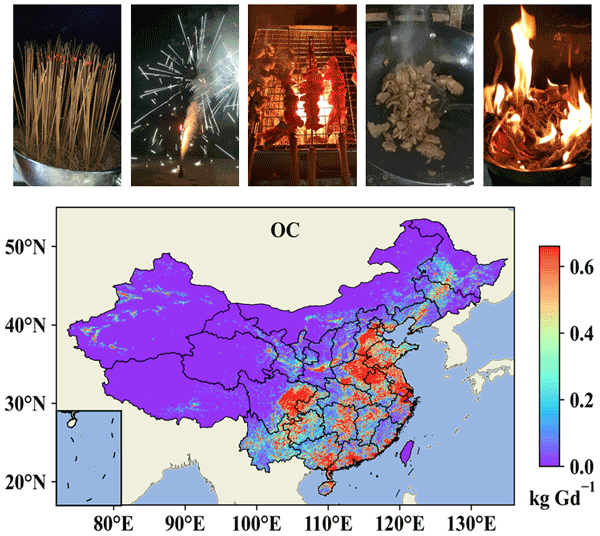
This work establishes the first emission inventory of carbonaceous aerosols from cooking, fireworks, sacrificial incense, joss paper burning, and barbecue, using multi-source datasets and tested emission factors. These emissions were concentrated in specific periods and areas. Positive and negative correlations between income and emissions were revealed in urban and rural regions. The dataset will be helpful for improving modeling studies and modifying corresponding emission control policies.
Yongqing Bai, Wen Lu, Tian Zhan, Xiao Yun Sun, Tianliang Zhao, Lijuan Shen, Guicai Ning, Zewen Lin, Kai Meng, and Wuke Wang
EGUsphere, https://doi.org/10.5194/egusphere-2026-4625, https://doi.org/10.5194/egusphere-2026-4625, 2026
This preprint is open for discussion and under review for Atmospheric Chemistry and Physics (ACP).
Short summary
Short summary
The Twain-Hu Basin in central China has extreme heat and severe ozone, yet few combined events. We show that basin O₃ is driven by synoptic transport from upwind sources rather than local heat, with the O₃ peak shifting to September, decoupling ozone from temperature. This pattern may be common in multi-source receptor basins.
Tingting Wang, Shaofei Kong, Xujing Qin, Yaduan Zhou, Yunkai Feng, Yingying Yan, Jian Wu, Wei Liu, and Feng Ding
Earth Syst. Sci. Data Discuss., https://doi.org/10.5194/essd-2026-570, https://doi.org/10.5194/essd-2026-570, 2026
Preprint under review for ESSD
Short summary
Short summary
Industrial emissions vary substantially over the course of a day, but this variation is often missing from air-pollution assessments. Using direct measurements from five major industries in China, we quantified the amounts of particles and gases released and traced how they changed hour by hour. The resulting data can improve emission estimates, air-quality simulations, and the timing of targeted pollution-control measures.
Huang Zheng, Shaofei Kong, Deping Ding, Marjan Savadkoohi, Congbo Song, Mingming Zheng, and Roy M. Harrison
Atmos. Chem. Phys., 25, 16363–16386, https://doi.org/10.5194/acp-25-16363-2025, https://doi.org/10.5194/acp-25-16363-2025, 2025
Short summary
Short summary
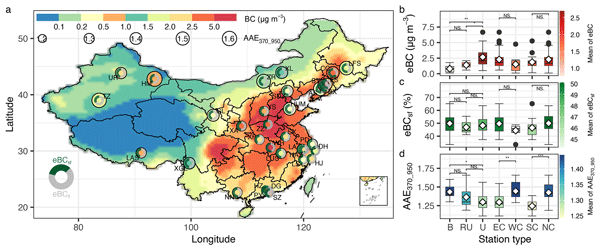
This study analyzes 13 years of BC (black carbon) data in China, uncovering patterns in its concentration and sources. Spatial-temporal variations and trends of BC are reported. Our analysis revealed that the reduction rates of BC and its sources varied across different station types, with spatial differences in the drivers of reduction. These long-term observations provide valuable insights to enhance understanding of pollution trends and improve models for predicting air quality.
Qingjian Yang, Tianliang Zhao, Yongqing Bai, Kai Meng, Yuehan Luo, Zhijie Tian, Xiaoyun Sun, Weikang Fu, Kai Yang, and Jun Hu
Atmos. Chem. Phys., 25, 8029–8042, https://doi.org/10.5194/acp-25-8029-2025, https://doi.org/10.5194/acp-25-8029-2025, 2025
Short summary
Short summary
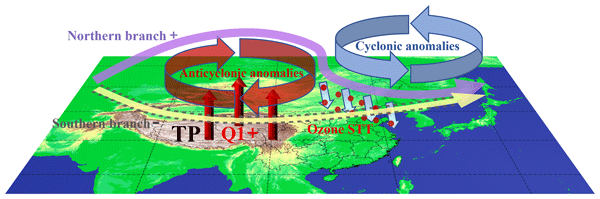
This study reveals a unique driver of the Tibetan Plateau (TP) thermal forcing of the interannual variations in stratosphere-to-troposphere transport (STT) of ozone with diverse structures. Anomalous strong TP thermal forcing induces anticyclonic anomalies in the upper troposphere over the TP, which strengthens and attenuates the northern and southern branches of the westerly jet, intensifying (weakening) the westerly trough for more (fewer) tropopause folds of ozone STT over the East Asian region.
Yongqing Bai, Tianliang Zhao, Kai Meng, Yue Zhou, Jie Xiong, Xiaoyun Sun, Lijuan Shen, Yanyu Yue, Yan Zhu, Weiyang Hu, and Jingyan Yao
Atmos. Chem. Phys., 25, 1273–1287, https://doi.org/10.5194/acp-25-1273-2025, https://doi.org/10.5194/acp-25-1273-2025, 2025
Short summary
Short summary
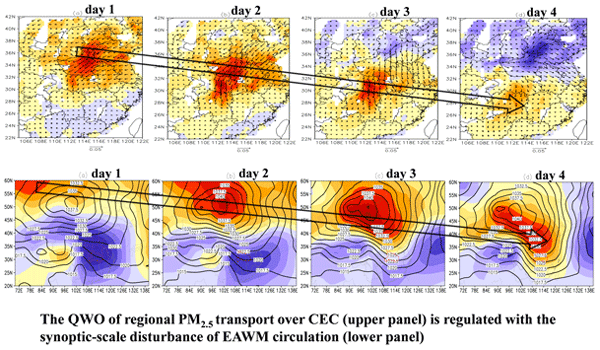
We proposed a composite statistical method to identify the quasi-weekly oscillation (QWO) of regional PM2.5 transport over China in winter from 2015 to 2019. The QWO of regional PM2.5 transport is constrained by synoptic-scale disturbances of the East Asian winter monsoon circulation with the periodic activities of the Siberian high, providing a new insight into the understanding of regional pollutant transport with meteorological drivers in atmospheric environment changes.
Kai Meng, Tianliang Zhao, Yongqing Bai, Ming Wu, Le Cao, Xuewei Hou, Yuehan Luo, and Yongcheng Jiang
Atmos. Chem. Phys., 24, 12623–12642, https://doi.org/10.5194/acp-24-12623-2024, https://doi.org/10.5194/acp-24-12623-2024, 2024
Short summary
Short summary
We studied the impact of stratospheric intrusions (SIs) on tropospheric and near-surface ozone in Central and Eastern China from a stratospheric source tracing perspective. SIs contribute the most in the eastern plains, with a contribution exceeding 15 %, and have a small contribution to the west and south. Western Siberia and Mongolia are the most critical source areas for indirect and direct SIs, with the Rossby wave and northeast cold vortex being important driving circulation systems.
Yuehan Luo, Tianliang Zhao, Kai Meng, Jun Hu, Qingjian Yang, Yongqing Bai, Kai Yang, Weikang Fu, Chenghao Tan, Yifan Zhang, Yanzhe Zhang, and Zhikuan Li
Atmos. Chem. Phys., 24, 7013–7026, https://doi.org/10.5194/acp-24-7013-2024, https://doi.org/10.5194/acp-24-7013-2024, 2024
Short summary
Short summary
We reveal a significant mechanism of stratospheric O3 intrusion (SI) into the atmospheric environment induced by an extratropical cyclone system. This system facilitates the downward transport of stratospheric O3 to the near-surface layer by vertical coupling, involving the upper westerly trough, the middle northeast cold vortex, and the lower extratropical cyclone in the troposphere. On average, stratospheric O3 contributed 26.77 % to near-surface O3 levels over the North China Plain.
Qian Li, Dantong Liu, Xiaotong Jiang, Ping Tian, Yangzhou Wu, Siyuan Li, Kang Hu, Quan Liu, Mengyu Huang, Ruijie Li, Kai Bi, Shaofei Kong, Deping Ding, and Chenjie Yu
Atmos. Chem. Phys., 23, 9439–9453, https://doi.org/10.5194/acp-23-9439-2023, https://doi.org/10.5194/acp-23-9439-2023, 2023
Short summary
Short summary
By attributing the shortwave absorption from black carbon, primary organic aerosol and secondary organic aerosol in a suburban environment, we firstly observed that the photochemically produced nitrogen-containing secondary organic aerosol may contribute to the enhancement of brown carbon absorption, partly compensating for some bleaching effect on the absorption of primary organic aerosol, hereby exerting radiative impacts.
Yi Cheng, Shaofei Kong, Liquan Yao, Huang Zheng, Jian Wu, Qin Yan, Shurui Zheng, Yao Hu, Zhenzhen Niu, Yingying Yan, Zhenxing Shen, Guofeng Shen, Dantong Liu, Shuxiao Wang, and Shihua Qi
Earth Syst. Sci. Data, 14, 4757–4775, https://doi.org/10.5194/essd-14-4757-2022, https://doi.org/10.5194/essd-14-4757-2022, 2022
Short summary
Short summary
This work establishes the first emission inventory of carbonaceous aerosols from cooking, fireworks, sacrificial incense, joss paper burning, and barbecue, using multi-source datasets and tested emission factors. These emissions were concentrated in specific periods and areas. Positive and negative correlations between income and emissions were revealed in urban and rural regions. The dataset will be helpful for improving modeling studies and modifying corresponding emission control policies.
Siyuan Li, Dantong Liu, Shaofei Kong, Yangzhou Wu, Kang Hu, Huang Zheng, Yi Cheng, Shurui Zheng, Xiaotong Jiang, Shuo Ding, Dawei Hu, Quan Liu, Ping Tian, Delong Zhao, and Jiujiang Sheng
Atmos. Chem. Phys., 22, 6937–6951, https://doi.org/10.5194/acp-22-6937-2022, https://doi.org/10.5194/acp-22-6937-2022, 2022
Short summary
Short summary
The understanding of secondary organic aerosols is hindered by the aerosol–gas evolution by different oxidation mechanisms. By concurrently measuring detailed mass spectra of aerosol and gas phases in a megacity online, we identified the primary and secondary source sectors and investigated the transformation between gas and aerosol phases influenced by photooxidation and moisture. The results will help us to understand the respective evolution of major sources in a typical urban environment.
Xiaoyun Sun, Tianliang Zhao, Yongqing Bai, Shaofei Kong, Huang Zheng, Weiyang Hu, Xiaodan Ma, and Jie Xiong
Atmos. Chem. Phys., 22, 3579–3593, https://doi.org/10.5194/acp-22-3579-2022, https://doi.org/10.5194/acp-22-3579-2022, 2022
Short summary
Short summary
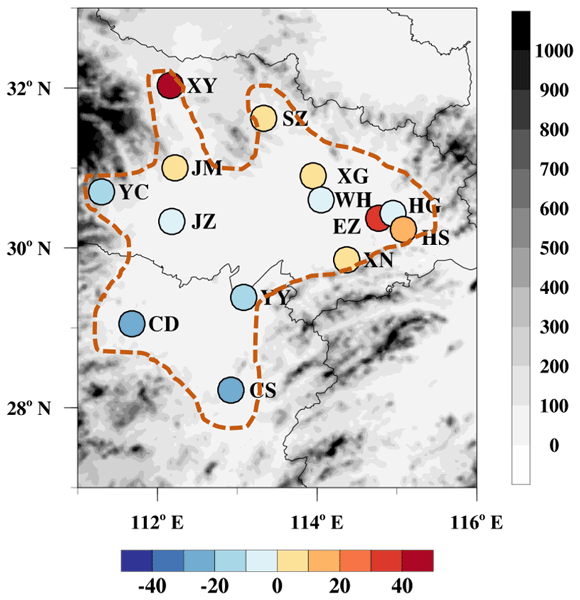
This study revealed the impact of anthropogenic emissions and meteorological conditions on PM2.5 decline in the regional transport of air pollutants over a receptor region in central China. The meteorological drivers led to upwind accelerating and downward offsetting of the effects of emission reductions over the receptor region in regional PM2.5 transport, and the contribution of gaseous precursor emissions to PM2.5 pollution was enhanced with reduced anthropogenic emissions in recent years.

Kelvin H. Bates, Daniel J. Jacob, Ke Li, Peter D. Ivatt, Mat J. Evans, Yingying Yan, and Jintai Lin
Atmos. Chem. Phys., 21, 18351–18374, https://doi.org/10.5194/acp-21-18351-2021, https://doi.org/10.5194/acp-21-18351-2021, 2021
Short summary
Short summary
Simple aromatic compounds (benzene, toluene, xylene) have complex gas-phase chemistry that is inconsistently represented in atmospheric models. We compile recent experimental and theoretical insights to develop a new mechanism for gas-phase aromatic oxidation that is sufficiently compact for use in multiscale models. We compare our new mechanism to chamber experiments and other mechanisms, and implement it in a global model to quantify the impacts of aromatic oxidation on tropospheric chemistry.
Quan Liu, Dantong Liu, Yangzhou Wu, Kai Bi, Wenkang Gao, Ping Tian, Delong Zhao, Siyuan Li, Chenjie Yu, Guiqian Tang, Yunfei Wu, Kang Hu, Shuo Ding, Qian Gao, Fei Wang, Shaofei Kong, Hui He, Mengyu Huang, and Deping Ding
Atmos. Chem. Phys., 21, 14749–14760, https://doi.org/10.5194/acp-21-14749-2021, https://doi.org/10.5194/acp-21-14749-2021, 2021
Short summary
Short summary
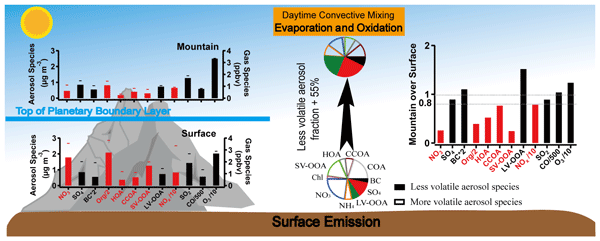
Through simultaneous online measurements of detailed aerosol compositions at both surface and surface-influenced mountain sites, the evolution of aerosol composition during daytime vertical transport was investigated. The results show that, from surface to the top of the planetary boundary layer, the oxidation state of organic aerosol had been significantly enhanced due to evaporation and further oxidation of these evaporated gases.
Cited articles
Adcock, K. E., Ashfold, M. J., Chou, C. C.-K., Gooch, L. J., Mohd Hanif, N., Laube, J. C., Oram, D. E., Ou-Yang, C.-F., Panagi, M., Sturges, W. T., and Reeves, C. E.: Investigation of East Asian emissions of CFC-11 using atmospheric observations in Taiwan, Environ. Sci. Technol., 54, 3814–3822, https://doi.org/10.1021/acs.est.9b06433, 2020.
Alabdulhadi, A., Ramadan, A., Devey, P., Boggess, M., and Guest, M.: Inhalation exposure to volatile organic compounds in the printing industry, J. Air Waste Manage., 69, 1142–1169, https://doi.org/10.1080/10962247.2019.1629355, 2019.
An, X., Henne, S., Yao, B., Vollmer, M. K., Zhou, L., and Li, Y.: Estimating emissions of HCFC-22 and CFC-11 in China by atmospheric observations and inverse modeling, Sci. China Chem., 55, 2233–2241, https://doi.org/10.1007/s11426-012-4624-8, 2012.
Burkholder, J. B., Hodnebrog, Ø., McDonald, B. C., Orkin, V., Papadimitriou, V. C., and Van Hoomissen, D.: Summary of abundances, lifetimes, ODPs, REs, GWPs, and GTPs. WMO, Geneva, Switzerland, Open File Rep. 509, 435 pp., https://www.csl.noaa.gov/assessments/ozone/2022 (last access: 22 December 2024), 2022.
Cheng, Y., Kong, S., Yao, L., Zheng, H., Wu, J., Yan, Q., Zheng, S., Hu, Y., Niu, Z., Yan, Y., Shen, Z., Shen, G., Liu, D., Wang, S., and Qi, S.: Multiyear emissions of carbonaceous aerosols from cooking, fireworks, sacrificial incense, joss paper burning, and barbecue as well as their key driving forces in China, Earth Syst. Sci. Data, 14, 4757–4775, https://doi.org/10.5194/essd-14-4757-2022, 2022.
Chen, L.: Study on environmental geochemistry of Chlorine in Chinese coals, Master thesis, Nanchang University, China, https://doi.org/10.7666/d.y1850295, 2010.
Chiodo, G. and Polvani, L. M.: New insights on the radiative impacts of ozone-depleting substances, Geophys. Res. Lett., 49, e2021GL096783, https://doi.org/10.1029/2021GL096783, 2022.
Daniel, J. S., Reimann, S., Ashford, P., Fleming, E. L., Hossaini, R., Lickley, M. J., Schofield, R., Walter-Terrinoni, H., McBride, L., Park, S., Ross, M., N., Salawitch, R. J., Sherry, D., Tegtmeier, S., and Velders, G. J. M.: CHAPTER 7 Scenarios and information for Policymakers, UNEP, Nairobi, Kenya, Open File Rep. 48 pp., https://csl.noaa.gov/assessments/ozone/2022/downloads/ (last access: 1 March 2025), 2022.
Dhomse, S. S., Feng, W., Montzka, S. A., Hossaini, R., Keeble, J., Pyle, J. A., Daniel, J. S., and Chipperfield, M. P.: Delay in recovery of the Antarctic ozone hole from unexpected CFC-11 emissions, Nat. Commun., 10, 5781, https://doi.org/10.1038/s41467-019-13717-x, 2019.
Energy Foundation, Tsinghua University Building Energy Efficiency Research Center: Constructing a new rural energy system toward carbon neutrality-comprehensive report on the governance of rural domestic coal in China, Tsinghua University, Beijing, China, Open File Rep., 63 pp., 2024 (in Chinese).
Fang, X., Ravishankara, A. R., Velders, G. J. M., Molina, M. J., Su, S., Zhang, J., Hu, J., and Prinn, R. G.: Changes in emissions of ozone-depleting substances from China due to implementation of the Montreal Protocol, Environ. Sci. Technol., 52, 11359–11366, https://doi.org/10.1021/acs.est.8b01280, 2018.
Fang, D., Chen, B., Hubacek, K., Ni, R., Chen, L., Feng, K., and Lin, J.: Clean air for some: unintended spillover effects of regional air pollution policies, Sci. Adv., 5, eaav4707, https://doi.org/10.1126/sciadv.aav4707, 2019.
Fleming, E. L., Newman, P. A., Liang, Q., and Daniel, J. S.: The impact of continuing CFC-11 emissions on stratospheric ozone, J. Geophys. Res.-Atmos., 125, e2019JD031849, https://doi.org/10.1029/2019JD031849, 2020.
Geng, G., Liu, Y., Liu, Y., Liu, S., Cheng, J., Yan, L., Wu, N., Hu, H., Tong, D., Zheng, B., Yin, Z., He, K., and Zhang, Q.: Efficacy of China's clean air actions to tackle PM2.5 pollution between 2013 and 2020, Nat. Geosci., 17, 987–994, https://doi.org/10.1038/s41561-024-01540-z, 2024.
Global Carbon Atlas: Carbon Emissions, https://globalcarbonatlas.org/emissions/carbon-emissions/, last access: 22 December 2024.
Gong, P., Li, X., and Zhang, W.: 40-Year (1978–2017) human settlement changes in China reflected by impervious surfaces from satellite remote sensing, Sci. Bull., 64, 756–763, https://doi.org/10.1016/j.scib.2019.04.024, 2019.
Gong, P., Chen, B., Li, X., Liu, H., Wang, J., Bai, Y., Chen, J., Chen, X., Fang, L., Feng, S., Feng, Y., Gong, Y., Gu, H., Huang, H., Huang, X., Jiao, H., Kang, Y., Lei, G., Li, A., Li, X., Li, X., Li, Y., Li, Z., Li, Z., Liu, C., Liu, C., Liu, M., Liu, S., Mao, W., Miao, C., Ni, H., Pan, Q., Qi, S., Ren, Z., Shan, Z., Shen, S., Shi, M., Song, Y., Su, M., Ping Suen, H., Sun, B., Sun, F., Sun, J., Sun, L., Sun, W., Tian, T., Tong, X., Tseng, Y., Tu, Y., Wang, H., Wang, L., Wang, X., Wang, Z., Wu, T., Xie, Y., Yang, J., Yang, J., Yuan, M., Yue, W., Zeng, H., Zhang, K., Zhang, N., Zhang, T., Zhang, Y., Zhao, F., Zheng, Y., Zhou, Q., Clinton, N., Zhu, Z., and Xu, B.: Mapping essential urban land use categories in China (EULUCChina): Preliminary results for 2018, Sci. Bull., 65, 182–187, https://doi.org/10.1016/j.scib.2019.12.007, 2020.
Guo, H., Ding, A., Wang, T., Simpson, I. J., Blake, D. R., Barletta, B., Meinardi, S., Rowland, F. S., Saunders, S. M., Fu, T., Hung, W., and Li, Y.: Source origins, modeled profiles, and apportionments of halogenated hydrocarbons in the greater Pearl River Delta region, southern China, J. Geophys. Res., 114, 2008JD011448, https://doi.org/10.1029/2008JD011448, 2009.
Huang, X., Zhang, Y., Xue, L., Tang, J., Song, W., Blake, D. R., and Wang, X.: Constraining emission estimates of CFC-11 in Eastern China based on local observations at surface stations and Mount Tai, Environ. Sci. Technol. Lett., 8, 940–946, https://doi.org/10.1021/acs.estlett.1c00539, 2021.
Jin, W., Yan, Y., Qiu, X., Peng, L., Li, Z., and Tang, Y.: Characterizing full-phase chlorine species emissions from domestic coal combustion in China: Implications for significant impacts on air pollution and ozone-layer depletion, Environ. Pollut., 372, 126043, https://doi.org/10.1016/j.envpol.2025.126043, 2025.
Kim, J., Li, S., Kim, K., Stohl, A., Mühle, J., Kim, S., Park, M., Kang, D., Lee, G., Harth, C. M., Salameh, P. K., and Weiss, R. F.: Regional atmospheric emissions determined from measurements at Jeju Island, Korea: Halogenated compounds from China, Geophys. Res. Lett., 37, 2010GL043263, https://doi.org/10.1029/2010GL043263, 2010.
Li, Q., Jiang, J., Zhang, Q., Zhou, W., Cai, S., Duan, L., Ge, S., and Hao, J.: Influences of coal size, volatile matter content, and additive on primary particulate matter emissions from household stove combustion, Fuel, 182, 780–787, https://doi.org/10.1016/j.fuel.2016.06.059, 2016.
Li, J., Wang, J., Li, H., Rao, Z., Li, Q., and Luo, S.: The production and release of CFCs from coal combustion, Acta Geol. Sin.-Engl., 77, 81–85, https://doi.org/10.1111/j.1755-6724.2003.tb00113.x, 2003.
Li, J., Wang, J., Yao, Z., Li, H., Li, Q., Luo, S., Xu, X., and Wang, Y.: Production and emission of Chlorofluorocarbons during coal combustion. Rock and Mineral Analysis, 23, 1–5, https://doi.org/10.15898/j.cnki.11-2131/td.2004.01.001, 2004 (in Chinese).
Lickley, M., Fletcher, S., Rigby, M., and Solomon, S.: Joint inference of CFC lifetimes and banks suggests previously unidentified emissions, Nat. Commun., 12, 2920, https://doi.org/10.1038/s41467-021-23229-2, 2021.
Liu, F., Zhang, Q., Tong, D., Zheng, B., Li, M., Huo, H., and He, K. B.: High-resolution inventory of technologies, activities, and emissions of coal-fired power plants in China from 1990 to 2010, Atmos. Chem. Phys., 15, 13299–13317, https://doi.org/10.5194/acp-15-13299-2015, 2015.
Liu, Y., Weng, W., Zhang, Q., Li, Q., Xu, J., Zheng, L., Su, Y., Wu, D., Yan, W., Zhang, J., Chen, J., and Yao, B.: Ozone-depleting substances unintendedly emitted from iron and steel industry: CFCs, HCFCs, halons and halogenated very short-lived substances, J. Geophys. Res.-Atmos., 129, e2024JD041035, https://doi.org/10.1029/2024JD041035, 2024.
Liu, Z., Guan, D., Wei, W., Davis, S. J., Ciais, P., Bai, J., Peng, S., Zhang, Q., Hubacek, K., Marland, G., Andres, R. J., Crawford-Brown, D., Lin, J., Zhao, H., Hong, C., Boden, T. A., Feng, K., Peters, G. P., Xi, F., Liu, J., Li, Y., Zhao, Y., Zeng, N., and He, K.: Reduced carbon emission estimates from fossil fuel combustion and cement production in China, Nature, 524, 335–338, https://doi.org/10.1038/nature14677, 2015.
Luo, K., Ren, D., Xu, L., Dai, S., Cao, D., Feng, F., and Tan, J.: Fluorine content and distribution pattern in Chinese coals, Int. J. Coal Geol., 57, 143–149, https://doi.org/10.1016/j.coal.2003.10.003, 2004.
McCulloch, A., Ashford, P., and Midgley, P. M.: Historic emissions of fluorotrichloromethane (CFC-11) based on a market survey, Atmos. Environ., 35, 4387–4397, https://doi.org/10.1016/S1352-2310(01)00249-7, 2001.
Molina, M. J. and Rowland, F. S.: Stratospheric sink for chlorofluoromethanes: chlorine atom-catalysed destruction of ozone, Nature, 249, 810–812, https://doi.org/10.1038/249810a0, 1974.
Montzka, S. A., Dutton, G. S., Yu, P., Ray, E., Portmann, R. W., Daniel, J. S., Kuijpers, L., Hall, B. D., Mondeel, D., Siso, C., Nance, J. D., Rigby, M., Manning, A. J., Hu, L., Moore, F., Miller, B. R., and Elkins, J. W.: An unexpected and persistent increase in global emissions of ozone-depleting CFC-11, Nature, 557, 413–417, https://doi.org/10.1038/s41586-018-0106-2, 2018.
Montzka, S. A., Dutton, G. S., Portmann, R. W., Chipperfield, M. P., Davis, S., Feng, W., Manning, A. J., Ray, E., Rigby, M., Hall, B. D., Siso, C., Nance, J. D., Krummel, P. B., Mühle, J., Young, D., O'Doherty, S., Salameh, P. K., Harth, C. M., Prinn, R. G., Weiss, R. F., Elkins, J. W., Walter-Terrinoni, H., and Theodoridi, C.: A decline in global CFC-11 emissions during 2018–2019, Nature, 590, 428–432, https://doi.org/10.1038/s41586-021-03260-5, 2021.
National Bureau of Statistics of China, 2001–2022, Department of Energy Statistics: China Energy Statistical Yearbook, 2001–2022, https://www.cnki.net/ (last access: 12 June 2024), 2001–2022.
National Bureau of Statistics of China, National data [data set], https://data.stats.gov.cn/, last access: 12 January 2025.
Niu, Z., Kong, S., Yan, Q., Cheng, Y., Zheng, H., Hu, Y., Wu, J., Qin, X., Dong, H., Jiang, W., Yan, Y., Liu, W., Ding, F., Bai, Y., and Qi, S.: Estimation of CFC-11 emissions from coal combustion in China, Figshare [data set], https://doi.org/10.6084/m9.figshare.28523063, 2025.
Palmer, P. I., Jacob, D. J., Mickley, L. J., Blake, D. R., Sachse, G. W., Fuelberg, H. E., and Kiley, C. M.: Eastern Asian emissions of anthropogenic halocarbons deduced from aircraft concentration data, J. Geophys. Res., 108, 2003JD003591, https://doi.org/10.1029/2003JD003591, 2003.
Pan, Y., Birdsey, R. A., Fang, J., Houghton, R., Kauppi, P. E., Kurz, W. A., Phillips, O. L., Shvidenko, A., Lewis, S. L., Canadell, J. G., Ciais, P., Jackson, R. B., Pacala, S. W., McGuire, A. D., Piao, S., Rautiainen, A., Sitch, S., and Hayes, D.: A large and persistent carbon sink in the world's forests, Science, 333, 988–993, https://doi.org/10.1126/science.1201609, 2011.
Park, S., Western, L. M., Saito, T., Redington, A. L., Henne, S., Fang, X., Prinn, R. G., Manning, A. J., Montzka, S. A., Fraser, P. J., Ganesan, A. L., Harth, C. M., Kim, J., Krummel, P. B., Liang, Q., Mühle, J., O'Doherty, S., Park, H., Park, M.-K., Reimann, S., Salameh, P. K., Weiss, R. F., and Rigby, M.: A decline in emissions of CFC-11 and related chemicals from eastern China, Nature, 590, 433–437, https://doi.org/10.1038/s41586-021-03277-w, 2021.
Peng, L., Zhang, Q., Yao, Z., Mauzerall, D. L., Kang, S., Du, Z., Zheng, Y., Xue, T., and He, K.: Underreported coal in statistics: A survey-based solid fuel consumption and emission inventory for the rural residential sector in China, Appl. Energy, 235, 1169–1182, https://doi.org/10.1016/j.apenergy.2018.11.043, 2019.
Polvani, L. M., Previdi, M., England, M. R., Chiodo, G., and Smith, K. L.: Substantial twentieth-century Arctic warming caused by ozone-depleting substances, Nat. Clim. Change, 10, 130–133, https://doi.org/10.1038/s41558-019-0677-4, 2020.
Pons, J., Tope, H., and Walter-Terrinoni, H.: Montreal protocol on substances that deplete the ozone layer, report of the technology and economic assessment panel May 2019, Volume 3: Decision XXX/3 TEAP Task Force Report on Unexpected Emissions of Trichlorofluoromethane (CFC-11), UNEP, Nairobi, Kenya, Open File Rep. 178 pp., https://ozone.unep.org/sites/default/files/2020-07/TEAP_Task_Force_Dec_XXX-3_on_Unexpected_CFC-11_Emissions_May_2019.pdf (last access: 27 October 2025), 2019.
Rigby, M., Prinn, R. G., O'Doherty, S., Montzka, S. A., McCulloch, A., Harth, C. M., Mühle, J., Salameh, P. K., Weiss, R. F., Young, D., Simmonds, P. G., Hall, B. D., Dutton, G. S., Nance, D., Mondeel, D. J., Elkins, J. W., Krummel, P. B., Steele, L. P., and Fraser, P. J.: Re-evaluation of the lifetimes of the major CFCs and CH3CCl3 using atmospheric trends, Atmos. Chem. Phys., 13, 2691–2702, https://doi.org/10.5194/acp-13-2691-2013, 2013.
Rigby, M., Park, S., Saito, T., Western, L. M., Redington, A. L., Fang, X., Henne, S., Manning, A. J., Prinn, R. G., Dutton, G. S., Fraser, P. J., Ganesan, A. L., Hall, B. D., Harth, C. M., Kim, J., Kim, K.-R., Krummel, P. B., Lee, T., Li, S., Liang, Q., Lunt, M. F., Montzka, S. A., Mühle, J., O'Doherty, S., Park, M.-K., Reimann, S., Salameh, P. K., Simmonds, P., Tunnicliffe, R. L., Weiss, R. F., Yokouchi, Y., and Young, D.: Increase in CFC-11 emissions from eastern China based on atmospheric observations, Nature, 569, 546–550, https://doi.org/10.1038/s41586-019-1193-4, 2019.
Shao, M., Huang, D., Gu, D., Lu, S., Chang, C., and Wang, J.: Estimate of anthropogenic halocarbon emission based on measured ratio relative to CO in the Pearl River Delta region, China, Atmos. Chem. Phys., 11, 5011–5025, https://doi.org/10.5194/acp-11-5011-2011, 2011.
Shen, G., Ru, M., Du, W., Zhu, X., Zhong, Q., Chen, Y., Shen, H., Yun, X., Meng, W., Liu, J., Cheng, H., Hu, J., Guan, D., and Tao, S.: Impacts of air pollutants from rural Chinese households under the rapid residential energy transition, Nat. Commun., 10, 3405, https://doi.org/10.1038/s41467-019-11453-w, 2019.
Shen, G., Xiong, R., Tian, Y., Luo, Z., Jiangtulu, B., Du, W., Meng, J., Chen, Y., Xue, B., Wang, B., Duan, Y., Duo, J., Fan, F., Huang, L., Ju, T., Liu, F., Li, S., Liu, X., Li, Y., Wang, M., Nan, Y., Pan, B., Pan, Y., Wang, L., Zeng, E., Zhan, C., Chen, Y., Shen, H., Cheng, H., and Tao, S.: Substantial transition to clean household energy mix in rural households in China, Nat. Sci. Rev., 9, nwac050, https://doi.org/10.1093/nsr/nwac050, 2022.
Shen, H., Luo, Z., Xiong, R., Liu, X., Zhang, L., Li, Y., Du, W., Chen, Y., Cheng, H., Shen, G., and Tao, S.: A critical review of pollutant emission factors from fuel combustion in home stoves, Environ. Int., 157, 106841, https://doi.org/10.1016/j.envint.2021.106841, 2021.
Shen, L., Xiang, P., Liang, S., Chen, W., Wang, M., Lu, S., and Wang, Z.: Sources profiles of volatile organic compounds (VOCs) measured in a typical industrial process in Wuhan, Central China, Atmosphere, 9, 297, https://doi.org/10.3390/atmos9080297, 2018.
Shi, J., Deng, H., Bai, Z., Kong, S., Wang, X., Hao, J., Han, X., and Ning, P.: Emission and profile characteristic of volatile organic compounds emitted from coke production, iron smelt, heating station and power plant in Liaoning Province, China, Sci. Total Environ., 515–516, 101–108, https://doi.org/10.1016/j.scitotenv.2015.02.034, 2015.
Simpson, I. J., Barletta, B., Meinardi, S., Aburizaiza, O. S., DeCarlo, P. F., Farrukh, M. A., Khwaja, H., Kim, J., Kim, Y., Panday, A., Siddique, A., Stone, E. A., Wang, T., Woo, J.-H., Xue, L., Yokelson, R. J., Zeb, J., and Blake, D. R.: CFC-11 measurements in China, Nepal, Pakistan, Saudi Arabia and South Korea (1998–2018): Urban, landfill fire and garbage burning sources, Environ. Chem., 18, 370–392, https://doi.org/10.1071/EN21139, 2022.
Sun, J., Shen, Z., Huang, Y., Cao, J., Ho, S. S. H., Niu, X., Wang, T., Zhang, Q., Lei, Y., Xu, H., and Liu, H.: VOCs emission profiles from rural cooking and heating in Guanzhong Plain, China and its potential effect on regional O3 and SOA formation, Atmos. Chem. Phys. Discuss. [preprint], https://doi.org/10.5194/acp-2018-36, 2018.
Sun, J., Shen, Z., Zhang, L., Zhang, Y., Zhang, T., Lei, Y., Niu, X., Zhang, Q., Dang, W., Han, W., Cao, J., Xu, H., Liu, P., and Li, X.: Volatile organic compounds emissions from traditional and clean domestic heating appliances in Guanzhong Plain, China: Emission factors, source profiles, and effects on regional air quality, Environ. Int., 133, 105252, https://doi.org/10.1016/j.envint.2019.105252, 2019.
Tao, S., Shen, G., Cheng, H., and Ma, J.: Toward clean residential energy: challenges and priorities in research, Environ. Sci. Technol., 55, 13602–13613, https://doi.org/10.1021/acs.est.1c02283, 2021.
Tong, D., Zhang, Q., Liu, F., Geng, G., Zheng, Y., Xue, T., Hong, C., Wu, R., Qin, Y., Zhao, H., Yan, L., and He, K.: Current emissions and future mitigation pathways of coal-fired power plants in China from 2010 to 2030, Environ. Sci. Technol., 52, 12905–12914, https://doi.org/10.1021/acs.est.8b02919, 2018.
Wan, D., Xu, J., Zhang, J., Tong, X., and Hu, J.: Historical and projected emissions of major halocarbons in China, Atmos. Environ., 43, 5822–5829, https://doi.org/10.1016/j.atmosenv.2009.07.052, 2009.
Wang, M., Li, S., Zhu, R., Zhang, R., Zu, L., Wang, Y., and Bao, X.: On-road tailpipe emission characteristics and ozone formation potentials of VOCs from gasoline, diesel and liquefied petroleum gas fueled vehicles, Atmos. Environ., 223, 117294, https://doi.org/10.1016/j.atmosenv.2020.117294, 2020.
Wang, S., Su, H., Chen, C., Tao, W., Streets, D. G., Lu, Z., Zheng, B., Lelieveld, J., Pöschl, U., and Cheng, Y.: Natural gas shortages during the “coal-to-gas” transition in China have caused a large redistribution of air pollution, P. Natl. Acad. Sci. USA, 117, 31018–31025, https://doi.org/10.1073/pnas.2007513117, 2020.
Western, L. M., Vollmer, M. K., Krummel, P. B., Adcock, K. E., Crotwell, M., Fraser, P. J., Harth, C. M., Langenfelds, R. L., Montzka, S. A., Mühle, J., O'Doherty, S., Oram, D. E., Reimann, S., Rigby, M., Vimont, I., Weiss, R. F., Young, D., and Laube, J. C.: Global increase of ozone-depleting chlorofluorocarbons from 2010 to 2020, Nat. Geosci., 16, 309–313, https://doi.org/10.1038/s41561-023-01147-w, 2023.
Wu, H., Liu, J., Hu, X., He, G., Zhou, Y., Wang, X., Liu, Y., Ma, J., and Tao, S.: Fewer than 15 % of coal power plant workers in China can easily shift to green jobs by 2060, One Earth, 7, 1994–2007, https://doi.org/10.1016/j.oneear.2024.10.006, 2024.
Wu, J., Kong, S., Zeng, X., Cheng, Y., Yan, Q., Zheng, H., Yan, Y., Zheng, S., Liu, D., Zhang, X., Fu, P., Wang, S., and Qi, S.: First high-resolution emission inventory of levoglucosan for biomass burning and non-biomass burning sources in China, Environ. Sci. Technol., 55, 1497–1507, https://doi.org/10.1021/acs.est.0c06675, 2021.
Wu, R. and Xie, S.: Spatial distribution of ozone formation in China derived from emissions of speciated volatile organic compounds, Environ. Sci. Technol., 51, 2574–2583, https://doi.org/10.1021/acs.est.6b03634, 2017.
Yan, Q., Kong, S., Yan, Y., Liu, H., Wang, W., Chen, K., Yin, Y., Zheng, H., Wu, J., Yao, L., Zeng, X., Cheng, Y., Zheng, S., Wu, F., Niu, Z., Zhang, Y., Zheng, M., Zhao, D., Liu, D., and Qi, S.: Emission and simulation of primary fine and submicron particles and water-soluble ions from domestic coal combustion in China, Atmos. Environ., 224, 117308, https://doi.org/10.1016/j.atmosenv.2020.117308, 2020.
Yan, Q., Kong, S., Yan, Y., Liu, X., Zheng, S., Qin, S., Wu, F., Niu, Z., Zheng, H., Cheng, Y., Zeng, X., Wu, J., Yao, L., Liu, D., Shen, G., Shen, Z., and Qi, S.: Emission and spatialized health risks for trace elements from domestic coal burning in China, Environ. Int., 158, 107001, https://doi.org/10.1016/j.envint.2021.107001, 2022.
Yang, N., Tang, S., Zhang, S., Huang, W., Chen, P., Chen, Y., Xi, Z., Yuan, Y., and Wang, K.: Fluorine in Chinese coal: A review of distribution, abundance, modes of occurrence, genetic factors and environmental effects, Minerals, 7, 219, https://doi.org/10.3390/min7110219, 2017.
Ye, X.: Study on characteristics of pollutants emission from non-road mobile source and biomass boilers on real work conditions, Master thesis, South China University of Technology, China, https://www.lib.scut.edu.cn/2016/1014/c8766a124602/page.htm (last access: 27 October 2025), 2018.
Zeng, L., Dang, J., Guo, H., Lyu, X., Simpson, I. J., Meinardi, S., Wang, Y., Zhang, L., and Blake, D. R.: Long-term temporal variations and source changes of halocarbons in the Greater Pearl River Delta region, China, Atmos. Environ., 234, 117550, https://doi.org/10.1016/j.atmosenv.2020.117550, 2020.
Zeng, X., Kong, S., Zhang, Q., Ren, H., Liu, J., Feng, Y., Yan, Q., Qin, S., Zheng, S., Yao, L., Fan, Z., Zhang, Y., Liu, X., Yan, Y., Zhu, K., Ding, F., Liu, W., Liu, D., Qi, S., and Fu, P.: Source profiles and emission factors of organic and inorganic species in fine particles emitted from the ultra-low emission power plant and typical industries, Sci. Total Environ., 789, 147966, https://doi.org/10.1016/j.scitotenv.2021.147966, 2021.
Zhang, Y., Wang, X., Simpson, I. J., Barletta, B., Blake, D. R., Meinardi, S., Louie, P. K. K., Zhao, X., Shao, M., Zhong, L., Wang, B., and Wu, D.: Typical industrial sector-based volatile organic compounds source profiles and ozone formation potentials in Zhengzhou, China, Atmos. Pollut. Res., 11, 841–850, https://doi.org/10.1016/j.apr.2020.01.012, 2014.
Zhao, Y., Nielsen, C. P., Lei, Y., McElroy, M. B., and Hao, J.: Quantifying the uncertainties of a bottom-up emission inventory of anthropogenic atmospheric pollutants in China, Atmos. Chem. Phys., 11, 2295–2308, https://doi.org/10.5194/acp-11-2295-2011, 2011.
Short summary
Trichlorofluoromethane (CFC-11) is usually recognized from CFC-11 production and use sources. In this study, we established a CFC-11 emission inventory from coal combustion in China during 2000–2021. We found that CFC-11 emissions from coal combustion exhibited fluctuations and an overall upward trend, peaking in 2016, and that Hebei and Shandong had higher emissions. The CFC-11 emissions from coal combustion in the coastal regions might influence the monitored CFC-11 concentrations.
Trichlorofluoromethane (CFC-11) is usually recognized from CFC-11 production and use sources. In...


Altmetrics
Final-revised paper
Preprint