Articles | Volume 17, issue 10
https://doi.org/10.5194/essd-17-5149-2025
© Author(s) 2025. This work is distributed under
the Creative Commons Attribution 4.0 License.
the Creative Commons Attribution 4.0 License.
https://doi.org/10.5194/essd-17-5149-2025
© Author(s) 2025. This work is distributed under
the Creative Commons Attribution 4.0 License.
the Creative Commons Attribution 4.0 License.
Data description article
| 
06 Oct 2025
Data description article |
| 06 Oct 2025
| 06 Oct 2025
Capacity building enables unique near-fault observations of the destructive 2025 Mw 7.7 Myanmar earthquake
Ssu-Ting Lai
GFZ Helmholtz Centre for Geosciences, Potsdam, Germany
Kyaw Moe Oo
Department of Meteorology and Hydrology (DMH), Naypyitaw, Myanmar
Yin Myo Min Htwe
Department of Meteorology and Hydrology (DMH), Naypyitaw, Myanmar
Tin Yi
Department of Meteorology and Hydrology (DMH), Naypyitaw, Myanmar
Htay Htay Than
Department of Meteorology and Hydrology (DMH), Naypyitaw, Myanmar
Oo Than
Department of Meteorology and Hydrology (DMH), Naypyitaw, Myanmar
Zaw Min
Department of Meteorology and Hydrology (DMH), Naypyitaw, Myanmar
Tun Minn Oo
Department of Meteorology and Hydrology (DMH), Naypyitaw, Myanmar
Phyo Maung Maung
Nanyang Technological University (NTU), Singapore, Singapore

GFZ Helmholtz Centre for Geosciences, Potsdam, Germany
Fabrice Cotton
GFZ Helmholtz Centre for Geosciences, Potsdam, Germany
Institute of Geosciences, University of Potsdam, Potsdam, Germany
Peter L. Evans
GFZ Helmholtz Centre for Geosciences, Potsdam, Germany
Andres Heinloo
GFZ Helmholtz Centre for Geosciences, Potsdam, Germany
Laura Hillmann
GFZ Helmholtz Centre for Geosciences, Potsdam, Germany
Joachim Saul
GFZ Helmholtz Centre for Geosciences, Potsdam, Germany
Christoph Sens-Schönfelder
GFZ Helmholtz Centre for Geosciences, Potsdam, Germany
Angelo Strollo
GFZ Helmholtz Centre for Geosciences, Potsdam, Germany
Frederik Tilmann
GFZ Helmholtz Centre for Geosciences, Potsdam, Germany
Institute for Geological Sciences, Freie Universität Berlin, Berlin, Germany
Graeme Weatherill
GFZ Helmholtz Centre for Geosciences, Potsdam, Germany
Ming-Hsuan Yen
GFZ Helmholtz Centre for Geosciences, Potsdam, Germany
Institute of Geosciences, University of Potsdam, Potsdam, Germany
Riccardo Zaccarelli
GFZ Helmholtz Centre for Geosciences, Potsdam, Germany
Thomas Zieke
GFZ Helmholtz Centre for Geosciences, Potsdam, Germany
Claus Milkereit
GFZ Helmholtz Centre for Geosciences, Potsdam, Germany
Related authors
No articles found.
Francesco Scotto di Uccio, Angelo Strollo, Matteo Picozzi, Dino Bindi, Antonio Scala, Gaetano Festa, Tony Alfredo Stabile, Erwan Gueguen, Guido Maria Adinolfi, Claudio Martino, Ortensia Amoroso, Raffaella De Matteis, Vincenzo Convertito, Daniele Spallarossa, Alessandro Caruso, Francesco Carotenuto, Simona Colombelli, Grazia De Landro, Gregory De Martino, Luca Elia, Benjamin Heit, Laura Hillman, Antonio Giovanni Iaccarino, Mauro Palo, Karina Loviknes, Stefan Mroczek, Sahar Nazeri, Titouan Muzellec, Ferdinando Napolitano, Serena Panebianco, Raffaele Rea, Rosario Riccio, Guido Russo, Vincenzo Serlenga, Stefania Tarantino, Nicola Tragni, Thomas Zieke, Jannes Münchmeyer, Peter Makus, Alister Trabattoni, Aldo Zollo, and Fabrice Cotton
Earth Syst. Sci. Data Discuss., https://doi.org/10.5194/essd-2026-270, https://doi.org/10.5194/essd-2026-270, 2026
Revised manuscript accepted for ESSD
Short summary
Short summary
The DETECT experiment provides a novel dataset to showcase how dense seismic sensor networks can improve monitoring of complex fault systems. This survey aims to collect seismic waveforms near seismic sources to better image faults, understand their behavior between earthquakes, and track changes that may anticipate a larger event. The data collected during the survey offer potential for advancing methodologies in earthquake identification and source characterization.
Leonardo Colavitti, Dino Bindi, Gabriele Tarchini, Davide Scafidi, Matteo Picozzi, and Daniele Spallarossa
Earth Syst. Sci. Data, 17, 3089–3108, https://doi.org/10.5194/essd-17-3089-2025, https://doi.org/10.5194/essd-17-3089-2025, 2025
Short summary
Short summary
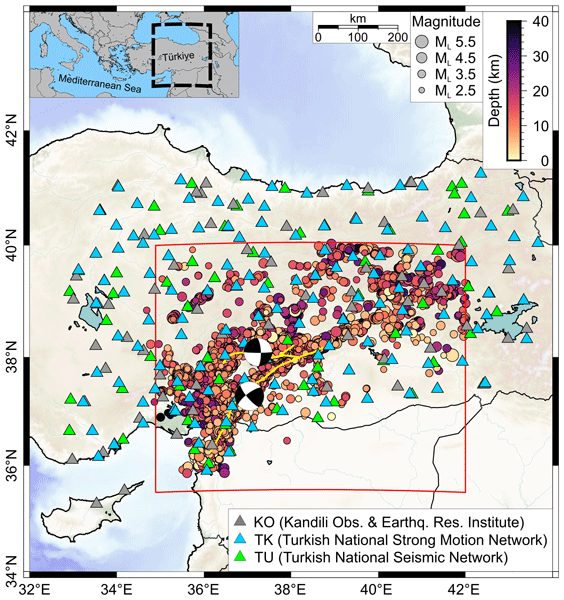
This work describes a dataset of 5 years of earthquakes with magnitude range of 2.0–5.5 from January 2019 along the East Anatolian Fault, Türkiye. All events were located using the non-linear location algorithm, providing reliable horizontal locations and depths. The distributed product includes Fourier amplitude spectra, peak ground acceleration and peak ground velocity; we strongly believe that the creation of high-quality open-source datasets is crucial for any seismological investigation.
Graeme Weatherill, Fabrice Cotton, Guillaume Daniel, Irmela Zentner, Pablo Iturrieta, and Christian Bosse
Nat. Hazards Earth Syst. Sci., 24, 3755–3787, https://doi.org/10.5194/nhess-24-3755-2024, https://doi.org/10.5194/nhess-24-3755-2024, 2024
Short summary
Short summary
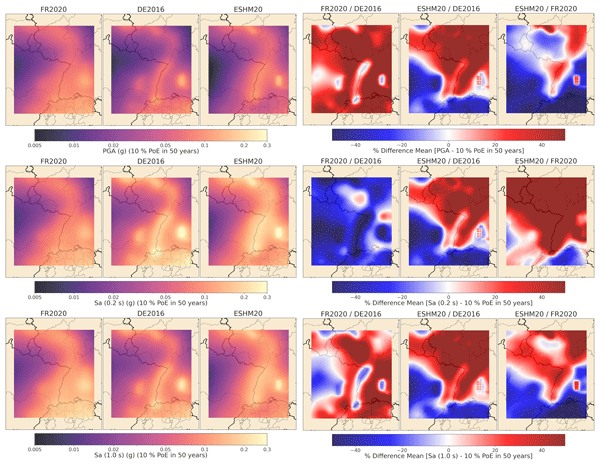
New generations of seismic hazard models are developed with sophisticated approaches to quantify uncertainties in our knowledge of earthquake processes. To understand why and how recent state-of-the-art seismic hazard models for France, Germany, and Europe differ despite similar underlying assumptions, we present a systematic approach to investigate model-to-model differences and to quantify and visualise them while accounting for their respective uncertainties.
Laurentiu Danciu, Domenico Giardini, Graeme Weatherill, Roberto Basili, Shyam Nandan, Andrea Rovida, Céline Beauval, Pierre-Yves Bard, Marco Pagani, Celso G. Reyes, Karin Sesetyan, Susana Vilanova, Fabrice Cotton, and Stefan Wiemer
Nat. Hazards Earth Syst. Sci., 24, 3049–3073, https://doi.org/10.5194/nhess-24-3049-2024, https://doi.org/10.5194/nhess-24-3049-2024, 2024
Short summary
Short summary
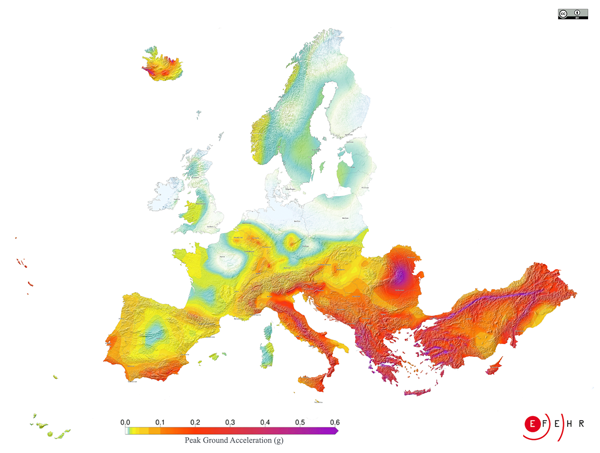
The 2020 European Seismic Hazard Model (ESHM20) is the latest seismic hazard assessment update for the Euro-Mediterranean region. This state-of-the-art model delivers a broad range of hazard results, including hazard curves, maps, and uniform hazard spectra. ESHM20 provides two hazard maps as informative references in the next update of the European Seismic Design Code (CEN EC8), and it also provides a key input to the first earthquake risk model for Europe.
Graeme Weatherill, Sreeram Reddy Kotha, Laurentiu Danciu, Susana Vilanova, and Fabrice Cotton
Nat. Hazards Earth Syst. Sci., 24, 1795–1834, https://doi.org/10.5194/nhess-24-1795-2024, https://doi.org/10.5194/nhess-24-1795-2024, 2024
Short summary
Short summary
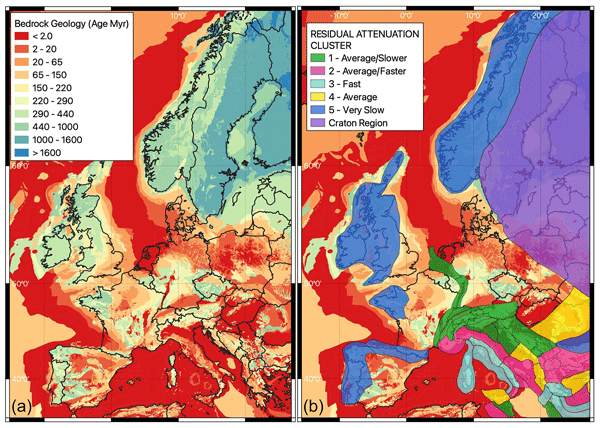
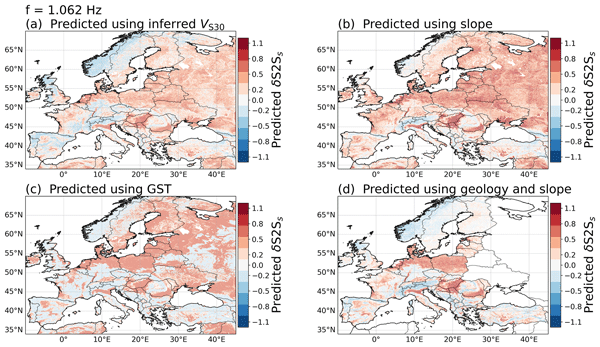
The ground motion models (GMMs) selected for the 2020 European Seismic Hazard Model (ESHM20) and their uncertainties require adaptation to different tectonic environments. Using insights from new data, local experts and developments in the scientific literature, we further calibrate the ESHM20 GMM logic tree to capture previously unmodelled regional variation. We also propose a new scaled-backbone logic tree for application to Europe's subduction zones and the Vrancea deep seismic source.
Karina Loviknes, Fabrice Cotton, and Graeme Weatherill
Nat. Hazards Earth Syst. Sci., 24, 1223–1247, https://doi.org/10.5194/nhess-24-1223-2024, https://doi.org/10.5194/nhess-24-1223-2024, 2024
Short summary
Short summary
Earthquake ground shaking can be strongly affected by local geology and is often amplified by soft sediments. In this study, we introduce a global geomorphological model for sediment thickness as a protentional parameter for predicting this site amplification. The results show that including geology and geomorphology in site-amplification predictions adds important value and that global or regional models for sediment thickness from fields beyond engineering seismology are worth considering.
Dino Bindi, Riccardo Zaccarelli, Angelo Strollo, Domenico Di Giacomo, Andres Heinloo, Peter Evans, Fabrice Cotton, and Frederik Tilmann
Earth Syst. Sci. Data, 16, 1733–1745, https://doi.org/10.5194/essd-16-1733-2024, https://doi.org/10.5194/essd-16-1733-2024, 2024
Short summary
Short summary
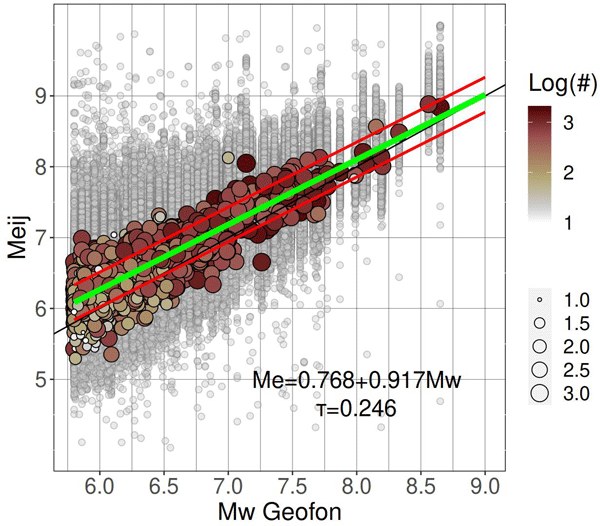
The size of an earthquake is often described by a single number called the magnitude. Among the possible magnitude scales, the seismic moment (Mw) and the radiated energy (Me) scales are based on physical parameters describing the rupture process. Since these two magnitude scales provide complementary information that can be used for seismic hazard assessment and for seismic risk mitigation, we complement the Mw catalog disseminated by the GEOFON Data Centre with Me values.
Irina Dallo, Michèle Marti, Nadja Valenzuela, Helen Crowley, Jamal Dabbeek, Laurentiu Danciu, Simone Zaugg, Fabrice Cotton, Domenico Giardini, Rui Pinho, John F. Schneider, Céline Beauval, António A. Correia, Olga-Joan Ktenidou, Päivi Mäntyniemi, Marco Pagani, Vitor Silva, Graeme Weatherill, and Stefan Wiemer
Nat. Hazards Earth Syst. Sci., 24, 291–307, https://doi.org/10.5194/nhess-24-291-2024, https://doi.org/10.5194/nhess-24-291-2024, 2024
Short summary
Short summary
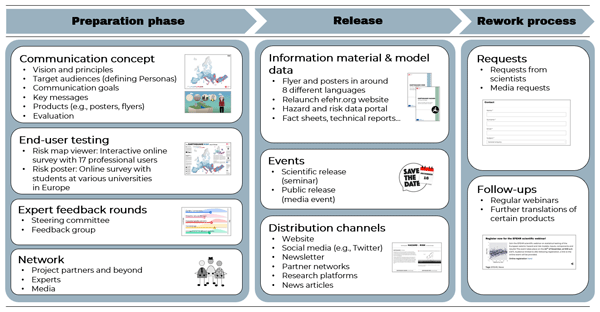
For the release of cross-country harmonised hazard and risk models, a communication strategy co-defined by the model developers and communication experts is needed. The strategy should consist of a communication concept, user testing, expert feedback mechanisms, and the establishment of a network with outreach specialists. Here we present our approach for the release of the European Seismic Hazard Model and European Seismic Risk Model and provide practical recommendations for similar efforts.
Max Schneider, Fabrice Cotton, and Pia-Johanna Schweizer
Nat. Hazards Earth Syst. Sci., 23, 2505–2521, https://doi.org/10.5194/nhess-23-2505-2023, https://doi.org/10.5194/nhess-23-2505-2023, 2023
Short summary
Short summary
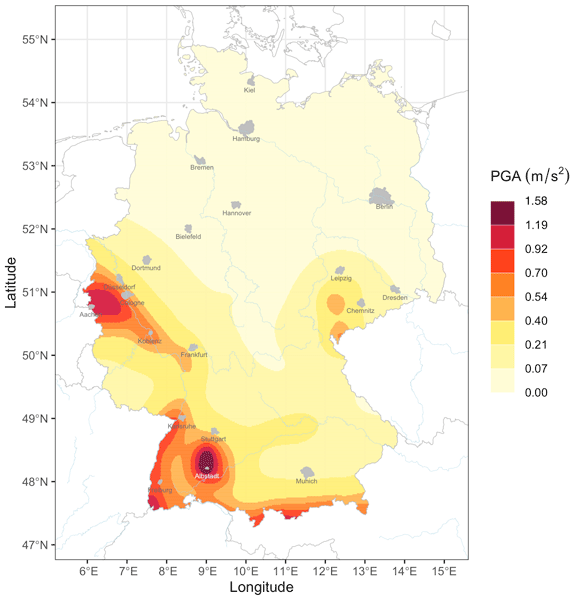
Hazard maps are fundamental to earthquake risk reduction, but research is missing on how to design them. We review the visualization literature to identify evidence-based criteria for color and classification schemes for hazard maps. We implement these for the German seismic hazard map, focusing on communicating four properties of seismic hazard. Our evaluation finds that the redesigned map successfully communicates seismic hazard in Germany, improving on the baseline map for two key properties.
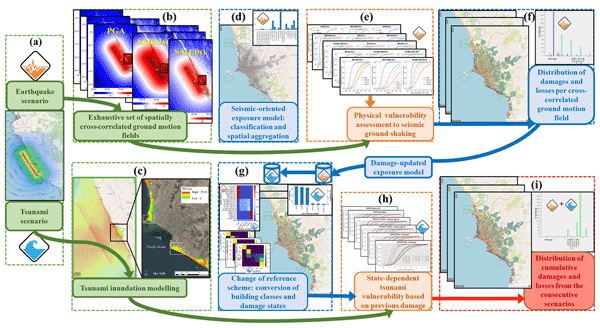
Juan Camilo Gómez Zapata, Massimiliano Pittore, Nils Brinckmann, Juan Lizarazo-Marriaga, Sergio Medina, Nicola Tarque, and Fabrice Cotton
Nat. Hazards Earth Syst. Sci., 23, 2203–2228, https://doi.org/10.5194/nhess-23-2203-2023, https://doi.org/10.5194/nhess-23-2203-2023, 2023
Short summary
Short summary
To investigate cumulative damage on extended building portfolios, we propose an alternative and modular method to probabilistically integrate sets of single-hazard vulnerability models that are being constantly developed by experts from various research fields to be used within a multi-risk context. We demonstrate its application by assessing the economic losses expected for the residential building stock of Lima, Peru, a megacity commonly exposed to consecutive earthquake and tsunami scenarios.
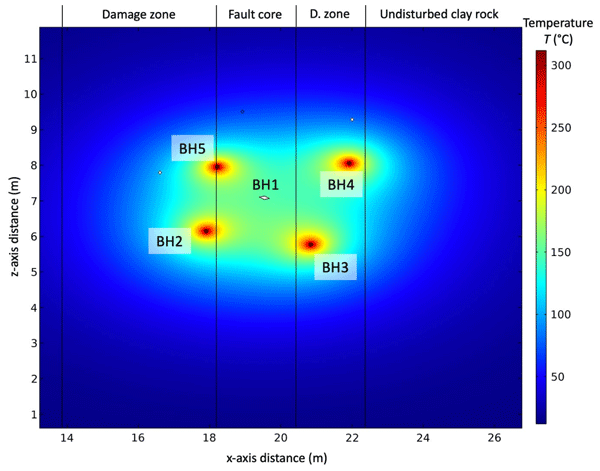
Audrey Bonnelye, Pierre Dick, Marco Bohnhoff, Fabrice Cotton, Rüdiger Giese, Jan Henninges, Damien Jougnot, Grzegorz Kwiatek, and Stefan Lüth
Adv. Geosci., 58, 177–188, https://doi.org/10.5194/adgeo-58-177-2023, https://doi.org/10.5194/adgeo-58-177-2023, 2023
Short summary
Short summary
The overall objective of the CHENILLE project is to performed an in-situ experiment in the Underground Reaserch Laboratory of Tournemire (Southern France) consisting of hydraulic and thermal stimulation of a fault zone. This experiment is monitored with extensive geophysical means (passive seismic, active seismic, distributed fiber optics for temperature measurements) in order to unravel the physical processes taking place during the stimulation for a better charactization of fault zones.
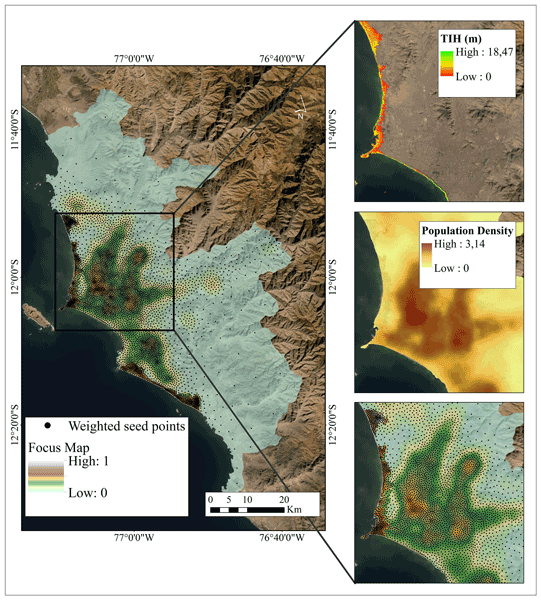
Juan Camilo Gomez-Zapata, Nils Brinckmann, Sven Harig, Raquel Zafrir, Massimiliano Pittore, Fabrice Cotton, and Andrey Babeyko
Nat. Hazards Earth Syst. Sci., 21, 3599–3628, https://doi.org/10.5194/nhess-21-3599-2021, https://doi.org/10.5194/nhess-21-3599-2021, 2021
Short summary
Short summary
We present variable-resolution boundaries based on central Voronoi tessellations (CVTs) to spatially aggregate building exposure models and physical vulnerability assessment. Their geo-cell sizes are inversely proportional to underlying distributions that account for the combination between hazard intensities and exposure proxies. We explore their efficiency and associated uncertainties in risk–loss estimations and mapping from decoupled scenario-based earthquakes and tsunamis in Lima, Peru.
Cited articles
Amante, C. and Eakins, B. W.: ETOPO1 1 Arc-Minute Global Relief Model: Procedures, Data Sources and Analysis, NOAA Technical Memorandum NESDIS NGDC-24, National Geophysical Data Center, NOAA, https://repository.library.noaa.gov/view/noaa/1163 (last access: 17 July 2025), 2009. a
Ancheta, T. D., Darragh, R. B., Stewart, J. P., Seyhan, E., Silva, W. J., Chiou, B. S.-J., Wooddell, K. E., Graves, R. W., Kottke, A. R., Boore, D. M., Kishida, T., and Donahue, J. L.: NGA-West2 Database, Earthq. Spectra, 30, 989–1005, https://doi.org/10.1193/070913EQS197M, 2014. a
Bai, Y., Yuan, X., He, Y., Hou, G., Thant, M., Sein, K., and Ai, Y.: Mantle Transition Zone Structure Beneath Myanmar and Its Geodynamic Implications, Geochem. Geophy. Geosy., 21, https://doi.org/10.1029/2020gc009262, 2020. a
Beyreuther, M., Barsch, R., Krischer, L., Megies, T., Behr, Y., and Wassermann, J.: ObsPy: A Python Toolbox for Seismology, Seismol. Res. Lett., 81, 530–533, https://doi.org/10.1785/gssrl.81.3.530, 2010. a
Bindi, D., Lai, S.-T., Strollo, A., Zaccarelli, R., Tilmann, F., and Saul, J.: Software and data products for “Capacity Building Enables Unique Near-Fault Observations of the destructive 2025 Mw 7.7 Myanmar Earthquake”, Zenodo [code], https://doi.org/10.5281/zenodo.15921214, 2025. a, b
Boore, D. M.: Orientation-Independent, Nongeometric-Mean Measures of Seismic Intensity from Two Horizontal Components of Motion, B. Seismol. Soc. Am., 100, 1830–1835, https://doi.org/10.1785/0120090400, 2010. a
Boore, D. M., Stewart, J. P., Seyhan, E., and Atkinson, G. M.: NGA-West2 Equations for Predicting PGA, PGV, and 5 % Damped PSA for Shallow Crustal Earthquakes, Earthq. Spectra, 30, 1057–1085, https://doi.org/10.1193/070113EQS184M, 2014. a, b, c, d
Bozorgnia, Y. and Campbell, K. W.: Ground Motion Model for the Vertical-to-Horizontal (V
Campbell, K. W. and Bozorgnia, Y.: NGA-West2 Ground Motion Model for the Average Horizontal Components of PGA, PGV, and 5 % Damped Linear Acceleration Response Spectra, Earthq. Spectra, 30, 1087–1115, https://doi.org/10.1193/062913EQS175M, 2014. a
Chioccarelli, E. and Iervolino, I.: Near-source seismic demand and pulse-like records: A discussion for L'Aquila earthquake, Earthq. Eng. Struct. D., 39, 1039–1062, https://doi.org/10.1002/eqe.987, 2010. a
Chiou, B. S.-J. and Youngs, R. R.: Update of the Chiou and Youngs NGA Model for the Average Horizontal Component of Peak Ground Motion and Response Spectra, Earthq. Spectra, 30, 1117–1153, https://doi.org/10.1193/072813EQS219M, 2014. a
Department of Meteorology and Hydrology – National Earthquake Data Center: Myanmar National Seismic Network, International Federation of Digital Seismograph Networks [data set], https://doi.org/10.7914/SN/MM, 2016. a, b, c, d
Disaster and Emergency Management Authority: Turkish National Strong Motion Network, Department of Earthquake, Disaster and Emergency Management Authority [data set], https://doi.org/10.7914/SN/TK, 1973. a
GEOFON Data Centre: GEOFON Seismic Network, GEOFON Data Centre [data set], https://doi.org/10.14470/TR560404, 1993. a, b, c
Helmholtz Centre Potsdam GFZ German Research Centre for Geosciences and GEMPA GmbH: The SeisComP seismological software package, GFZ Data Services [code], https://doi.org/10.5880/GFZ.2.4.2020.003, 2008. a
Hisada, Y. and Tanaka, S.: What Is Fling Step? Its Theory, Simulation Method, and Applications to Strong Ground Motion near Surface Fault Ruptures, B. Seismol. Soc. Am., 111, 2486–2506, https://doi.org/10.1785/0120210046, 2021. a
Hurukawa, N. and Maung Maung, P.: Two seismic gaps on the Sagaing Fault, Myanmar, derived from relocation of historical earthquakes since 1918, Geophys. Res. Lett., 38, https://doi.org/10.1029/2010gl046099, 2011. a
Incorporated Research Institutions for Seismology (2012): Standard for the Exchange of Earthquake Data (SEED) Reference Manual, version 2.4, https://www.fdsn.org/publications/ (last access: 17 July 2025), 2012.
International Seismological Centre: International Seismograph Station Registry (IR), https://doi.org/10.31905/EL3FQQ40, 2025. a
Kamai, R., Abrahamson, N., and Graves, R.: Adding Fling Effects to Processed Ground-Motion Time Histories, B. Seismol. Soc. Am., 104, 1914–1929, https://doi.org/10.1785/0120130272, 2014. a
Kandilli Observatory and Earthquake Research Institute, Boğaziçi University: Kandilli Observatory And Earthquake Research Institute (KOERI), Kandilli Observatory and Earthquake Research Institute [data set], https://doi.org/10.7914/SN/KO, 1971. a
Kennet, B. L. N., Engdahl, E., and Buland, R.: Constraints on seismic velocities in the Earth from travel times, Geophys. J. Int., 122, https://doi.org/10.1111/j.1365-246X.1995.tb03540.x, 1995. a
Lai, S.-T., Schibuola, A., and Bonilla, L. F.: Unveiling nonlinear site response through time-frequency analysis of earthquake records, Geophys. J. Int., ggaf098, https://doi.org/10.1093/gji/ggaf098, 2025. a, b, c
Lanzano, G., Luzi, L., Cauzzi, C., Bienkowski, J., Bindi, D., Clinton, J., Cocco, M., D'Amico, M., Douglas, J., Faenza, L., Felicetta, C., Gallovic, F., Giardini, D., Ktenidou, O., Lauciani, V., Manakou, M., Marmureanu, A., Maufroy, E., Michelini, A., Özener, H., Puglia, R., Rupakhety, R., Russo, E., Shahvar, M., Sleeman, R., and Theodoulidis, N.: Accessing European Strong-Motion Data: An Update on ORFEUS Coordinated Services, Seismol. Res. Lett., 92, 1642–1658, https://doi.org/10.1785/0220200398, 2021. a
Milkereit, C., Dahm, T., Cesca, S., Cotton, F., Bindi, D., Strollo, A., Tilmann, F., and Participants, T. C.: International Training Courses on “Seismology, Seismic Hazard Assessment and Risk Mitigation”, XXVIII General Assembly of the International Union of Geodesy and Geophysics (IUGG) (Berlin), https://doi.org/10.57757/IUGG23-2629, 2023. a
Mon, C. T., Gong, X., Wen, Y., Jiang, M., Chen, Q.-F., Zhang, M., Hou, G., Thant, M., Sein, K., and He, Y.: Insight Into Major Active Faults in Central Myanmar and the Related Geodynamic Sources, Geophys. Res. Lett., 47, e2019GL086236, https://doi.org/10.1029/2019GL086236, 2020. a
Peterson, J.: Observations and modeling of seismic background noise, US Geol. Surv. Open-File Rept. 93-322, US Gelogical Survery, https://pubs.usgs.gov/publication/ofr93322 (last access: 17 July 2025), 1993. a
Puglia, R., Russo, E., Luzi, L., D'Amico, M., Felicetta, C., Pacor, F., and Lanzano, G.: Strong-motion processing service: a tool to access and analyse earthquakes strong-motion waveforms, B. Earthq. Eng., 16, https://doi.org/10.1007/s10518-017-0299-z, 2018. a
Quinteros, J., Strollo, A., Evans, P. L., Hanka, W., Heinloo, A., Hemmleb, S., Hillmann, L., Jaeckel, K., Kind, R., Saul, J., Zieke, T., and Tilmann, F.: The GEOFON Program in 2020, Seismol. Res. Lett., 92, 1610–1622, https://doi.org/10.1785/0220200415, 2021. a, b
R Core Team: R: A Language and Environment for Statistical Computing, R Foundation for Statistical Computing, Vienna, Austria, https://www.R-project.org/ (last access: 17 July 2025), 2024. a
Sandvol, E., Gaherty, J., Steckler, M., and Persaud, P.: Tripartite-BIMA (Bangladesh-India-Myanmar Array), https://doi.org/10.7914/SN/XR_2018, 2018. a, b
Sens-Schönfelder, C.: Synchronizing seismic networks with ambient noise, Geophys. J. Int., 174, 966–970, https://doi.org/10.1111/j.1365-246X.2008.03842.x, 2008. a
Sens-Schönfelder, C., Pomponi, E., and Peltier, A.: Dynamics of Piton de la Fournaise Volcano Observed by Passive Image Interferometry with Multiple References, J. Volcanol. Geoth. Res., 276, 32–45, https://doi.org/10.1016/j.jvolgeores.2014.02.012, 2014. a
Shahi, S. K. and Baker, J. W.: An Efficient Algorithm to Identify Strong-Velocity Pulses in Multicomponent Ground Motions, B. Seismol. Soc. Am., 104, 2456–2466, https://doi.org/10.1785/0120130191, 2014. a, b, c, d
Socquet, A., Vigny, C., Chamot-Rooke, N., Simons, W., Rangin, C., and Ambrosius, B.: India and Sunda plates motion and deformation along their boundary in Myanmar determined by GPS, J. Geophys. Res.-Sol. Ea., 111, https://doi.org/10.1029/2005jb003877, 2006. a
Somerville, P. G.: Magnitude scaling of the near fault rupture directivity pulse, Phys. Earth Planet. In., 137, 201–212, https://doi.org/10.1016/S0031-9201(03)00015-3, 2003. a
Stockwell, R., Mansinha, L., and Lowe, R.: Localization of the complex spectrum: the S transform, IEEE T. Signal Proces., 44, 998–1001, https://doi.org/10.1109/78.492555, 1996. a
Strollo, A., Cambaz, D., Clinton, J., Danecek, P., Evangelidis, C. P., Marmureanu, A., Ottemöller, L., Pedersen, H., Sleeman, R., Stammler, K., Armbruster, D., Bienkowski, J., Boukouras, K., Evans, P. L., Fares, M., Neagoe, C., Heimers, S., Heinloo, A., Hoffmann, M., Kaestli, P., Lauciani, V., Michalek, J., Odon Muhire, E., Ozer, M., Palangeanu, L., Pardo, C., Quinteros, J., Quintiliani, M., Antonio Jara-Salvador, J., Schaeffer, J., Schloemer, A., and Triantafyllis, N.: EIDA: The European Integrated Data Archive and Service Infrastructure within ORFEUS, Seismol. Res. Lett., 92, 1788–1795, https://doi.org/10.1785/0220200413, 2021. a
Strozzi, T., Luckman, A., Murray, T. U., and Werner, C. L.: Glacier motion estimation using SAR offset-tracking procedures, IEEE T. Geosci. Remote, 40, 2384–2391, https://doi.org/10.1109/TGRS.2002.805079, 2002. a
Styron, R. and Pagani, M.: The GEM Global Active Faults Database, Earthq. Spectra, 36, 160–180, https://doi.org/10.1177/8755293020944182, 2020. a
Thiam, H. N., Htwe, Y. M. M., Kyaw, T. L., Tun, P. P., Min, Z., Htwe, S. H., Aung, T. M., Lin, K. K., Aung, M. M., Cristofaro, J. D., Franke, M., Radman, S., Lepiten, E., Wolin, E., and Hough, S. E.: A Report on Upgraded Seismic Monitoring Stations in Myanmar: Station Performance and Site Response, Seismol. Res. Lett., 88, 926–934, https://doi.org/10.1785/0220160168, 2017. a, b
Tilmann, F., Schurr, B., Yuan, X., and Than, O.: Myanmar subduction to collision imaging array (MySCOLAR), GFZ Data Services, Dataset/Seismic Network, https://doi.org/10.14470/1P7564636194, 2021. a, b
Türker, E., Yen, M., Pilz, M., and Cotton, F.: Significance of Pulse-Like Ground Motions and Directivity Effects in Moderate Earthquakes: The Example of the Mw 6.1 Gölyaka-Düzce Earthquake on 23 November 2022, B. Seismol. Soc. Am., https://doi.org/10.1785/0120230043, 2023. a, b
US Geological Survey: Finite Fault, version 2025-04-02 14:19:57 (UTC), https://earthquake.usgs.gov/earthquakes/eventpage/us7000pn9s/finite-fault (last access: 17 July 2025), 2025a. a
US Geological Survey: PAGER, version 2025-04-16 05:22:25 (UTC), https://earthquake.usgs.gov/earthquakes/eventpage/us7000pn9s/pager (last access: 17 July 2025), 2025b. a
US Geological Survey: ShakeMap, version 2025-06-06 13:36:23 (UTC), https://earthquake.usgs.gov/earthquakes/eventpage/us7000pn9s/shakemap/intensity (last access: 17 July 2025), 2025c. a
Van Rossum, G. and Drake, F. L.: Python 3 Reference Manual, CreateSpace, Scotts Valley, CA, ISBN 978-1-4414-1269-0, 2009. a
Vera, F., Carrillo-Ponce, A., Crosetto, S., Kosari, E., Metzger, S., Motagh, M., Liang, Y., Lyu, S., Petersen, G., Saul, J., Sudhaus, H., Symmes-Lopetegui, B., Than, O., Xiao, H., and Tilmann, F.: Supershear Rupture Along the Sagaing Fault Seismic Gap: The 2025 Myanmar Earthquake, The Seismic Record, 5, 289–299, https://doi.org/10.1785/0320250025, 2025. a, b
Wald, D. and Allen, T.: Topographic slope as a proxy for seismic site conditions and amplification, B. Seismol. Soc. Am., 97, 1379–1395, 2007. a
Wang, X., Wei, S., Wang, Y., Maung Maung, P., Hubbard, J., Banerjee, P., Huang, B.-S., Moe Oo, K., Bodin, T., Foster, A., and Almeida, R.: A 3-D Shear Wave Velocity Model for Myanmar Region, J. Geophys. Res.-Sol. Ea., 124, 504–526, https://doi.org/10.1029/2018jb016622, 2019. a
Wessel, P., Luis, J. F., Uieda, L., Scharroo, R., Wobbe, F., Smith, W. H. F., and Tian, D.: The Generic Mapping Tools Version 6, Geochem. Geophy. Geosy., 20, 5556–5564, https://doi.org/10.1029/2019GC008515, 2019. a
Wu, S., Yao, J., Wei, S., Hubbard, J., Wang, Y., Min Htwe, Y. M., Thant, M., Wang, X., Wang, K., Liu, T., Liu, Q., and Tong, P.: New insights into the structural heterogeneity and geodynamics of the Indo-Burma subduction zone from ambient noise tomography, Earth Planet. Sc. Lett., 562, 116856, https://doi.org/10.1016/j.epsl.2021.116856, 2021. a
Yang, H.-B., Chang, Y.-K., Liu, W., Sung, G.-Y., Gao, J.-C., Thant, M., Maung Maung, P., and Chan, C.-H.: Probabilistic seismic hazard assessments for Myanmar and its metropolitan areas, Geoscience Letters, 10, 48, https://doi.org/10.1186/s40562-023-00301-x, 2023. a
Yen, M.-H., Specht, S., Lin, Y.-Y., Cotton, F., and Ma, K.-F.: Within- and Between-Event Variabilities of Strong-Velocity Pulses of Moderate Earthquakes within Dense Seismic Arrays, B. Seismol. Soc. Am., 112, https://doi.org/10.1785/0120200376, 2021. a, b
Yen, M.-H., Türker, E., Ulrich, T., Marchandon, M., Gabriel, A.-A., and Cotton, F.: An analysis of directivity pulses using empirical data and dynamic rupture simulations of the 2023 Kahramanmaras earthquake doublet, Earthq. Spectra, 41, 1669–1688, https://doi.org/10.1177/87552930241305012, 2025. a, b, c, d, e
Zaccarelli, R.: Stream2segment: a tool to download, process and visualize event-based seismic waveform data (Version 2.7.3), GFZ Data Services [code], https://doi.org/10.5880/GFZ.2.4.2019.002, 2018. a
Zaccarelli, R. and Weatherill, G.: eGSIM – a Python library and web application to select and test Ground Motion models, GFZ Data Services [code], https://doi.org/10.5880/GFZ.2.6.2023.007, 2020. a
Zaccarelli, R., Bindi, D., Strollo, A., Quinteros, J., and Cotton, F.: Stream2segment: An Open-Source Tool for Downloading, Processing, and Visualizing Massive Event-Based Seismic Waveform Datasets, Seismol. Res. Lett., 90, 2028–2038, https://doi.org/10.1785/0220180314, 2019. a
Short summary
On 28 March 2025, Myanmar was struck by a destructive Mw 7.7 earthquake. We present detailed information on the data and metadata availability for the Naypyitaw station (NPW) in Myanmar, the only local strong-motion station located near the Sagaing Fault that recorded the mainshock without saturation. We also highlight the collaborative effort that made the installation of NPW possible. The high-quality recordings from NPW offer critical insights for seismic hazard assessment in the region.
On 28 March 2025, Myanmar was struck by a destructive Mw 7.7 earthquake. We present detailed...


Altmetrics
Final-revised paper
Preprint