Articles | Volume 18, issue 11
https://doi.org/10.5194/essd-18-8949-2026
© Author(s) 2026. This work is distributed under
the Creative Commons Attribution 4.0 License.
https://doi.org/10.5194/essd-18-8949-2026
© Author(s) 2026. This work is distributed under
the Creative Commons Attribution 4.0 License.
Data description article
| Highlight paper
| 
26 Nov 2026
Data description article | Highlight paper |
| 26 Nov 2026
A comprehensive global ocean radiocarbon dataset (1700–2024) for climate applications

Department of Physics, Imperial College London, London, UK
Branwen Williams
Claremont McKenna College, Claremont, CA, USA
Rena Mukherjee
Claremont McKenna College, Claremont, CA, USA
Roberta L. Hansman
Woods Hole Oceanographic Institution, Woods Hole, MA, USA
Rolf Sonnerup
Cooperative Institute for Climate, Ocean and Ecosystem Studies, University of Washington, Seattle, WA, USA
Nikita Tournebise
Interdepartmental Graduate Program in Marine Science, University of California, Santa Barbara, CA, USA
Tim DeVries
Earth Research Institute, University of California, Santa Barbara, CA, USA
Heather Graven
Department of Physics, Imperial College London, London, UK
Related authors
No articles found.
Pierre Friedlingstein, Michael O'Sullivan, Robbie M. Andrew, Judith Hauck, Matthew W. Jones, Peter Landschützer, Corinne Le Quéré, Hongmei Li, Ingrid T. Luijkx, Are Olsen, Glen P. Peters, Wouter Peters, Julia Pongratz, Clemens Schwingshackl, Stephen Sitch, Josep G. Canadell, Philippe Ciais, Kjetil Aas, Simone R. Alin, Vivek Arora, Nicholas R. Bates, Kimberly Bedard, David Martin Belda, Nicolas Bellouin, Alice Benoit-Cattin, Carla F. Berghoff, Sarah Berthet, Laurent Bopp, Ida Bagus Mandhara Brasika, Eleanor Burke, Leon Casse, Matthew A. Chamberlain, Frédéric Chevallier, Louise P. Chini, Margot Cronin, Susan E. Curless, Tim DeVries, Tobias Ehmen, Matthew P. Enright, Kazutaka Enyo, Michael Erb, Wiley Evans, Amanda R. Fay, Ben Felzer, Daniel J. Ford, Adrianna Foster, Filippa Fransner, Agneta Fransson, Andrew Friedman, Thomas Gasser, Marion Gehlen, Thanos Gkritzalis, Giacomo Grassi, Luke Gregor, Nicolas Gruber, Özgür Gürses, Wensu Hao, Kirsty Harrington, Jens Heinke, George C. Hurtt, Tatiana Ilyina, Akihiko Ito, Andrew R. Jacobson, Atul K. Jain, Rajesh Janardanan, Tereza Jarníková, Annika Jersild, Fei Jiang, Zhe Jin, Linus Kamb, Etsushi Kato, Ralph F. Keeling, Kees Klein Goldewijk, Jürgen Knauer, Jan Ivar Korsbakken, Taro Kunimitsu, Xin Lan, Vladimir Lapin, Siv K. Lauvset, Simone Le Chevère, Woo-Sung Lee, Enhui Liao, Junjie Liu, Zhu Liu, Sebastiaan Luyssaert, Lei Ma, Suman Maity, Gregg Marland, Patrick C. McGuire, Nicolas Metzl, Juliette Mignot, Natalie M. Monacci, Eric J. Morgan, Jens D. Müller, David R. Munro, Miaki Muramatsu, Shin-Ichiro Nakaoka, Craig Neill, Tobias Nützel, Léa Olivier, Timothy Osborn, Xosé A. Padín, Paul I. Palmer, Sudhanshu Pandey, Denis Pierrot, Ben Poulter, Zhangcai Qin, Yumou Qiu, Gregor Rehder, Laure Resplandy, Christian Rödenbeck, Alizée Roobaert, Thais M. Rosan, Simone Rossi, Jörg Schwinger, Gereon Seeberg, Roland Séférian, Elisabeth H. Shadwick, Ingunn Skjelvan, Karolina Slominska-Durdasiak, T. Luke Smallman, Mohanan G Sreeush, Qing Sun, Adrienne J. Sutton, Colm Sweeney, Shintaro Takao, Hiroaki Tatebe, Jens Terhaar, Hanqin Tian, Bronte Tilbrook, Takahiro Toyoda, Joaquin A. Triñanes, Francesco Tubiello, Guido R. van der Werf, Auke van der Woude, Sebastiaan J. van de Velde, Anthony P. Walker, Rik Wanninkhof, Xiaojuan Yang, Wenping Yuan, Xu Yue, Jiye Zeng, Ning Zheng, and Bo Zheng
Earth Syst. Sci. Data Discuss., https://doi.org/10.5194/essd-2026-895, https://doi.org/10.5194/essd-2026-895, 2026
Preprint under review for ESSD
Short summary
Short summary
The Global Carbon Budget 2026 describes the methodology, main results, and datasets used to quantify the anthropogenic emissions of carbon dioxide (CO2) and their partitioning among the atmosphere, land ecosystems, and the ocean over the historical period (1750–2026). These living datasets are updated every year to provide the highest transparency and traceability in the reporting of CO2, the key driver of climate change.
Dylan Geissbühler, Thomas Laemmel, Stephan Henne, Dominik Brunner, Negar Haghipour, Philip Gautschi, Markus Leuenberger, Christophe Espic, Matthias Bantle, Heather Graven, Lukas Wacker, and Sönke Szidat
EGUsphere, https://doi.org/10.5194/egusphere-2026-5725, https://doi.org/10.5194/egusphere-2026-5725, 2026
This preprint is open for discussion and under review for Atmospheric Chemistry and Physics (ACP).
Short summary
Short summary
Combining five years of radiocarbon measurements at six Swiss sites with atmospheric transport modelling, we assess fossil carbon dioxide and methane source attribution to verify emission inventories. Radiocarbon-derived fossil carbon dioxide agrees well with reported inventories. For methane, however, sporadic radiocarbon releases from nearby nuclear reactors overwhelm the fossil signal, which current inventories cannot resolve, undermining source apportionment.
Vivek K. Arora, Chris D. Jones, Pierre Friedlingstein, Tatiana Ilyina, Guilherme L. Torres Mendonça, Benjamin Sanderson, Charles Koven, Heather Graven, Michio Kawamiya, Victor Brovkin, John Dunne, Forrest M. Hoffman, Julia Pongratz, James T. Randerson, Anastasia Romanou, Sönke Zaehle, and Kirsten Zickfeld
EGUsphere, https://doi.org/10.5194/egusphere-2026-5533, https://doi.org/10.5194/egusphere-2026-5533, 2026
This preprint is open for discussion and under review for Geoscientific Model Development (GMD).
Short summary
Short summary
Earth system models (ESM) are important tools for understanding how the Earth’s climate and carbon cycle interact, and how Earth system responds to anthropogenic CO2 emissions. The Coupled Climate-Carbon Cycle Model Intercomparison Project (C4MIP) compares Earth system models from around the world in context of climate and carbon cycle interactions. This manuscript describes the new set of experiments for C4MIP for the seventh phase of the coupled modelling intercomparison project (CMIP7).
Thomas Laemmel, Dylan Geissbühler, Stephan Henne, Ryo Fujita, Heather Graven, Christophe Espic, Matthias Bantle, Negar Haghipour, Franz Conen, Dominik Brunner, Martin Steinbacher, Giulia Zazzeri, Samuel Hammer, Markus Leuenberger, and Sönke Szidat
Atmos. Chem. Phys., 26, 12019–12036, https://doi.org/10.5194/acp-26-12019-2026, https://doi.org/10.5194/acp-26-12019-2026, 2026
Short summary
Short summary
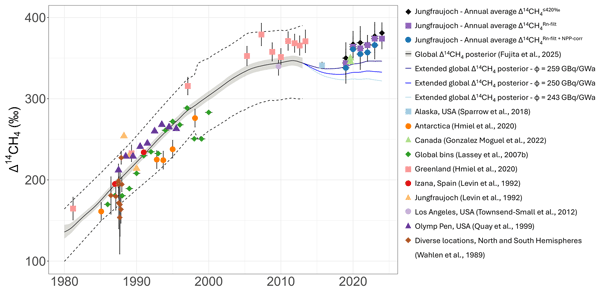
Carbon dioxide and methane are the two main anthropogenic greenhouse gases responsible for current climate change. Beside the measurement of their atmospheric concentration, the analysis of the abundance of their isotope carbon-14 (14C) gives hints about their origin, either biogenic or fossil. Here we present six years of atmospheric 14CH4 and 14CO2 measurements at a high-elevation alpine site in Switzerland (Jungfraujoch) and discuss the observed trends in both local and global views.
Joseph Ovwemuvwose, Ian Colin Prentice, and Heather Graven
Biogeosciences, 23, 5593–5605, https://doi.org/10.5194/bg-23-5593-2026, https://doi.org/10.5194/bg-23-5593-2026, 2026
Short summary
Short summary
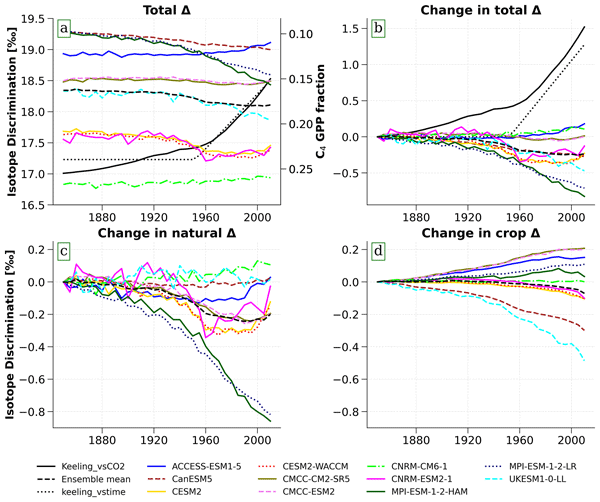
This work examines the roles of cropland representation and the treatment of photosynthetic pathways in the uncertainties of carbon flux simulations in Earth System Models (ESMs). Our results show that reducing these uncertainties will require improvements in the representation of C3 and C4 crops and natural vegetation area coverage, as well as the theories underpinning the simulation of their carbon uptake processes, specifically the implementation of photosynthetic pathways.
Li-Qing Jiang, Amanda Fay, Jens Daniel Müller, Luke Gregor, Alizée Roobaert, Lydia Keppler, Dustin Carroll, Siv K. Lauvset, Tim DeVries, Judith Hauck, Christian Rödenbeck, Nicolas Metzl, Andrea J. Fassbender, Jean-Pierre Gattuso, Peter Landschützer, Rik Wanninkhof, Christopher Sabine, Simone R. Alin, Mario Hoppema, Are Olsen, Matthew P. Humphreys, Kunal Chakraborty, Ana C. Franco, Kumiko Azetsu-Scott, Dorothee C. E. Bakker, Leticia Barbero, Nicholas R. Bates, Nicole Besemer, Henry C. Bittig, Albert E. Boyd, Daniel Broullón, Wei-Jun Cai, Brendan R. Carter, Thi-Tuyet-Trang Chau, Chen-Tung Arthur Chen, Frédéric Cyr, John E. Dore, Ian Enochs, Richard A. Feely, Hernan E. Garcia, Marion Gehlen, Prasanna Kanti Ghoshal, Lucas Gloege, Melchor González-Dávila, Nicolas Gruber, Debby Ianson, Yosuke Iida, Masao Ishii, Apurva Padamnabh Joshi, Esther Kennedy, Alex Kozyr, Nico Lange, Claire Lo Monaco, Derek P. Manzello, Galen A. McKinley, Natalie M. Monacci, Xose A. Padin, Ana M. Palacio-Castro, Fiz F. Pérez, J. Magdalena Santana-Casiano, Jonathan Sharp, Adrienne Sutton, Jim Swift, Toste Tanhua, Maciej Telszewski, Jens Terhaar, Ruben van Hooidonk, Anton Velo, Andrew J. Watson, Angelicque E. White, Zelun Wu, Liang Xue, Hyelim Yoo, Jiye Zeng, and Guorong Zhong
Earth Syst. Sci. Data, 18, 1405–1462, https://doi.org/10.5194/essd-18-1405-2026, https://doi.org/10.5194/essd-18-1405-2026, 2026
Short summary
Short summary
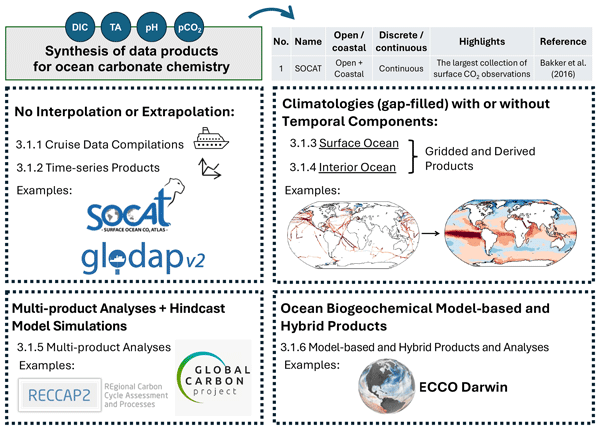
This review article provides an overview of 68 existing ocean carbonate chemistry data products and data product sets, encompassing a broad range of types, including compilations of cruise datasets, gap-filled observational products, model simulations, and more. It is designed to help researchers identify and access the data products that best support their scientific objectives, thereby facilitating progress in understanding the ocean's changing carbonate chemistry.
Brendan R. Carter, Jörg Schwinger, Rolf Sonnerup, Andrea J. Fassbender, Jonathan D. Sharp, Larissa M. Dias, and Daniel E. Sandborn
Earth Syst. Sci. Data, 17, 3073–3088, https://doi.org/10.5194/essd-17-3073-2025, https://doi.org/10.5194/essd-17-3073-2025, 2025
Short summary
Short summary
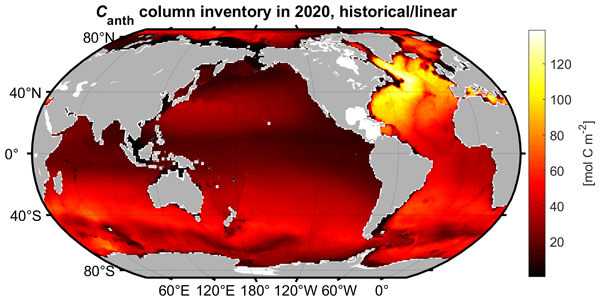
We infer ocean gas exchange and circulation from ocean tracer measurements and use this to create code to estimate the amount of carbon dioxide dissolved in the ocean that is there due to human emissions of CO2 into the atmosphere. The code works across the ocean depths for the past, present, or future from information about the location, temperature, and salinity of the seawater. We produce a data product with estimates throughout the ocean throughout the last ~300 and the next ~500 years.
Giulia Zazzeri, Lukas Wacker, Negar Haghipour, Philip Gautschi, Thomas Laemmel, Sönke Szidat, and Heather Graven
Atmos. Meas. Tech., 18, 319–325, https://doi.org/10.5194/amt-18-319-2025, https://doi.org/10.5194/amt-18-319-2025, 2025
Short summary
Short summary
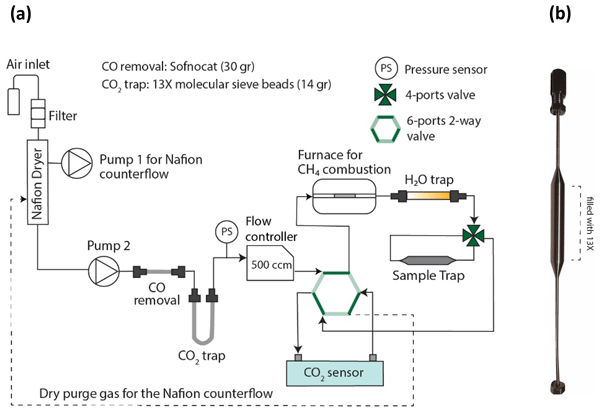
Radiocarbon (14C) is an optimal tracer of methane (CH4) emissions, as 14C measurements enable distinguishing between fossil methane and biogenic methane. However, these measurements are particularly challenging, mainly due to technical difficulties in the sampling procedure. We made the sample extraction much simpler and time efficient, providing a new technology that can be used by any research group, with the goal of expanding 14C measurements for an improved understanding of methane sources.
Alexander S. Brunmayr, Frank Hagedorn, Margaux Moreno Duborgel, Luisa I. Minich, and Heather D. Graven
Geosci. Model Dev., 17, 5961–5985, https://doi.org/10.5194/gmd-17-5961-2024, https://doi.org/10.5194/gmd-17-5961-2024, 2024
Short summary
Short summary
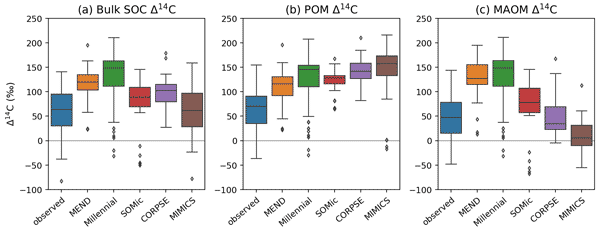
A new generation of soil models promises to more accurately predict the carbon cycle in soils under climate change. However, measurements of 14C (the radioactive carbon isotope) in soils reveal that the new soil models face similar problems to the traditional models: they underestimate the residence time of carbon in soils and may therefore overestimate the net uptake of CO2 by the land ecosystem. Proposed solutions include restructuring the models and calibrating model parameters with 14C data.
Hannah Chawner, Eric Saboya, Karina E. Adcock, Tim Arnold, Yuri Artioli, Caroline Dylag, Grant L. Forster, Anita Ganesan, Heather Graven, Gennadi Lessin, Peter Levy, Ingrid T. Luijkx, Alistair Manning, Penelope A. Pickers, Chris Rennick, Christian Rödenbeck, and Matthew Rigby
Atmos. Chem. Phys., 24, 4231–4252, https://doi.org/10.5194/acp-24-4231-2024, https://doi.org/10.5194/acp-24-4231-2024, 2024
Short summary
Short summary
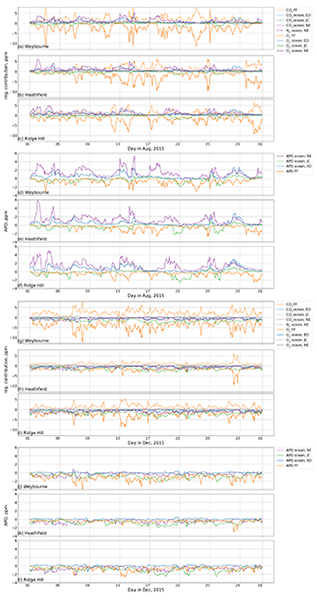
The quantity of atmospheric potential oxygen (APO), derived from coincident measurements of carbon dioxide (CO2) and oxygen (O2), has been proposed as a tracer for fossil fuel CO2 emissions. In this model sensitivity study, we examine the use of APO for this purpose in the UK and compare our model to observations. We find that our model simulations are most sensitive to uncertainties relating to ocean fluxes and boundary conditions.
Jérôme Pinti, Tim DeVries, Tommy Norin, Camila Serra-Pompei, Roland Proud, David A. Siegel, Thomas Kiørboe, Colleen M. Petrik, Ken H. Andersen, Andrew S. Brierley, and André W. Visser
Biogeosciences, 20, 997–1009, https://doi.org/10.5194/bg-20-997-2023, https://doi.org/10.5194/bg-20-997-2023, 2023
Short summary
Short summary
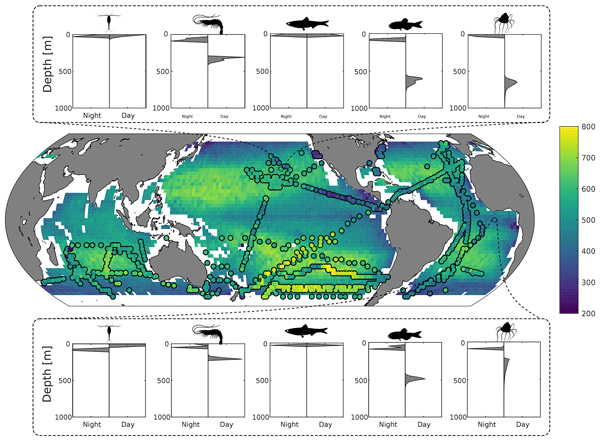
Large numbers of marine organisms such as zooplankton and fish perform daily vertical migration between the surface (at night) and the depths (in the daytime). This fascinating migration is important for the carbon cycle, as these organisms actively bring carbon to depths where it is stored away from the atmosphere for a long time. Here, we quantify the contributions of different animals to this carbon drawdown and storage and show that fish are important to the biological carbon pump.
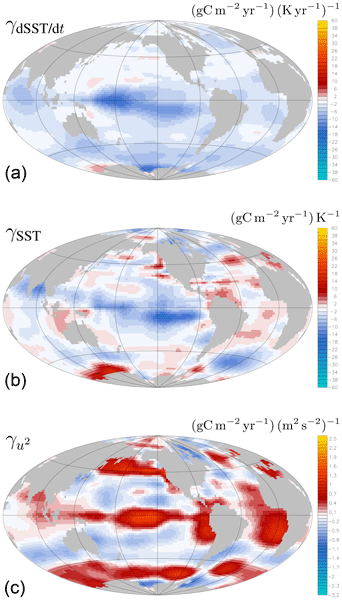
Christian Rödenbeck, Tim DeVries, Judith Hauck, Corinne Le Quéré, and Ralph F. Keeling
Biogeosciences, 19, 2627–2652, https://doi.org/10.5194/bg-19-2627-2022, https://doi.org/10.5194/bg-19-2627-2022, 2022
Short summary
Short summary
The ocean is an important part of the global carbon cycle, taking up about a quarter of the anthropogenic CO2 emitted by burning of fossil fuels and thus slowing down climate change. However, the CO2 uptake by the ocean is, in turn, affected by variability and trends in climate. Here we use carbon measurements in the surface ocean to quantify the response of the oceanic CO2 exchange to environmental conditions and discuss possible mechanisms underlying this response.
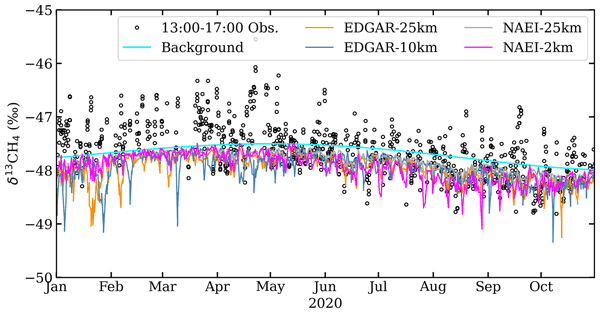
Eric Saboya, Giulia Zazzeri, Heather Graven, Alistair J. Manning, and Sylvia Englund Michel
Atmos. Chem. Phys., 22, 3595–3613, https://doi.org/10.5194/acp-22-3595-2022, https://doi.org/10.5194/acp-22-3595-2022, 2022
Short summary
Short summary
Continuous measurements of atmospheric methane concentrations and its carbon-13 isotope have been made in central London since early 2018. These measurements were used to evaluate methane emissions reported in global and UK-specific emission inventories for the London area. Compared to atmospheric methane measurements from March 2018 to October 2020, both inventories are under-reporting natural gas leakage for the London area.
Cited articles
Adkins, J. F., Cheng, H., Boyle, E. A., Druffel, E. R. M., and Edwards, R. L.: Deep-Sea Coral Evidence for Rapid Change in Ventilation of the Deep North Atlantic 15,400 Years Ago, Science, 280, 725–728, https://doi.org/10.1126/science.280.5364.725, 1998. a
Aramaki, T., Nakaoka, S., Terao, Y., Kushibashi, S., Kobayashi, T., Osonoi, Y., Mukai, H., and Tohjima, Y.: Variation of Surface Radiocarbon in the North Pacific During Summer Season 2004–2016, Radiocarbon, 61, 1367–1375, https://doi.org/10.1017/RDC.2019.32, 2019. a, b
Benavides, L. M. and Druffel, E. R. M.: Sclerosponge growth rate as determined by 210Pb and 14C chronologies, Coral Reefs, 4, 221–224, https://doi.org/10.1007/BF00298080, 1986. a, b
Broecker, W. S. and Olson, E. A.: Lamont Radiocarbon Measurements VI, Radiocarbon, 1, 111–132, https://doi.org/10.1017/S0033822200020427, 1959. a
Broecker, W. S., Gerard, R., Ewing, M., and Heezen, B. C.: Natural radiocarbon in the Atlantic Ocean, J. Geophys. Res., 65, 2903–2931, https://doi.org/10.1029/JZ065i009p02903, 1960. a
Broecker, W. S., Peng, T. H., and Stuiver, M.: An estimate of the upwelling rate in the equatorial Atlantic based on the distribution of bomb radiocarbon, J. Geophys. Res.-Oceans, 83, 6179–6186, https://doi.org/10.1029/JC083iC12p06179, 1978. a
Brown, T. A., Farwell, G. W., Grootes, P. M., Schmidt, F. H., and Stuiver, M.: Intra-Annual Variability of the Radiocarbon Content of Corals from the Galapagos Islands, Radiocarbon, 35, 245–251, https://doi.org/10.1017/S0033822200064912, 1993. a, b
Burke, A. and Robinson, L. F.: The Southern Ocean's Role in Carbon Exchange During the Last Deglaciation, Science, 335, 557–561, https://doi.org/10.1126/science.1208163, 2012. a
Castrillejo, M., Hansman, R. L., Graven, H. D., Lester, J. G., Bollhalder, S., Kündig, K., and Wacker, L.: Comparability of radiocarbon measurements in dissolved inorganic carbon of seawater produced at ETH-Zurich, Radiocarbon, 66, 1054–1063, https://doi.org/10.1017/RDC.2023.16, 2024. a
Castrillejo, M., Bollhalder, S., Lherminier, P., Fontela, M., and Wacker, L.: Dissolved inorganic radiocarbon along the Greenland–Portugal GO-SHIP A25 OVIDE line in 2018, Zenodo [data set], https://doi.org/10.5281/zenodo.24372568, 2026a. a, b
Castrillejo, M., Graven, H., Lester, J., Sanchez-Franks, A., Kündig, K., Gautschi, P., and Wacker, L.: Dissolved inorganic radiocarbon along the GO-SHIP A05 line `JC191-24N' in 2020, Zenodo [data set], https://doi.org/10.5281/zenodo.24377842, 2026b. a, b, c
Danabasoglu, G., Lamarque, J. F., Bacmeister, J., Bailey, D. A., DuVivier, A. K., Edwards, J., Emmons, L. K., Fasullo, J., Garcia, R., Gettelman, A., Hannay, C., Holland, M. M., Large, W. G., Lauritzen, P. H., Lawrence, D. M., Lenaerts, J. T. M., Lindsay, K., Lipscomb, W. H., Mills, M. J., Neale, R., Oleson, K. W., Otto-Bliesner, B., Phillips, A. S., Sacks, W., Tilmes, S., van Kampenhout, L., Vertenstein, M., Bertini, A., Dennis, J., Deser, C., Fischer, C., Fox-Kemper, B., Kay, J. E., Kinnison, D., Kushner, P. J., Larson, V. E., Long, M. C., Mickelson, S., Moore, J. K., Nienhouse, E., Polvani, L., Rasch, P. J., and Strand, W. G.: The Community Earth System Model Version 2 (CESM2), J. Adv. Model. Earth Syst., 12, e2019MS001916, https://doi.org/10.1029/2019MS001916, 2020. a
DeLong, K. L., Kilbourne, K. H., Guilderson, T. P., Wagner, A. J., Slowey, N., Palmer, K., and Hajdas, I.: New and old coral radiocarbon records revisited for the subtropical and tropical Atlantic Ocean, Radiocarbon, 67, 487–512, https://doi.org/10.1017/RDC.2025.5, 2025. a
Druffel, E. M.: Radiocarbon in annual coral rings from the eastern Tropical Pacific Ocean, Geophys. Res. Lett., 8, 59–62, https://doi.org/10.1029/GL008i001p00059, 1981. a, b, c
Druffel, E. M. and Linick, T. W.: Radiocarbon in annual coral rings of Florida, Geophys. Res. Lett., 5, 913–916, https://doi.org/10.1029/GL005i011p00913, 1978. a
Druffel, E. R. M.: Geochemistry of corals: Proxies of past ocean chemistry, ocean circulation, and climate, P. Natl. Acad. Sci. USA, 94, 8354–8361, https://doi.org/10.1073/pnas.94.16.8354, 1997. a
Druffel, E. R. M.: Decade time scale variability of ventilation in the North Atlantic: High-precision measurements of bomb radiocarbon in banded corals, J. Geophys. Res.-Oceans, 94, 3271–3285, https://doi.org/10.1029/JC094iC03p03271, 1989. a
Druffel, E. R. M. and Griffin, S.: Large variations of surface ocean radiocarbon: Evidence of circulation changes in the southwestern Pacific, J. Geophys. Res.-Oceans, 98, 20249–20259, https://doi.org/10.1029/93JC02113, 1993. a, b
Druffel, E. R. M., Williams, P. M., Bauer, J. E., and Ertel, J. R.: Cycling of dissolved and particulate organic matter in the open ocean, J. Geophys. Res.-Oceans, 97, 15639–15659, https://doi.org/10.1029/92JC01511, 1992. a
Druffel, E. R. M., Griffin, S., Glynn, D. S., Dunbar, R. B., Mucciarone, D. A., and Toggweiler, J. R.: Seasonal radiocarbon and oxygen isotopes in a Galapagos coral: Calibration with climate indices, Geophys. Res. Lett., 41, 5099–5105, https://doi.org/10.1002/2014GL060504, 2014. a, b
Druffel, E. R. M., Griffin, S., Glynn, C. S., Benner, R., and Walker, B. D.: Radiocarbon in dissolved organic and inorganic carbon of the Arctic Ocean, Geophys. Res. Lett., 44, 2369–2376, https://doi.org/10.1002/2016GL072138, 2017. a
Dutta, K., Bhushan, R., and Somayajulu, B. L. K.: ΔR Correction Values for the Northern Indian Ocean, Radiocarbon, 43, 483–488, https://doi.org/10.1017/S0033822200038376, 2001. a
Fairhall, A. W. and Young, A. W.: Historical 14C Measurements from the Atlantic, Pacific and Indian Oceans, Radiocarbon, 27, 473–507, 1985. a
Fallon, S. J. and Guilderson, T. P.: Extracting growth rates from the nonlaminated coralline sponge Astrosclera willeyana using bomb radiocarbon, Limnol. Oceanogr.-Meth., 3, 455–461, https://doi.org/10.4319/lom.2005.3.455, 2005. a
Frischknecht, T., Ekici, A., and Joos, F.: Radiocarbon in the Land and Ocean Components of the Community Earth System Model, Global Biogeochem. Cy., 36, e2021GB007042, https://doi.org/10.1029/2021GB007042, 2022. a, b
Goodkin, N. F., Druffel, E. R. M., Hughen, K. A., and Doney, S. C.: Two centuries of limited variability in subtropical North Atlantic thermocline ventilation, Nat. Commun., 3, 803, https://doi.org/10.1038/ncomms1811, 2012. a, b
Graven, H.: Atmospheric Δ14CO2 forcing for input4MIPs (source ID: ImperialCollege-3-0), ESGF [data set], https://doi.org/10.25981/ESGF.input4MIPs.CMIP7/2583902, 2025. a
Graven, H., Kozyr, A., and Key, R.: Historical observations of oceanic radiocarbon conducted prior to GEOSECS, NCEI [data set], https://doi.org/10.3334/CDIAC/OTG.HIST_C14_OBS, 2012a. a, b
Graven, H., Allison, C. E., Etheridge, D. M., Hammer, S., Keeling, R. F., Levin, I., Meijer, H. A. J., Rubino, M., Tans, P. P., Trudinger, C. M., Vaughn, B. H., and White, J. W. C.: Compiled records of carbon isotopes in atmospheric CO2 for historical simulations in CMIP6, Geosci. Model Dev., 10, 4405–4417, https://doi.org/10.5194/gmd-10-4405-2017, 2017. a
Graven, H. D.: Impact of fossil fuel emissions on atmospheric radiocarbon and various applications of radiocarbon over this century, P. Natl. Acad. Sci. USA, 112, 9542–9545, https://doi.org/10.1073/pnas.1504467112, 2015. a
Graven, H. D., Gruber, N., Key, R., Khatiwala, S., and Giraud, X.: Changing controls on oceanic radiocarbon: New insights on shallow-to-deep ocean exchange and anthropogenic CO2 uptake, J. Geophys. Res.-Oceans, 117, https://doi.org/10.1029/2012JC008074, 2012b. a, b, c
Graven, H. D., Guilderson, T. P., and Keeling, R. F.: Observations of radiocarbon in CO2 at La Jolla, California, USA 1992–2007: Analysis of the long-term trend, J. Geophys. Res.-Atmos., 117, D02302, https://doi.org/10.1029/2011JD016533, 2012c. a
Grottoli, A. G.: Monthly resolved stable oxygen isotope record in a Palauan sclerosponge Acanthocheatetes wellsi for the period of 1977–2001, in: Proceedings of 10th International Coral Reef Symposium, 572–579, 2006. a
Grottoli, A. G. and Eakin, C. M.: A review of modern coral δ18O and Δ14C proxy records, Earth-Sci. Rev., 81, 67–91, https://doi.org/10.1016/j.earscirev.2006.10.001, 2007. a
Guilderson, T. P. and Schrag, D. P.: Abrupt Shift in Subsurface Temperatures in the Tropical Pacific Associated with Changes in El Niño, Science, 281, 240–243, https://doi.org/10.1126/science.281.5374.240, 1998. a, b
Hua, Q., Barbetti, M., and Rakowski, A. Z.: Atmospheric Radiocarbon for the Period 1950–2010, Radiocarbon, 55, 2059–2072, https://doi.org/10.2458/azu_js_rc.v55i2.16177, 2013. a, b
Johnson, G. C., Robbins, P. E., and Hufford, G. E.: Systematic Adjustments of Hydrographic Sections for Internal Consistency, J. Atmos. Ocean. Tech., 18, 1234–1244, https://doi.org/10.1175/1520-0426(2001)018<1234:SAOHSF>2.0.CO;2, 2001. a, b
Kaizer, J., Kumamoto, Y., Molnár, M., Palcsu, L., and Povinec, P. P.: Temporal changes in tritium and radiocarbon concentrations in the western North Pacific Ocean (1993–2012), J. Environ. Radioactiv., 218, 106238, https://doi.org/10.1016/j.jenvrad.2020.106238, 2020. a
Key, R. M., Kozyr, A., Sabine, C. L., Lee, K., Wanninkhof, R., Bullister, J. L., Feely, R. A., Millero, F. J., Mordy, C., and Peng, T. H.: A global ocean carbon climatology: Results from Global Data Analysis Project (GLODAP), Global Biogeochem. Cy., 18, https://doi.org/10.1029/2004GB002247, 2004. a, b
Kilbourne, K. H., Quinn, T. M., Guilderson, T. P., Webb, R. S., and Taylor, F. W.: Decadal- to interannual-scale source water variations in the Caribbean Sea recorded by Puerto Rican coral radiocarbon, Clim. Dynam., 29, 51–62, https://doi.org/10.1007/s00382-007-0224-2, 2007. a, b
Kumamoto, Y., Murata, A., Saito, C., Honda, M., and Kusakabe, M.: Bomb radiocarbon invasion into the northwestern North Pacific, Deep-Sea Res. Pt. II, 49, 5339–5351, https://doi.org/10.1016/S0967-0645(02)00194-7, 2002. a
Lange, N., Lauvset, S. K., Carter, B. R., Humphreys, M. P., Woosley, R. J., Olsen, A., Bittig, H. C., Kozyr, A., Álvarez, M., Azetsu-Scott, K., Becker, S., Brown, P. J., Cotrim da Cunha, L., Dias, L., Hoppema, M., Ishii, M., Jeansson, E., Murata, A., Müller, J. D., Pérez, F. F., Schirnick, C., Steinfeldt, R., Ulfsbo, A., Velo, A., and Tanhua, T.: The Global Ocean Data Analysis Project version 3 (GLODAPv3) – an internally consistent biogeochemical data product for the world ocean, Earth Syst. Sci. Data Discuss. [preprint], https://doi.org/10.5194/essd-2026-496, in review, 2026a. a, b
Lange, N., Lauvset, S. K., Carter, B. R., Humphreys, M. P., Woosley, R. J., Olsen, A., Bittig, H. C., Kozyr, A., Álvarez, M., Azetsu-Scott, K., Becker, S., Brown, P. J., Cotrim da Cunha, L., Hoppema, M., Ishii, M., Jeansson, E., Murata, A., Müller, J. D., Pérez, F. F., Schirnick, C., Steinfeldt, R., Ulfsbo, A., Velo, A., and Tanhua, T.: The Global Ocean Data Analysis Project version 3 (GLODAPv3) – an internally consistent biogeochemical data product for the World Ocean (NCEI Accession 0315582), NCEI [data set], https://doi.org/10.25921/m6tp-mj50, 2026b. a
Lauvset, S. K., Lange, N., Tanhua, T., Bittig, H. C., Olsen, A., Kozyr, A., Álvarez, M., Azetsu-Scott, K., Brown, P. J., Carter, B. R., Cotrim da Cunha, L., Hoppema, M., Humphreys, M. P., Ishii, M., Jeansson, E., Murata, A., Müller, J. D., Pérez, F. F., Schirnick, C., Steinfeldt, R., Suzuki, T., Ulfsbo, A., Velo, A., Woosley, R. J., and Key, R. M.: The annual update GLODAPv2.2023: the global interior ocean biogeochemical data product, Earth Syst. Sci. Data, 16, 2047–2072, https://doi.org/10.5194/essd-16-2047-2024, 2024. a, b
Lee, J.-M., Eltgroth, S. F., Boyle, E. A., and Adkins, J. F.: The transfer of bomb radiocarbon and anthropogenic lead to the deep North Atlantic Ocean observed from a deep sea coral, Earth Planet. Sc. Lett., 458, 223–232, https://doi.org/10.1016/j.epsl.2016.10.049, 2017. a
Levin, I. and Hesshaimer, V.: Radiocarbon – A Unique Tracer of Global Carbon Cycle Dynamics, Radiocarbon, 42, 69–80, https://doi.org/10.1017/S0033822200053066, 2000. a, b
Levin, I., Naegler, T., Kromer, B., Diehl, M., Francey, R. J., Gomez-Pelaez, A. J., Steele, L. P., Wagenbach, D., Weller, R., and Worthy, D. E.: Observations and modelling of the global distribution and long-term trend of atmospheric 14CO2, Tellus B, 62, 26–46, https://doi.org/10.1111/j.1600-0889.2009.00446.x, 2010. a
Linick, T. W.: La Jolla Measurements of Radiocarbon in the Oceans, Radiocarbon, 20, 333–359, https://doi.org/10.1017/S0033822200009164, 1978. a
Lower-Spies, E. E., Whitney, N. M., Wanamaker, A. D., Griffin, S. M., Introne, D. S., and Kreutz, K. J.: A 250-Year, Decadally Resolved, Radiocarbon Time History in the Gulf of Maine Reveals a Hydrographic Regime Shift at the End of the Little Ice Age, J. Geophys. Res.-Oceans, 125, e2020JC016579, https://doi.org/10.1029/2020JC016579, 2020. a, b
Lu, Y., Wang, L., Wang, L., Cong, Y., Yang, G., and Zhao, L.: Deciphering carbon sources of mussel shell carbonate under experimental ocean acidification and warming, Mar. Environ. Res., 142, 141–146, https://doi.org/10.1016/j.marenvres.2018.10.007, 2018. a
Mamnun, N.: v1.0: Compilation code for a global ocean radiocarbon (Δ14C) dataset (1700–2024), Zenodo [code], https://doi.org/10.5281/zenodo.22100626, 2026. a
Mamnun, N., Williams, B., Mukherjee, R., and Graven, H.: A Global Ocean Radiocarbon (Δ14C) Dataset (1700–2024) from Dissolved Inorganic Carbon and Marine Carbonate Archives, Zenodo [data set], https://doi.org/10.5281/zenodo.22100029, 2026. a, b, c, d
McConnaughey, T. A. and Gillikin, D. P.: Carbon isotopes in mollusk shell carbonates, Geo-Mar. Lett., 28, 287–299, https://doi.org/10.1007/s00367-008-0116-4, 2008. a
Montero-Serrano, J.-C., Frank, N., Tisnerat-Laborde, N., Colin, C., Wu, C.-C., Lin, K., Shen, C.-C., Copard, K., Orejas, C., Gori, A., De Mol, L., Van Rooij, D., Reverdin, G., and Douville, E.: Decadal changes in the mid-depth water mass dynamic of the Northeastern Atlantic margin (Bay of Biscay), Earth Planet. Sc. Lett., 364, 134–144, https://doi.org/10.1016/j.epsl.2013.01.012, 2013. a
Nozaki, Y., Rye, D. M., Turekian, K. K., and Dodge, R. E.: A 200 year record of carbon-13 and carbon-14 variations in a Bermuda coral, Geophys. Res. Lett., 5, 825–828, https://doi.org/10.1029/GL005i010p00825, 1978. a
Nydal, R., Brenkert, A. L., and Boden, T. A.: Carbon-14 Measurements in Surface Water CO2 from the Atlantic, Indian and Pacific Oceans, 1965–1994, NCEI [data set], https://doi.org/10.3334/CDIAC/otg.ndp057, 1998. a, b, c, d
Olsen, A., Key, R. M., van Heuven, S., Lauvset, S. K., Velo, A., Lin, X., Schirnick, C., Kozyr, A., Tanhua, T., Hoppema, M., Jutterström, S., Steinfeldt, R., Jeansson, E., Ishii, M., Pérez, F. F., and Suzuki, T.: The Global Ocean Data Analysis Project version 2 (GLODAPv2) – an internally consistent data product for the world ocean, Earth Syst. Sci. Data, 8, 297–323, https://doi.org/10.5194/essd-8-297-2016, 2016. a
Östlund, H. G. and Stuiver, M.: GEOSECS Pacific Radiocarbon, Radiocarbon, 22, 25–53, https://doi.org/10.1017/S0033822200004707, 1980. a
Pookkandy, B., Graven, H., and Martin, A. P.: Contemporary oceanic radiocarbon response to ocean circulation changes, Clim. Dynam., 61, 3223–3235, https://doi.org/10.1007/s00382-023-06737-3, 2023. a
Rafter, P. A., Sanchez, S. C., Ferguson, J., Carriquiry, J. D., Druffel, E. R. M., Villaescusa, J. A., and Southon, J. R.: Eastern tropical North Pacific coral radiocarbon reveals North Pacific Gyre Oscillation (NPGO) variability, Quaternary Sci. Rev., 160, 108–115, https://doi.org/10.1016/j.quascirev.2017.02.002, 2017. a, b
Rafter, P. A., Gray, W. R., Hines, S. K. V., Burke, A., Costa, K. M., Gottschalk, J., Hain, M. P., Rae, J. W. B., Southon, J. R., Walczak, M. H., Yu, J., Adkins, J. F., and DeVries, T.: Global reorganization of deep-sea circulation and carbon storage after the last ice age, Sci. Adv., 8, eabq5434, https://doi.org/10.1126/sciadv.abq5434, 2022. a
Rodgers, K. B., Lee, S.-S., Rosenbloom, N., Timmermann, A., Danabasoglu, G., Deser, C., Edwards, J., Kim, J.-E., Simpson, I. R., Stein, K., Stuecker, M. F., Yamaguchi, R., Bódai, T., Chung, E.-S., Huang, L., Kim, W. M., Lamarque, J.-F., Lombardozzi, D. L., Wieder, W. R., and Yeager, S. G.: Ubiquity of human-induced changes in climate variability, Earth Syst. Dynam., 12, 1393–1411, https://doi.org/10.5194/esd-12-1393-2021, 2021. a, b
Rosenheim, B. E. and Swart, P. K.: Caribbean sclerosponge radiocarbon measurements re-interpreted in terms of U/Th age models, Nucl. Instrum. Meth. Phys. Res. Sect. B, 259, 474–478, https://doi.org/10.1016/j.nimb.2007.01.235, 2007. a
Schlosser, P., Kromer, B., Östlund, G., Ekwurzel, B., Bönisch, G., Loosli, H. H., and Purtschert, R.: On the 14C and 39Ar Distribution in the Central Arctic Ocean: Implications for Deep Water Formation, Radiocarbon, 36, 327–343, https://doi.org/10.1017/S003382220001451X, 1994. a
Schlosser, P., Kromer, B., Ekwurzel, B., Bönisch, G., McNichol, A., Schneider, R., von Reden, K., Östlund, H. G., and Swift, J. H.: The first trans-Arctic 14C section: comparison of the mean ages of the deep waters in the Eurasian and Canadian basins of the Arctic Ocean, Nucl. Instrum. Meth. Phys. Res. Sect. B, 123, 431–437, https://doi.org/10.1016/S0168-583X(96)00677-5, 1997. a
Scourse, J., Richardson, C., Forsythe, G., Harris, I., Heinemeier, J., Fraser, N., Briffa, K., and Jones, P.: First cross-matched floating chronology from the marine fossil record: data from growth lines of the long-lived bivalve mollusc Arctica islandica, Holocene, 16, 967–974, https://doi.org/10.1177/0959683606hl987rp, 2006. a
Scourse, J. D., Wanamaker, A. D., Weidman, C., Heinemeier, J., Reimer, P. J., Butler, P. G., Witbaard, R., and Richardson, C. A.: The Marine Radiocarbon Bomb Pulse Across the Temperate North Atlantic: A Compilation of Δ14C Time Histories from Arctica Islandica Growth Increments, Radiocarbon, 54, 165–186, https://doi.org/10.2458/azu_js_rc.v54i2.16026, 2012. a
Shen, C. D., Yi, W. X., Yu, K. F., Sun, Y. M., Yang, Y., and Zhou, B.: Interannual 14C Variations During 1977–1998 Recorded in Coral from Daya Bay, South China Sea, Radiocarbon, 46, 595–601, https://doi.org/10.1017/S0033822200035633, 2004. a, b
Sherwood, O. A., Scott, D. B., Risk, M. J., and Guilderson, T. P.: Radiocarbon evidence for annual growth rings in the deep-sea octocoral Primnoa resedaeformis, Mar. Ecol. Prog.-Ser., 301, 129–134, https://doi.org/10.3354/meps301129, 2005. a
Sherwood, O. A., Edinger, E. N., Guilderson, T. P., Ghaleb, B., Risk, M. J., and Scott, D. B.: Late Holocene radiocarbon variability in Northwest Atlantic slope waters, Earth Planet. Sc. Lett., 275, 146–153, https://doi.org/10.1016/j.epsl.2008.08.019, 2008. a
Skinner, L. C. and Bard, E.: Radiocarbon as a Dating Tool and Tracer in Paleoceanography, Rev. Geophys., 60, https://doi.org/10.1029/2020rg000720, 2022. a
Stuiver, M. and Polach, H. A.: Discussion: Reporting of 14C Data, Radiocarbon, 19, 355–363, https://doi.org/10.1017/S0033822200003672, 1977. a, b, c, d
Swart, P. K., Thorrold, S., Rosenheim, B., Eisenhauer, A., Harrison, C. G. A., Grammer, M., and Latkoczy, C.: Intra-annual variation in the stable oxygen and carbon and trace element composition of sclerosponges, Paleoceanography, 17, https://doi.org/10.1029/2000PA000622, 2002. a
Swift, J. H. and Diggs, S. C.: Description of WHP exchange format for CTD/Hydrographic data, CLIVAR and Carbon Hydrographic Data Office, UCSD Scripps Institution of Oceanography, San Diego, CA, USA, https://cchdo.github.io/hdo-assets/documentation/WHP_Exchange_Description.pdf (last access: 1 October 2026), 2008. a
Talley, L. D., Feely, R. A., Sloyan, B. M., Wanninkhof, R., Baringer, M. O., Bullister, J. L., Carlson, C. A., Doney, S. C., Fine, R. A., Firing, E., Gruber, N., Hansell, D. A., Ishii, M., Johnson, G. C., Katsumata, K., Key, R. M., Kramp, M., Langdon, C., Macdonald, A. M., Mathis, J. T., McDonagh, E. L., Mecking, S., Millero, F. J., Mordy, C. W., Nakano, T., Sabine, C. L., Smethie, W. M., Swift, J. H., Tanhua, T., Thurnherr, A. M., Warner, M. J., and Zhang, J.-Z.: Changes in Ocean Heat, Carbon Content, and Ventilation: A Review of the First Decade of GO-SHIP Global Repeat Hydrography, Annu. Rev. Mar. Sci., 8, 185–215, https://doi.org/10.1146/annurev-marine-052915-100829, 2016. a
Tournebise, N. and DeVries, T.: Model output from assimilations presented in Optimized Gas Transfer Velocity from Historical Radiocarbon Measurements in an Inverse Ocean Circulation Model, Zenodo [data set], https://doi.org/10.5281/zenodo.24510595, 2026. a
Vogel, J. C. and Marais, M.: Pretoria Radiocarbon Dates I, Radiocarbon, 13, 378–394, https://doi.org/10.1017/S003382220000850X, 1971. a
Wang, N., Shen, C., Sun, W., Yi, W., Ding, P., Ding, X., Fu, D., and Liu, K.: Seasonal 14C and Sr/Ca Records of a Modern Coral around Daya Bay Nuclear Power Plants, Radiocarbon, 59, 1035–1046, https://doi.org/10.1017/RDC.2017.43, 2017. a, b
Weidman, C. R.: Development and application of the mollusc Arctica islandica as a paleoceanographic tool for the North Atlantic Ocean, PhD thesis, Massachusetts Institute of Technology and Woods Hole Oceanographic Institution, Joint Program in Oceanography, Woods Hole, MA, USA, https://doi.org/10.2172/663502, 1995. a
Williams, B. and Grottoli, A. G.: Recent shoaling of the nutricline and thermocline in the western tropical Pacific, Geophys. Res. Lett., 37, L22601, https://doi.org/10.1029/2010GL044867, 2010. a
Editorial statement
The manuscript presents an open, harmonized global marine radiocarbon dataset comprising 68,543 measurements spanning 1700–2024. By integrating ship-based dissolved inorganic carbon measurements with biogenic carbonate records, recovering historical data, and extending coverage beyond GLODAP, it brings previously dispersed observations into a coherent resource with standardized metadata and quality flags. Its breadth, transparency, and reproducibility make it a valuable contribution to the study of ocean ventilation and carbon cycling, and to the evaluation of Earth system models across the pre-bomb, bomb-transient, and modern periods.
The manuscript presents an open, harmonized global marine radiocarbon dataset comprising 68,543...
Short summary
Radiocarbon measurements in the ocean are key to studying ocean circulation, gas exchange and the carbon cycle, but they are sparse and scattered across many sources. We combined about 68,500 measurements from ship-based seawater samples (1955–2024) and biogenic carbonates (corals and shells, 1700–2020) into one quality-checked, openly available dataset. The dataset provides the most comprehensive record of ocean radiocarbon over the industrial period, including impacts of nuclear bomb tests.
Radiocarbon measurements in the ocean are key to studying ocean circulation, gas exchange and...


Altmetrics
Final-revised paper
Preprint