Articles | Volume 18, issue 11
https://doi.org/10.5194/essd-18-8865-2026
© Author(s) 2026. This work is distributed under
the Creative Commons Attribution 4.0 License.
https://doi.org/10.5194/essd-18-8865-2026
© Author(s) 2026. This work is distributed under
the Creative Commons Attribution 4.0 License.
Data description article
| 
25 Nov 2026
Data description article |
| 25 Nov 2026
Overview of ParallelClim-WestUS-Daily – high-resolution observed and counterfactual daily climate data for the western United States, 1951–2025

Scripps Institution of Oceanography, University of California, San Diego, La Jolla, CA, USA
Department of Geography, University of California, Los Angeles, CA, USA
Department of Atmospheric and Oceanic Sciences, University of California, Los Angeles, CA, USA
John T. Abatzoglou
Management of Complex Systems Department, University of California, Merced, CA, USA
Gavin D. Madakumbura
Scripps Institution of Oceanography, University of California, San Diego, La Jolla, CA, USA
Department of Geography, University of California, Los Angeles, CA, USA
Haibo Liu
Lamont-Doherty Earth Observatory, Columbia University, Palisades, NY, USA
Stefan Rahimi
Department of Atmospheric Science, University of Wyoming, Laramie, WY, USA
Christopher Daly
PRISM Climate Group, Northwest Alliance for Computational Science and Engineering, College of Engineering, Oregon State University, Corvallis, OR, USA
Related authors

A. Park Williams, Winslow D. Hansen, Caroline S. Juang, John T. Abatzoglou, Volker C. Radeloff, Bowen Wang, Jazlynn Hall, Jatan Buch, and Gavin D. Madakumbura
Geosci. Model Dev., 19, 1157–1191, https://doi.org/10.5194/gmd-19-1157-2026, https://doi.org/10.5194/gmd-19-1157-2026, 2026
Short summary
Short summary
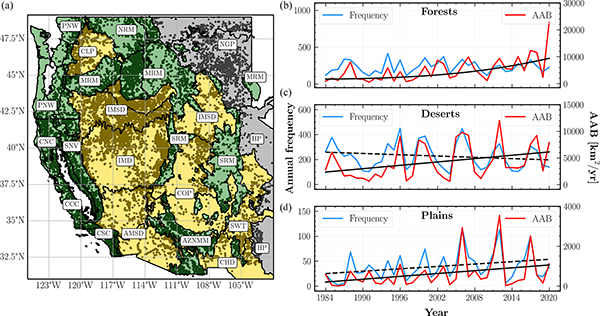
The new Western United States Large Forest Fire Stochastic Simulator (WULFFSS) is a monthly gridded model to simulate forest fires across the western United States in response to vegetation, topographic, anthropogenic, and climate factors. The model is highly skillful, accounting for over 80 % of the observed variability in annual forest-fire area and capturing observed spatial, intra-annual variations, and trends.
A. Park Williams, Caroline S. Juang, and Karen C. Short
Earth Syst. Sci. Data, 17, 7359–7372, https://doi.org/10.5194/essd-17-7359-2025, https://doi.org/10.5194/essd-17-7359-2025, 2025
Short summary
Short summary
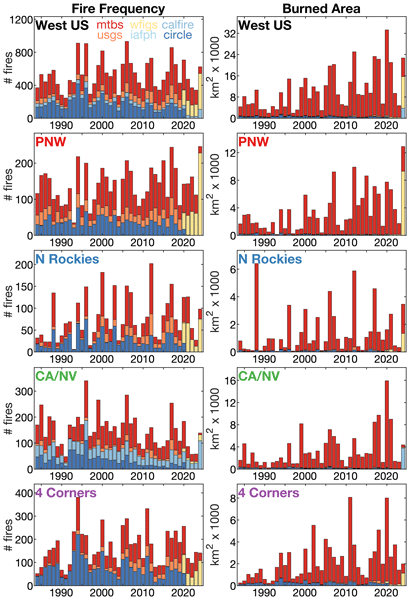
The Western United States MTBS-Interagency Database of Large Wildfires, 1984–2024 (WUMI2024a) represents more than 22000 large (≥1 km2) wildfires in the western United States from 1984 through 2024, including maps of fire perimeters and areas burned. It was compiled from seven government datasets and quality controlled. This dataset will aid research on the causes and effects of wildfire in a changing world.
Jatan Buch, A. Park Williams, Caroline S. Juang, Winslow D. Hansen, and Pierre Gentine
Geosci. Model Dev., 16, 3407–3433, https://doi.org/10.5194/gmd-16-3407-2023, https://doi.org/10.5194/gmd-16-3407-2023, 2023
Short summary
Short summary
We leverage machine learning techniques to construct a statistical model of grid-scale fire frequencies and sizes using climate, vegetation, and human predictors. Our model reproduces the observed trends in fire activity across multiple regions and timescales. We provide uncertainty estimates to inform resource allocation plans for fuel treatment and fire management. Altogether the accuracy and efficiency of our model make it ideal for coupled use with large-scale dynamical vegetation models.
Chantelle A. Burton, Francesca Di Giuseppe, Matthew W. Jones, Douglas I. Kelley, Maria L. F. Barbosa, Joe McNorton, Bob Potts, Carlota Segura-Garcia, John T. Abatzoglou, Iulian Alin Rosu, Niels Andela, Liana O. Anderson, Sally Archibald, Esther Brambleby, Emilio Chuvieco, Andrew Ciavarella, Hamish Clarke, Francisco de la Barrera, Carlos M. Di Bella, Enza Di Tomaso, Kebonye Dintwe, Tim S. Doherty, Victoria M. Donovan, Jonathan M. Eden, Paulo M. Fernandes, Lukas Fiedler, Louis Giglio, Olivia Haas, Douglas S. Hamilton, Stijn Hantson, Sarah Harris, Andrew J. Hartley, Theo Keeping, Crystal A. Kolden, Jean-Luc Kouassi, Elena Kukavskaya, Seppe Lampe, Zhongwei Liu, Guilherme Mataveli, Sarah Meier, Duarte Oom, Mark Parrington, Yuquan Qu, Victor Resco de Dios, Julien Ruffault, Mojtaba Sadegh, Cristina Santín, Fernando Sedano, Jacquelyn K. Shuman, Patrícia S. Silva, Fiona R. Spuler, Carmen B. Steinmann, Veerachai Tanpipat, Miguel Ángel Torres-Vazquez, Marco Turco, Guido R. van der Werf, Dave van Wees, Sander Veraverbeke, Jakob B. Wessel, and Bo Zheng
Earth Syst. Sci. Data, 18, 8037–8105, https://doi.org/10.5194/essd-18-8037-2026, https://doi.org/10.5194/essd-18-8037-2026, 2026
Short summary
Short summary
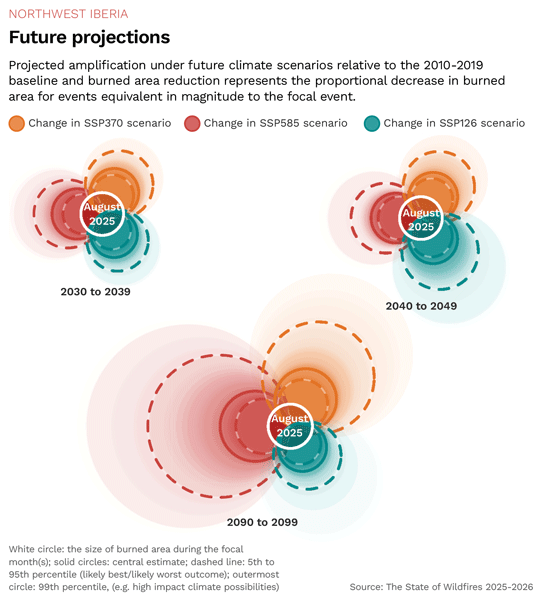
The third State of Wildfires report examines extreme wildfire events from 2025 to early 2026. It analyses key regional events in Midwestern Canadian Shield Forests, Northwest Iberia, and Chilean Temperate Forests and Matorral, assessing their impacts, drivers, and attributing them to climate change. Climate change greatly increased the likelihood of these fires, and without strong mitigation, such events will become more frequent.
Fanghe Zhao, Stefan Rahimi, Melissa Bukovsky, Karandeep Singh, Chad Thackeray, Jesse Norris, Alex Hall, and Weichen Liu
EGUsphere, https://doi.org/10.5194/egusphere-2026-5377, https://doi.org/10.5194/egusphere-2026-5377, 2026
This preprint is open for discussion and under review for Geoscientific Model Development (GMD).
Short summary
Short summary
Mountain snow supplies vital water, but detailed estimates of its future are costly. We developed an artificial intelligence tool that quickly reproduces computer estimates of water stored in snow across the western United States. Training on diverse simulated future climates produced more reliable results than training on past conditions alone, with warmer climates especially valuable. This approach could make assessments of future snow supplies faster and more affordable for water planning.
Jacob Stuivenvolt-Allen, Trude Eidhammer, Rachel McCrary, Melissa Bukovsky, Stefan Rahimi, Hsin-I Chang, and Seth McGinnis
Geosci. Model Dev., 19, 8995–9017, https://doi.org/10.5194/gmd-19-8995-2026, https://doi.org/10.5194/gmd-19-8995-2026, 2026
Short summary
Short summary
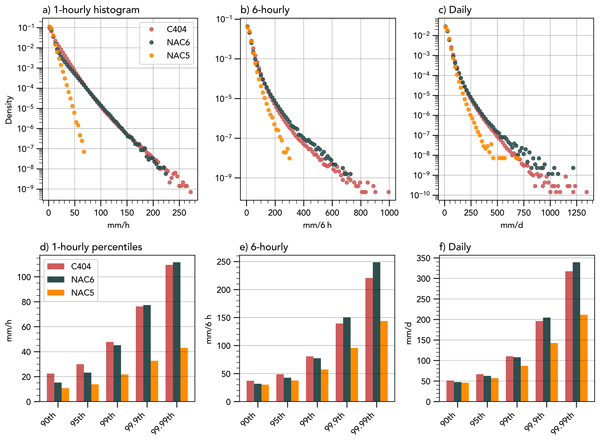
This study presents a new 12 km CORDEX (Coordinated Regional Downscaling Experiment )-CMIP6 (Coupled Model Intercomparison Project) WRF (Weather Research and Forecasting) simulation for North America, compared against an earlier 25 km CMIP5 version and a 4 km convection-permitting simulation. The updated run reduces temperature and precipitation biases, improves precipitation timing, and better captures tropical cyclone intensity. Extreme precipitation at 12 km closely matches convection-permitting results, offering a practical resolution for regional climate assessment.
A. Park Williams, Winslow D. Hansen, Caroline S. Juang, John T. Abatzoglou, Volker C. Radeloff, Bowen Wang, Jazlynn Hall, Jatan Buch, and Gavin D. Madakumbura
Geosci. Model Dev., 19, 1157–1191, https://doi.org/10.5194/gmd-19-1157-2026, https://doi.org/10.5194/gmd-19-1157-2026, 2026
Short summary
Short summary
The new Western United States Large Forest Fire Stochastic Simulator (WULFFSS) is a monthly gridded model to simulate forest fires across the western United States in response to vegetation, topographic, anthropogenic, and climate factors. The model is highly skillful, accounting for over 80 % of the observed variability in annual forest-fire area and capturing observed spatial, intra-annual variations, and trends.
A. Park Williams, Caroline S. Juang, and Karen C. Short
Earth Syst. Sci. Data, 17, 7359–7372, https://doi.org/10.5194/essd-17-7359-2025, https://doi.org/10.5194/essd-17-7359-2025, 2025
Short summary
Short summary
The Western United States MTBS-Interagency Database of Large Wildfires, 1984–2024 (WUMI2024a) represents more than 22000 large (≥1 km2) wildfires in the western United States from 1984 through 2024, including maps of fire perimeters and areas burned. It was compiled from seven government datasets and quality controlled. This dataset will aid research on the causes and effects of wildfire in a changing world.
Douglas I. Kelley, Chantelle Burton, Francesca Di Giuseppe, Matthew W. Jones, Maria L. F. Barbosa, Esther Brambleby, Joe R. McNorton, Zhongwei Liu, Anna S. I. Bradley, Katie Blackford, Eleanor Burke, Andrew Ciavarella, Enza Di Tomaso, Jonathan Eden, Igor José M. Ferreira, Lukas Fiedler, Andrew J. Hartley, Theodore R. Keeping, Seppe Lampe, Anna Lombardi, Guilherme Mataveli, Yuquan Qu, Patrícia S. Silva, Fiona R. Spuler, Carmen B. Steinmann, Miguel Ángel Torres-Vázquez, Renata Veiga, Dave van Wees, Jakob B. Wessel, Emily Wright, Bibiana Bilbao, Mathieu Bourbonnais, Cong Gao, Carlos M. Di Bella, Kebonye Dintwe, Victoria M. Donovan, Sarah Harris, Elena A. Kukavskaya, Aya Brigitte N'Dri, Cristina Santín, Galia Selaya, Johan Sjöström, John T. Abatzoglou, Niels Andela, Rachel Carmenta, Emilio Chuvieco, Louis Giglio, Douglas S. Hamilton, Stijn Hantson, Sarah Meier, Mark Parrington, Mojtaba Sadegh, Jesus San-Miguel-Ayanz, Fernando Sedano, Marco Turco, Guido R. van der Werf, Sander Veraverbeke, Liana O. Anderson, Hamish Clarke, Paulo M. Fernandes, and Crystal A. Kolden
Earth Syst. Sci. Data, 17, 5377–5488, https://doi.org/10.5194/essd-17-5377-2025, https://doi.org/10.5194/essd-17-5377-2025, 2025
Short summary
Short summary
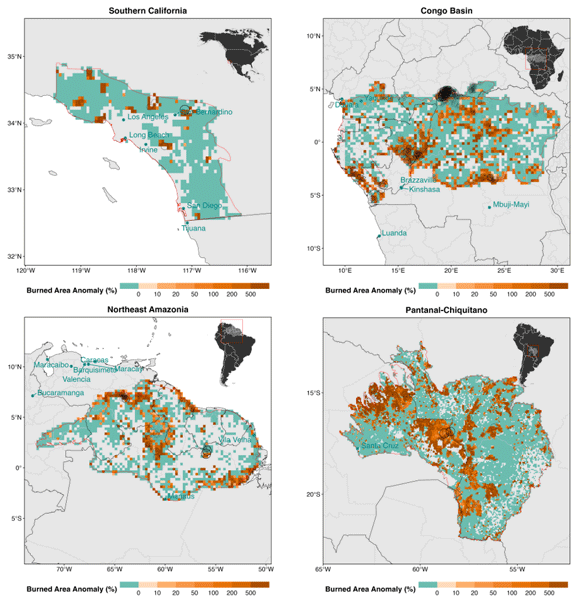
The second State of Wildfires report examines extreme wildfire events from 2024 to early 2025. It analyses key regional events in Southern California, Northeast Amazonia, Pantanal–Chiquitano, and the Congo Basin, assessing their drivers and predictability and attributing them to climate change and land use. Seasonal outlooks and decadal projections are provided. Climate change greatly increased the likelihood of these fires, and without strong mitigation, such events will become more frequent.
Bhupinderjeet Singh, Mingliang Liu, John Abatzoglou, Jennifer Adam, and Kirti Rajagopalan
EGUsphere, https://doi.org/10.5194/egusphere-2024-2284, https://doi.org/10.5194/egusphere-2024-2284, 2024
Preprint archived
Short summary
Short summary
Hydrology models rely on simplistic static approaches to precipitation phase partitioning. We evaluate model skill changes for a suite of snow metrics by transitioning to a more accurate dynamic partitioning. We found that the transition resulted in a better match between modeled and observed metrics, with a 50 % reduction in model bias, emphasizing the need for the hydrological modeling community to adopt dynamic partitioning.
Matthew W. Jones, Douglas I. Kelley, Chantelle A. Burton, Francesca Di Giuseppe, Maria Lucia F. Barbosa, Esther Brambleby, Andrew J. Hartley, Anna Lombardi, Guilherme Mataveli, Joe R. McNorton, Fiona R. Spuler, Jakob B. Wessel, John T. Abatzoglou, Liana O. Anderson, Niels Andela, Sally Archibald, Dolors Armenteras, Eleanor Burke, Rachel Carmenta, Emilio Chuvieco, Hamish Clarke, Stefan H. Doerr, Paulo M. Fernandes, Louis Giglio, Douglas S. Hamilton, Stijn Hantson, Sarah Harris, Piyush Jain, Crystal A. Kolden, Tiina Kurvits, Seppe Lampe, Sarah Meier, Stacey New, Mark Parrington, Morgane M. G. Perron, Yuquan Qu, Natasha S. Ribeiro, Bambang H. Saharjo, Jesus San-Miguel-Ayanz, Jacquelyn K. Shuman, Veerachai Tanpipat, Guido R. van der Werf, Sander Veraverbeke, and Gavriil Xanthopoulos
Earth Syst. Sci. Data, 16, 3601–3685, https://doi.org/10.5194/essd-16-3601-2024, https://doi.org/10.5194/essd-16-3601-2024, 2024
Short summary
Short summary
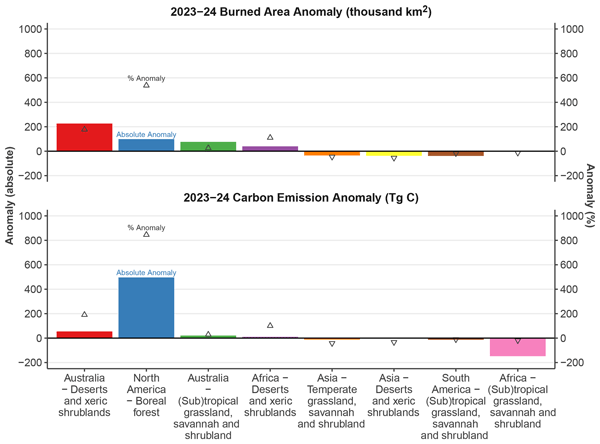
This inaugural State of Wildfires report catalogues extreme fires of the 2023–2024 fire season. For key events, we analyse their predictability and drivers and attribute them to climate change and land use. We provide a seasonal outlook and decadal projections. Key anomalies occurred in Canada, Greece, and western Amazonia, with other high-impact events catalogued worldwide. Climate change significantly increased the likelihood of extreme fires, and mitigation is required to lessen future risk.
Yavar Pourmohamad, John T. Abatzoglou, Erin J. Belval, Erica Fleishman, Karen Short, Matthew C. Reeves, Nicholas Nauslar, Philip E. Higuera, Eric Henderson, Sawyer Ball, Amir AghaKouchak, Jeffrey P. Prestemon, Julia Olszewski, and Mojtaba Sadegh
Earth Syst. Sci. Data, 16, 3045–3060, https://doi.org/10.5194/essd-16-3045-2024, https://doi.org/10.5194/essd-16-3045-2024, 2024
Short summary
Short summary
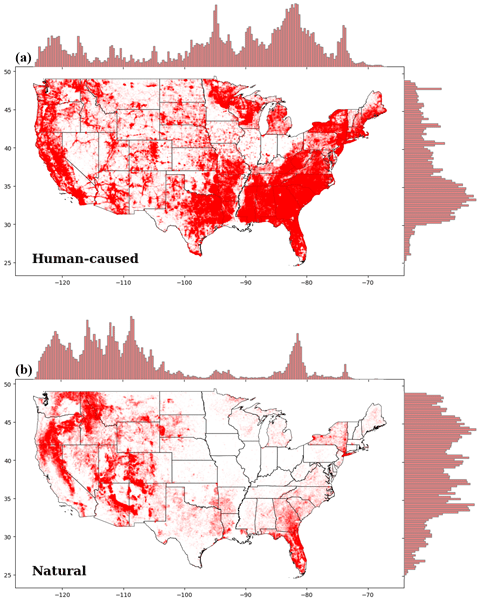
The FPA FOD-Attributes dataset provides > 300 biological, physical, social, and administrative attributes associated with > 2.3×10⁶ wildfire incidents across the US from 1992 to 2020. The dataset can be used to (1) answer numerous questions about the covariates associated with human- and lightning-caused wildfires and (2) support descriptive, diagnostic, predictive, and prescriptive wildfire analytics, including the development of machine learning models.
Stefan Rahimi, Lei Huang, Jesse Norris, Alex Hall, Naomi Goldenson, Will Krantz, Benjamin Bass, Chad Thackeray, Henry Lin, Di Chen, Eli Dennis, Ethan Collins, Zachary J. Lebo, Emily Slinskey, Sara Graves, Surabhi Biyani, Bowen Wang, Stephen Cropper, and the UCLA Center for Climate Science Team
Geosci. Model Dev., 17, 2265–2286, https://doi.org/10.5194/gmd-17-2265-2024, https://doi.org/10.5194/gmd-17-2265-2024, 2024
Short summary
Short summary
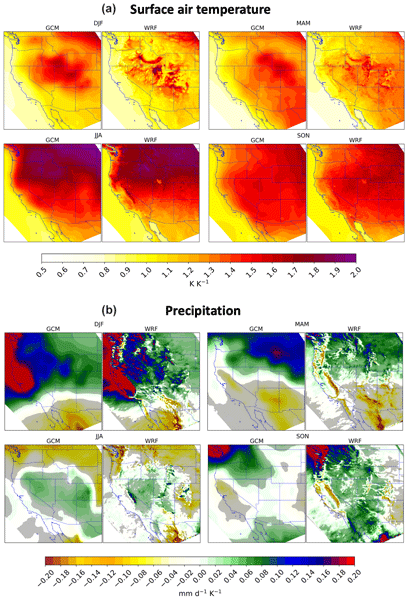
Here, we project future climate across the western United States through the end of the 21st century using a regional climate model, embedded within 16 latest-generation global climate models, to provide the community with a high-resolution physically based ensemble of climate data for use at local scales. Strengths and weaknesses of the data are frankly discussed as we overview the downscaled dataset.
Shreta Ghimire, Zachary J. Lebo, Shane Murphy, Stefan Rahimi, and Trang Tran
Atmos. Chem. Phys., 23, 9413–9438, https://doi.org/10.5194/acp-23-9413-2023, https://doi.org/10.5194/acp-23-9413-2023, 2023
Short summary
Short summary
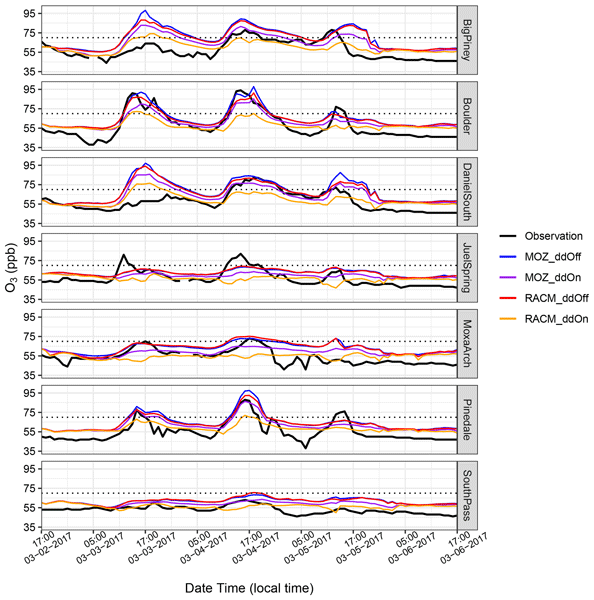
High wintertime ozone levels have occurred often in recent years in mountain basins with oil and gas production facilities. Photochemical modeling of ozone production serves as a basis for understanding the mechanism by which it occurs and for predictive capability. We present photochemical model simulations of ozone formation and accumulation in the Upper Green River basin, Wyoming, demonstrating the model's ability to simulate wintertime ozone and the sensitivity of ozone to its precursors.
Jatan Buch, A. Park Williams, Caroline S. Juang, Winslow D. Hansen, and Pierre Gentine
Geosci. Model Dev., 16, 3407–3433, https://doi.org/10.5194/gmd-16-3407-2023, https://doi.org/10.5194/gmd-16-3407-2023, 2023
Short summary
Short summary
We leverage machine learning techniques to construct a statistical model of grid-scale fire frequencies and sizes using climate, vegetation, and human predictors. Our model reproduces the observed trends in fire activity across multiple regions and timescales. We provide uncertainty estimates to inform resource allocation plans for fuel treatment and fire management. Altogether the accuracy and efficiency of our model make it ideal for coupled use with large-scale dynamical vegetation models.
Abby C. Lute, John Abatzoglou, and Timothy Link
Geosci. Model Dev., 15, 5045–5071, https://doi.org/10.5194/gmd-15-5045-2022, https://doi.org/10.5194/gmd-15-5045-2022, 2022
Short summary
Short summary
We developed a snow model that can be used to quantify snowpack over large areas with a high degree of spatial detail. We ran the model over the western United States, creating a snow and climate dataset for three time periods. Compared to observations of snowpack, the model captured the key aspects of snow across time and space. The model and dataset will be useful in understanding historical and future changes in snowpack, with relevance to water resources, agriculture, and ecosystems.
Cited articles
Abatzoglou, J. T.: Development of gridded surface meteorological data for ecological applications and modelling, Int. J. Climatol., 33, 121–131, https://doi.org/10.1002/joc.3413, 2013.
Abatzoglou, J. T. and Williams, A. P.: Impact of anthropogenic climate change on wildfire across western US forests, P. Natl. Acad. Sci. USA, 113, 11770–11775, https://doi.org/10.1073/pnas.1607171113, 2016.
Abatzoglou, J. T., Dobrowski, S. Z., Parks, S. A., and Hegewisch, K. C.: TerraClimate, a high-resolution global dataset of monthly climate and climatic water balance from 1958–2015, Scientific Data, 5, 1–12, https://doi.org/10.1038/sdata.2017.191, 2018.
Allen, R. G., Pereira, L. S., Raes, D., and Smith, M.: Crop evapotranspiration-Guidelines for computing crop water requirements-FAO Irrigation and drainage, paper 56, Food and Agriculture Organization of the United Nations, Rome, http://www.fao.org/3/X0490E/X0490E00.htm (last access: 17 November 2026), 1998.
Anderegg, W. R. L., Anderegg, L. D. L., Kerr, K. L., and Trugman, A. T.: Widespread drought-induced tree mortality at dry range edges indicates climate stress exceeds species' compensating mechanisms, Glob. Change Biol., 25, 3793–3802, https://doi.org/10.1111/gcb.14771, 2019.
Ault, T. R., Cole, J. E., Overpeck, J. T., Pederson, G. T., and Meko, D. M.: Assessing the risk of persistent drought using climate model simulations and paleoclimate data, J. Climate, 27, 7529–7549, https://doi.org/10.1175/JCLI-D-12-00282.1, 2014.
Bellenger, H., Guilyardi, E., Leloup, J., Lengaigne, M., and Vialard, J.: ENSO representation in climate models: from CMIP3 to CMIP5, Clim. Dynam., 42, 1999–2018, https://doi.org/10.1007/s00382-013-1783-z, 2014.
Berner, L. T., Law, B. E., Meddens, A. J. H., and Hicke, J. A.: Tree mortality from fires, bark beetles, and timber harvest during a hot and dry decade in the western United States (2003–2012), Environ. Res. Lett., 12, 065005, https://doi.org/10.1088/1748-9326/aa6f94, 2017.
Bi, D., Dix, M., Marsland, S., O'farrell, S., Sullivan, A., Bodman, R., Law, R., Harman, I., Srbinovsky, J., Rashid, H. A., Dobrohotoff, P., Mackallah, C., Yan, H., Hirst, A., Savita, A., Dias, F. B., Woodhouse, M., Fiedler, R., and Heerdegen, A.: Configuration and spin-up of ACCESS-CM2, the new generation Australian community climate and earth system simulator coupled model, Journal of Southern Hemisphere Earth Systems Science, 70, 225–251, https://doi.org/10.1071/ES19040, 2020.
Brunner, L., Pendergrass, A. G., Lehner, F., Merrifield, A. L., Lorenz, R., and Knutti, R.: Reduced global warming from CMIP6 projections when weighting models by performance and independence, Earth Syst. Dynam., 11, 995–1012, https://doi.org/10.5194/esd-11-995-2020, 2020.
Byrne, H., Seager, R., and Smerdon, J. E.: CMIP6 models cannot capture long-term forced changes in the tropical Pacific sea surface temperature gradient, Nat. Commun., 17, 142, https://doi.org/10.1038/s41467-025-66839-w, 2025.
Cai, W., Santoso, A., Collins, M., Dewitte, B., Karamperidou, C., Kug, J.-S., Lengaigne, M., McPhaden, M. J., Stuecker, M. F., Taschetto, A. S., Timmermann, A., Wu, L., Yeh, S.-W., Wang, G., Ng, B., Jia, F., Yang, Y., Ying, J., Zheng, X.-T., Bayr, T., Brown, J. R., Capotondi, A., Cobb, K. M., Gan, B., Geng, T., Ham, Y.-G., Jin, F.-F., Jo, H.-S., Li, X., Lin, X., McGregor, S., Park, J.-H., Stein, K., Yang, K., Zhang, L., and Zhong, W.: Changing El Niño–Southern oscillation in a warming climate, Nat. Rev. Earth Environ., 2, 628–644, https://doi.org/10.1038/s43017-021-00199-z, 2021.
Cayan, D. R., Redmond, K. T., and Riddle, L. G.: ENSO and hydrologic extremes in the western United States, J. Climate, 12, 2881–2893, https://doi.org/10.1175/1520-0442(1999)012<2881:EAHEIT>2.0.CO;2, 1999.
Cherchi, A., Fogli, P. G., Lovato, T., Peano, D., Iovino, D., Gualdi, S., Masina, S., Scoccimarro, E., Materia, S., Bellucci, A., and Navarra, A.: Global mean climate and main patterns of variability in the CMCC-CM2 coupled model, J. Adv. Model Earth Sy., 11, 185–209, https://doi.org/10.1029/2018MS001369, 2019.
Cook, B. I., Mankin, J. S., Marvel, K., Williams, A. P., Smerdon, J. E., and Anchukaitis, K. J.: Twenty-first century drought projections in the CMIP6 forcing scenarios, Earth's Future, 8, e2019EF001461, https://doi.org/10.1029/2019EF001461, 2020.
Cox, P. M., Huntingford, C., and Williamson, M. S.: Emergent constraint on equilibrium climate sensitivity from global temperature variability, Nature, 553, 319–322, https://doi.org/10.1038/nature25450, 2018.
Daly, C., Doggett, M. K., Smith, J. I., Olson, K. V., Halbleib, M. D., Dimcovic, Z., Keon, D., Loiselle, R. A., Steinberg, B., and Ryan, A. D.: Challenges in observation-based mapping of daily precipitation across the conterminous United States, J. Atmos. Ocean. Tech., 38, 1979–1992, https://doi.org/10.1175/JTECH-D-21-0054.1, 2021.
Danabasoglu, G., Lamarque, J.-F., Bacmeister, J., Bailey, D. A., DuVivier, A. K., Edwards, J., Emmons, L. K., Fasullo, J., Garcia, R., Gettelman, A., Hannay, C., Holland, M. M., Large, W. G., Laurizen, P. H., Lawrence, D. M., Lenaerts, J. T. M., Lindsay, K., Lipscomb, W. H., Mills, M. J., Neale, R., Oleson, K. W., Otto-Bliesner, B., Phillips, A. S., Sacks, W., Tilmes, S., van Kampenhout, L., Vertenstein, M., Bertini, A., Dennis, J., Deser, C., Fischer, C., Fox-Kemper, B., Kay, J. E., Kinnison, D., Kushner, P. J., Larson, V. E., Long, M. C., Mickelson, S., Moore, J. K., Anagnostou, E. N., Polvani, L., Rasch, P. J., and Strand, W. G.: The Community Earth System Model Version 2 (CESM2), J. Adv. Model Earth Sy., 12, e2019MS001916, https://doi.org/10.1029/2019MS001916, 2020.
Dannenberg, M. P., McCabe, G. J., Wise, E. K., Johnston, M. R., Huntzinger, D. N., and Williams, A. P.: Recent increases in Missouri River streamflow driven by combined effects of climate variability, land-use change, and elevated CO2, AGU Adv., 6, e2024AV001432, https://doi.org/10.1029/2024AV001432, 2025.
Deser, C., Terray, L., and Phillips, A. S.: Forced and internal components of winter air temperature trends over North America during the past 50 years: Mechanisms and implications, J. Climate, 29, 2237–2258, https://doi.org/10.1175/JCLI-D-15-0304.1, 2016.
Dettinger, M. D., Cayan, D. R., Diaz, H. F., and Meko, D. M.: North-south precipitation patterns in western North America on interannual-to-decadal timescales, J. Climate, 11, 3095–3111, https://doi.org/10.1175/1520-0442(1998)011<3095:NSPPIW>2.0.CO;2, 1998.
Dieppois, B., Capotondi, A., Pohl, B., Chun, K. P., Monerie, P.-A., and Eden, J.: ENSO diversity shows robust decadal variations that must be captured for accurate future projections, Commun. Earth Environ., 2, 212, https://doi.org/10.1038/s43247-021-00285-6, 2021.
Diffenbaugh, N. S. and Burke, M.: Global warming has increased global economic inequality, P. Natl. Acad. Sci. USA, 116, 9808–9813, https://doi.org/10.1073/pnas.1816020116, 2019.
Döscher, R., Acosta, M., Alessandri, A., Anthoni, P., Arsouze, T., Bergman, T., Bernardello, R., Boussetta, S., Caron, L.-P., Carver, G., Castrillo, M., Catalano, F., Cvijanovic, I., Davini, P., Dekker, E., Doblas-Reyes, F. J., Docquier, D., Echevarria, P., Fladrich, U., Fuentes-Franco, R., Gröger, M., v. Hardenberg, J., Hieronymus, J., Karami, M. P., Keskinen, J.-P., Koenigk, T., Makkonen, R., Massonnet, F., Ménégoz, M., Miller, P. A., Moreno-Chamarro, E., Nieradzik, L., van Noije, T., Nolan, P., O'Donnell, D., Ollinaho, P., van den Oord, G., Ortega, P., Prims, O. T., Ramos, A., Reerink, T., Rousset, C., Ruprich-Robert, Y., Le Sager, P., Schmith, T., Schrödner, R., Serva, F., Sicardi, V., Sloth Madsen, M., Smith, B., Tian, T., Tourigny, E., Uotila, P., Vancoppenolle, M., Wang, S., Wårlind, D., Willén, U., Wyser, K., Yang, S., Yepes-Arbós, X., and Zhang, Q.: The EC-Earth3 Earth system model for the Coupled Model Intercomparison Project 6, Geosci. Model Dev., 15, 2973–3020, https://doi.org/10.5194/gmd-15-2973-2022, 2022.
Draxl, C., Wang, J., Sheridan, L., Jung, C., Bodini, N., Buckhold, S., Aghili, C. T., Peco, K., Kotamarthi, R., Kumler, A., Phillips, C., Purkayastha, A., Young, E., Rosenlieb, E., and Heidi, T.: WTK-LED: The wind toolkit long-term ensemble dataset, NREL/TP–5000-88457, National Renewable Energy Laboratory (NREL), Golden, CO, https://doi.org/10.2172/2473210, 2024.
Dunne, J. P., Horowitz, L. W., Adcroft, A. J., Ginoux, P., Held, I. M., John, J. G., Krasting, J. P., Malyshev, S., Naik, V., Paulot, F., Shevliakova, E., Stock, C. A., Zadeh, N., Balaji, V., Blanton, C., Dunne, K. A., Dupuis, C., Durachta, J., Dussin, R., Gauthier, P. P. G., Griffies, S. M., Guo, H., Hallberg, R. W., Harrison, M., He, J. H., Hurlin, W., McHugh, C., Milly, P. C. D., Nikonov, S., Paynter, D. J., Ploshay, J., Radhakrishnan, A., Rand, K., Reichl, B. G., Robinson, T., Schwarzkopf, D. M., Sentman, L. T., Underwood, S., Vahlenkamp, H., Winton, M., Wittenberg, A. T., Wyman, B., Zeng, Y., and Zhao, M.: The GFDL Earth System Model Version 4.1 (GFDL-ESM4.1): Overall coupled model description and simulation characteristics, J. Adv. Model Earth Sy., 12, e2019MS002015, https://doi.org/10.1029/2019MS002015, 2020.
Dunne, J. P., Hewitt, H. T., Arblaster, J. M., Bonou, F., Boucher, O., Cavazos, T., Dingley, B., Durack, P. J., Hassler, B., Juckes, M., Miyakawa, T., Mizielinski, M., Naik, V., Nicholls, Z., O'Rourke, E., Pincus, R., Sanderson, B. M., Simpson, I. R., and Taylor, K. E.: An evolving Coupled Model Intercomparison Project phase 7 (CMIP7) and Fast Track in support of future climate assessment, Geosci. Model Dev., 18, 6671–6700, https://doi.org/10.5194/gmd-18-6671-2025, 2025.
Durre, I., Arguez, A., Schreck III, C. J., Squires, M. F., and Vose, R. S.: Daily high-resolution temperature and precipitation fields for the contiguous United States from 1951 to present, J. Atmos. Ocean. Tech., 39, 1837–1855, https://doi.org/10.1175/JTECH-D-22-0024.1, 2022.
Eyring, V., Bony, S., Meehl, G. A., Senior, C. A., Stevens, B., Stouffer, R. J., and Taylor, K. E.: Overview of the Coupled Model Intercomparison Project Phase 6 (CMIP6) experimental design and organization, Geosci. Model Dev., 9, 1937–1958, https://doi.org/10.5194/gmd-9-1937-2016, 2016.
Eyring, V., Gillett, N. P., Achuta Rao, K. M., Barimalala, R., Barreiro Parrillo, M., Bellouin, N., Cassou, C., Durack, P. J., Kosaka, Y., McGregor, S., Min, S., Morgenstern, O., and Sun, Y.: Human influence on the climate system, chap. 3, IPCC 2021: Climate Change 2021: The Physical Science Basis. Contribution of Working Group I to the Sixth Assessment Report of the Intergovernmental Panel on Climate Change, 423–552, https://doi.org/10.1017/9781009157896.005, 2023.
Faunt, C. C., Sneed, M., Traum, J., and Brandt, J. T.: Water availability and land subsidence in the Central Valley, California, USA, Hydrogeol. J., 24, 675–684, https://doi.org/10.1007/s10040-015-1339-x, 2016.
Forster, P., Storelvmo, T., Armour, K., Collins, W., Dufresne, J.-L., Frame, D., Lunt, D. J., Mauritsen, T., Plamer, M. D., Watanabe, M., Wild, M., and Zhang, H.: The Earth's Energy Budget, Climate Feedbacks, and Climate Sensitivity, in: Climate Change 2021: The Physical Science Basis. Contribution of Working Group I to the Sixth Assessment Report of the Intergovernmental Panel on Climate Change, Cambridge University Press, Cambridge, United Kingdom and New York, NY, USA, 923–1024, https://doi.org/10.1017/9781009157896.009, 2021.
Forster, P. M., Maycock, A. C., McKenna, C. M., and Smith, C. J.: Latest climate models confirm need for urgent mitigation, Nat. Clim. Change, 10, 7–10, https://doi.org/10.1038/s41558-019-0660-0, 2020.
Gershunov, A. and Barnett, T. P.: ENSO influence on intraseasonal extreme rainfall and temperature frequencies in the contiguous United States: Observations and model results, J. Climate, 11, 1575–1586, https://doi.org/10.1175/1520-0442(1998)011<1575:EIOIER>2.0.CO;2, 1998.
Giorgi, F., Im, E.-S., Coppola, E., Diffenbaugh, N. S., Gao, X. J., Mariotti, L., and Shi, Y.: Higher hydroclimatic intensity with global warming, J. Climate, 24, 5309–5324, https://doi.org/10.1175/2011JCLI3979.1, 2011.
GISTEMP Team: GISS Surface Temperature Analysis (GISTEMP) (4), NASA Goddard Institute for Space Studies [data set], https://doi.org/10.18739/A2WW77214, 2024.
Gottlieb, A. R. and Mankin, J. S.: Evidence of human influence on Northern Hemisphere snow loss, Nature, 625, 293–300, https://doi.org/10.1038/s41586-023-06794-y, 2024.
Hajima, T., Watanabe, M., Yamamoto, A., Tatebe, H., Noguchi, M. A., Abe, M., Ohgaito, R., Ito, A., Yamazaki, D., Okajima, H., Ito, A., Takata, K., Ogochi, K., Watanabe, S., and Kawamiya, M.: Development of the MIROC-ES2L Earth system model and the evaluation of biogeochemical processes and feedbacks, Geosci. Model Dev., 13, 2197–2244, https://doi.org/10.5194/gmd-13-2197-2020, 2020.
Hall, A. and Qu, X.: Using the current seasonal cycle to constrain snow albedo feedback in future climate change, Geophys. Res. Lett., 33, https://doi.org/10.1029/2005GL025127, 2006.
Hannart, A., Pearl, J., Otto, F. E. L., Naveau, P., and Ghil, M.: Causal counterfactual theory for the attribution of weather and climate-related events, B. Am. Meteorol. Soc., 97, 99–110, https://doi.org/10.1175/BAMS-D-14-00034.1, 2016.
Hausfather, Z., Marvel, K., Schmidt, G. A., and Nielsen-Gammon, J. W.: Climate simulations: recognize the “hot model” problem, Nature, 605, 26–29, https://doi.org/10.1038/d41586-022-01192-2, 2022.
He, C., Valayamkunnath, P., Barlage, M., Chen, F., Gochis, D., Cabell, R., Schneider, T., Rasmussen, R., Niu, G.-Y., Yang, Z.-L., Niyogi, D., and Ek, M.: Modernizing the open-source community Noah with multi-parameterization options (Noah-MP) land surface model (version 5.0) with enhanced modularity, interoperability, and applicability, Geosci. Model Dev., 16, 5131–5151, https://doi.org/10.5194/gmd-16-5131-2023, 2023.
He, Q., Williams, A. P., Johnston, M. R., Juang, C. S., and Wang, B.: Influence of time-averaging of climate data on estimates of atmospheric vapor pressure deficit and inferred relationships with wildfire area in the western United States, Geophys. Res. Lett., 52, e2024GL113708, https://doi.org/10.1029/2024GL113708, 2025.
Hersbach, H., Bell, B., Berrisford, P., Hirahara, S., Horányi, A., Muñoz-Sabater, J., Nicolas, J., Peubey, C., Radu, R., Schepers, D., Simmons, A., Soci, C., Abbdalla, S., Abellan, X., Balsamo, G., Bechtold, P., Biavati, G., Bidlot, J., Bonavita, M., De Chiara, G., Dahlgren, P., Dee, D., Diamantakis, M., Dragani, R., Flemming, J., Forbes, R., Fuentes, M., Geer, A., Haimberger, L., Healy, S., Hogan, R. J., Hólm, E., Janisková, M., Keeley, S., Laloyaux, P., Lopez, P., Lupu, C., Radnoti, R., de Rosnay, P., Rozum, I., Vamorg, F., Villaume, S., and Thêpaut, J.-N.: The ERA5 global reanalysis, Q. J. Roy. Meteor. Soc., 146, 1999–2049, https://doi.org/10.1002/qj.3803, 2020.
Hicke, J. A., Meddens, A. J. H., and Kolden, C. A.: Recent tree mortality in the western United States from bark beetles and forest fires, Forest Sci., 62, 141–153, https://doi.org/10.5849/forsci.15-086, 2016.
Hirsch, A. L., Ridder, N. N., Perkins-Kirkpatrick, S. E., and Ukkola, A.: CMIP6 MultiModel evaluation of present-day heatwave attributes, Geophys. Res. Lett., 48, e2021GL095161, https://doi.org/10.1029/2021GL095161, 2021.
Howitt, R., Medellin-Azuara, J., MacEwan, D., Lund, J., and Sumner, D. A.: Economic analysis of the 2014 drought for California agriculture, UC Davis Center for Watershed Sciences, Davis, CA, https://watershed.ucdavis.edu/sites/g/files/dgvnsk8531/files/products/2021-05/DroughtReport_23July2014_0.pdf (last access: 20 November 2026), 2014.
Hu, G. and Franzke, C. L. E.: Evaluation of daily precipitation extremes in reanalysis and gridded observation-based data sets over Germany, Geophys. Res. Lett., 47, e2020GL089624, https://doi.org/10.1029/2020GL089624, 2020.
Huang, B., Yin, X., Menne, M. J., and Vose, R.: NOAA Global Surface Temperature Dataset (NOAAGlobalTemp) (6.1.0), NOAA National Centers for Environmental Information [data set], https://doi.org/10.25921/vvaa-wq11, 2026.
Hung, M. J. and Williams, A. P.: High-severity fire now dominant in California forests, P. Natl. Acad. Sci. USA, 123, e2532829123, https://doi.org/10.1073/pnas.2532829123, 2026.
Jiang, F., Seager, R., and Cane, M. A.: Historical subsurface cooling in the tropical Pacific and its dynamics, J. Climate, 37, 5925–5938, https://doi.org/10.1175/JCLI-D-24-0007.1, 2024.
Jiang, F., Seager, R., Cane, M. A., Karamperidou, C., and Brizuela, N. G.: Subsurface cooling and sea surface temperature pattern formation over the equatorial Pacific, J. Geophys. Res.-Oceans, 130, e2024JC022222, https://doi.org/10.1029/2024JC022222, 2025.
Juang, C. S., Williams, A. P., Abazoglou, J. T., Balch, J. K., Hurteau, M. D., and Moritz, M. A.: Rapid growth of large forest fires drives the exponential response of annual forest-fire area to aridity in the western United States, Geophys. Res. Lett., 49, e2021GL097131, https://doi.org/10.1029/2021GL097131, 2022.
Knutti, R., Sedláček, J., Sanderson, B. M., Lorenz, R., Fischer, E. M., and Eyring, V.: A climate model projection weighting scheme accounting for performance and interdependence, Geophys. Res. Lett., 44, 1909–1918, https://doi.org/10.1002/2016GL072012, 2017a.
Knutti, R., Rugenstein, M. A. A., and Hegerl, G. C.: Beyond equilibrium climate sensitivity, Nat. Geosci., 10, 727–736, https://doi.org/10.1038/ngeo3017, 2017b.
Koszuta, M., Siler, N., Leung, L. R., and Wettstein, J. J.: Weakened orographic influence on cool-season precipitation in simulations of future warming over the western US, Geophys. Res. Lett., 51, e2023GL107298, https://doi.org/10.1029/2023GL107298, 2024.
Krantz, W., Pierce, D., Goldenson, N., and Cayan, D.: Memorandum on Evaluating Global Climate Models for Studying Regional Climate Change in California, California Energy Commission's applied research grant EPC-20-006: Development of Climate Projections for California and Identification of Priority Projections, EPC-20-006, California Energy Commission, Scripps Institution of Oceanography, https://www.energy.ca.gov/sites/default/files/2022-09/20220907_CDAWG_MemoEvaluating_GCMs_EPC-20-006_Nov2021-ADA.pdf (last access: 17 November 2026), 2022.
Lee, J., Kim, J., Sun, M.-A., Kim, B.-H., Moon, H., Sung, H. M., Kim, J., and Byun, Y.-H.: Evaluation of the Korea Meteorological Administration Advanced Community Earth-System model (K-ACE), Asia-Pac. J. Atmos. Sci., 56, 381–395, https://doi.org/10.1007/s13143-019-00144-7, 2020.
Lehner, F., Deser, C., Simpson, I. R., and Terray, L.: Attributing the US Southwest's recent shift into drier conditions, Geophys. Res. Lett., 45, 6251–6261, https://doi.org/10.1029/2018GL078312, 2018.
Letcher, T. W. and Minder, J. R.: Characterization of the simulated regional snow albedo feedback using a regional climate model over complex terrain, J. Climate, 28, 7576–7595, https://doi.org/10.1175/JCLI-D-15-0166.1, 2015.
Li, L., Yu, Y., Tang, Y., Lin, P., Xie, J., Song, M., Dong, L., Zhou, T., Liu, L., Wang, L., Pu, Y., Chen, X., Chen, L., Xie, Z., Liu, H., Zhang, L., Huang, X., Feng, T., Zheng, W., Xia, K., Liu, H., Liu, J., Wang, Y., Wang, L., Jia, B., Xia, F., Wang, B., Zhao, S., Yu, Z., Zhao, B., and Wei, J.: The Flexible Global Ocean-Atmosphere-Land System Model Grid-Point version 3 (FGOALS-g3): Description and evaluation, J. Adv. Model. Earth Sy., 12, e2019MS002012, https://doi.org/10.1029/2019MS002012, 2020.
Li, Z. and Ding, Q.: A global poleward shift of atmospheric rivers, Sci. Adv., 10, eadq0604, https://doi.org/10.1126/sciadv.adq0604, 2024.
Liang, Y., Gillett, N. P., and Monahan, A. H.: Climate model projections of 21st century global warming constrained using the observed warming trend, Geophys. Res. Lett., 47, e2019GL086757, https://doi.org/10.1029/2019GL086757, 2020.
Lorenz, R., Herger, N., Sedláček, J., Eyring, V., Fischer, E. M., and Knutti, R.: Prospects and caveats of weighting climate models for summer maximum temperature projections over North America, J. Geophys. Res.-Atmos., 123, 4509–4526, https://doi.org/10.1029/2017JD027992, 2018.
Madakumbura, G. D., Abolafia-Rosenzweig, R., He, C., Jones, J., He, Q., Revel, M., Wang, B., and Williams, A. P.: A 4-km long-term (1952–2025) daily hydrometeorological dataset for the western United States, Scientific Data, 13, 1418, https://doi.org/10.1038/s41597-026-07642-0, 2026.
Marvel, K. and Bonfils, C.: Identifying external influences on global precipitation, P. Natl. Acad. Sci. USA, 110, 19301–19306, https://doi.org/10.1073/pnas.1314382110, 2013.
Mauritsen, T., Bader, J., Becker, T., Behrens, J., Bittner, M., Brokopf, R., Brovkin, V., Claussen, M., Crueger, T., and Esch, M.: Developments in the MPI-M Earth System Model version 1.2 (MPI-ESM1. 2) and its response to increasing CO2, J. Adv. Model Earth Sy., 11, 998–1038, https://doi.org/10.1029/2018MS001400, 2019.
McCabe, G. J. and Dettinger, M. D.: Decadal variations in the strength of ENSO teleconnections with precipitation in the western United States, Int. J. Climatol., 19, 1399–1410, https://doi.org/10.1002/(SICI)1097-0088(19991115)19:13%3C1399::AID-JOC457%3E3.0.CO;2-A, 1999.
McCrary, R. R., Mearns, L. O., Abel, M. R., Biner, S., and Bukovsky, M. S.: Projections of North American snow from NA-CORDEX and their uncertainties, with a focus on model resolution, Climatic Change, 170, 20, https://doi.org/10.1007/s10584-021-03294-8, 2022.
Meinshausen, M., Nicholls, Z. R. J., Lewis, J., Gidden, M. J., Vogel, E., Freund, M., Beyerle, U., Gessner, C., Nauels, A., Bauer, N., Canadell, J. G., Daniel, J. S., John, A., Krummel, P. B., Luderer, G., Meinshausen, N., Montzka, S. A., Rayner, P. J., Reimann, S., Smith, S. J., van den Berg, M., Velders, G. J. M., Vollmer, M. K., and Wang, R. H. J.: The shared socio-economic pathway (SSP) greenhouse gas concentrations and their extensions to 2500, Geosci. Model Dev., 13, 3571–3605, https://doi.org/10.5194/gmd-13-3571-2020, 2020.
Mengel, M., Treu, S., Lange, S., and Frieler, K.: ATTRICI v1.1 – counterfactual climate for impact attribution, Geosci. Model Dev., 14, 5269–5284, https://doi.org/10.5194/gmd-14-5269-2021, 2021.
Merrifield, A. L., Brunner, L., Lorenz, R., Medhaug, I., and Knutti, R.: An investigation of weighting schemes suitable for incorporating large ensembles into multi-model ensembles, Earth Syst. Dynam., 11, 807–834, https://doi.org/10.5194/esd-11-807-2020, 2020.
Mote, P. W., Li, S., Lettenmaier, D. P., Xiao, M., and Engel, R.: Dramatic declines in snowpack in the western US, npj Climate Atmos. Sci., 1, https://doi.org/10.1038/s41612-018-0012-1, 2018.
Musselman, K. N., Addor, N., Vano, J. A., and Molotch, N. P.: Winter melt trends portend widespread declines in snow water resources, Nat. Clim. Change, 11, 418–424, https://doi.org/10.1038/s41558-021-01014-9, 2021.
National Academies of Sciences, Engineering, and Medicine: Attribution of Extreme Weather Events in the Context of Climate Change, The National Academies Press, Washington, D. C., 166 pp., https://doi.org/10.17226/21852, 2016.
Newman, M., Alexander, M. A., Ault, T. R., Cobb, K. M., Deser, C., Di Lorenzo, E., Mantua, N. J., Miller, A. J., Minobe, S., Nakamura, H., Schneider, N., Vimont, D. J., Phillips, A. S., scott, J. S., and Smith, C. A.: The Pacific Decadal Oscillation, revisited, J. Climate, 29, 4399–4427, https://doi.org/10.1175/JCLI-D-15-0508.1, 2016.
Nijsse, F. J. M. M., Cox, P. M., and Williamson, M. S.: Emergent constraints on transient climate response (TCR) and equilibrium climate sensitivity (ECS) from historical warming in CMIP5 and CMIP6 models, Earth Syst. Dynam., 11, 737–750, https://doi.org/10.5194/esd-11-737-2020, 2020.
NOAA: US Standard Atmosphere, 1976, NOAA-S/T 76-1562, National Oceanic and Atmospheric Administration, Washington, D. C., https://ntrs.nasa.gov/citations/19770009539 (last access: 17 November 2026), 1976.
Noyelle, R., Wills, R. J., Fischer, E., Wernli, H., and Knutti, R.: Climate models lack decadal variability in precipitation because of a weak atmospheric response to sea surface temperature anomalies, EGUsphere [preprint], https://doi.org/10.5194/egusphere-2026-6524, 2026.
O'Neill, B. C., Tebaldi, C., van Vuuren, D. P., Eyring, V., Friedlingstein, P., Hurtt, G., Knutti, R., Kriegler, E., Lamarque, J.-F., Lowe, J., Meehl, G. A., Moss, R., Riahi, K., and Sanderson, B. M.: The Scenario Model Intercomparison Project (ScenarioMIP) for CMIP6, Geosci. Model Dev., 9, 3461–3482, https://doi.org/10.5194/gmd-9-3461-2016, 2016.
Parks, S. A., Coop, J. D., and Davis, K. T.: Intensifying Fire Season Aridity Portends Ongoing Expansion of Severe Wildfire in Western US Forests, Glob. Change Biol., 31, e70429, https://doi.org/10.1111/gcb.70429, 2025.
Payne, A. E. and Magnusdottir, G.: An evaluation of atmospheric rivers over the North Pacific in CMIP5 and their response to warming under RCP 8.5, J. Geophys. Res.-Atmos., 120, 11–173, https://doi.org/10.1002/2015JD023586, 2015.
Peco, K., Wang, J., Jung, C., Sever, G., Sheridan, L., Feinstein, J., Kotamarthi, R., Draxl, C., Young, E., Purkayastha, A., and Kumler, A.: Evaluation of a high-resolution regional climate simulation for surface and hub-height wind climatology over North America, Wind Energ. Sci., 11, 13–35, https://doi.org/10.5194/wes-11-13-2026, 2026.
Pendergrass, A. G., Knutti, R., Lehner, F., Deser, C., and Sanderson, B. M.: Precipitation variability increases in a warmer climate, Sci. Rep., 7, 17966, https://doi.org/10.1038/s41598-017-17966-y, 2017.
Pepin, N., Apple, M., Knowles, J., Terzago, S., Arnone, E., Hänchen, L., Napoli, A., Potter, E., Steiner, J., Williamson, S. N., Williamson, S. N., Ahrens, B., Dhar, T., Dimri, A. P., Palazzi, E., Rameshan, A., Salzmann, N., Shahgedanova, M., de Deous Vidal Jr., J., and Zardi, D.: Elevation-dependent climate change in mountain environments, Nature Reviews Earth & Environment, 6, 772–788, https://doi.org/10.1038/s43017-025-00740-4, 2025.
Pfahl, S., O'Gorman, P. A., and Fischer, E. M.: Understanding the regional pattern of projected future changes in extreme precipitation, Nat. Clim. Change, 7, 423–427, https://doi.org/10.1038/nclimate3287, 2017.
Pierce, D. W., Cayan, D. R., Goodrich, J., Das, T., and Munévar, A.: Evaluating global climate models for hydrological studies of the upper Colorado River Basin, J. Am. Water Resour. As., 58, 709–734, https://doi.org/10.1111/1752-1688.12974, 2022.
Pillai, J. R., Armour, K. C., and Battisti, D. S.: The Influence of Historical Sea Surface Temperature Patterns on Regional Precipitation Trends, J. Climate, 39, 2333–2349, https://doi.org/10.1175/JCLI-D-25-0446.1, 2026.
Planton, Y. Y., Guilyardi, E., Wittenberg, A. T., Lee, J., Gleckler, P. J., Bayr, T., McGregor, S., McPhaden, M. J., Power, S., Roehrig, R., Vialard, J., and Voldoire, A.: Evaluating climate models with the CLIVAR 2020 ENSO metrics package, B. Am. Meteorol. Soc., 102, E193–E217, https://doi.org/10.1175/BAMS-D-19-0337.1, 2021.
Rahimi, S., Krantz, W., Lin, Y.-H., Bass, B., Goldenson, N., Hall, A., Lebo, Z. J., and Norris, J.: Evaluation of a Reanalysis-Driven Configuration of WRF4 Over the Western United States From 1980 to 2020, J. Geophys. Res.-Atmos., 127, e2021JD035699, https://doi.org/10.1029/2021JD035699, 2022.
Rahimi, S., Huang, L., Norris, J., Hall, A., Goldenson, N., Krantz, W., Bass, B., Thackeray, C., Lin, H., Chen, D., Dennis, E., Collins, E., Lebo, Z. J., Slinskey, E., Graves, S., Biyani, S., Wang, B., Cropper, S., and the UCLA Center for Climate Science Team: An overview of the Western United States Dynamically Downscaled Dataset (WUS-D3), Geosci. Model Dev., 17, 2265–2286, https://doi.org/10.5194/gmd-17-2265-2024, 2024.
Ribes, A., Qasmi, S., and Gillett, N. P.: Making climate projections conditional on historical observations, Science Advances, 7, eabc0671, https://doi.org/10.1126/sciadv.abc0671, 2021.
Rodell, M., Famiglietti, J. S., Wiese, D. N., Reager, J. T., Beaudoing, H. K., Landerer, F. W., and Lo, M.-H.: Emerging trends in global freshwater availability, Nature, 557, 651–659, https://doi.org/10.1038/s41586-018-0123-1, 2018.
Rohde, R. A. and Hausfather, Z.: The Berkeley Earth Land/Ocean Temperature Record, Earth Syst. Sci. Data, 12, 3469–3479, https://doi.org/10.5194/essd-12-3469-2020, 2020.
Ropelewski, C. F. and Halpert, M. S.: North American precipitation and temperature patterns associated with the El Niño/Southern Oscillation (ENSO), Mon. Weather Rev., 114, 2352–2362, https://doi.org/10.1175/1520-0493(1986)114%3C2352:NAPATP%3E2.0.CO;2, 1986.
Rupp, D. E., Daly, C., Doggett, M. K., Smith, J. I., and Steinberg, B.: Mapping an observation-based global solar irradiance climatology across the conterminous United States, J. Appl. Meteorol. Clim., 61, 857–876, https://doi.org/10.1175/JAMC-D-21-0236.1, 2022.
Sanderson, B. M., Knutti, R., and Caldwell, P.: A representative democracy to reduce interdependency in a multimodel ensemble, J. Climate, 28, 5171–5194, https://doi.org/10.1175/JCLI-D-14-00362.1, 2015.
Sanderson, B. M., Wehner, M., and Knutti, R.: Skill and independence weighting for multi-model assessments, Geosci. Model Dev., 10, 2379–2395, https://doi.org/10.5194/gmd-10-2379-2017, 2017.
Schwalm, C. R., Williams, C. A., Schaefer, K., Baldocchi, D., Black, T. A., Goldstein, A. H., Law, B. E., Oechel, W. C., U, K. T. P., and Scott, R. L.: Reduction in carbon uptake during turn of the century drought in western North America, Nat. Geosci., 5, 551–556, https://doi.org/10.1038/ngeo1529, 2012.
Seager, R., Cane, M., Henderson, N., Lee, D.-E., Abernathy, R., and Zhang, H.: Strengthening tropical Pacific zonal sea surface temperature gradient consistent with greenhouse gases, Nat. Clim. Change, 9, 517–522, https://doi.org/10.1038/s41558-019-0505-x, 2019.
Seager, R., Henderson, N., and Cane, M.: Persistent discrepancies between observed and modeled trends in the tropical Pacific Ocean, J. Climate, 35, 4571–4584, https://doi.org/10.1175/JCLI-D-21-0648.1, 2022.
Seager, R., Ting, M., Alexander, P., Liu, H., Nakamura, J., Li, C., and Newman, M.: Ocean-forcing of cool season precipitation drives ongoing and future decadal drought in southwestern North America, npj Climate and Atmospheric Science, 6, 141, https://doi.org/10.1038/s41612-023-00461-9, 2023.
Séférian, R., Nabat, P., Michou, M., Saint-Martin, D., Voldoire, A., Colin, J., Decharme, B., Delire, C., Berthet, S., and Chevallier, M.: Evaluation of CNRM Earth system model, CNRM-ESM2-1: Role of Earth system processes in present-day and future climate, J. Adv. Model. Earth Sy., 11, 4182–4227, https://doi.org/10.1029/2019MS001791, 2019.
Seland, Ø., Bentsen, M., Olivié, D., Toniazzo, T., Gjermundsen, A., Graff, L. S., Debernard, J. B., Gupta, A. K., He, Y.-C., Kirkevåg, A., Schwinger, J., Tjiputra, J., Aas, K. S., Bethke, I., Fan, Y., Griesfeller, J., Grini, A., Guo, C., Ilicak, M., Karset, I. H. H., Landgren, O., Liakka, J., Moseid, K. O., Nummelin, A., Spensberger, C., Tang, H., Zhang, Z., Heinze, C., Iversen, T., and Schulz, M.: Overview of the Norwegian Earth System Model (NorESM2) and key climate response of CMIP6 DECK, historical, and scenario simulations, Geosci. Model Dev., 13, 6165–6200, https://doi.org/10.5194/gmd-13-6165-2020, 2020.
Sellar, A. A., Jones, C. G., Mulcahy, J. P., Tang, Y., Yool, A., Wiltshire, A., O'Connor, F. M., Stringer, M., Hill, R., Palmieri, J., Woodward, S., de Mora, L., Kuhlbrodt, T., Rumbold, S. T., Kelley, M., Ellis, R., Johnson, C. E., Walton, J., Abraham, N. L., Andrews, M. B., Andrews, T., Archibald, A. T., Berthou, S., Burke, E., Blockley, E., Carslaw, K., Dalvi, M., Edwards, J., Folberth, G. A., Gedney, N., Griffiths, P. T., Harper, A. B., Hendry, M. A., Hewitt, H. T., Johnson, B., Jones, A., Jones, C. D., Keeble, J., Liddicoat, S., Morgenstern, O., Parker, R. J., Predoi, V., Robertson, E., Siahaan, A., Smith, R. S., Swaminathan, R., Woodhouse, M. T., Zeng, G., and Zerroukat, M.: UKESM1: Description and evaluation of the U.K. Earth System Model, J. Adv. Model. Earth Sy., 11, 4513–4558, https://doi.org/10.1029/2019MS001739, 2019.
Siler, N. and Roe, G.: How will orographic precipitation respond to surface warming? An idealized thermodynamic perspective, Geophys. Res. Lett., 41, 2606–2613, https://doi.org/10.1002/2013GL059095, 2014.
Sippel, S., Meinshausen, N., Fischer, E. M., Székely, E., and Knutti, R.: Climate change now detectable from any single day of weather at global scale, Nat. Clim. Change, 10, 35–41, https://doi.org/10.1038/s41558-019-0666-7, 2020.
Smith, E., Grant, N., Luo, X., and Diaz, D.: Evaluating the ability of gridded climate datasets to capture temperature and precipitation trends and extremes, Sci. Rep., 15, 12607, https://doi.org/10.1038/s41598-025-97570-7, 2025.
Stephens, S. L., Steel, Z. L., Collins, B. M., Fry, D. L., Gill, S. J., Rivera-Huerta, H., and Skinner, C. N.: Climate and fire impacts on tree recruitment in mixed conifer forests in northwestern Mexico and California, Ecol. Appl., 33, e2844, https://doi.org/10.1002/eap.2844, 2023.
Sun, Q., Miao, C., Duan, Q., Ashouri, H., Sorooshian, S., and Hsu, K.-L.: A review of global precipitation data sets: Data sources, estimation, and intercomparisons, Rev. Geophys., 56, 79–107, https://doi.org/10.1002/2017RG000574, 2018.
Swain, D. L., Prein, A. F., Abatzoglou, J. T., Albano, C. M., Brunner, M., Diffenbaugh, N. S., Singh, D., Skinner, C. B., and Touma, D.: Hydroclimate volatility on a warming Earth, Nat. Rev. Earth Environ., 6, 35–50, https://doi.org/10.1038/s43017-024-00624-z, 2025.
Swart, N. C., Cole, J. N. S., Kharin, V. V., Lazare, M., Scinocca, J. F., Gillett, N. P., Anstey, J., Arora, V., Christian, J. R., Hanna, S., Jiao, Y., Lee, W. G., Majaess, F., Saenko, O. A., Seiler, C., Seinen, C., Shao, A., Sigmond, M., Solheim, L., von Salzen, K., Yang, D., and Winter, B.: The Canadian Earth System Model version 5 (CanESM5.0.3), Geosci. Model Dev., 12, 4823–4873, https://doi.org/10.5194/gmd-12-4823-2019, 2019.
Tatebe, H., Ogura, T., Nitta, T., Komuro, Y., Ogochi, K., Takemura, T., Sudo, K., Sekiguchi, M., Abe, M., Saito, F., Chikira, M., Watanabe, S., Mori, M., Hirota, N., Kawatani, Y., Mochizuki, T., Yoshimura, K., Takata, K., O'ishi, R., Yamazaki, D., Suzuki, T., Kurogi, M., Kataoka, T., Watanabe, M., and Kimoto, M.: Description and basic evaluation of simulated mean state, internal variability, and climate sensitivity in MIROC6, Geosci. Model Dev., 12, 2727–2765, https://doi.org/10.5194/gmd-12-2727-2019, 2019.
Taylor, K. E., Stouffer, R. J., and Meehl, G. A.: An overview of CMIP5 and the experiment design, B. Am. Meteorol. Soc., 93, 485–498, https://doi.org/10.1175/BAMS-D-11-00094.1, 2012.
Tokarska, K. B., Stolpe, M. B., Sippel, S., Fischer, E. M., Smith, C. J., Lehner, F., and Knutti, R.: Past warming trend constrains future warming in CMIP6 models, Sci. Adv., 6, eaaz9549, https://doi.org/10.1126/sciadv.aaz9549, 2020.
Voldoire, A., Saint-Martin, D., Sénési, S., Decharme, B., Alias, A., Chevallier, M., Colin, J., Guérémy, J.-F., Michou, M., Moine, M.-P., Nabat, P., Roehrig, R., Salas y Mélia, D., Séférian, R., Valcke, S., Beau, I., Belamari, S., Berthet, S., Cassou, C., Cattiaux, J., Deshayes, J., Douville, H., Ethé, C., Franchistéguy, L., Geoffroy, O., Lévy, C., Madec, G., Meurdesoif, Y., Msadek, R., Ribes, A., Sanchez-Gomez, E., and Waldman, R.: Evaluation of CMIP6 DECK Experiments With CNRM-CM6-1, J. Adv. Model. Earth Sy., 11, 2177–2213, https://doi.org/10.1029/2019MS001683, 2019.
Volodin, E. M., Mortikov, E. V., Kostrykin, S. V., Galin, V. Y., Lykossov, V. N., Gritsun, A. S., Diansky, N. A., Gusev, A. V., Iakovlev, N. G., Shestakova, A. A., and Emelina, S. V.: Simulation of the modern climate using the INM-CM4-8 model, Russ. J. Numer. Anal. M., 33, 367–374, https://doi.org/10.1515/rnam-2018-0032, 2017.
Volodin, E. M., Mortikov, E. V., Kostrykin, S. V., Galin, V. Y., Lykossov, V. N., Gritsun, A. S., Diansky, N. A., Gusev, A. V., and Iakovlev, N. G.: Simulation of the present-day climate with the INMCM5 model, Clim. Dynam., 49, 3715–3734, https://doi.org/10.1007/s00382-017-3539-7, 2018.
Wang, J., Bodini, N., Purkayastha, A., Young, E., and Draxl, C.: WIND Toolkit Long-Term Ensemble Dataset, Open Energy Data Initiative (OEDI), National Renewable Energy Laboratory (NREL) [data set], https://doi.org/10.25984/2504176, 2024.
Williams, A. P.: Code and data resources to remove CMIP6 anthropogenic trends from western US daily observed climate (1.0), Zenodo [code], https://doi.org/10.5281/zenodo.20345319, 2026a.
Williams, A. P.: Couterfactual version of 1/24-degree gridded daily observed climate for the western United States after removal of CMIP6 trends in background means and daily variances, 1951–2025, Zenodo [data set], https://doi.org/10.5281/zenodo.20261472, 2026b.
Williams, A. P.: Gridded 1/24-degree daily climate for the western United States, 1951–2025 (1.0), Zenodo [data set], https://doi.org/10.5281/zenodo.24118479, 2026c.
Williams, A. P., Allen, C. D., Macalady, A. K., Griffin, D., Woodhouse, C. A., Meko, D. M., Swetnam, T. W., Rauscher, S. A., Seager, R., Grissino Mayer, H. D., Dean, J. S., Cook, E. R., Gangodagamage, C., Cai, M., and McDowell, N. G.: Temperature as a potent driver of regional forest drought stress and tree mortality, Nat. Clim. Change, 3, 292–297, https://doi.org/10.1038/nclimate1693, 2013.
Williams, A. P., Seager, R., Abatzoglou, J. T., Cook, B. I., Smerdon, J. E., and Cook, E. R.: Contribution of anthropogenic warming to California drought during 2012–2014, Geophys. Res. Lett., 42, 6819–6828, https://doi.org/10.1002/2015GL064924, 2015.
Williams, A. P., Cook, E. R., Smerdon, J. E., Cook, B. I., Abatzoglou, J. T., Bolles, K., Baek, S. H., Badger, A., and Livneh, B.: Large contribution from anthropogenic warming to a developing North American megadrought, Science, 368, 314–318, https://doi.org/10.1126/science.aaz9600, 2020.
Williams, A. P., Livneh, B., McKinnon, K. A., Hansen, W. D., Mankin, J. S., Cook, B. I., Smerdon, J. E., Varuolo-Clarke, A. M., Bjarke, N. R., and Juang, C. S.: Growing impact of wildfire on western US water supply, P. Natl. Acad. Sci. USA, 119, e2114069119, https://doi.org/10.1073/pnas.2114069119, 2022a.
Williams, A. P., Cook, B. I., and Smerdon, J. E.: Rapid intensification of the emerging southwestern North American megadrought in 2020–2021, Nat. Clim. Change, 12, 232–234, https://doi.org/10.1038/s41558-022-01290-z, 2022b.
Williams, A. P., McKinnon, K. A., Anchukaitis, K. J., Gershunov, A., Varuolo-Clarke, A. M., Clemesha, R. E., and Liu, H.: Anthropogenic intensification of cool-season precipitation is not yet detectable across the western United States, J. Geophys. Res.-Atmos., 129, e2023JD040537, https://doi.org/10.1029/2023JD040537, 2024a.
Williams, D. N., Balaji, V., Cinquini, L., Denvil, S., Duffy, D., Evans, B., Ferraro, R., Hansen, R., Lautenschlager, M., and Trenham, C.: A global repository for planet-sized experiments and observations, B. Am. Meteorol. Soc., 97, 803–816, https://doi.org/10.1175/BAMS-D-15-00132.1, 2016.
Williams, E. L. and Abatzoglou, J. T.: Climate change increases evaporative and crop irrigation demand in North America, Earth's Future, 13, e2025EF005931, https://doi.org/10.1029/2025EF005931, 2025.
Williams, E. L., Abatzoglou, J. T., Hegewisch, K. C., and Williams, A. P.: Anthropogenic climate change has reduced drought recovery probabilities across the western US, Communications Earth & Environment, 5, 546, https://doi.org/10.1038/s43247-024-01640-z, 2024b.
Williams, K. D., Copsey, D., Blockley, E. W., Bodas-Salcedo, A., Calvert, D., Comer, R., Davis, P., Graham, T., Hewitt, H. T., Hill, R., Hyder, P., Ineson, S., Johns, T. C., Keen, A. B., Lee, R. W., Megann, A., Milton, S. F., Rae, L. G. L., Roberts, M. J., Scaife, A. A., Schiemann, R., Storkey, D., Thorpe, L., Watterson, I. G., Walters, D. N., West, A., Wood, R. A., Woolings, T., and Xavier, P. K.: The Met Office Global Coupled Model 3.0 and 3.1 (GC3.0 and GC3.1) configurations, J. Adv. Model. Earth Sy., 10, 357–380, https://doi.org/10.1002/2017MS001115, 2018.
WMO: Guide to Meteorological Instruments and Methods of Observation, WMO-No. 8, World Meteorological Organization, Geneva, Switzerland, https://wmo.int/guide-instruments-and-methods-of-observation-wmo-no-8-0 (last access: 17 November 2026), 2008.
WMO: The State of Greenhouse Gases in the Atmosphere Based on Global Observations through 2025, WMO Greenhouse Gas Bulletin, 22, World Meteorological Organization, Geneva, https://library.wmo.int/idurl/4/69986 (last access: 17 November 2026), 2026.
Xia, Y., Mitchell, K., Ek, M., Sheffield, J., Cosgrove, B., Wood, E., Luo, L., Alonge, C., Wei, H., Meng, J., Linvneh, B., Lettenmaier, D., Koren, V., Duan, Q., Mo, K., Fan, Y., and Mocko, D.: Continental-scale water and energy flux analysis and validation for the North American Land Data Assimilation System project phase 2 (NLDAS-2): 1. Intercomparison and application of model products, J. Geophys. Res.-Atmos., 117, D03109, https://doi.org/10.1029/2011JD016051, 2012.
Xiao, M., Udall, B., and Lettenmaier, D. P.: On the causes of declining Colorado River streamflows, Water Resour. Res., 54, 6739–6756, https://doi.org/10.1029/2018WR023153, 2018.
Yukimoto, S., Kawai, H., Koshiro, T., Oshima, N., Yoshida, K., Urakawa, S., Tsujino, H., Deushi, M., Tanaka, T., Hosaka, M., Yabu, S., Yoshimura, H., Shindo, E., Mizuta, R., Obata, A., Adachi, Y., and Ishii, M.: The Meteorological Research Institute Earth System Model Version 2.0, MRI-ESM2.0: Description and basic evaluation of the physical component, J. Meteorol. Soc. Jpn. Ser. II, 97, 931–965, https://doi.org/10.2151/jmsj.2019-051, 2019.
Zelinka, M. D., Myers, T. A., McCoy, D. T., Po-Chedley, S., Caldwell, P. M., Ceppi, P., Klein, S. A., and Taylor, K. E.: Causes of higher climate sensitivity in CMIP6 models, Geophys. Res. Lett., 47, e2019GL085782, https://doi.org/10.1029/2019GL085782, 2020.
Zhang, W., Furtado, K., Wu, P., Zhou, T., Chadwick, R., Marzin, C., Rostron, J., and Sexton, D.: Increasing precipitation variability on daily-to-multiyear time scales in a warmer world, Science Advances, 7, eabf8021, https://doi.org/10.1126/sciadv.abf8021, 2021.
Zhu, J., Poulsen, C. J., and Otto-Bliesner, B. L.: High climate sensitivity in CMIP6 model not supported by paleoclimate, Nat. Clim. Change, 10, 378–379, https://doi.org/10.1038/s41558-020-0764-6, 2020.
Ziehn, T., Chamberlain, M. A., Law, R. M., Lenton, A., Bodman, R. W., Dix, M., Stevens, M., Wang, Y.-P., and Srbinovsky, J.: The Australian Earth System Model: ACCESS-ESM1.5, Journal of Southern Hemisphere Earth Systems Science, 70, 193–214, https://doi.org/10.1071/ES19035, 2020.
Short summary
Here we introduce ParallelClim-WestUS-Daily, a new dataset of daily gridded climate data for the western US from 1951–2025 as well as a parallel, counterfactual realization of the observed climate without human-caused climate change. This dataset will enable assessments of how climate change has affected complex hydroclimatic processes such as hydrology, vegetation dynamics, and wildfire.
Here we introduce ParallelClim-WestUS-Daily, a new dataset of daily gridded climate data for the...


Altmetrics
Final-revised paper
Preprint