Articles | Volume 18, issue 11
https://doi.org/10.5194/essd-18-8471-2026
© Author(s) 2026. This work is distributed under
the Creative Commons Attribution 4.0 License.
the Creative Commons Attribution 4.0 License.
https://doi.org/10.5194/essd-18-8471-2026
© Author(s) 2026. This work is distributed under
the Creative Commons Attribution 4.0 License.
the Creative Commons Attribution 4.0 License.
Data description article
| 
18 Nov 2026
Data description article |
| 18 Nov 2026
| 18 Nov 2026
A new high-resolution daily mean South China Sea Ocean Reanalysis dataset: SCSORA
Xuri Zhang
School of Marine Sciences, Sun Yat–sen University, and Southern Marine Science and Engineering Guangdong Laboratory (Zhuhai), Zhuhai, 519082, China

School of Marine Sciences, Sun Yat–sen University, and Southern Marine Science and Engineering Guangdong Laboratory (Zhuhai), Zhuhai, 519082, China
Ziqing Zu
State Key Laboratory of Satellite Ocean Environment Dynamics, National Marine Environmental Forecasting Center, Beijing 100081, China
Key Laboratory of Marine Hazards Forecasting, Ministry of Natural Resources, Beijing 100081, China
Guokun Lv
Key Laboratory for Polar Science and National Arctic and Antarctic Data Center (NADC), Polar Research Institute of China, Ministry of Natural Resources, Shanghai, 200136, China
Hailong Wang
School of Marine Sciences, Sun Yat–sen University, and Southern Marine Science and Engineering Guangdong Laboratory (Zhuhai), Zhuhai, 519082, China
Yan Yan
CORRESPONDING AUTHOR
93110 Troops, Beijing, 100871, China
Jian Liu
School of Marine Sciences, Sun Yat–sen University, and Southern Marine Science and Engineering Guangdong Laboratory (Zhuhai), Zhuhai, 519082, China
Hui Wang
State Key Laboratory of Satellite Ocean Environment Dynamics, National Marine Environmental Forecasting Center, Beijing 100081, China
Related authors
No articles found.
Wenyu Shen, Xiaoping Pang, Meng Qu, Guokun Lv, Xunxiang Wu, Farui Jiang, Jianbo Shao, and Na Li
EGUsphere, https://doi.org/10.5194/egusphere-2026-4430, https://doi.org/10.5194/egusphere-2026-4430, 2026
Preprint archived
Short summary
Short summary
Melt ponds play an important role in the melting of Arctic sea ice, yet their different stages remain difficult to map accurately. This study used very high-resolution aerial imagery to distinguish melt pond stages and explored how they are associated with small-scale variations in ice surface topography. The findings provide new insight into late-summer sea ice conditions and support improved observations and understanding of Arctic climate change.
Chengyan Liu, Zhaomin Wang, Dake Chen, Xianxian Han, Hengling Leng, Xi Liang, Liangjun Yan, Xiang Li, Craig Stevens, Andrew McC. Hogg, Kazuya Kusahara, Kaihe Yamazaki, Kay I. Ohshima, Meng Zhou, Xiao Cheng, Dongxiao Wang, Changming Dong, Jiping Liu, Qinghua Yang, Xichen Li, Ruibo Lei, Minghu Ding, Zhaoru Zhang, Dujuan Kang, Di Qi, Tongya Liu, Jihai Dong, Lu An, Ru Chen, Tong Zhang, Xiaoming Hu, Bo Han, Haibo Bi, Qi Shu, Longjiang Mu, Shiming Xu, Hu Yang, Hailong Liu, Tingfeng Dou, Zhixuan Feng, Lei Zheng, Xueyuan Tang, Guitao Shi, Yongqing Cai, Bingrui Li, Yang Wu, Xia Lin, Wenjin Sun, Yu Liu, Kai Yu, Yu Zhang, Weizeng Shao, Xiaoyu Wang, Shaojun Zheng, Chengyi Yuan, Chunxia Zhou, Jian Liu, Yang Liu, Yue Xia, Xiaoyu Pan, Jiabao Zeng, Kechen Liu, Jiahao Fan, Chen Cheng, and Qi Li
Geosci. Model Dev., 19, 2985–3033, https://doi.org/10.5194/gmd-19-2985-2026, https://doi.org/10.5194/gmd-19-2985-2026, 2026
Short summary
Short summary
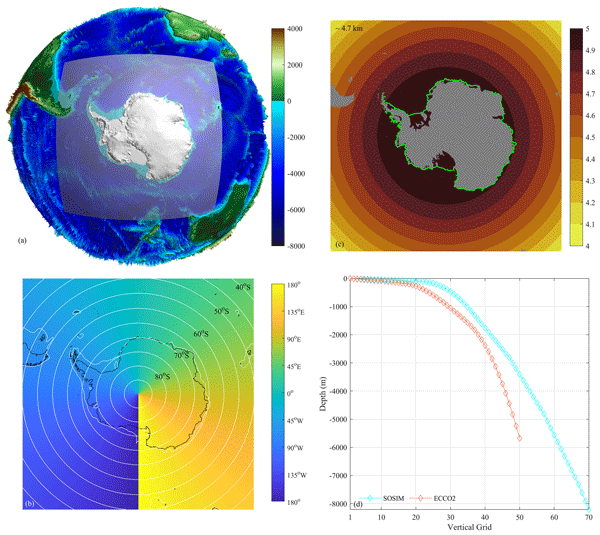
We developed a high-resolution computer model to simulate how the ocean, sea ice, and ice shelves interact around Antarctica. This helps us understand their critical role in global climate and sea-level rise. Our model successfully captures essential features like major currents and seasonal ice changes. Despite some remaining biases, it provides a useful tool for predicting future changes in this vital and rapidly evolving region.
Guokun Lyu, Longjiang Mu, Armin Koehl, Ruibo Lei, Xi Liang, and Chuanyu Liu
Geosci. Model Dev., 18, 9451–9468, https://doi.org/10.5194/gmd-18-9451-2025, https://doi.org/10.5194/gmd-18-9451-2025, 2025
Short summary
Short summary
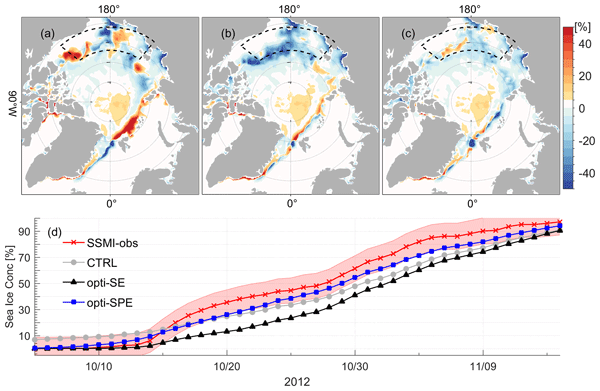
In the sea ice-ocean models, errors in the parameters and missing spatiotemporal variations contribute to the deviations between the simulations and the observations. We extended an adjoint method to optimize spatiotemporally varying parameters together with the atmosphere forcing and the initial conditions using satellite and in-situ observations. Seasonally, this scheme demonstrates a more prominent advantage in mid-autumn and show great potential for accurately reproducing the Arctic changes.
Xueying Zhang, Enhui Liao, Wenfang Lu, Zelun Wu, Guansuo Wang, Xueming Zhu, and Shiyu Liang
Earth Syst. Sci. Data, 17, 6071–6095, https://doi.org/10.5194/essd-17-6071-2025, https://doi.org/10.5194/essd-17-6071-2025, 2025
Short summary
Short summary
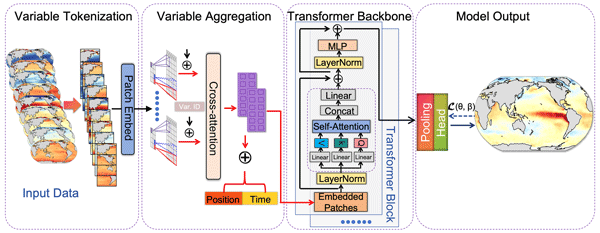
We created a new global dataset that reveals how ocean surface carbon dioxide has changed each month over the past four decades. By applying a deep learning model trained on both observational data and model simulations, we improved the representation of interannual variability and more accurately captured ocean responses to climate events like El Niño. This work supports global efforts to understand the ocean’s role in the carbon cycle and its response to climate change.

Linxu Huang, Tianyu Zhang, Shouwen Zhang, and Hui Wang
Ocean Sci., 21, 1891–1908, https://doi.org/10.5194/os-21-1891-2025, https://doi.org/10.5194/os-21-1891-2025, 2025
Short summary
Short summary
This study used computer simulations to analyze tide–surge interaction during Typhoon Nida (2016) in the Pearl River Estuary in China. The results showed that the deeper waters were influenced by the tide and the shallower areas were dominated by wind and bottom friction. Surge impacts varied with tidal timing, but key factors remained consistent. The findings show that tidal data should be included in surge forecasts to improve coastal defences.

Qinwang Xing, Haiqing Yu, Wei Yu, Xinjun Chen, and Hui Wang
Earth Syst. Sci. Data, 17, 2831–2848, https://doi.org/10.5194/essd-17-2831-2025, https://doi.org/10.5194/essd-17-2831-2025, 2025
Short summary
Short summary
Ocean fronts play a key role in marine ecosystems and often implicitly exist in satellite observations. This work presents the first publicly available daily global front dataset spanning 1982 to 2023, with comprehensive validations using in situ global observations. Our validations enhance confidence in the application of satellite-based front detection and provide independent support for global front occurrence patterns. The dataset is expected to be widely used in front-related studies.
Han Zhang, Dake Chen, Tongya Liu, Di Tian, Min He, Qi Li, Guofei Wei, and Jian Liu
Earth Syst. Sci. Data, 16, 5665–5679, https://doi.org/10.5194/essd-16-5665-2024, https://doi.org/10.5194/essd-16-5665-2024, 2024
Short summary
Short summary
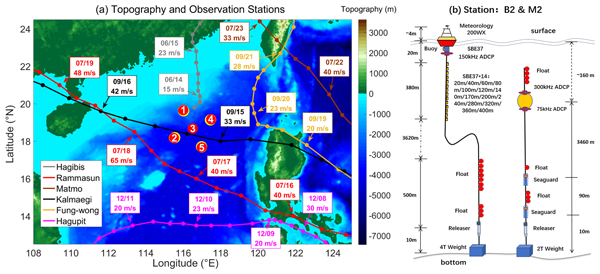
This paper provides a cross-shaped moored array dataset (MASCS 1.0) of observations that consist of five buoys and four moorings in the northern South China Sea from 2014 to 2015. The moored array is influenced by atmospheric forcings such as tropical cyclones and monsoon as well as oceanic tides and flows. The data reveal variations of the air–sea interface and the ocean itself, which are valuable for studies of air–sea interactions and ocean dynamics in the northern South China Sea.
Jian Liu, Jingjing Yu, Chuyong Lin, Min He, Haiyan Liu, Wei Wang, and Min Min
Earth Syst. Sci. Data, 16, 4949–4969, https://doi.org/10.5194/essd-16-4949-2024, https://doi.org/10.5194/essd-16-4949-2024, 2024
Short summary
Short summary
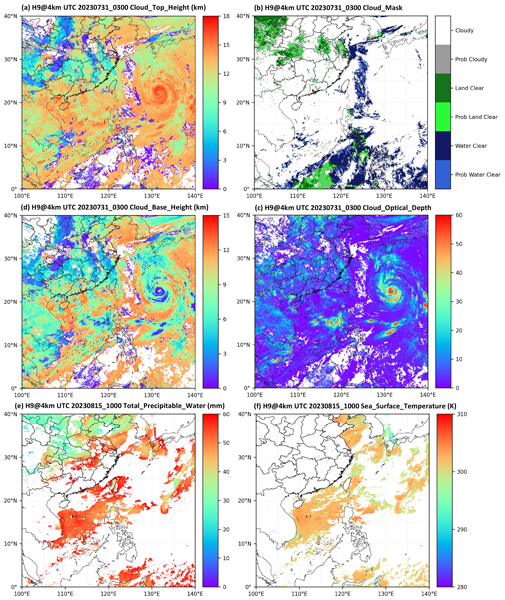
The Japanese Himawari-8 and Himawari-9 (H8/9) geostationary (GEO) satellites are strategically positioned over the South China Sea (SCS), spanning from 3 November 2022 to the present. They mainly provide cloud mask, fraction, height, phase, optical, and microphysical property; layered precipitable water; and sea surface temperature products within a temporal resolution of 10 min and a gridded resolution of 0.05° × 0.05°.

Na Li, Xueming Zhu, Hui Wang, Shouwen Zhang, and Xidong Wang
Ocean Sci., 19, 1437–1451, https://doi.org/10.5194/os-19-1437-2023, https://doi.org/10.5194/os-19-1437-2023, 2023
Short summary
Short summary
Observations of the sea surface temperature in the Arabian Sea show exceptional warming before the onset of the Indian Ocean summer monsoon. The sea surface temperature change is mainly caused by sea surface heat flux forcing, horizontal advection, and vertical entrainment. Here, we quantify the contribution of those factors to the Arabian Sea warm pool using heat budget analysis and highlight how large-scale ocean modes control its change.
Guokun Lyu, Armin Koehl, Xinrong Wu, Meng Zhou, and Detlef Stammer
Ocean Sci., 19, 305–319, https://doi.org/10.5194/os-19-305-2023, https://doi.org/10.5194/os-19-305-2023, 2023
Short summary
Short summary
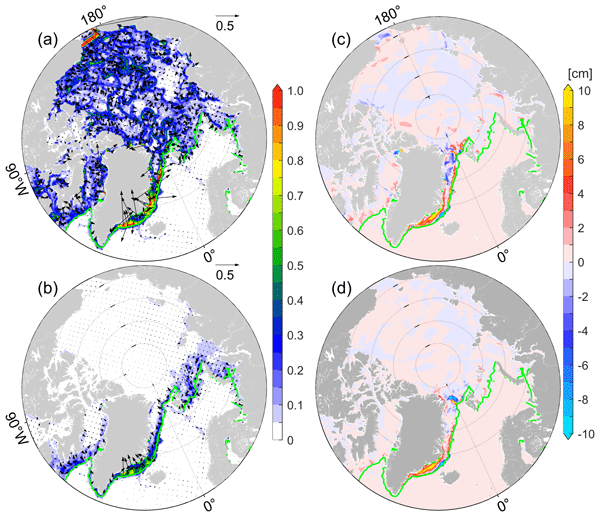
Data assimilation techniques are important for combining observations with numerical models. Here, we approximate the adjoint of viscous-plastic dynamics (adjoint-VP) to replace the adjoint of free-drift dynamics (adjoint-FD) for developing an advanced Arctic Ocean and sea ice modeling and adjoint-based assimilation system. We find that adjoint-VP provides a better ocean and sea ice estimation than adjoint-FD, considering the residual errors and adjustments of the atmospheric states.

Xueming Zhu, Ziqing Zu, Shihe Ren, Miaoyin Zhang, Yunfei Zhang, Hui Wang, and Ang Li
Geosci. Model Dev., 15, 995–1015, https://doi.org/10.5194/gmd-15-995-2022, https://doi.org/10.5194/gmd-15-995-2022, 2022
Short summary
Short summary
SCSOFS has provided daily updated marine forecasting in the South China Sea for the next 5 d since 2013. Comprehensive updates have been conducted to the configurations of SCSOFS's physical model and data assimilation scheme in order to improve its forecasting skill. The three most sensitive updates are highlighted. Scientific comparison and accuracy assessment results indicate that remarkable improvements have been achieved in SCSOFSv2 with respect to the original version SCSOFSv1.
Guokun Lyu, Nuno Serra, Meng Zhou, and Detlef Stammer
Ocean Sci., 18, 51–66, https://doi.org/10.5194/os-18-51-2022, https://doi.org/10.5194/os-18-51-2022, 2022
Short summary
Short summary
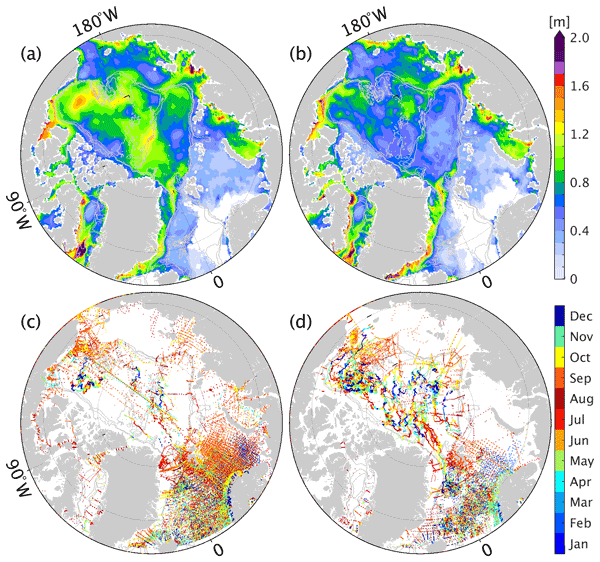
This study explores the Arctic sea level variability depending on different timescales and the relation to temperature, salinity and mass changes, identifying key parameters and regions that need to be observed coordinately. The decadal sea level variability reflects salinity changes. But it can only reflect salinity change at periods of greater than 1 year, highlighting the requirement for enhancing in situ hydrographic observations and complicated interpolation methods.
Cited articles
An, M., Liu, J., Liu, J., Sun, W., Yang, J., Tan, W., Liu, Y., Sian, K. T. C. L. K., Ji, J., and Dong, C.: Comparative analysis of four types of mesoscale eddies in the north pacific subtropical countercurrent region – Part I spatial characteristics, Front. Mar. Sci., 9, 1004300, https://doi.org/10.3389/fmars.2022.1004300, 2022.
Archer, M. R., Li, Z., and Fu, L. L.: Increasing the space–time resolution of mapped sea surface height from altimetry, J. Geophys. Res.-Oceans, 125, e2019JC015878, https://doi.org/10.1029/2019JC015878, 2020.
Argo Science Team: On the design and implementation of Argo: An initial plan for a global array of profiling floats, GODAE International Project Office, https://argo.ucsd.edu/wp-content/uploads/sites/361/2020/05/argo-design.pdf (last access: 12 December 2025), 1998.
Bian, C., Jing, Z., Wang, H., Wu, L., Chen, Z., Gan, B., and Yang, H.: Oceanic mesoscale eddies as crucial drivers of global marine heatwaves, Nat. Commun., 14, 2970, https://doi.org/10.1038/s41467-023-38811-z, 2023.
Cai, Z., Gan, J., Liu, Z., Hui, C. R., and Li, J.: Progress on the formation dynamics of the layered circulation in the South China Sea, Prog. Oceanogr., 181, 102246, https://doi.org/10.1016/j.pocean.2019.102246, 2020.
Callies, J., Ferrari, R., Klymak, J., and Gula, J.: Seasonality in submesoscale turbulence, Nat. Commun., 6, 6862, https://doi.org/10.1038/ncomms7862, 2015.
Capet, X., McWilliams, J. C., Molemaker, M. J., and Shchepetkin, A. F.: Mesoscale to submesoscale transition in the California current system. Part I: flow structure, eddy flux, and observational tests, J. Phys. Oceanogr., 38, 29–43, https://doi.org/10.1175/2007JPO3671.1, 2008.
Carnes, M. R.: Description and evaluation of GDEM-V 3.0, Naval Research Laboratory, Stennis Space Center, MS, NRL/MR/7330-09-9165, https://www7320.nrlssc.navy.mil/pubs/2009/carnes-2009.pdf (last access: 4 February 2026), 2009.
Castillo-Trujillo, A. C., Kwon, Y. O., Fratantoni, P., Chen, K., Seo, H., Alexander, M. A., and Saba, V. S.: An evaluation of eight global ocean reanalyses for the Northeast US continental shelf, Prog. Oceanogr., 219, 103126, https://doi.org/10.1016/j.pocean.2023.103126, 2023.
Chapman, D. C.: Numerical treatment of cross-shelf open boundaries in a barotropic coastal ocean model, J. Phys. Oceanogr., 15, 1060–1075, 1985.
Chen, G., Hou, Y., and Chu, X.: Mesoscale eddies in the South China Sea: Mean properties, spatiotemporal variability, and impact on thermohaline structure, J. Geophys. Res.-Oceans, 116, C06018, https://doi.org/10.1029/2010JC006716, 2011.
Chen, R., Yang, Y., Geng, Q., Stewart, A., Flierl, G., and Wang, J.: Diagnostic framework linking eddy flux ellipse with eddy-mean energy exchange, Ocean-Land-Atmos. Res., 3, 0072, https://doi.org/10.34133/olar.0072, 2024.
Chen, Y., Xiao, C., Zhang, Y., and Lai, Z.: The mixed layer salinity budget in the Northern South China Sea: a modeling study, J. Mar. Sci. Eng., 11, 1693, https://doi.org/10.3390/jmse11091693, 2023.
Cheng, L., Abraham, J., Trenberth, K. E., Boyer, T., Mann, M. E., Zhu, J., and Lu, Y.: New record ocean temperatures and related climate indicators in 2023, Adv. Atmos. Sci., 41, 1068–1082, https://doi.org/10.1007/s00376-024-3378-5, 2024a.
Cheng, L., Pan, Y., Tan, Z., Zheng, H., Zhu, Y., Wei, W., Du, J., Yuan, H., Li, G., Ye, H., Gouretski, V., Li, Y., Trenberth, K. E., Abraham, J., Jin, Y., Reseghetti, F., Lin, X., Zhang, B., Chen, G., Mann, M. E., and Zhu, J.: IAPv4 ocean temperature and ocean heat content gridded dataset, Earth Syst. Sci. Data, 16, 3517–3546, https://doi.org/10.5194/essd-16-3517-2024, 2024b.
Cheng, X. and Qi, Y.: Variations of eddy kinetic energy in the South China Sea, J. Oceanogr., 66, 85–94, 2010.
Cheung, W. W. L. and Frölicher, T. L.: Marine heatwaves exacerbate climate change impacts for fisheries in the northeast Pacific, Sci. Rep., 10, 6678, https://doi.org/10.1038/s41598-020-63650-z, 2020.
Copernicus Marine Service: Global Ocean Gridded L4 Sea Surface Heights and Derived Variables Reprocessed 1993 Ongoing, Mercator Ocean International [data set], https://doi.org/10.48670/moi-00148, 2024a.
Copernicus Marine Service: Global Ocean OSTIA Sea Surface Temperature and Sea Ice Reprocessed, Mercator Ocean International [data set], https://doi.org/10.48670/moi-00168, 2024b.
Cummings, J. A. and Smedstad, O. M.: Variational data assimilation for the global ocean, in: Data Assimilation for Atmospheric, Oceanic and Hydrologic Applications, Vol. II, Springer, Berlin, Heidelberg, 303–343, https://doi.org/10.1007/978-3-642-35088-7_13, 2013.
Dong, C., You, Z., Dong, J., Ji, J., Sun, W., Xu, G., Lu, X., Xie, H., Teng, F., Liu, Y., Xu, A., Wang, Q., Xia, Q., Lin, X., Fu, M., Wang, J., Cao, Y., and Han, G.: Oceanic mesoscale eddies, Ocean-Land-Atmos. Res., 4, 0081, https://doi.org/10.34133/olar.0081, 2025.
Donlon, C. J., Martin, M., Stark, J., Roberts-Jones, J., Fiedler, E., and Wimmer, W.: The operational sea surface temperature and sea ice analysis (OSTIA) system, Remote Sens. Environ., 116, 140–158, https://doi.org/10.1016/j.rse.2010.10.017, 2012.
Elipot, S., Lumpkin, R., Perez, R. C., Lilly, J. M., Early, J. J., and Sykulski, A. M.: A global surface drifter data set at hourly resolution, J. Geophys. Res.-Oceans, 121, 2937–2966, https://doi.org/10.1002/2016JC011716, 2016.
Evans, D. G., Frajka-Williams, E., and Garabato, A. N.: Dissipation of mesoscale eddies at a western boundary via a direct energy cascade, Sci. Rep., 12, 887, https://doi.org/10.1038/s41598-022-05002-7, 2022.
Evensen, G.: The ensemble Kalman filter: theoretical formulation and practical implementation, Ocean Dynam., 53, 343–367, https://doi.org/10.1007/s10236-003-0036-9, 2003.
Ferrari, R. and Wunsch, C.: Ocean circulation kinetic energy: Reservoirs, sources, and sinks, Annu. Rev. Fluid Mech., 41, 253–282, https://doi.org/10.1146/annurev.fluid.40.111406.102139, 2009.
Flather, R. A.: A tidal model of the northwest European continental shelf, Mem. Soc. R. Sci. Liege, 10, 141–164, http://pascal-francis.inist.fr/vibad/index.php?action=getRecordDetail&idt=PASCAL7730150079 (last access: 12 February 2026), 1976.
Frölicher, T. L., Fischer, E. M., and Gruber, N.: Marine heatwaves under global warming, Nature, 560, 360–364, https://doi.org/10.1038/s41586-018-0383-9, 2018.
Gregory, C. H., Artana, C., Lama, S., León-FonFay, D., Sala, J., Xiao, F., and Holbrook, N. J.: Global marine heatwaves under different flavors of ENSO, Geophys. Res. Lett., 51, e2024GL110399, https://doi.org/10.1029/2024GL110399, 2024.
Guo, M., Xiu, P., Li, S., Chai, F., Xue, H., Zhou, K., and Dai, M.: Seasonal variability and mechanisms regulating chlorophyll distribution in mesoscale eddies in the South China Sea, J. Geophys. Res.-Oceans, 122, 5329–5347, https://doi.org/10.1002/2016JC012670, 2017.
Guo, P., Zhao, M., and Lian, Z.: El Niño enhances coral larval dispersal potential of Dongsha Island – a biodiversity hotspot in the South China Sea, Front. Mar. Sci., 13, 1748933, https://doi.org/10.3389/fmars.2026.1748933, 2026.
Han, T., Xu, K., Wang, L., Liu, B., Tam, C. Y., Liu, K., and Wang, W.: Extremely long-lived marine heatwave in South China Sea during summer 2020: Combined effects of the seasonal and intraseasonal variations, Global Planet. Change, 230, 104261, https://doi.org/10.1016/j.gloplacha.2023.104261, 2023.
He, Q., Zhan, W., Feng, M., Gong, Y., Cai, S., and Zhan, H.: Common occurrences of subsurface heatwaves and cold spells in ocean eddies, Nature, 634, 1111–1117, https://doi.org/10.1038/s41586-024-08051-2, 2024.
He, R., Wu, T., Mao, S., Zong, H., Zambon, J., Warrillow, J., and Hernandez, D.: Advanced Ocean Reanalysis of the Northwestern Atlantic: 1993–2022, arxiv [preprint], https://doi.org/10.48550/arXiv.2503.06907, 2025.
He, Y., Xie, J., and Cai, S.: Interannual variability of winter eddy patterns in the eastern South China Sea, Geophys. Res. Lett., 43, 5185–5193, https://doi.org/10.1002/2016GL068842, 2016.
Hersbach, H., Bell, B., Berrisford, P., Hirahara, S., Horányi, A., Muñoz-Sabater, J., Nicolas, J., Peubey, C., Radu, R., Schepers, D., Simmons, A., Soci, C., Abdalla, S., Abellan, X., Balsamo, G., Bechtold, P., Biavati, G., Bidlot, J., Bonavita, M., De Chiara, G., Dahlgren, P., Dee, D., Diamantakis, M., Dragani, R., Flemming, J., Forbes, R., Fuentes, M., Geer, A., Haimberger, L., Healy, S., Hogan, R. J., Hólm, E., Janisková, M., Keeley, S., Laloyaux, P., Lopez, P., Lupu, C., Radnoti, G., de Rosnay, P., Rozum, I., Vamborg, F., Villaume, S., and Thépaut, J.-N.: The ERA5 global reanalysis, Q. J. Roy. Meteor. Soc., 146, 1999–2049, https://doi.org/10.1002/qj.3803, 2020.
Hobday, A. J., Alexander, L. V., Perkins, S. E., Smale, D. A., Straub, S. C., Oliver, E. C., and Wernberg, T.: A hierarchical approach to defining marine heatwaves, Prog. Oceanogr., 141, 227–238, https://doi.org/10.1016/j.pocean.2015.12.014, 2016.
Holbrook, N. J., Scannell, H. A., Sen Gupta, A., Benthuysen, J. A., Feng, M., Oliver, E. C., and Wernberg, T.: A global assessment of marine heatwaves and their drivers, Nat. Commun., 10, 2624, https://doi.org/10.1038/s41467-019-10206-z, 2019.
Hughes, T. P., Kerry, J. T., Baird, A. H., Connolly, S. R., Dietzel, A., Eakin, C. M., Heron, S. F., Hoey, A. S., Hoogenboom, M. O., Liu, G., McWilliam, M. J., Pears, R. J., Pratchett, M. S., Skirving, W. J., Stella, J. S., and Torda, G.: Global warming transforms coral reef assemblages, Nature, 556, 492–496, https://doi.org/10.1038/s41586-018-0041-2, 2018.
Jean-Michel, L., Eric, G., Romain, B. B., Gilles, G., Angélique, M., Marie, D., and Pierre-Yves, L. T.: The Copernicus global 1/12 oceanic and sea ice GLORYS12 reanalysis, Front. Earth Sci., 9, 698876, https://doi.org/10.3389/feart.2021.698876, 2021.
Jin, Y., Jin, M., Wang, D., and Dong, C.: Statistical analysis of multi-year South China Sea eddies and exploration of eddy classification, Remote Sens., 16, 1818, https://doi.org/10.3390/rs16101818, 2024.
Juhl, M. C., Passaro, M., and Dettmering, D.: Regional daily sea level maps from multi-mission altimetry using space–time window Kriging, Adv. Space Res., 75, 7769–7786, https://doi.org/10.1016/j.asr.2025.04.014, 2025.
Kerry, C. G., Roughan, M., Keating, S., Gwyther, D., Brassington, G., Siripatana, A., and Souza, J. M. A. C.: Comparison of 4-dimensional variational and ensemble optimal interpolation data assimilation systems using a Regional Ocean Modeling System (v3.4) configuration of the eddy-dominated East Australian Current system, Geosci. Model Dev., 17, 2359–2386, https://doi.org/10.5194/gmd-17-2359-2024, 2024.
Kim, W., Yeh, S. W., Kim, J. H., Kug, J. S., and Kwon, M.: The unique 2009–2010 El Niño event: A fast phase transition of warm pool El Niño to La Niña, Geophys. Res. Lett., 38, L15809, https://doi.org/10.1029/2011GL048521, 2011.
Kuo, Y.-C., Chan, J.-W., Wang, Y.-C., Shen, Y.-L., Chang, Y., and Lee, M.-A.: Long-term observation on sea surface temperature variability in the Taiwan Strait during the northeast monsoon season, Int. J. Remote Sens., 39, 4330–4342, https://doi.org/10.1080/01431161.2017.1387311, 2018.
Lguensat, R., Viet, P. H., Sun, M., Chen, G., Fenglin, T., Chapron, B., and Fablet, R.: Data-driven interpolation of sea level anomalies using analog data assimilation, Remote Sens., 11, 858, https://doi.org/10.3390/rs11070858, 2019.
Li, Z., Jiang, X., and Wang, G.: Numerical models, observing systems, and data assimilation for prediction of ocean mesoscale eddies, Ocean-Land-Atmos. Res., 3, 0059, https://doi.org/10.34133/olar.0059, 2024.
Li, Y., Ren, G., Wang, Q., Mu, L., and Niu, Q.: Marine heatwaves in the South China Sea: tempo-spatial pattern and its association with large-scale circulation, Remote Sens., 14, 5829, https://doi.org/10.3390/rs14225829, 2022.
Lin, X., Dong, C., Chen, D., Liu, Y., Yang, J., Zou, B., and Guan, Y.: Three-dimensional properties of mesoscale eddies in the South China Sea based on eddy-resolving model output, Deep-Sea Res. Pt. I, 99, 46–64, https://doi.org/10.1016/j.dsr.2015.01.007, 2015.
Lumpkin, R. and Pazos, M.: Measuring surface currents with Surface Velocity Program drifters: the instrument, its data, and some recent results, in: Lagrangian Analysis and Prediction of Coastal and Ocean Dynamics, edited by: Griffa, A., Kirwan, A. D., Mariano, A. J., Özgökmen, T., and Ross, T., Cambridge University Press, 39–67, https://doi.org/10.1017/CBO9780511535901.003, 2007.
Lumpkin, R., Özgökmen, T., and Centurioni, L.: Advances in the application of surface drifters, Annu. Rev. Mar. Sci., 9, 59–81, https://doi.org/10.1146/annurev-marine-010816-060641, 2017
Madin, E. M.: Halt reef destruction in South China Sea, Nature, 524, 291–291, https://doi.org/10.1038/524291a, 2015.
Marchesiello, P., McWilliams, J. C., and Shchepetkin, A.: Open boundary conditions for long-term integration of regional oceanic models, Ocean Model., 3, 1–20, https://doi.org/10.1016/S1463-5003(00)00013-5, 2001.
Mellor, G. L. and Yamada, T.: Development of a turbulence closure model for geophysical fluid problems, Rev. Geophys., 20, 851–875, https://doi.org/10.1029/RG020i004p00851, 1982.
Nan, F., Xue, H., and Yu, F.: Kuroshio intrusion into the South China Sea: A review, Prog. Oceanogr., 137, 314–333, https://doi.org/10.1016/j.pocean.2014.05.012, 2015.
Nencioli, F., Dong, C., Dickey, T., Washburn, L., and McWilliams, J. C.: A vector geometry–based eddy detection algorithm and its application to a high-resolution numerical model product and high-frequency radar surface velocities in the Southern California Bight, J. Atmos. Ocean. Technol., 27, 564–579, https://doi.org/10.1175/2009JTECHO725.1, 2010.
Niiler, P. P.: The world ocean surface circulation, in: Ocean Circulation and Climate: Observing and Modelling the Global Ocean, edited by: Siedler, G., Church, J., and Gould, J., International Geophysics Series, Academic Press, 77, 193–204, https://doi.org/10.1016/S0074-6142(01)80119-4, 2001
Noh, E., Kim, J., Jun, S. Y., Pak, G., Kim, J.-H., and Kim, H.-G.: Atmospheric pathway of marine heatwaves over the Northwestern Pacific, Sci. Rep., 13, 22821, https://doi.org/10.1038/s41598-023-49833-4, 2023.
Oke, P. R., Brassington, G. B., Griffin, D. A., and Schiller, A.: The Bluelink ocean data assimilation system (BODAS), Ocean Model., 21, 46–70, https://doi.org/10.1016/j.ocemod.2007.11.002, 2008.
Oliver, E. C. J., Benthuysen, J. A., Darmaraki, S., Donat, M. G., Hobday, A. J., Holbrook, N. J., Schlegel, R. W., and Sen Gupta, A.: Marine heatwaves, Annu. Rev. Mar. Sci., 13, 313–342, https://doi.org/10.1146/annurev-marine-032720-095144, 2021.
Oliver, E. C. J., Donat, M. G., Burrows, M. T., Moore, P. J., Smale, D. A., Alexander, L. V., Benthuysen, J. A., Feng, M., Sen Gupta, A., Hobday, A. J., Holbrook, N. J., Perkins-Kirkpatrick, S. E., Scannell, H. A., Straub, S. C., and Wernberg, T.: Longer and more frequent marine heatwaves over the past century, Nat. Commun., 9, 1324, https://doi.org/10.1038/s41467-018-03732-9, 2018.
Pan, J. and Sun, Y.: Estimation of horizontal eddy heat flux in upper mixed-layer in the South China Sea by using satellite data, Sci. Rep., 8, 15527, https://doi.org/10.1038/s41598-018-33803-2, 2018.
Passaro, M. and Juhl, M. C.: On the potential of mapping sea level anomalies from satellite altimetry with Random Forest Regression, Ocean Dynam., 73, 107–116, https://doi.org/10.1007/s10236-023-01540-4, 2023.
Paul, N. and Mahadevan, A.: Near-inertial waves enhance vertical transport at ocean fronts, arXiv [preprint], https://doi.org/10.48550/arXiv.2511.23460, 2025.
Qiu, C., Du, Z., Tang, H., Yi, Z., Qiao, J., Wang, D., Zhai, X., and Wang, W.: A high-resolution temperature–salinity dataset observed by autonomous underwater vehicles for the evolution of mesoscale eddies and associated submesoscale processes in the South China Sea, Earth Syst. Sci. Data, 17, 3189–3202, https://doi.org/10.5194/essd-17-3189-2025, 2025a.
Qiu, C., Du, Z., Tang, H., Yi, Z., Qiao, J., Wang, D., Zhai, X., and Wang, W.: A High-Resolution Temperature-Salinity Dataset Observed by Autonomous Underwater Vehicles for the Evolution of Mesoscale Eddies and Associated Submesoscale Processes in South China Sea, Science Data Bank [data set], https://doi.org/10.57760/sciencedb.11996, 2025b.
Reynolds, R. W., Smith, T. M., Liu, C., Chelton, D. B., Casey, K. S., and Schlax, M. G.: Daily high-resolution-blended analyses for sea surface temperature, J. Climate, 20, 5473–5496, https://doi.org/10.1175/2007JCLI1824.1, 2007.
Rio, M. H., Santoleri, R., Bourdalle-Badie, R., Griffa, A., Piterbarg, L., and Taburet, G.: Improving the altimeter-derived surface currents using high-resolution sea surface temperature data: a feasibility study based on model outputs, J. Atmos. Ocean. Tech., 33, 2769–2784, https://doi.org/10.1175/JTECH-D-16-0017.1, 2016.
Roemmich, D., Johnson, G. C., Riser, S., Davis, R., Gilson, J., Owens, W. B., and Ignaszewski, M.: The Argo Program: Observing the global ocean with profiling floats, Oceanography, 22, 34–43, https://doi.org/10.5670/oceanog.2009.36, 2009.
Sallée, J. B., Pellichero, V., Akhoudas, C., Pauthenet, E., Vignes, L., Schmidtko, S., and Kuusela, M.: Summertime increases in upper-ocean stratification and mixed-layer depth, Nature, 591, 592–598, https://doi.org/10.1038/s41586-021-03303-x, 2021.
Schubert, R., Gula, J., Greatbatch, R. J., Baschek, B., and Biastoch, A.: The submesoscale kinetic energy cascade: Mesoscale absorption of submesoscale mixed layer eddies and frontal downscale fluxes, J. Phys. Oceanogr., 50, 2573–2589, https://doi.org/10.1175/JPO-D-19-0311.1, 2020.
Sen Gupta, A., Thomsen, M., Benthuysen, J. A., Hobday, A. J., Oliver, E., Alexander, L. V., Burrows, M. T., Donat, M. G., Feng, M., Holbrook, N. J., Perkins-Kirkpatrick, S., Moore, P. J., Rodrigues, R. R., Scannell, H. A., Taschetto, A. S., Ummenhofer, C. C., Wernberg, T., and Smale, D. A.: Drivers and impacts of the most extreme marine heatwave events, Sci. Rep., 10, 19359, https://doi.org/10.1038/s41598-020-75445-3, 2020.
Shchepetkin, A. F. and McWilliams, J. C.: The regional oceanic modeling system (ROMS): a split-explicit, free-surface, topography-following-coordinate oceanic model, Ocean Model., 9, 347–404, https://doi.org/10.1016/j.ocemod.2004.08.002, 2005.
Song, X., Sun, R., He, S., Zhang, H., Gu, Y., Li, P., and Song, J.: Impact of anticyclonic mesoscale eddies on the vertical structures of marine heatwaves in the South China Sea, Remote Sens., 17, 370, https://doi.org/10.3390/rs17030370, 2025.
Soufflet, Y., Marchesiello, P., Lemarié, F., Jouanno, J., Capet, X., Debreu, L., and Benshila, R.: On effective resolution in ocean models, Ocean Model., 98, 36–50, https://doi.org/10.1016/j.ocemod.2015.12.004, 2016.
Stammer, D.: Global characteristics of ocean variability estimated from regional TOPEX/POSEIDON altimeter measurements, J. Phys. Oceanogr., 27, 1743–1769, https://doi.org/10.1175/1520-0485(1997)027<1743:GCOOVE>2.0.CO;2, 1997.
Stammer, D.: On eddy characteristics, eddy transports, and mean flow properties, J. Phys. Oceanogr., 28, 727–739, https://doi.org/10.1175/1520-0485(1998)028<0727:OECETA>2.0.CO;2, 1998.
Sun, W., Wang, Y., Xie, M., Pan, Y., Li, C., Ji, J., and Dong, C.: Exploring the connection of marine heatwaves and mesoscale eddies in the South China Sea, J. Oceanol. Limnol., 1–15, https://doi.org/10.1007/s00343-025-4332-9, 2026.
Sun, W., Dong, C., Tan, W., and He, Y.: Statistical characteristics of cyclonic warm-core eddies and anticyclonic cold-core eddies in the North Pacific based on remote sensing data, Remote Sens., 11, 208, https://doi.org/10.3390/rs11020208, 2019.
Taburet, G., Sanchez-Roman, A., Ballarotta, M., Pujol, M.-I., Legeais, J.-F., Fournier, F., Faugere, Y., and Dibarboure, G.: DUACS DT2018: 25 years of reprocessed sea level altimetry products, Ocean Sci., 15, 1207–1224, https://doi.org/10.5194/os-15-1207-2019, 2019.
Tang, D., Sun, Z., and Sui, G.: Geological environment in the South China Sea, J. Oceanol. Limnol., 41, 403–408, https://doi.org/10.1007/s00343-023-3403-2, 2023.
Terhaar, J., Burger, F. A., Vogt, L., Frölicher, T. L., and Stocker, T. F.: Record sea surface temperature jump in 2023–2024 unlikely but not unexpected, Nature, 639, 942–946, https://doi.org/10.1038/s41586-025-08674-z, 2025.
Thompson, B. and Tkalich, P.: Mixed layer thermodynamics of the Southern South China Sea, Clim. Dynam., 43, 2061–2075, https://doi.org/10.1007/s00382-013-2030-3, 2014.
Thoppil, P. G.: Enhanced phytoplankton bloom triggered by atmospheric high-pressure systems over the Northern Arabian Sea, Sci. Rep., 13, 769, https://doi.org/10.1038/s41598-023-27785-z, 2023.
Villas Bôas, A. B., Lenain, L., Cornuelle, B. D., Gille, S. T., and Mazloff, M. R.: A broadband view of the sea surface height wavenumber spectrum, Geophys. Res. Lett., 49, e2021GL096699, https://doi.org/10.1029/2021GL096699, 2022.
Wang, B., Huang, F., Wu, Z., Yang, J., Fu, X., and Kikuchi, K.: Multi-scale climate variability of the South China Sea monsoon: A review, Dyn. Atmos. Oceans, 47, 15–37, https://doi.org/10.1016/j.dynatmoce.2008.09.004, 2009.
Wang, D.: Overview of the atmosphere and hydrological environment of the South China Sea, in: Ocean Circulation and Air-Sea Interaction in the South China Sea, Springer Nature Singapore, Singapore, 1–15, https://doi.org/10.1007/978-981-19-6262-2_1, 2022.
Wang, G., Su, J., and Chu, P. C.: Mesoscale eddies in the South China Sea observed with altimeter data, Geophys. Res. Lett., 30, 2121, https://doi.org/10.1029/2003GL018532, 2003.
Wang, H., Lu, Y., Zhai, L., Chen, X., and Liu, S.: Variations of surface marine heatwaves in the Northwest Pacific during 1993–2019, Front. Mar. Sci., 11, 1323702, https://doi.org/10.3389/fmars.2024.1323702, 2024.
Wu, C.-R. and Chiang, T.-L.: Mesoscale eddies in the northern South China Sea, Deep-Sea Res. Pt. II, 54, 1575–1588, https://doi.org/10.1016/j.dsr2.2007.05.008, 2007.
Wyatt, A. S. J., Leichter, J. J., Washburn, L., Kui, L., Edmunds, P. J., and Burgess, S. C.: Hidden heatwaves and severe coral bleaching linked to mesoscale eddies and thermocline dynamics, Nat. Commun., 14, 25, https://doi.org/10.1038/s41467-022-35550-5, 2023.
Xie, B., Sun, H., Liu, T., Jin, W., Lin, F., Meng, L., and Wang, Y.: Formation of record-breaking 2015/2016 winter marine heatwave in the northwest South China Sea, Front. Mar. Sci., 12, 1671389, https://doi.org/10.3389/fmars.2025.1671389, 2025.
Xie, J. and Zhu, J.: Ensemble optimal interpolation schemes for assimilating Argo profiles into a hybrid coordinate ocean model, Ocean Model., 33, 283–298, https://doi.org/10.1016/j.ocemod.2010.03.002, 2010.
Xie, S.-P., Xie, Q., Wang, D., and Liu, W. T.: Summer upwelling in the South China Sea and its role in regional climate variations, J. Geophys. Res.-Oceans, 108, 3261, https://doi.org/10.1029/2003JC001867, 2003.
Yao, Y. and Wang, C.: Variations in summer marine heatwaves in the South China Sea, J. Geophys. Res.-Oceans, 126, e2021JC017792, https://doi.org/10.1029/2021JC017792, 2021.
Yao, Y. and Wang, C.: Subsurface marine heatwaves in the South China Sea, J. Geophys. Res.-Oceans, 129, e2024JC021356, https://doi.org/10.1029/2024JC021356, 2024.
Yao, Y., Wang, C., and Wang, C.: Record-breaking 2020 summer marine heatwaves in the western North Pacific, Deep-Sea Res. Pt. II, 209, 105288, https://doi.org/10.1016/j.dsr2.2023.105288, 2023.
Yi, Z., Qiu, C., Wang, D., Cai, Z., Yu, J., and Shi, J.: Submesoscale kinetic energy induced by vertical buoyancy fluxes during the tropical cyclone Haitang, J. Geophys. Res.-Oceans, 129, e2023JC020494, https://doi.org/10.1029/2023JC020494, 2024.
Zeng, X., Peng, S., Li, Z., Zeng, Q., and Wang, D.: A reanalysis dataset of the South China Sea, Sci. Data, 1, 140052, https://doi.org/10.1038/sdata.2014.52, 2014.
Zhang, Z., Tian, J., Qiu, B., Zhao, W., Chang, P., Wu, D., and Wan, X.: Observed 3D structure, generation, and dissipation of oceanic mesoscale eddies in the South China Sea, Sci. Rep., 6, 24349, https://doi.org/10.1038/srep24349, 2016.
Zhang, Z., Wang, G., Wang, H., and Liu, H.: Three-dimensional structure of oceanic mesoscale eddies, Ocean-Land-Atmos. Res., 3, 0051, https://doi.org/10.34133/olar.0051, 2024.
Zhao, Z. and Marin, M.: A MATLAB toolbox to detect and analyze marine heatwaves, J. Open Source Softw., 4, 1124, https://doi.org/10.21105/joss.01124, 2019.
Zhu, X. and Zhang, X.: South China Sea Ocean Reanalysis (SCSORA) dataset, Southern Marine Science and Engineering Guangdong Laboratory (Zhuhai) [data set], 2001–2024, Version 1, https://doi.org/10.12378/geodb.2026.2.005.V1, 2026.
Zhu, X., Zu, Z., Ren, S., Zhang, M., Zhang, Y., Wang, H., and Li, A.: Improvements in the regional South China Sea Operational Oceanography Forecasting System (SCSOFSv2), Geosci. Model Dev., 15, 995–1015, https://doi.org/10.5194/gmd-15-995-2022, 2022.
Zhu, X., Guo, S., Chang, J., Zhang, X., Hu, Z., and Wang, H.: Full destruction of an anticyclonic eddy in the Northern South China Sea by Tropical Storm Mulan, Deep-Sea Res. Pt. I, 104500, https://doi.org/10.1016/j.dsr.2025.104500, 2025.
Short summary
This research presents a high-resolution ocean reanalysis dataset for the South China Sea covering 2001 to 2024. The dataset assimilates satellite remote sensing data and in-situ observations. It provides daily mean three-dimensional fields of temperature, salinity, currents, and sea surface height. Validation results show good agreement with observations. The dataset has been used to support studies of marine heatwaves, mesoscale eddies, and related processes in this important region.
This research presents a high-resolution ocean reanalysis dataset for the South China Sea...


Altmetrics
Final-revised paper
Preprint