the Creative Commons Attribution 4.0 License.
the Creative Commons Attribution 4.0 License.
 | 17 Nov 2026
Ecological change in the native Scottish pinewoods since 1971 – data from the Bunce 2018–2022 re-survey

Simon M. Smart
Fiona M. Seaton
Andy McMullen
Susan E. Ward
Karen Hornigold
Chris Nichols
Clare McW. H. Benskin
The native pinewoods of Scotland are acknowledged to be an important ecological resource, both for their biodiversity value and as a cultural and amenity resource. Due to the unique nature of the habitat and its limited range, it plays a critical role as an early warning system for broader environmental issues. In the late 1960s and 70s, increased concern was expressed regarding a decline in the status and management of the pinewoods. In response to the concerns, an ecological monitoring survey was initiated by R. G. H. Bunce of the Nature Conservancy in 1971, recording ground flora, tree information, soils and other descriptive attributes. Since that time, interest in the pinewoods has increased further, and there is a general consensus that the habitat is more vulnerable than ever. Thanks to a recent repeat survey between 2018 and 2022, questions addressing the threats and changes occurring in the pinewoods can now be explored in a statistically robust way. These questions include issues surrounding the impacts of deer grazing, regeneration, the balance between native and exotic species, local disturbances, trends in ground flora species occurrences, climate change and recovery from acidification. The new data from the 2018–2022 survey are now publicly available via the following DOI: https://doi.org/10.5285/5e268e86-4a4f-4112-bf2d-c3b0179c915c (Smart et al., 2023). Change data are available at: https://doi.org/10.6084/m9.figshare.34574874 (Wood et al., 2026).
- Article
(11027 KB) - Full-text XML
-
Supplement
(515 KB) - BibTeX
- EndNote


The Caledonian Pinewoods are a globally unique habitat. They are usually dominated by native Scots pine (Pinus sylvestris) but often have diverse canopies that include birch (Betula spp.), rowan (Sorbus aucuparia), alder (Alnus glutinosa), willow (Salix spp.), holly (Ilex aquifolium) and hazel (Corylus avellana). In Scotland, the native pine woodlands are included on the Scottish biodiversity list (NatureScot, 2024). They are identified as a priority habitat in the UK Biodiversity Action Plan (Maddock, 2008), and as an Annex I Habitat in the EU Habitats Directive (Caledonian Forest 91C0) (Romão, 2013). The restoration and resilience of this habitat is vital for halting biodiversity loss and contributing to reaching net zero, as well as being valued for cultural and recreational reasons. As a rare and unique habitat, the pinewoods act as an early warning system for many wider environmental issues. Several issues impacting the Scottish pinewood habitat have been identified including non-native tree species planting, regeneration of native species, deer density and management, ground flora species decline and climate change. In the last 50 years, statistically robust data regarding ecological changes in the habitat had been lacking that would allow investigation of changes over time related to these themes. The repeat of the “Bunce Scottish Pinewood Survey”, completed in 2022, provides the evidence to explore a wide range of questions when analysed in conjunction with the 1971 dataset (as described in Wood and Bunce, 2016).
In the 1960s and 70s, concerns were expressed as to the decline in the native pinewoods, and as a result, an ecological survey (the “Bunce Scottish Pinewood Survey”) was initiated in 1971 by Professor R. G. H. Bunce of the Nature Conservancy (later the Institute of Terrestrial Ecology and then the UK Centre for Ecology & Hydrology). This baseline survey and dataset is described in detail in Wood and Bunce (2016) and aimed to build on the comprehensive “Native pinewoods of Scotland” book published in 1959 (Steven and Carlisle, 1959). The initial 1971 survey led to a symposium in 1975, bringing together key stakeholders and raising the profile in conservation terms of this biodiverse and valued habitat. Ongoing concern about the current state of the woodlands led to “Scotland's Pinewood Conference”, convened in Fort William, Scotland in October 2024, the third of its kind since 1975. Attendees included conservationists, foresters, land managers and academics. The repeatable methods used in the 1971 survey have enabled a re-survey of the Bunce sites, starting in 2018. The survey was completed in 2022, and was largely funded by Woodland Trust, with a contribution from the Cairngorms National Park Authority. At the same time, a complementary survey of broadleaved woodlands was carried out, the “Bunce Woodland Survey of Great Britain”, also initiated in 1971 using the same methods (Wood and Bunce, 2016; Smart et al., 2024). That survey had been repeated in 2001 (Wood et al., 2015; Kirby et al., 2005), however the Bunce pinewood survey had never been repeated aside from two sites (Mar Lodge and Shieldaig) undertaken as part of a pilot study in 2000 (Smart et al., 2001).
The main aims of the 2018–2022 re-survey were to provide an evidence base for understanding the effects of multiple drivers and threats within a habitat of high conservation importance, and to gain a unique perspective on how understanding the past aids interpretation of the present. In particular, to investigate the status of native and non-native tree species, to collect evidence on the impacts of deer grazing, to test whether vegetation changes in the understorey have stabilised or been reversed due to local disturbance or management, to collect evidence of ongoing recovery from acidification by atmospheric sulphur and nitrogen deposition, to characterise the nearly 50-year trend in terms of variables that reflect links to ecosystem services (such as carbon storage in canopy and soils), and the changing role of woodlands as refuges for distinctive species. A substantial benefit of the Bunce survey is that change since 1971 can be directly assessed. The survey complements other recent work carried out in the pinewoods – the “Caledonian Pinewood Survey” (Rainey and Holmes, 2023) and the “Native Pine Survey”, part of the Native Woodland Survey of Scotland (NWSS) (Patterson et al., 2014) in addition to many smaller studies such as Bruce and Servant (2003), Froyd and Bennett (2006), and Bain (1987).
1.1 Sites
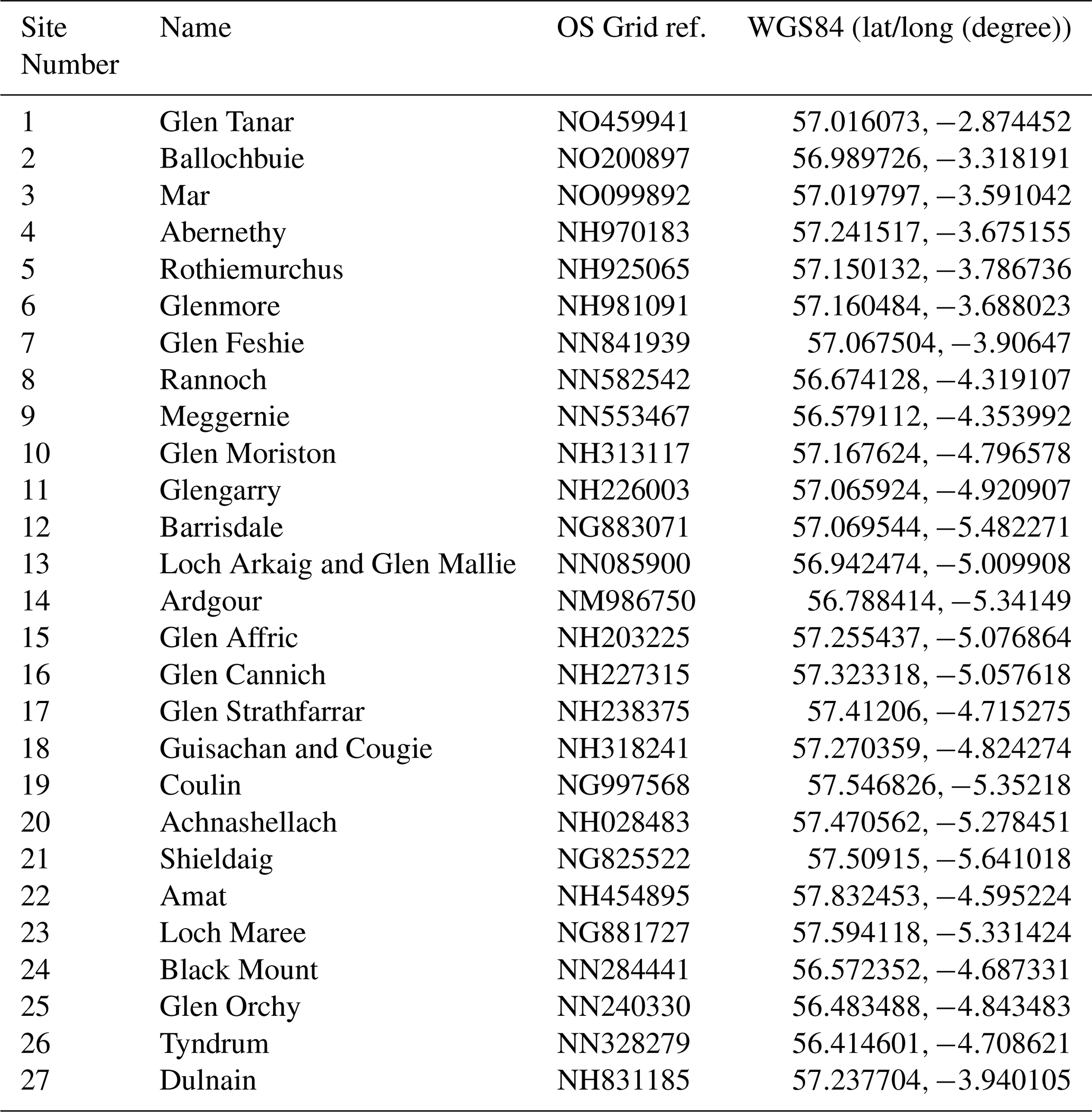
The sites chosen for inclusion in the Bunce survey are a set of 27 sites chosen from 35 included as maps in the seminal text of Steven and Carlisle (1959), which were identified as the major areas of native pine woodland in Scotland. Since 1971, the pinewoods originally surveyed have undergone substantial changes in management and ownership, and therefore it is expected that changes in the ground flora, trees and other ecological aspects have also changed in line with these drivers, as well as wider external factors such as climate change and atmospheric deposition. These sites (Table 1) were divided into groups by Steven and Carlisle as shown in Fig. 1, and it is helpful to summarise the sites on this basis, as they represent different gradients in potential change drivers, such as rainfall, as illustrated, and other geographical variability, such as soil type. Each group also has some similarities in ownership and management as outlined below.
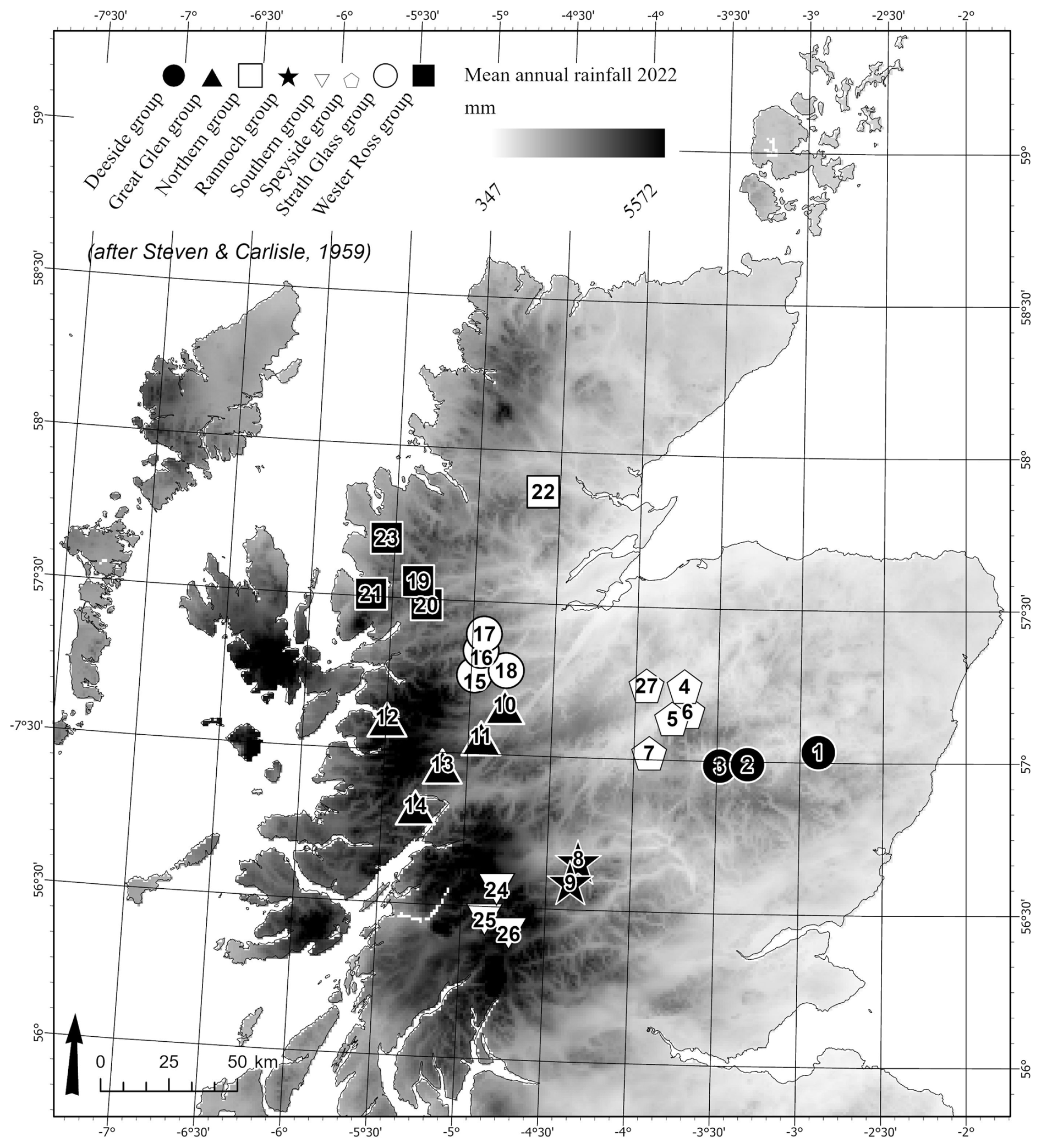
Figure 1Pinewood site groups shown in Steven and Carlisle (Steven and Carlisle, 1959) groupings displayed with mean annual rainfall for 2022 (Met Office et al., 2024). See Table 1 for a site listing. Contains Ordnance Survey data © Crown Copyright and database right 2025
The sites in the Deeside Group: Glen Tanar, Ballochbuie, and Mar Lodge, are the most easterly of the pinewoods, experiencing lower rainfall and lower winter temperatures compared to the other sites. All sites were in private ownership in 1971. Since then, Glen Tanar was partially acquired by the Scottish nature conservation agency, NatureScot, in 1978, and Mar Lodge has been acquired by The National Trust, a charity whose aims include nature conservation. Ballochbuie is still under the private ownership of the Crown Estate. Management of these sites has increasingly focused on conservation in the last few decades.
Abernethy, Rothiemurchus, Glenmore, Glen Feshie and Dulnain are all in the Speyside Group, and include some of the largest pinewoods. Along with the Deeside sites, the Speyside sites are located in areas with the lowest rainfall and winter temperatures compared to the other Groups. The majority of these sites are in public ownership, owned by Forest and Land Scotland (FLS) (formerly Forest Enterprise Scotland (FES) and before that, the Forestry Commission (FC)) and therefore subject to changing FLS, FES and FC policies over the years. In the past, felling and planting of non-native species particularly, for example at Glenmore occurred. FLS policies in recent years have been based more around conservation objectives than in the past, when timber production was paramount.
The Great Glen Group contains sites located in the valleys of the glen, with rainfall values ranging from moderate to very high and relatively mild winters. The sites are under a mixture of ownership. Barrisdale and Ardgour are in private ownership and are both relatively remote sites with scattered pine trees. The Loch Arkaig & Glen Mallie site was recently acquired by the Woodland Trust, and the removal of non-native tree species is a management priority here, as well as continuing to recover from a widespread and devastating fire in 1942. The Strath Glass Group contains Glen Affric, Glen Cannich, Glen Strathfarrar and Guisachan & Cougie. These receive moderately high rainfall, with cold winters. All are in public (FLS) ownership with the exception of Glen Strathfarrar. Non-native conifer planting has occurred in these sites, and their removal has been ongoing. Deer fencing and pinewood restoration has been a priority in recent decades.
The Wester Ross Group contains Shieldaig, Loch Maree, Coulin and Achnashellach, and consists of sites with high rainfall and mild winters at the western edge of the Scots pine range. Ownership is a mix of public (FLS) and private.
In the Rannoch Group, the Black Wood of Rannoch has been declared a Site of Special Scientific Interest and a Forest Nature Reserve. This group includes the Old Wood of Meggernie, belonging to a private estate.
The privately owned Amat forest is in the Northern group. The Amat forest and the woods within the Rannoch Group experience average rainfall for Scotland but relatively cool winters – although not as cold as those in the Deeside, Speyside or Strath Glass Groups. Amat has suffered from felling and fires in the past, but now has deer fencing in place, and natural regeneration reportedly occurs.
The Southern sites are Black Mount, Glen Orchy and Tyndrum. All of these experience very high rainfall and relatively mild winters. Glen Orchy is publicly owned by FLS and has suffered in the past from non-native conifer planting. The other two sites are privately owned and have been subject to deer fencing. In terms of rainfall, these are some of the wettest sites.
1.2 Changes in the pinewood habitat since 1971
At the time of the first Bunce survey in 1971, conservationists and woodland managers realised that the pinewoods were under threat from ploughing and planting of non-native conifer species and overgrazing from deer and also sheep. In 1963, alarmingly, McVean came to the conclusion that the “existing pure pine stands are largely artifacts and they have a limited future as self-maintaining entities; intensive management will be required for the native forests to be retained as they are” (McVean, 1963). In 1975, the only forest with a plan for expansion of native Pinus sylvestris was the Black Wood of Rannoch (Bain, 2013).
At the 2024 Fort William conference, a number of key issues were discussed. Each of these issues has affected the tree structure and composition of the pinewoods, the ground flora and soils in different ways since the 1970s. These key themes, which are often interrelated, are outlined as follows:
-
Non-native tree planting and removal. In the 1960s and 70s, there was much planting of Sitka spruce (Picea sitchensis) and other non-native conifers particularly in the west of Scotland, with extensive planting of Scots pine (Pinus sylvestris) around other pinewoods, often in the Central and Eastern Highlands (Bunce et al., 2014). Coniferous planting has a considerable effect on the associated ground flora, with little able to survive in the dense shade (Carey et al., 2008). It also has considerable effects on many aspects of landscape ecology, such as drainage patterns (Bunce et al., 2014). In 1977, the Forestry Commission's Native Pinewood Grant Scheme encouraged landowners to restore and increase the extent of pinewoods in specific areas. Only locally sourced seeds were allowed to be planted (Bain, 2013). Further protection was forthcoming in the 1980s, when sites designated as Sites of Special Scientific Interest (SSSI) were protected from felling and other harmful activities. Grants were made available for deer fencing (Bain, 2013).
-
Regeneration of native tree species. Regeneration depends on both the growing conditions, and external factors, such as incentives for the encouragement of natural regeneration. In the 1990s, the UK Biodiversity Action Plan (BAP, 1994) specified objectives to maintain remnant native pinewood areas listed on the Caledonian Pinewood Inventory and restore their natural diversity of composition and structure, regenerate and expand the current wooded area of remnant native pinewoods, and encourage natural regeneration (BAP, 1994). State support for Caledonian Pinewood restoration improved, with a series of Caledonian Forest Reserves being established in state owned forests, targeted felling of non-natives was supported as a management practice, along with attempts to control deer populations (Rainey and Holmes, 2023). These interventions were supported by improved Woodland Grant Schemes (1988–2003). However, the 2000s did not bring much further improvement in support (Bain, 2013).
-
Impact of deer. In Scotland, it is estimated that deer numbers have doubled from 500 000 in 1990 to around 1 million now (Scottish Government, 2025). The effect of deer browsing in limiting regeneration is well documented, for example in Cameron (1995), Palmer and Truscott (2003), Palmer et al. (2007), Holloway (1967). Deer also have been shown to affect the composition of the ground flora in the pinewoods (Baines et al., 1994).
-
Climate change. Since 1970, Scotland's climatic trend has been towards warmer mean temperatures and higher rainfall, particularly in the winter (Met Office, 2025b). Both factors are likely to affect tree regeneration, and the composition of the associated ground flora, and to some extent, soil quality. The pinewoods are home to nationally scarce species such as the creeping lady's-tresses orchid (Goodyera repens) (Wood and Bunce, 2016). Ground flora is likely to be affected by changes in climate, as well as grazing and the associated tree composition (Ford et al., 2018; Gill and Morgan, 2009) as the availability of shade will has significant effects on the ground flora assemblages (Peterken and Francis, 1999).
-
Additional threats. Threats such as tree disease, storm damage, atmospheric pollution and fire also pose challenges for the pinewood habitat.
1.3 Impact of changes in management, ownership and grants
Since 1971, there have been different approaches, interventions and incentives in response to the highlighted issues. At a local level, each pinewood is managed according to different objectives, and with a greater or lesser intensity. This is often dictated by ownership and also geographical factors. Some of the sites have been damaged by fire in the past, such as Loch Arkaig, and management objectives have included attempts to restore the damaged areas. Other management interventions have included deer culling and fencing, and assisting natural regeneration with the planting of native seed. In theory, the outlook for native pinewoods as a habitat should be better now than it has been for the last 300 years (Tayside Biodiversity Partnership, 2002). In recent years forestry policy has moved to recognise the value of native pinewood from a habitat, landscape and cultural perspective and has put in place a number of initiatives to protect and enhance its status and extent. The government, through Scottish Forestry, encourages forestry expansion through the payment of grants where creation of new woodland is in accordance with forestry and conservation policies. The Scottish Forestry Strategy contained a commitment to achieve Action Plan targets (Tayside Biodiversity Partnership, 2002). Financial and advisory support for native woodland management and establishment is also available (Scottish Forestry, 2025). In 1971, 68 % of the pinewoods were in private ownership and 18 % in the public sector. Now, nearly 30 % of the surveyed pinewoods are in the public ownership of FLS. Private ownership has dropped to around a third of the sites, and sites owned by charities or conservation groups, including the public body responsible for nature conservation in Scotland – NatureScot) make up the remainder. Several sites are under mixed ownership.
The Bunce survey collects a wide range of data that can aid the exploration of many of the issues facing the native pinewoods. The range of measurements recorded in 1971, and now repeated in 2018–2022, include data on ground flora, trees, saplings and shrubs, habitat descriptions, and soil pH and loss on ignition. The methods for collecting these data are described fully in Wood and Bunce (2016). In summary, within each site 16 plots are laid out, originally placed in a random dispersed manner. Each plot is 200 m2, with a concentric nested structure to aid botanical searching and allows for the estimation of species-area relationships (Kunin et al., 2018). In 2018–2022, plots were revisited as near as possible to the original 1971 position, based on plots marked on a 1:10 000 Ordnance Survey (the British mapping agency) map, previous surveyor notes, and to some extent, previous tree diameter at breast height (dbh) information (Smart and Wood, 2021). It is not possible to go back in time and understand fully how precisely the plots have been relocated and therefore some plot relocation error is inevitable given the nature of the information available and the nature of the original maps. However, work was undertaken in 2001 to understand the precision of plot relocation in the partner survey to this one, the Bunce Woodland Survey of Great Britain, which used exactly the same methods of relocation. Analysis of the 1648 plot records taken in 1971 and 2001, described fully in Kirby et al. (2005), demonstrated that the records may be treated as paired data (i.e. relocation error was not significant). In summary, the principal of autocorrelation (whereby plots near to each other are more similar than those further away) may be used to quantify the error in attempting to relocate the same vegetation plots.
A full census of the ground vegetation was recorded within these plots to the nearest 5 % cover (or just “present”); firstly presence and % cover in the inner 2×2 m nest, then presence in each subsequent nest, and finally the % cover for the whole 200 m2 quadrat. Litter, wood, rock, bare ground and water were also included where present (as a % cover), as well as bryophytes from a restricted list (Smart and Wood, 2021).
For tree recording, the 200 m2 plot was divided into 4 quadrants. Trees of > 5 cm diameter at breast height (dbh) were recorded from each quarter. Saplings (height < 130 cm and dbh < 5 cm)) and shrubs (species such as hazel (Corylus avellana) and juniper (Juniperus spp.) were recorded in quarters 1 and 3 only. A range of descriptive codes are recorded for each plot and site (including information such as presence of stumps, aquatic habitats, mammals, and land use).
A soil sample was taken from the centre of each plot, using a 5 cm diameter plastic tube to sample the top 15 cm of soil. Fresh plant litter was removed before sampling but decomposing plant litter was included within the sample. Soil samples were kept at around 4 °C until laboratory processing for pH and loss on ignition (LOI). Samples were sieved with a 2 mm sieve, then 10 cm3 of the sample were added to a beaker containing 10 mL of deionised water. A pH reading was taken with a standard pH probe (calibrated with buffer solutions of pH 4 and pH 7). Samples were then airdried at 25 °C for approximately 7 d. Another pH reading was taken from the dried soil at this point (Avery and Bascomb, 1974).
Loss on ignition and soil moisture were then determined. Loss on ignition is a simple method for determining soil organic matter. LOI was measured on a 5 g air-dried sub-sample taken after sieving to 2 mm, then dried at 105 °C for 12 h to remove moisture, weighed, and then combusted at 550 °C for 6 h. The cooled sample was then weighed and the LOI (%) calculated.
Data quality
During the survey seasons, all survey teams were initially trained in person by the project leader or deputy. Teams were in regular contact with the management team to ensure consistency and quality in data recording according to criteria laid out in the field handbook (Smart and Wood, 2021).
In 2018, the survey was undertaken for the first time using electronic data recording, using a bespoke recording form based on the ESRI Survey123 app (ESRI, 2025) incorporating the 1971 methodology. Electronic recording meant that certain errors could be eliminated (such as those related to poor handwriting and coding errors). Data could also be checked as soon as records were submitted from the field to the central database to ensure completeness.
The soil pH and loss on ignition were analysed using standardised protocols (Emmett et al., 2008; Avery and Bascomb, 1974) incorporating quality control measures.
Key findings from the 2022 Bunce survey can be summarised in relation to changes in tree structure and composition, ground flora and soils in response to the pressures and themes identified above. Firstly, changes in non-native tree species and native species regeneration, and then deer management and climate change. There is also additional information included in the datasets that can be explored in future work, regarding threats such as tree disease, storm damage and atmospheric deposition.
3.1 Tree structure and composition: native and non-native species
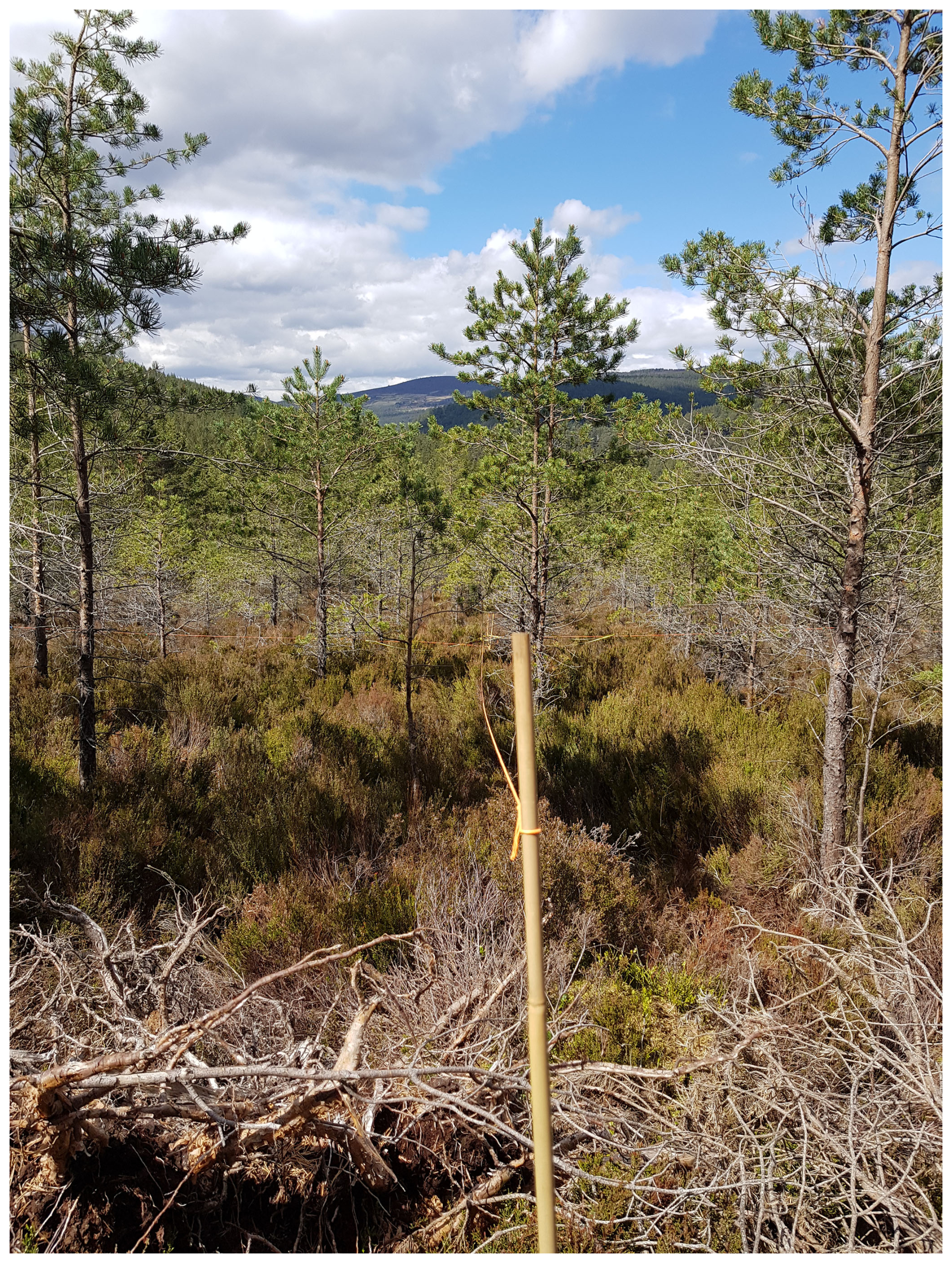
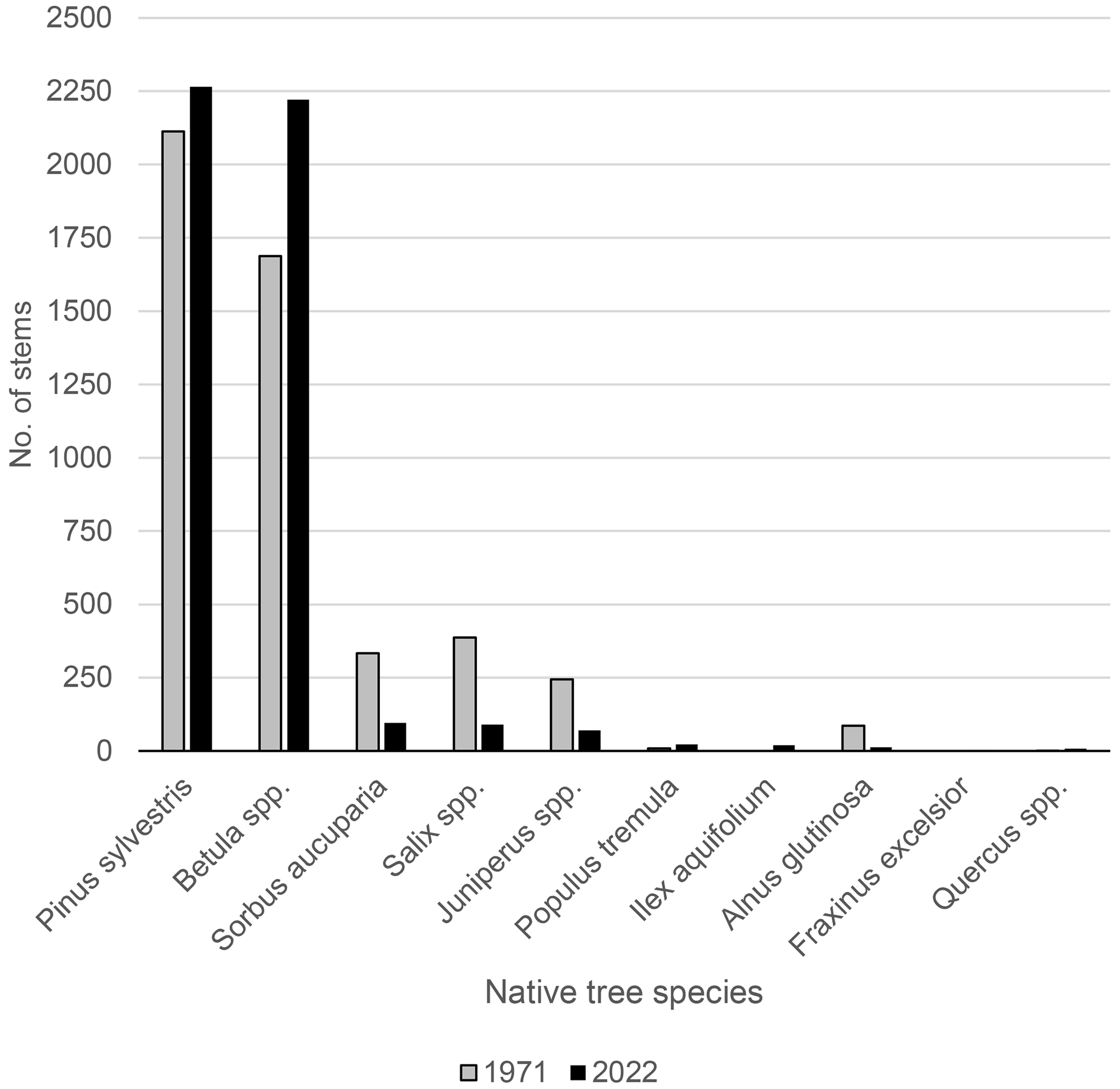
Overall, 5527 tree/shrub stems were recorded in 1971 and 5255 in the 2018–2022 survey – a decrease of 4.9 %. Scots pine (Pinus sylvestris) and birch (Betula spp.) were the most abundant tree species (78 % of all stems), with Scots pine (Pinus sylvestris) being recorded at all 27 sites. Trees, saplings and shrubs are included here, with trees being defined as stems of more than 5 cm diameter at breast height, saplings as for trees, but with a height of less than 130 cm and with a dbh less than 5 cm and shrubs being shrub species such as hazel (Corylus avellana) and juniper (Juniperus spp.). The greatest positive changes in mean stem number are associated with birch (Betula spp.) (19.1 stems per site) and Scots pine (Pinus sylvestris) (24.3 stems per site). Figure 2 illustrates an example of young Scots pine growth at the Glen Tanar site. Among the remaining native species, willows (Salix spp.) and rowan (Sorbus aucuparia) have declined markedly across all sites, willows by a mean of 13.3 stems and rowan by a mean of 8.8 stems. Juniper (Juniperus communis) has also declined. The major changes are shown in Fig. 3, and a summary table of the change in mean stem count number between 1971 and 2018–2022 by species for each pinewood site may be found in the Supplement (Table S1).
Non-native trees were present in 41 % of the 27 pinewoods, a figure that overall hasn't changed markedly since 1971 (a slight decrease from 44 %). However, the cover of those trees has declined (Fig. 4). Much of the decline in canopy cover is attributable to felling of densely planted, non-native conifers, including Douglas fir (Pseudotsuga menziesii), Japanese larch (Larix kaempferi), lodgepole pine (Pinus contorta), Norway spruce (Picea abies) and Sitka spruce (Picea sitchensis). An example of removal of non-native species at Glengarry is shown in Fig. 5, a site where this is particularly evident. While non-native conifers have generally declined across the Bunce sites, they have increased locally; larch (Larix spp.) at Abernethy, and Norway spruce (Picea abies) at Ballochbuie, Ardgour and Glen Orchy in particular. A summary table showing the changes in counts of non-native tree species may be found in the Supplement (Table S2) and a figure showing changes in these by ownership (Fig. S1 in the Supplement).
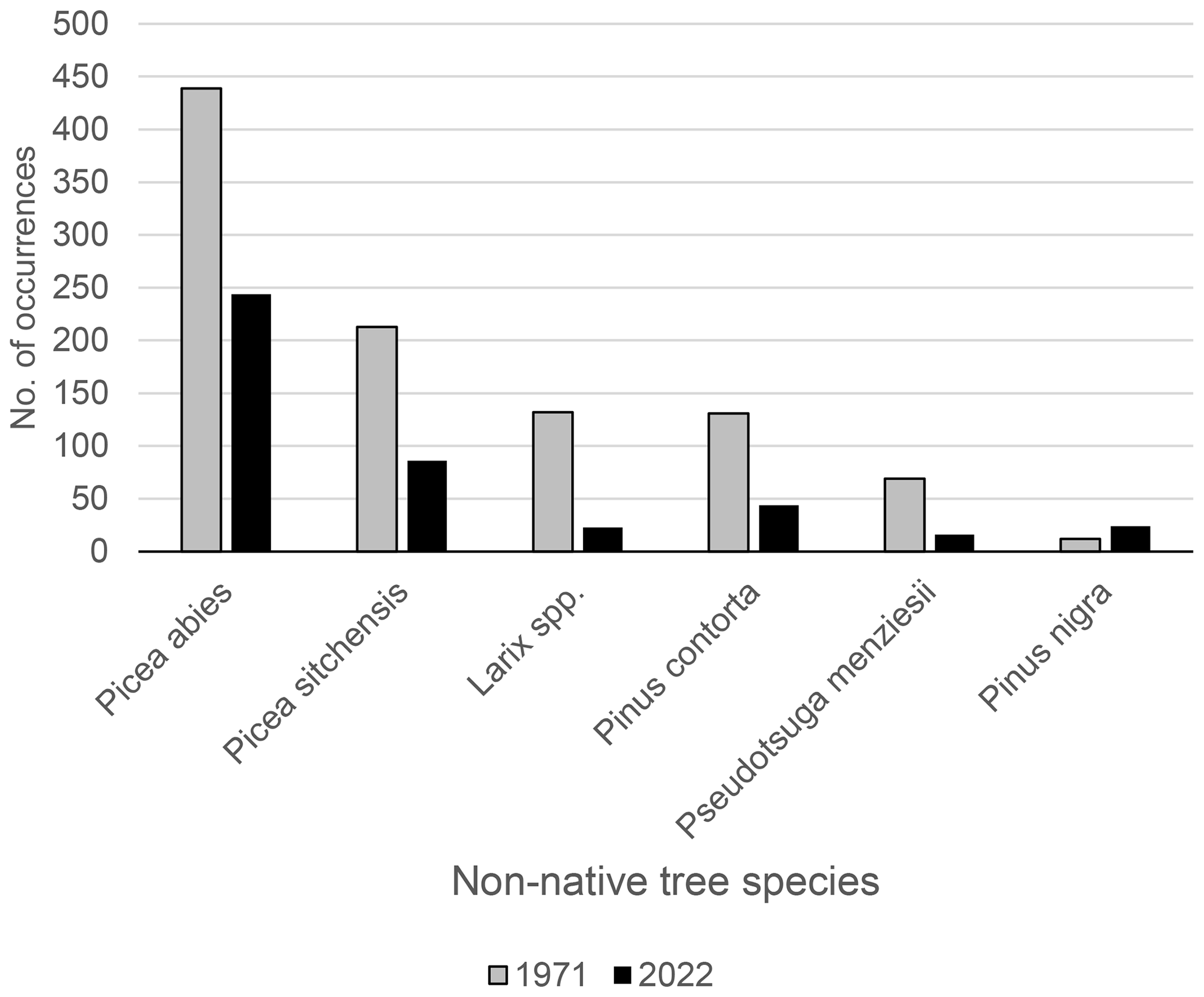
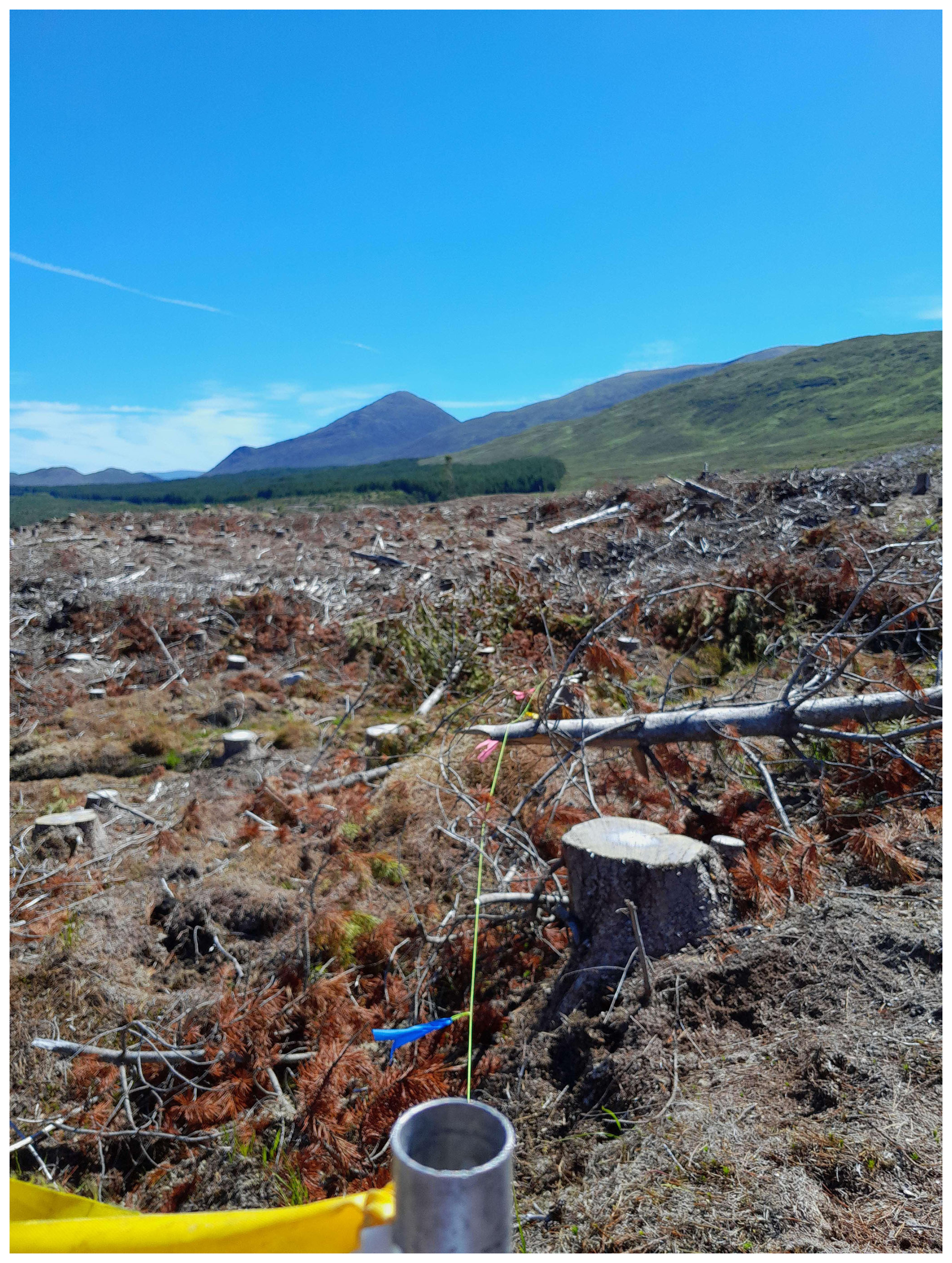
Figure 5Felling at Glen Garry.
The mean change in stem diameter per site ranges between −0.55 to 0.69 cm. Change was greatest for Scots pine (Pinus sylvestris), with a mean increase of 2.4 cm, whilst birch (Betula spp.) showed a minor increase of 0.5 cm. Very limited change in the diameter of the other broadleaved and native species was observed (< 0.3 cm). Among the non-native conifers, only Douglas fir (Pseudotsuga menziesii), and Norway spruce (Picea abies) demonstrate a change in average stem diameter of greater than ±0.1 cm.
3.2 Regeneration of native species
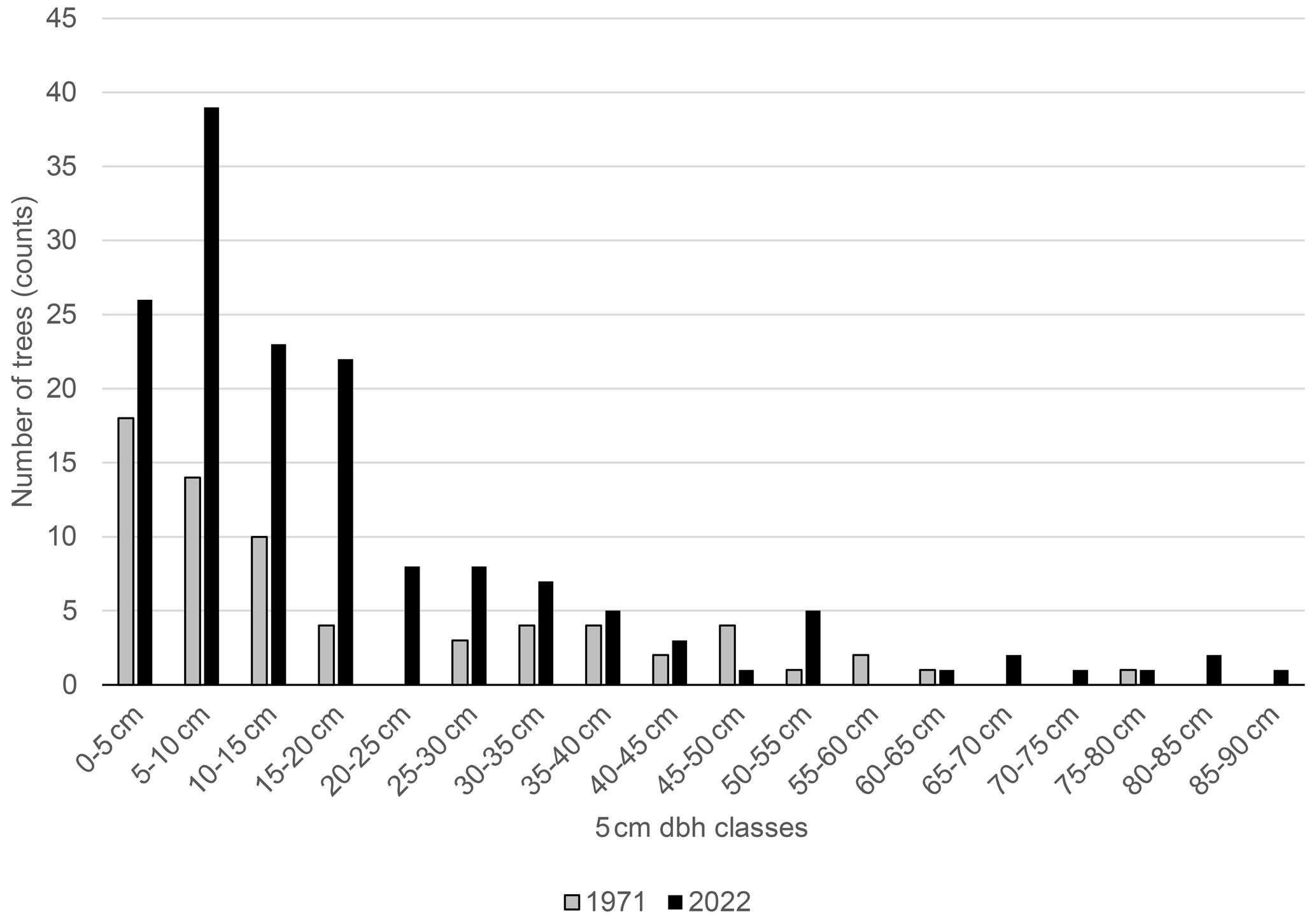
Signs of regeneration may be investigated in the data by looking at the records of recent regeneration recorded in the plot descriptions, and also by looking at counts of seedlings and smaller stemmed trees and saplings. Over the longer-term, counts of stems likely to have appeared since 1971 give a picture of growth (including stem increase of established trees and regeneration of new, smaller trees) since that date. Whilst it is difficult to estimate tree age from the trunk diameter, we propose that Scots pine (Pinus sylvestris) stems with a diameter at breast height less than or equal to 20 cm equate to individuals approximately 50 years old according to a tree age calculator (Virginia Tree Care, 2026) in order to present an approximation of change since 1971. Figure 6 shows a site example (Glen Tanar) which shows an increase in Scots pine (Pinus sylvestris) stems in the smaller dbh size classes, which indicates ongoing regeneration at that site.
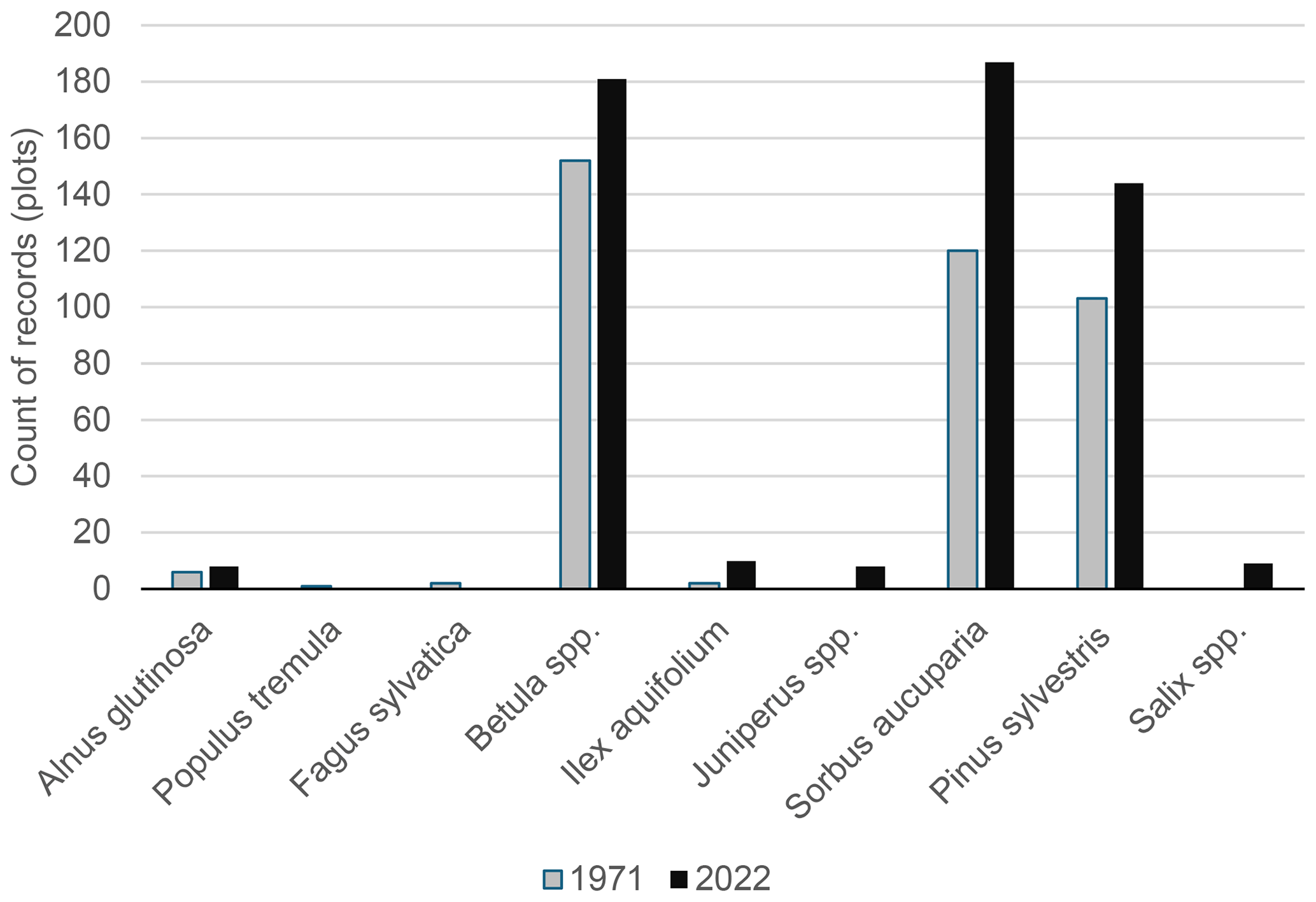
Overall, recent tree regeneration signs have increased by 33 %, with increases demonstrated especially for the native species of Scots pine (Pinus sylvestris), birch (Betula spp.) and rowan (Sorbus aucuparia), and smaller increases in holly (Ilex aquifolium), alder (Alnus glutinosa), juniper (Juniperus spp.) and willow (Salix spp.) (Fig. 7), which matches the increase in the overall mean stem counts. Whilst the overall number remains very low, holly regeneration has increased by 400 %. A marked increase in holly was particularly noted in the related Bunce Woodland Survey of Great Britain (Smart et al., 2024).
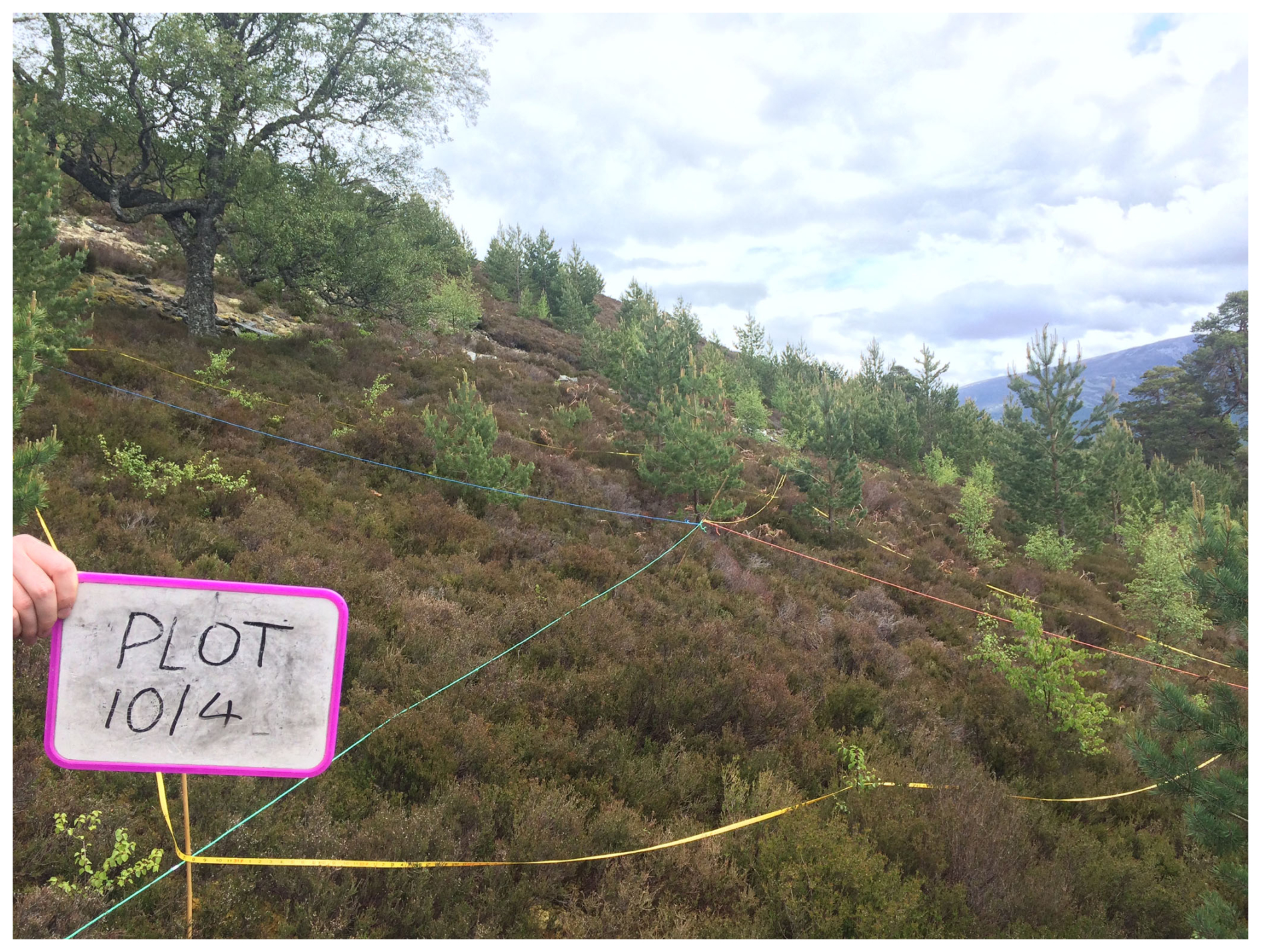
Mar Lodge (Fig. 8) is one of the sites demonstrating regeneration of Scots pine (Pinus sylvestris) and birch (Betula spp.) in the records of seedling frequency and regeneration. Recognised as an internationally important site, and having been acquired by the National Trust in 1995, the primary aim of the site is now focused on conservation. Large efforts have been made to control deer, which were previously hampering regeneration. The Bunce data confirms a decrease in signs of grazing animals since 1971.
3.3 Deer management
Overall, a 14.7 % decrease in signs of deer was noted between 1971 and 2021. Some sites, notably Mar Lodge, have made strong efforts to reduce the deer numbers. 14 of the Bunce sites recorded a decrease in signs of deer, and nine recorded an increase. This appears to be reflected in the impact on regeneration of Scots pine. At sites where a decrease in deer was noted, the mean change in the number of regeneration counts recorded was 3.35, but 1.11 at sites where deer had increased (Table 2). There is also evidence that deer may have had a slight effect on the number of ground flora species found. At sites where there has been an decrease in deer, the mean change in absolute species numbers was a loss of 2.07, versus a loss of 0.26 at sites where deer increased.
Table 2Effect of deer numbers on tree regeneration and ground flora, change in mean counts per site.

The effects of deer impacts are complicated as other local factors should also be taken into account when undertaking analysis. It is also often difficult to determine exactly what the current levels of deer are at a plot level, as well as historical levels over the last 50 years due to a lack of data. Heavy deer grazing is known to reduce palatable species such as bilberry/blaeberry (Vaccinium myrtillus) and increase unpalatable ones, such as bracken (Pteridium aquilinum) (Kirby, 2001). Across all sites in the Bunce pinewoods, both of these species have declined a very small amount overall. The data could, however, be used to investigate this issue in more detail at the individual site and plot level, including analysis of the trees and saplings. In broadleaved woodlands, it has been found by Kirby (2001) that grasses tend to thrive under heavy grazing. You might expect more shade overall with fewer deer allowing the trees and shrubs to thrive, and therefore fewer grass species, being largely shade intolerant. In the pinewoods, Table 3 demonstrates that sites with overall evidence of an increase in deer signs may have resulted in an increase in the percentage cover of grass species (6.5 %), but it also shows an increase (10.78 %) for sites with a decrease in deer signs. In terms of heather species (Erica spp. and Calluna spp.), sites with an increase in deer appear to demonstrate a smaller increase in these species, as may be expected, being palatable to the deer (Kirby, 2001; Baines et al., 1994). Table 3 suggests that Vaccinium myrtillus has increased slightly where signs of deer have increased. As a palatable species to deer, this is perhaps counterintuitive. Again, further detailed analysis is recommended as the situation is complex.
Table 3Effect of deer numbers on the change in the occurrence count of grass, heather and bilberry/blaeberry species, 1971–2022.

3.4 Effects of climate change on ground flora
All sites were wetter in 2022 than they were in 1971, with a mean increase of 341 mm overall when comparing the two years (Met Office et al., 2024). The wettest group (Southern Group) is also the group with the highest rainfall increase, i.e. the wettest sites are getting wetter. The mean daily temperature overall has risen from 7.5 °C in 1971 to 8.3 °C in 2022. Approximately one third of the sites have a mean winter minimum temperature above freezing point between 1991 and 2020 (Met Office, 2025b). This is an increase from only five sites between 1941 and 1970. These overall long-term trends are confirmed by other authors, for example, Wilson (2023).
Plants associated with bogs and wet heaths are well-represented in the top 25 most frequently recorded species including deergrass (Trichophorum germanicum), purple moor-grass (Molinia caerulea) and star sedge (Carex echinata). An increase in these species since 1971 is likely to be linked to the increase in climatic wetness. In terms of rare or plants diagnostic of the pinewood, two have increased: The orchid Goodyera repens was recorded 23 times (in 1971 it was recorded 14 times), and bearberry (Arctostaphylos uva-ursi) was recorded 59 times (in 1971, 12 times). Common cow wheat (Melampyrum pratense) was recorded 43 times, a decrease from 130 times in 1971. This species appears to be in decline overall based on other national surveys such as the GB Countryside Survey (UKCEH Countryside Survey, 2026) and the GB Broadleaved Woodland Survey (Smart et al., 2024). It is hemi-parasitic on the roots of other plants, including trees, ericaceous dwarf shrubs and Bog myrtle (Myrica gale). There has also been a major decline shown by Plant Atlas 2020 (https://plantatlas2020.org/atlas/2cd4p9h.yrz, last access: 6 November 2026). As its large seeds are ant dispersed, it is likely to have suffered from reduced dispersal opportunities if conditions in the understorey have become cooler and more shaded with reduced ant populations. Reasons for its decline in the pinewoods could be complex and would be worth investigating further in relation to a range of drivers.
3.5 Additional changes in ground flora composition
Species richness has declined across all sites from a mean of 18.6 species in 1971, to 17.5 species in the 2020s. However, this mean figure belies the large amount of variation between sites. A table showing the average number of species per site and relative and absolute change between surveys can be found in the Supplement (Table S3), along with a list of the top 25 ground flora species recorded in the 2018–2022 survey (Table S4).
Several sites have shown an overall increase, in particular Glen Garry, Loch Arkaig & Glen Mallie, and Achnashellach. These are all sites where removal of non-native trees has taken place which may explain some of the increase. Despite the extensive removal of non-natives in Glenmore and Guisachan & Cougie, species richness declined. The biggest decreases in species richness have occurred in Ballochbuie, Glenmore, Guisachan & Cougie and Glen Orchy. Further investigation might look into the relationship between species richness and the impacts of deer at these sites.
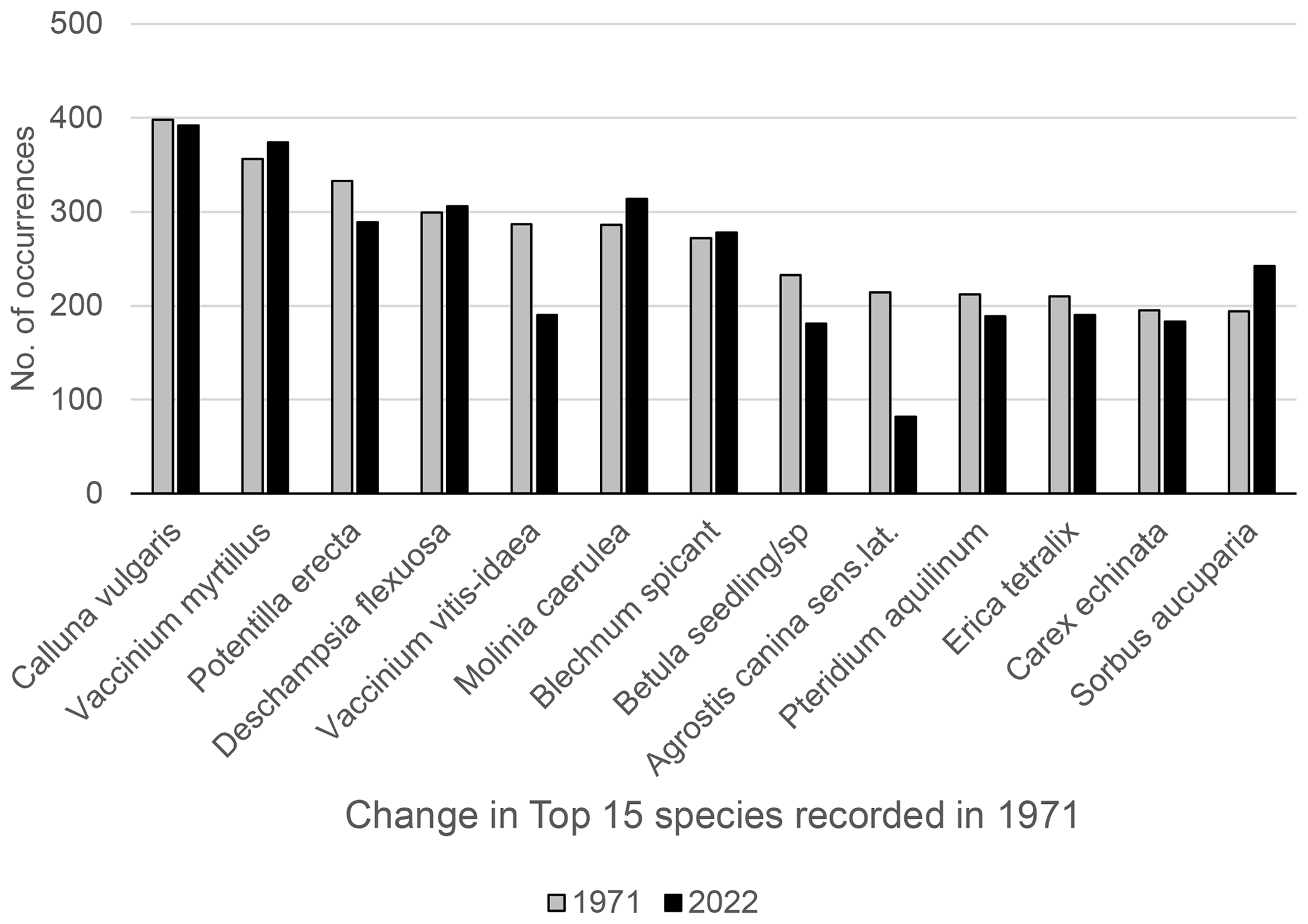
In terms of the frequency of species recorded, the two most frequent have not changed since 1971, being heather (Calluna vulgaris) and bilberry/blaeberry (Vaccinium myrtillus). Purple moor grass (Molinia caerulea) has increased slightly while tormentil (Potentilla erecta) has decreased. Wavy hair-grass (Deschampsia flexuosa) remains the fourth most recorded species. Overall, the frequency of broadleaved grasses, ferns, sub-shrubs, wetland herbs and tree-seedlings has increased. Decreases in frequency were found for sub-shrubs (Erica spp.) and diminutive herbs.
In terms of overall change in the Top 15 species recorded in 1971 (Fig. 9), the most frequent species, heather (Calluna vulgaris) has not changed significantly. Bilberry/blaeberry (Vaccinium myrtillus) has increased slightly. Of the top 15, cowberry (Vaccinium vitis-idea) and dog bent (Agrostis canina) have declined the most markedly. Rowan (Sorbus aucuparia) recorded as saplings has increased whereas those recorded as shrubs have declined, potentially indicating increased initial regeneration, with a failure to thrive, most likely due to selective browsing by deer.
3.6 Changes in soil condition
Change in soil acidity was compared between 1971 and 2022 (Fig. 10) with repeat measurements following the same methods. Overall, there is a signal of a slight rise in the mean fresh soil pH value (0.15), which matches an increase detected in the GB Bunce Woodland Survey (1971–2022) (Smart et al., 2024; Kirby et al., 2005) and the GB Countryside Survey (1978–) and at least partly attributable to recovery from historically high atmospheric sulphur deposition in the past (Reynolds et al., 2013). This driver-response relationship has also been identified in other national surveys, for example, Kirk et al. (2010); Seaton et al. (2023). The Deeside Group in particular has shown a marked increase in soil pH which would be worth investigating further in relation to a range of potential drivers. The only geographical groupings showing a fall in pH were the Wester Ross and Speyside Groups. The Wester Ross Group is located in one of the wettest locations but had the smallest increase in mean annual rainfall between 1971 and 2022 (from 2095 to 2158 mm (Met Office et al., 2024)). The Speyside Group is located in one of the comparatively drier zones (mean annual rainfall 960 mm for 2022 (Met Office et al., 2024)). At an individual site level, increased acidity was detected most markedly in the soil at Glenmore, Glen Moriston, Shieldaig and Glen Orchy.
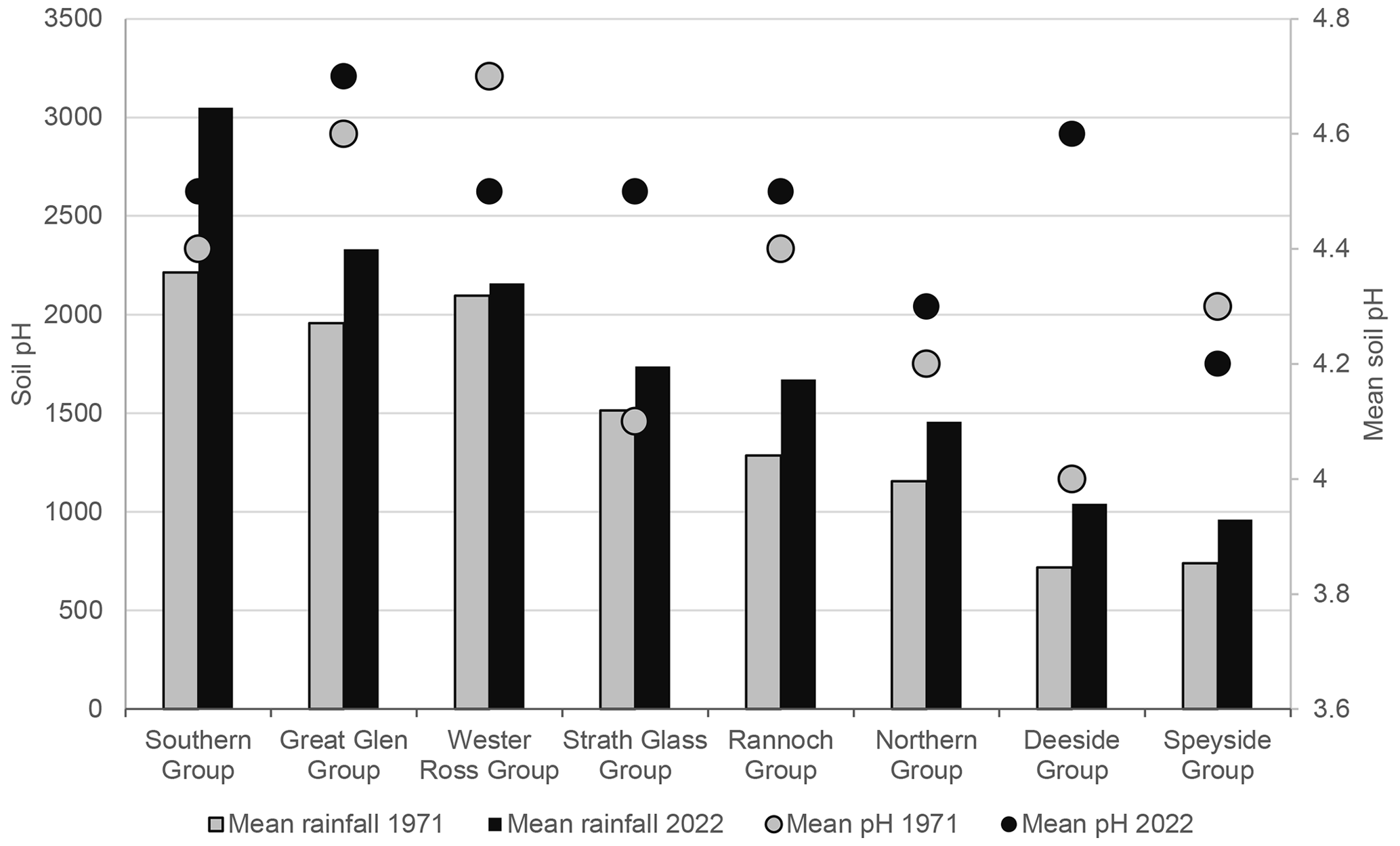
Figure 10Change in soil pH across geographical groups, displayed with mean annual rainfall change 1971–2022.
3.7 Additional threats: storm damage and disease
Winter storms were frequent during the period of the survey (Met Office, 2025a). Evidence of localised storm damage was apparent at two of the surveyed sites, Glen Moriston and Glen Garry, where trees had been blown down in the high winds.
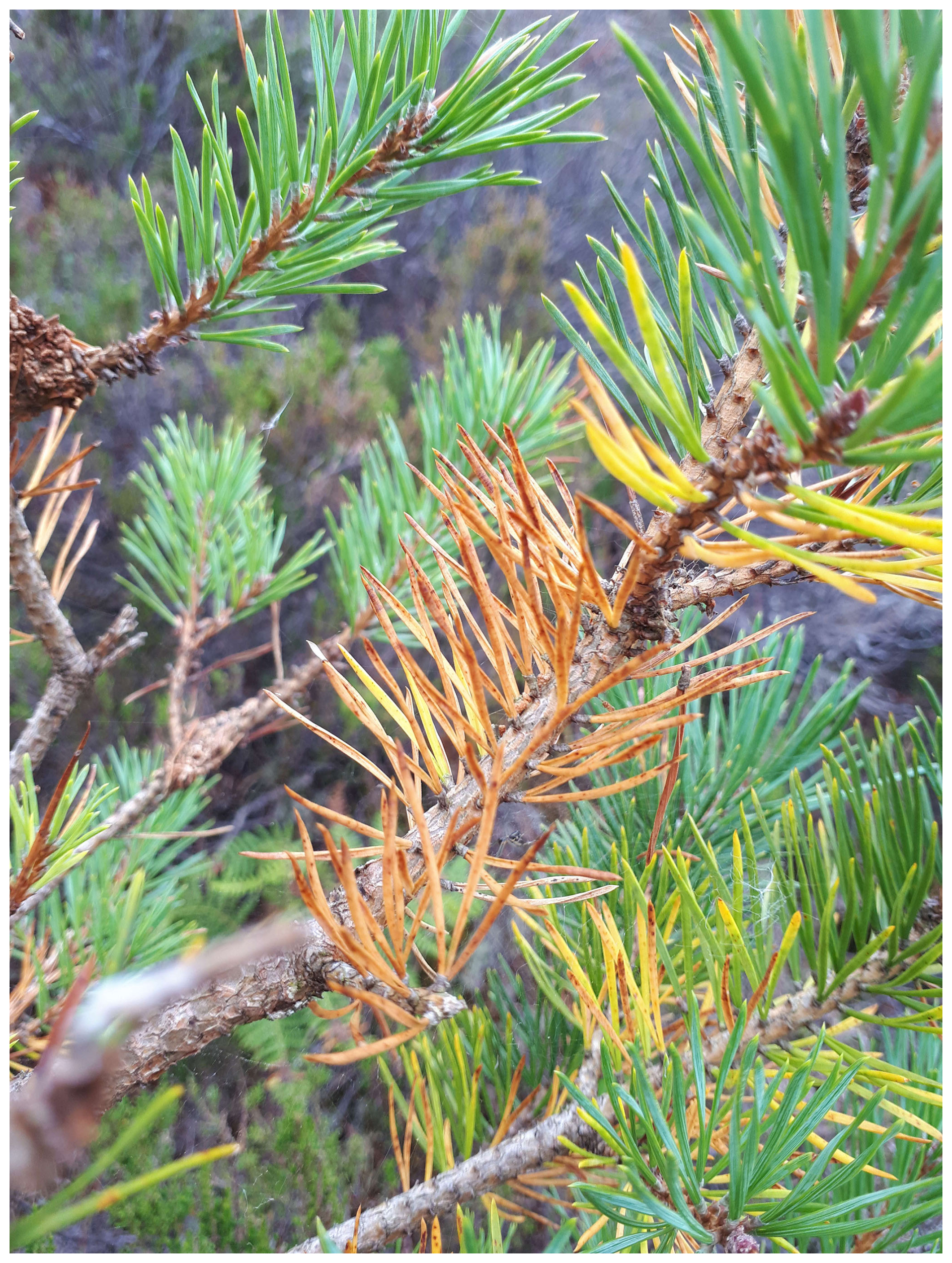
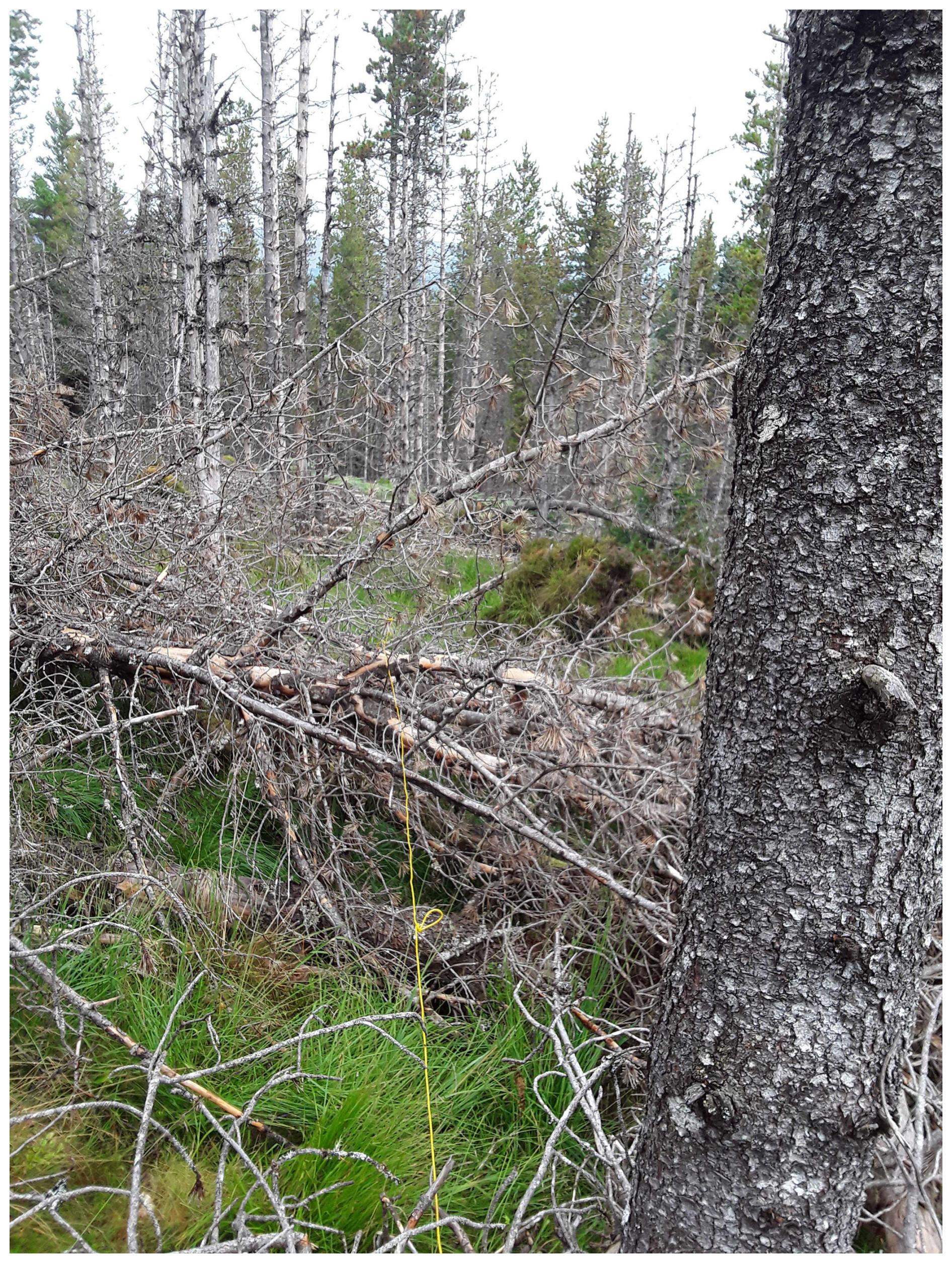
In recent years, increasing attention has been focused on plant pathogens. In terms of the pinewoods, Dothistroma Needle Blight (DNB) was largely considered a problem in commercial plantations in the southern hemisphere until the mid-1990s (Bulman et al., 2013). Affecting Pinus species, it can lead to the death of foliage, the reduction of tree growth and sometimes widespread tree death (Marzano et al., 2017). In the Bunce survey, evidence of tree disease was recorded from around a third of sites (10), including Abernethy, Glenmore, Glen Feshie, Ballochbuie, Shieldaig (Fig. 11), Guisachan & Cougie (Fig. 12), Coulin, Loch Maree, Glen Orchy and Tyndrum, which additionally threatens the overall health of the pinewood habitat.
3.8 Other notable changes recorded
From the presence of recorded descriptive attributes, a range of conclusions can be made as follows. Signs of animals, including deer and livestock, rabbits, red squirrels and bones, have declined generally since 1971. However, evidence of deer remains high in some areas, for example, Glengarry. There are clear signs of fencing having taken place, being present within 9 recorded plots overall and present in 19 sites. An encouraging result is that rubbish was not recorded at any plot, having been recorded in 13 plots in 1971.
Aside from the Bunce survey, other surveys and reports have been published regarding the Caledonian pinewood habitat. Most recently, Trees for Life published findings from the Caledonian Pinewood Recovery Project (Rainey and Holmes, 2023) – a large-scale survey covering many aspects of the pinewoods. There have been other reviews (Bain, 1987) and inventories supported by the national public forestry agencies (Forestry Commission, 1994; Scottish Forestry, 2014). There have also been many local or targeted studies, for example Wilson and Puri (2001), Tayside Biodiversity Partnership (2002), Cameron et al. (2000), Scott et al. (2000). The Bunce survey is the only study that includes trees, ground flora, soils and other attributes, using statistically robust data from repeated plots over a 50 year time-span, giving an indication of change over that period. The Caledonian Pinewood Inventory (Forestry Commission, 1994) and Native Woodland Survey of Scotland (NWSS) (Scottish Forestry, 2014) provide information on the extent of pinewoods, invasive species and tree growth stages as part of canopy, but lack detailed information on the composition of the woods – the ground flora, tree characteristics and soil metrics. The Trees for Life report (Rainey and Holmes, 2023) builds on the Caledonian Pinewood Inventory and identifies a few errors in the previous recording of sites, as well as discovering new pinewood fragments. Whilst it is wider ranging geographically than the Bunce survey, it doesn't sample soils or ground flora in as much detail nor can it provide the comparisons over time that the Bunce survey can. Some of the overall key messages are the same in both datasets, for example the same four species were recorded as the dominant ones in terms of cover in the pinewoods, namely ling heather (Calluna vulgaris), followed by purple moor grass (Molinia caerulea), bilberry/blaeberry (Vaccinium myrtillus) and bracken (Pteridium aquilinum).
The Trees for Life survey reports a shift to birch dominated woods in the south west region. In the Bunce study, in the south western sites, we detect increases in birch at Ardgour, Glengarry and Barrisdale, but not at Glen Moriston or Loch Arkaig. It is likely that there are potential worthwhile opportunities to undertake joint analyses with the Bunce and Trees for Life survey data.
The data sets have been assigned digital object identifiers and users of the data should reference the data as follows: Smart et al. (2023), Habitat, vegetation, tree and soil data from Native Pinewoods in Scotland, 2018–2022, NERC EDS Environmental Information Data Centre, https://doi.org/10.5285/5e268e86-4a4f-4112-bf2d-c3b0179c915c.
The 1971 data set is supplied as described in Wood and Bunce (2016). The data are provided under the terms of the Open Government Licence (https://eidc.ceh.ac.uk/licences/OGL/plain, https://www.nationalarchives.gov.uk/doc/open-government-licence/version/3/, last access: 6 November 2026). The metadata are stored in the ISO 19115 (2014) schema (International Organization for Standardization, 2014) in the UK Gemini 2.3 profile (UK Gemini, 2025). Data containing analyses of change are available via Figshare at: https://doi.org/10.6084/m9.figshare.34574874 (Wood et al., 2026). Users of the data will find the following document useful, supplied as supporting documentation with the data sets: “National Woodland Survey & Native Pine Survey Field Handbook” (Smart and Wood, 2021).
The Bunce Scottish Pinewood Survey provides an extremely rich dataset that will be an invaluable resource for exploring the responses of Scots pine woodlands to the changing environment, such as variations in canopy cover and the effects of shade on ground flora, the effect of storm damage and tree disease on ground flora, regional variations, climate change and deposition and pollution effects, as well as site level analyses. Since there is a large degree of spatial overlap in sites between this survey and the other recent surveys highlighted above there is additional scope for synergy and richer analyses resulting from combining datasets.
Whilst positive signs of change have been detected since 1971, there are still concerns regarding the health and resilience of the Caledonian pinewood habitat. It is encouraging to see an overall increase in Scots pine (Pinus sylvestris) and birch (Betula spp.) trees, replacing planted non-native species, largely as a result of policies initiated by public forestry bodies. However, there is still a significant presence of non-native trees at many sites.
The greatest increase in stem counts were associated with Scots pine (Pinus sylvestris) and birch (Betula spp.), and the growing presence of their seedlings and saplings within the field layer augurs well for the future. Both species are more frequent in the 2022 Bunce survey, birch (Betula spp.) by 19 % and Scots pine (Pinus sylvestris) by 40 %. Rowan (Sorbus aucuparia) seedlings and saplings, and signs of regeneration, have also increased their frequency in the field layer so it is possible that rowan will become more frequent in the future canopy, assuming no other impacts upon the population, such as grazing or disease although unlikely in sites with signs of significant deer impacts. The overall stem count for rowan (Sorbus aucuparia) has decreased since 1971, so this may be the case, and would be worth investigating further. Black Mount, Glen Affric, Glen Feshie and Glengarry have all seen declines in Scots pine (Pinus sylvestris). At Glen Affric and Glen Feshie, the decline appears to be related to the loss of mature trees as stem dbh has respectively diminished by −14.70 and −0.26 cm. As these sites are considered successful examples of native pinewood restoration, it is noted that both of these sites show an increase in Scots pine saplings (Table S1) so the decline in dbh could be due to the recruitment of smaller age classes, thereby reducing the mean.
There is evidence to suggest that climate change may bring about an increase in winter storms (Slingo et al., 2014; Woth et al., 2006; Seidl et al., 2017), with the accompanying damage they cause. Plant pathogens are also increasing (Gougherty, 2023). In the pinewoods, Dothistroma Needle Blight (DNB) is already evident in nearly a third of the Bunce sites. Climate change, as well as other factors such as nitrogen and sulphur deposition, are also likely to be affecting soil pH values, which overall showed an increase.
Deer pressure in the pinewoods is still evident despite signs of fencing, and an overall decrease of 14.7 % in deer signs across all sites. At sites showing an increase in deer, there was a mean change in plot counts of regeneration seedlings of 1.11, versus an increase of 3.35 at sites where deer appear to have decreased. In terms of the ground flora, slightly fewer species appear to have been lost in terms of mean absolute species numbers at sites with a deer increase. There is also evidence of small increases in heather cover (Erica spp., Calluna spp.) and in grass cover where deer have increased, although the situation is complex due to the range of potential variables involved and should be investigated further.
Overall, in line with many other plant studies in the UK (Maskell et al., 2010; Marrs et al., 2013; Carvalheiro et al., 2013; Seaton et al., 2025) species richness of the vascular plants in the field layer has declined, from an average of 18.6 species in 1971 to 17.5 species in the 2020s. This change equates to an average loss of 1.1 vascular species across all plots, or a reduction of 4.5 %. This coincides with an increase in species suited to warmer, wetter climates but also is likely to be related to variations in canopy cover and composition and factors driving those, in particular the large amount of management changes since the 1970s.
There remains work to be done in conserving this precious habitat. The Bunce dataset provides a critical source of evidence to direct decision-makers towards a better future in the Scottish pinewoods.
The supplement related to this article is available online at https://doi.org/10.5194/essd-18-8361-2026-supplement.
Claire Wood prepared the manuscript with significant contributions from all co-authors, and is the current database manager for the Land Use research group at CEH Lancaster. Simon Smart managed the survey in 2018–2022. Fiona Seaton and Clare Benskin managed the soil analyses and data. Andy McMullen and Sue Ward were part of the field survey team. Karen Hornigold and Chris Nichols provided support from the Woodland Trust.
The contact author has declared that none of the authors has any competing interests.
Publisher's note: Copernicus Publications remains neutral with regard to jurisdictional claims made in the text, published maps, institutional affiliations, or any other geographical representation in this paper. The authors bear the ultimate responsibility for providing appropriate place names. Views expressed in the text are those of the authors and do not necessarily reflect the views of the publisher.
The fieldwork for the survey was carried out by A. McMullen, S. Ward, R. Ward, G. Routledge, K. Massey, A. Everard, L. Ross (and students). C. Benskin and B. Dodd provided laboratory assistance.
Thanks are due to the many landowners who gave permission for the site visits and to the members of the Bunce Woodland Survey Steering Group and additional support, including Matt Heard, Clare Trivedi, Chris Tucker, Jay Doyle, Christine Reid, Richard Thompson, Jeanette Hall, Rebecca Isted, Siobhan Rogers, Emma Dear, David Jam, and Malcolm Vallis-Wilks. Many thanks to Richard Thompson and Mareike Wieczorek for suggestions that greatly improved the manuscript. Finally, we gratefully acknowledge the late Prof. Bob Bunce for initiating the survey back in 1971.
This research has been supported by the Woodland Trust.
This paper was edited by Birgit Heim and reviewed by Richard Thompson and Mareike Wieczorek.
Avery, B. W. and Bascomb, C. L.: Soil survey laboratory methods, Rothamsted Experimental Station, Harpenden (UK), ISBN 978-0901128799, 1974.
Bain, C.: Native Pinewoods in Scotland: A Review 1957–1987, Royal Society for the Protection of Birds, Edinburgh, 1987.
Bain, C.: The Ancient Pinewoods of Scotland Sandstone Press Ltd, Dingwall, ISBN-13 978-1908737250, 2013.
Baines, D., Sage, R. B., and Baines, M. M.: The Implications of Red Deer Grazing to Ground Vegetation and Invertebrate Communities of Scottish Native Pinewoods, J. Appl. Ecol., 31, 776–783, https://doi.org/10.2307/2404167, 1994.
BAP: Biodiversity: the UK Action Plan, London, https://data.jncc.gov.uk/data/cb0ef1c9-2325-4d17-9f87-a5c84fe400bd/UKBAP-BiodiversityActionPlan-1994.pdf (last access: 6 November 2026), 1994.
Bruce, M. and Servant, G.: Fire and pinewood ecology in Scotland: a summary of recent research at Glen Tanar Estate, Aberdeenshire, Scottish Forestry, 57, 33–38, 2003.
Bulman, L. S., Dick, M. A., Ganley, R. J., McDougal, R. L., Schwelm, A., and Bradshaw, R. E.: Dothistroma needle blight, in: Infectious forest diseases, CABI Wallingford UK, 436-457, https://doi.org/10.1079/9781780640402.0436, 2013.
Bunce, R. G. H., Wood, C. M., Smart, S. M., Oakley, R., Browning, G., Daniels, M. J., Ashmole, P., Cresswell, J., and Holl, K.: The landscape ecological impact of afforestation on the British uplands and some initiatives to restore native woodland cover, J. Landscape Ecol., 7, 5–24, https://doi.org/10.2478/jlecol-2014-0013, 2014.
Cameron, A. D., Miller, D. R., Ramsay, F., Nikolaou, I., and Clarke, G. C.: Temporal measurement of the loss of native pinewood in Scotland through the analysis of orthorectified aerial photographs, J. Environ. Manage., 58, 33–43, https://doi.org/10.1006/jema.1999.0306, 2000.
Cameron, E. J. F.: The regeneration of existing pinewoods, Our pinewood heritage, Proc. conference, Inverness, 1994, 155–164, ISBN-13 9780855383251, 1995.
Carey, P. D., Wallis, S., Chamberlain, P. M., Cooper, A., Emmett, B. A., Maskell, L. C., McCann, T., Murphy, J., Norton, L. R., Reynolds, B., Scott, W. A., Simpson, I. C., Smart, S. M., and Ullyett, J. M.: Countryside Survey: UK Results from 2007, NERC/Centre for Ecology & Hydrology, Lancaster, http://www.countrysidesurvey.org.uk/outputs/uk-results-2007 (last access: 12 November 2026), 2008.
Carvalheiro, L. G., Kunin, W. E., Keil, P., Aguirre-Gutiérrez, J., Ellis, W. N., Fox, R., Groom, Q., Hennekens, S., Van Landuyt, W., Maes, D., Van de Meutter, F., Michez, D., Rasmont, P., Ode, B., Potts, S. G., Reemer, M., Roberts, S. P. M., Schaminée, J., WallisDeVries, M. F., and Biesmeijer, J. C.: Species richness declines and biotic homogenisation have slowed down for NW-European pollinators and plants, Ecol. Lett., 16, 870–878, https://doi.org/10.1111/ele.12121, 2013.
Emmett, B., Frogbrook, Z., Chamberlain, P., Griffiths, R., Pickup, R., Poskitt, J., Reynolds, B., Rowe, E., Spurgeon, D., and Rowland, P.: CS Technical Report No. 3/07: Soils Manual, Centre for Ecology & Hydrology Wallingford, UK, https://nora.nerc.ac.uk/id/eprint/5201/1/CS_UK_2007_TR3%5B1%5D.pdf (last access: 6 November 2026), 2008.
ESRI: Survey123, https://survey123.arcgis.com/ (last access: 6 November 2026), 2025.
Ford, H., Healey, J. R., Markesteijn, L., and Smith, A. R.: How does grazing management influence the functional diversity of oak woodland ecosystems? A plant trait approach, Agr. Ecosyst. Environ., 258, 154–161, https://doi.org/10.1016/j.agee.2018.02.025, 2018.
Forestry Commission: Caledonian pinewood inventory, Forestry Commission [data set], https://open-data-scottishforestry.hub.arcgis.com/ (last access: 12 November 2026), 1994.
Froyd, C. A. and Bennett, K. D.: Long-term ecology of native pinewood communities in East Glen Affric, Scotland, Forestry, 79, 279–291, https://doi.org/10.1093/forestry/cpl015, 2006.
Gill, R. M. A. and Morgan, G.: The effects of varying deer density on natural regeneration in woodlands in lowland Britain, Forestry: An Int. J. Forest Res., 83, 53–63, https://doi.org/10.1093/forestry/cpp031, 2009.
Gougherty, A. V.: Emerging tree diseases are accumulating rapidly in the native and non-native ranges of Holarctic trees, NeoBiota, 87, https://doi.org/10.3897/neobiota.87.103525, 2023.
Holloway, C. W.: The effect of red deer and other animals on naturally regenerated Scots pine, PhD, University of Aberdeen, United Kingdom, 1967.
Kirby, K. J.: The impact of deer on the ground flora of British broadleaved woodland, Forestry, 74, 219–229, https://doi.org/10.1093/forestry/74.3.219, 2001.
Kirby, K. J., Smart, S. M., Black, H. I. J., Bunce, R. G. H., Corney, P. M., and Smithers, R. J.: Long term ecological change in British woodland (1971–2001). A re-survey and analysis of change based on the 103 sites in the Nature Conservancy “Bunce 1971” woodland survey, Final report, Peterborough: English Nature, English Nature Research Reports Number 653, Peterborough, 139 + appendices, https://www.researchgate.net/profile/Richard-Smithers/publication/230853581_Long_term_ ecological_change_in_British_woodland_1971-2001_A_re-survey_and_analysis_of_change_based_on_103_sites_in_the_ Nature_Conservancy_'Bunce_1971'_woodland_survey/links/ 00b4951be0fa238f94000000/Long-term-ecological-change-in-British-woodland-1971-2001-A-re-survey-and-analysis-of-change-based-on-103-sites-in-the-Nature-Conservancy-Bunce-1971-woodland-survey.pdf (last access: 12 November 2026), 2005.
Kirk, G. J. D., Bellamy, P. H., and Lark, R. M.: Changes in soil pH across England and Wales in response to decreased acid deposition, Glob. Change Biol., 16, 3111-3119, https://doi.org/10.1111/j.1365-2486.2009.02135.x, 2010.
Kunin, W. E., Harte, J., He, F., Hui, C., Jobe, R. T., Ostling, A., Polce, C., Šizling, A., Smith, A. B., Smith, K., Smart, S. M., Storch, D., Tjørve, E., Ugland, K.-I., Ulrich, W., and Varma, V.: Upscaling biodiversity: estimating the species–area relationship from small samples, Ecol. Monogr., 88, 170–187, https://doi.org/10.1002/ecm.1284, 2018.
Maddock, A.: UK Biodiversity Action Plan; Priority Habitat Descriptions, http://jncc.defra.gov.uk/PDF/UKBAP_PriorityHabitatDesc-Rev2011.pdf (last access: 12 November 2026), 2008.
Marrs, R. H., Kirby, K. J., Le Duc, M. G., McAllister, H., Smart, S. M., Oksanen, J., Bunce, R. G. H., and Corney, P. M.: Native dominants in British woodland – a potential cause of reduced species-richness?, New J. Bot., 3, 156–168, https://doi.org/10.1179/2042349713Y.0000000028, 2013.
Marzano, M., Fuller, L., and Quine, C. P.: Barriers to management of tree diseases: Framing perspectives of pinewood managers around Dothistroma Needle Blight, J. Environ. Manage., 188, 238–245, https://doi.org/10.1016/j.jenvman.2016.12.002, 2017.
Maskell, L. C., Smart, S. M., Bullock, J. M., Thompson, K., and Stevens, C. J.: Nitrogen deposition causes widespread loss of species richness in British habitats, Glob. Change Biol., 16, 671–679, https://doi.org/10.1111/j.1365-2486.2009.02022.x, 2010.
McVean, D. N.: Ecology of Scots Pine in the Scottish Highlands, J. Ecol., 51, 671–686, https://doi.org/10.2307/2257754, 1963.
Met Office: Past weather events: https://weather.metoffice.gov.uk/learn-about/past-uk-weather-events, last access: 24 June 2025a.
Met Office: UK temperature, rainfall and sunshine time series: https://www.metoffice.gov.uk/research/climate/maps-and-data/uk-temperature-rainfall-and-sunshine-time-series (last access: 25 March 2015), 2025b.
Met Office, Hollis, D., Carlisle, E., Kendon, M., Packman, S., and Doherty, A.: HadUK-Grid Gridded Climate Observations on a 1km grid over the UK, v1.3.0.ceda (1836-2023), NERC EDS Centre for Environmental Data Analysis [data set], https://doi.org/10.5285/b963ead70580451aa7455782224479d5, 2024.
NatureScot: Scottish Biodiversity List, https://www.nature.scot/scotlands-biodiversity/scottish-biodiversity-strategy-and-cop15/scottish-biodiversity-list, last access: 11 July 2024.
Palmer, S. C. F. and Truscott, A. M.: Browsing by deer on naturally regenerating Scots pine (Pinus sylvestris L.) and its effects on sapling growth, Forest Ecol. Manage., 182, 31–47, https://doi.org/10.1016/S0378-1127(03)00026-4, 2003.
Palmer, S. C. F., Broadhead, J. E., Ross, I., and Smith, D. E.: Long-term habitat use and browsing by deer in a Caledonian pinewood, Forest Ecol. Manage., 242, 273–280, https://doi.org/10.1016/j.foreco.2007.01.061, 2007.
Patterson, G., Nelson, D., Robertson, P., and Tullis, J.: Scotland's Native Woodlands: Results from the Native Woodland Survey of Scotland, Forestry Commission, Edinburgh, 2014.
Peterken, G. F. and Francis, J. L.: Open spaces as habitats for vascular ground flora species in the woods of central Lincolnshire, UK, Biol. Conserv., 91, 55–72, https://doi.org/10.1016/S0006-3207(99)00040-3, 1999.
Rainey, J. and Holmes, F.: Caledonian Pinewoods Findings from the Caledonian Pinewood Recovery Project, Trees for Life, Forres, Moray, 2023.
Reynolds, B., Chamberlain, P., Poskitt, J., Woods, C., Scott, W., Rowe, E., Robinson, D., Frogbrook, Z., Keith, A., and Henrys, P.: Countryside survey: national “soil change” 1978–2007 for topsoils in great britain – acidity, carbon, and total nitrogen status, Vadose Zone J., 12, https://doi.org/10.2136/vzj2012.0114, 2013.
Romão, C.: Interpretation manual of European Union habitats, version EUR 28, https://www.miteco.gob.es/content/dam/miteco/es/biodiversidad/temas/espacios-protegidos/doc_manual_intp_habitat_ue_tcm30-207191.pdf (last access: 12 November 2026), 2013.
Scott, D., Welch, D., Thurlow, M., and Elston, D. A.: Regeneration of Pinus sylvestris in a natural pinewood in NE Scotland following reduction in grazing by Cervus elaphus, Forest Ecol. Manage., 130, 199–211, https://doi.org/10.1016/S0378-1127(99)00191-7, 2000.
Scottish Forestry: The Native Woodland Survey of Scotland (NWSS), https://spatialdata.gov.scot/geonetwork/srv/api/records/BB223316-8746-4338-9056-5D9A2F0D2824 (last access: 12 November 2026), 2014.
Scottish Forestry: The Forestry Grant Scheme (FGS): https://www.forestry.gov.scot/available-funding-and-support, last access: 25 September 2025.
Scottish Government: Managing deer numbers for nature and climate: https://www.gov.scot/news/managing-deer-numbers-for-nature-and-climate/, last access: 26 March 2025.
Seaton, F., Wood, C., Hornigold, K., Kirby, K., Nichols, C., Jam, D., Dear, E., Kimberley, A., and Smart, S.: The increasing role of tree disease and decreasing influence of anthropogenic management over 50 years of woodland dynamics, Proc. Roy. Soc. B, 292, 20250554, https://doi.org/10.1098/rspb.2025.0554, 2025.
Seaton, F. M., Robinson, D. A., Monteith, D., Lebron, I., Bürkner, P., Tomlinson, S., Emmett, B. A., and Smart, S. M.: Fifty years of reduction in sulphur deposition drives recovery in soil pH and plant communities, J. Ecol., 111, 464–478, https://doi.org/10.1111/1365-2745.14039, 2023.
Seidl, R., Thom, D., Kautz, M., Martin-Benito, D., Peltoniemi, M., Vacchiano, G., Wild, J., Ascoli, D., Petr, M., Honkaniemi, J., Lexer, M. J., Trotsiuk, V., Mairota, P., Svoboda, M., Fabrika, M., Nagel, T. A., and Reyer, C. P. O.: Forest disturbances under climate change, Nat. Clim. Change, 7, 395–402, https://doi.org/10.1038/nclimate3303, 2017.
Slingo, J., Belcher, S., Scaife, A., McCarthy, M., Saulter, A., McBeath, K., Jenkins, A., Huntingford, C., Marsh, T., Hannaford, J., and Parry, S.: The recent storms and floods in the UK, Exeter, http://nora.nerc.ac.uk/id/eprint/505192/ (last access: 12 November 2026), 2014.
Smart, S. M. and Wood, C. M.: National Woodland Survey & Native Pine Survey Field Handbook, UK Centre for Ecology & Hydrology, Lancaster, 2021.
Smart, S. M., Bunce, R. G. H., Black, H. I. J., Ray, N., Bunce, F., Kirby, K., Watson, R., and Singleton, D.: Measuring long term ecological change in British woodlands (1971–2000), A pilot re-survey of 14 sites from the ITE/NCC “Bunce 1971” woodland survey and two sites from the 1971 Native Pinewood survey, Volume 1, Peterborough English Nature, English Nature Research Reports No. 461a, 1–60 pp., 2001.
Smart, S. M., Wood, C. M., Seaton, F. M., McMullen, A., Ward, S. E., Ward, R., Routledge, G., Massey, K., Everard, A., Ross, L., Benskin, C. M. H., and Dodd, B. A.: Habitat, vegetation, tree and soil data from Native Pinewoods in Scotland, 2018–2022, NERC EDS Environmental Information Data Centre [data set], https://doi.org/10.5285/5e268e86-4a4f-4112-bf2d-c3b0179c915c, 2023.
Smart, S. M., Walker, C., Sier, A. R. J., Seaton, F., Kirby, K. J., and Wood, C. M.: Fifty years of change across British broadleaved woodlands, UKCEH, Lancaster, 2024.
Steven, H. M. and Carlisle, A.: The native pinewoods of Scotland, Oliver & Boyd, Edinburgh, 1959.
Tayside Biodiversity Partnership: Tayside Biodiversity Action Plan: Woodland, Tayside Biodiversity Partnership, https://taysidebiodiversity.co.uk/wp-content/uploads/2015/01/Section2Woodland2.pdf (last access: 12 November 2026), 2002.
UKCEH Countryside Survey: UKCEH Countryside Survey, https://www.countrysidesurvey.org.uk, last access: 24 April 2026.
UK GEMINI: UK GEMINI, UK GEMINI https://www.agi.org.uk/groups/agi-gemini/, last access: 20 June 2025.
Virginia Tree Care: Tree Age Calculator, https://virginiatreecare.com/tree-age-calculator/, last access: 11 March 2026.
Wilson, B. and Puri, G.: A comparison of pinewood and moorland soils in the Abernethy Forest Reserve, Scotland, Global Ecol. Biogeogr., 10, 291–303, https://doi.org/10.1046/j.1466-822X.2001.00226.x, 2001.
Wilson, R.: Warmer and wetter: how climate change is impacting the Caledonian pine forest, Reforesting Scotland, 68, 17–20, 2023.
Wood, C. M. and Bunce, R. G. H.: Ecological survey of the native pinewoods of Scotland 1971, Earth Syst. Sci. Data, 8, 177–189, https://doi.org/10.5194/essd-8-177-2016, 2016.
Wood, C. M., Smart, S. M., and Bunce, R. G. H.: Woodland Survey of Great Britain 1971–2001, Earth Syst. Sci. Data, 7, 203–214, https://doi.org/10.5194/essd-7-203-2015, 2015.
Wood, C., Smart, S. M., Seaton, F., McMullen, A., Ward, S. E., Hornigold, K., Nichols, C., and Benskin, C.: Ecological change data from native Scottish pinewoods 1971–2022: Bunce pinewoods re-survey, figshare [data set], https://doi.org/10.6084/m9.figshare.34574874.v1, 2026.
Woth, K., Weisse, R., and von Storch, H.: Climate change and North Sea storm surge extremes: an ensemble study of storm surge extremes expected in a changed climate projected by four different regional climate models, Ocean Dynam., 56, 3–15, https://doi.org/10.1007/s10236-005-0024-3, 2006.