Articles | Volume 18, issue 4
https://doi.org/10.5194/essd-18-2689-2026
© Author(s) 2026. This work is distributed under
the Creative Commons Attribution 4.0 License.
the Creative Commons Attribution 4.0 License.
https://doi.org/10.5194/essd-18-2689-2026
© Author(s) 2026. This work is distributed under
the Creative Commons Attribution 4.0 License.
the Creative Commons Attribution 4.0 License.
Data description article
| 
17 Apr 2026
Data description article |
| 17 Apr 2026
| 17 Apr 2026
A high-resolution tropopause folding dataset over China from 2014–2023
Yujia Yang
State Key Laboratory of Climate System Prediction and Risk Management, Nanjing University of Information Science and Technology, Nanjing, 210044, China
Le Cao
CORRESPONDING AUTHOR

State Key Laboratory of Climate System Prediction and Risk Management, Nanjing University of Information Science and Technology, Nanjing, 210044, China
Liqiang Xu
State Key Laboratory of Climate System Prediction and Risk Management, Nanjing University of Information Science and Technology, Nanjing, 210044, China
Mengke Wang
State Key Laboratory of Climate System Prediction and Risk Management, Nanjing University of Information Science and Technology, Nanjing, 210044, China
Qingjian Yang
State Key Laboratory of Climate System Prediction and Risk Management, Nanjing University of Information Science and Technology, Nanjing, 210044, China
National Meteorological Information Center, China Meteorological Administration, Beijing, 100081, China
Yuqing Zhang
State Key Laboratory of Climate System Prediction and Risk Management, Nanjing University of Information Science and Technology, Nanjing, 210044, China
Tianqi Zhang
National Supercomputer Center in Tianjin, Tianjin, 300457, China
Xiuli Lei
National Supercomputer Center in Tianjin, Tianjin, 300457, China
Jiangpeng Miao
State Key Laboratory of Climate System Prediction and Risk Management, Nanjing University of Information Science and Technology, Nanjing, 210044, China
Tianliang Zhao
State Key Laboratory of Climate System Prediction and Risk Management, Nanjing University of Information Science and Technology, Nanjing, 210044, China
Related authors
No articles found.
Yongqing Bai, Wen Lu, Tian Zhan, Xiao Yun Sun, Tianliang Zhao, Lijuan Shen, Guicai Ning, Zewen Lin, Kai Meng, and Wuke Wang
EGUsphere, https://doi.org/10.5194/egusphere-2026-4625, https://doi.org/10.5194/egusphere-2026-4625, 2026
This preprint is open for discussion and under review for Atmospheric Chemistry and Physics (ACP).
Short summary
Short summary
The Twain-Hu Basin in central China has extreme heat and severe ozone, yet few combined events. We show that basin O₃ is driven by synoptic transport from upwind sources rather than local heat, with the O₃ peak shifting to September, decoupling ozone from temperature. This pattern may be common in multi-source receptor basins.
Xuewei Hou, Ryan Hossaini, Oliver Wild, Andrea Mazzeo, Richard J. Pope, Ye Wang, Siyuan Wang, Yuanhong Zhao, James Lee, Bin Zhu, Tianliang Zhao, and Alok K. Pandey
Atmos. Chem. Phys., 26, 13767–13793, https://doi.org/10.5194/acp-26-13767-2026, https://doi.org/10.5194/acp-26-13767-2026, 2026
Short summary
Short summary
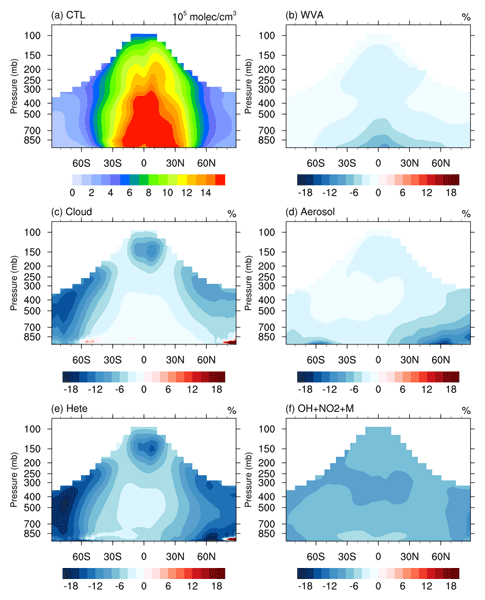
The atmosphere’s ability to remove pollutants and greenhouse gases is largely controlled by the hydroxyl radical, but the causes of its long-term changes remain uncertain. Using a global atmospheric model, we quantified the effects of emissions, weather, and key chemical processes on hydroxyl radical levels between 2000 and 2017. Our findings improve understanding of atmospheric self-cleansing and help reduce uncertainties in future climate assessments.
Xiangde Xu, Wenyue Cai, Tianliang Zhao, Changjun Yang, Kai Meng, Chong Wu, Na Dong, Yueqing Li, Shunjiu Wang, Wenqing Liu, Tianshu Zhang, Ga Zhuo, Shengjun Zhang, Bin Chen, Chunsong Lu, Jinghua Chen, Kai Yang, and Jianming Xu
Atmos. Chem. Phys., 26, 13581–13593, https://doi.org/10.5194/acp-26-13581-2026, https://doi.org/10.5194/acp-26-13581-2026, 2026
Short summary
Short summary
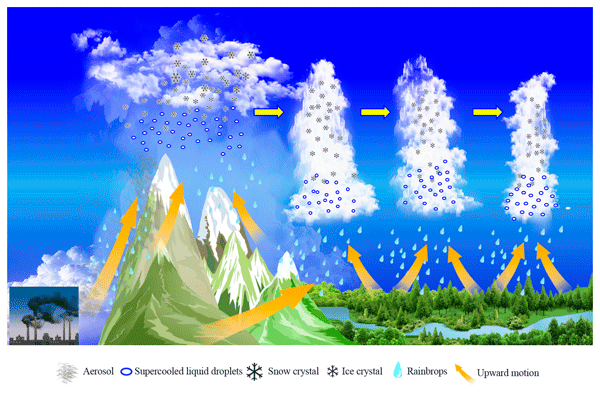
Using satellite and comprehensive ground-based observations, we identify pronounced ice-cloud activation associated with transported exogenous aerosols. Under different large-scale atmospheric circulation regimes, ice-phase cloud activated over Mount Qomolangma (MQ) can be efficiently transported downstream through distinct pathways, exerting a pronounced ice crystal seeding effect on cloud–precipitation conversion.
Yiqi Chen, Le Cao, Xiaochun Zhu, Yan Xia, Tianqi Zhang, Xiuli Lei, Mengke Wang, Liqiang Xu, and Tianliang Zhao
EGUsphere, https://doi.org/10.5194/egusphere-2026-3196, https://doi.org/10.5194/egusphere-2026-3196, 2026
This preprint is open for discussion and under review for Atmospheric Chemistry and Physics (ACP).
Short summary
Short summary
We investigate the spatiotemporal distribution of springtime tropopause folds over the Arctic during 2000–2023 using ERA5 reanalysis data and a three-dimensional tropopause fold labeling algorithm. The study combines pan-Arctic spatial statistics with station-based analyses at Alert, Barrow, Villum, and Zeppelin, providing a climatological characterization of Arctic tropopause fold occurrence, depth dependence, seasonal evolution, and associated upper-tropospheric dynamical background.
Zihan Wang, Yishu Bian, Fuwang Zhang, Honglei Wang, Wen Lin, Jun Hu, Tianliang Zhao, Lijian Shen, and Zuxin Xie
Atmos. Chem. Phys., 26, 7539–7554, https://doi.org/10.5194/acp-26-7539-2026, https://doi.org/10.5194/acp-26-7539-2026, 2026
Short summary
Short summary
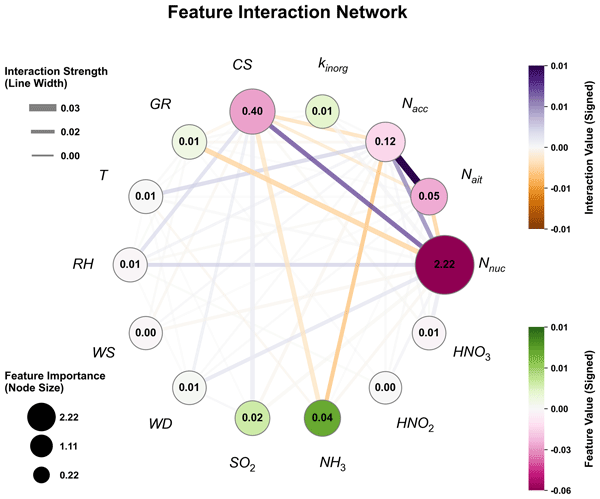
We investigated how new air particles form in cities and affect clouds. Our year-long study revealed a key seasonal pattern: while particle formation events are most frequent in spring, they are surprisingly inefficient at creating the seeds for clouds due to high pollution. In contrast, the cleaner summer air, despite having fewer events, allows the new particles to grow larger and much more effectively enhance potential cloud formation.
Deyu Liu, Yue Chen, Sihan Liu, Honglei Wang, Jingyi Chen, Yang Yang, Zihan Wang, Kun Cui, and Tianliang Zhao
Atmos. Chem. Phys., 26, 5781–5797, https://doi.org/10.5194/acp-26-5781-2026, https://doi.org/10.5194/acp-26-5781-2026, 2026
Short summary
Short summary
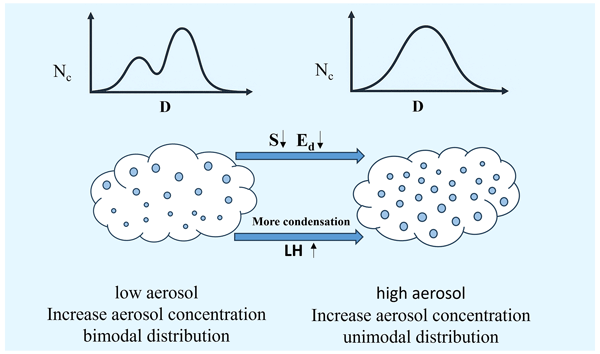
Cloud droplets are vital for rainfall and climate, and tiny airborne particles called aerosols can change their size and number. Using airplane observations over Hebei and simulations, we found that aerosols strongly affect droplet vertical distribution. Under high aerosols, lower droplets are larger and more numerous; under low aerosols, upper droplets are larger. These changes affect cloud development, precipitation, and atmospheric energy.
Kai Yang, Jinghua Chen, Tianliang Zhao, Xiangde Xu, Chunsong Lu, Shizuo Fu, Yuehan Luo, Qingjian Yang, Ziqian Liu, Zhikuan Li, Lin Wu, and Yuxiang Jin
EGUsphere, https://doi.org/10.5194/egusphere-2026-869, https://doi.org/10.5194/egusphere-2026-869, 2026
Short summary
Short summary
The Tibetan Plateau has little available moisture and energy, so convection is hard to develop. Large-eddy simulations indicates the lake promotes low-level moistening and lowers the barrier to convective initiation, produces shallow clouds and week rain. Mountain alone force lifting, yet the lack of moisture limits terrain-driven precipitation. Lake-mountain coupling is key: the mountain lifts lake-supplied moisture but can also block moisture transport, reshaping precipitation patterns.
Xiaofeng Xu, Zixu Xiong, Jianming Gong, Huilin Zhang, Tianliang Zhao, and Qing He
Atmos. Chem. Phys., 26, 2721–2740, https://doi.org/10.5194/acp-26-2721-2026, https://doi.org/10.5194/acp-26-2721-2026, 2026
Short summary
Short summary
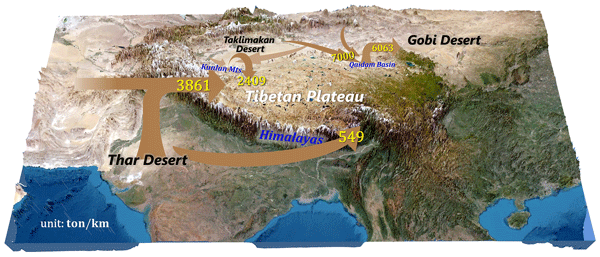
Dust has an important impact on the climate in East Asia. This study comprehensively utilized ground-based and satellite observation data to analyze the spatio-temporal variations of dust in the Tibetan Plateau and its surrounding areas, as well as the diurnal variation characteristics of regional dust transport. This study has deepened the understanding of the variation patterns of dust around the Tibetan Plateau.
Zhuozhi Shu, Fumo Yang, Guangming Shi, Yuqing Zhang, Yongjie Huang, Xinning Yu, Baiwan Pan, and Tianliang Zhao
Atmos. Chem. Phys., 25, 15437–15451, https://doi.org/10.5194/acp-25-15437-2025, https://doi.org/10.5194/acp-25-15437-2025, 2025
Short summary
Short summary
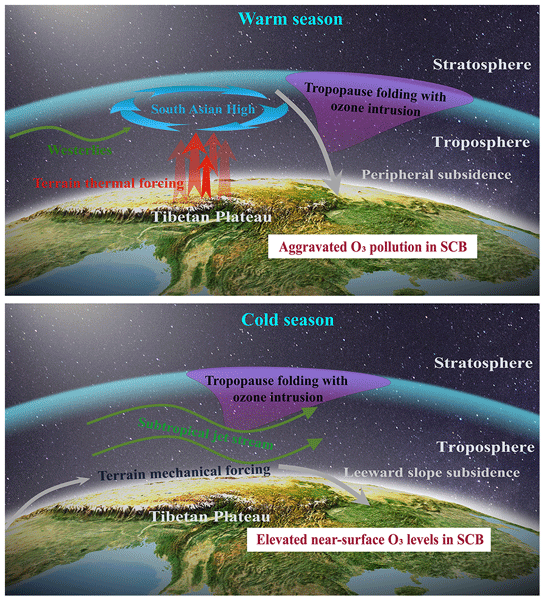
We targeted four stratospheric intrusion episodes to investigate the impacts of cross-layer transport of stratospheric O3 on the near-surface environmental atmosphere over Sichuan Basin and uncover multi-scale atmospheric circulation coupling mechanisms with the seasonally discrepant terrain effects of Tibetan Plateau. Results provided the critical insights into understanding of regional O3 pollution genesis with the exceptional natural sources contribution derived from the stratosphere.
Xiaochun Zhu, Le Cao, Xin Yang, Simeng Li, Jiandong Wang, and Tianliang Zhao
Atmos. Chem. Phys., 25, 12159–12176, https://doi.org/10.5194/acp-25-12159-2025, https://doi.org/10.5194/acp-25-12159-2025, 2025
Short summary
Short summary
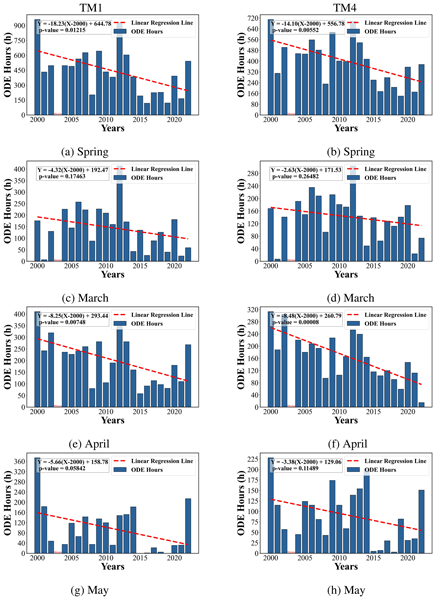
We applied various criteria to identify springtime ozone depletion events (ODEs) at Utqiaġvik, Arctic, and investigated the influence of using different criteria on conclusions regarding the characteristics of ODEs. We found that criteria using fixed thresholds or monthly average-based thresholds were more suitable for identifying ODEs than the others. Applying a threshold that varies with the monthly average or stricter fixed thresholds also indicated a more significant reduction in ODE occurrences.
Qingjian Yang, Tianliang Zhao, Yongqing Bai, Kai Meng, Yuehan Luo, Zhijie Tian, Xiaoyun Sun, Weikang Fu, Kai Yang, and Jun Hu
Atmos. Chem. Phys., 25, 8029–8042, https://doi.org/10.5194/acp-25-8029-2025, https://doi.org/10.5194/acp-25-8029-2025, 2025
Short summary
Short summary
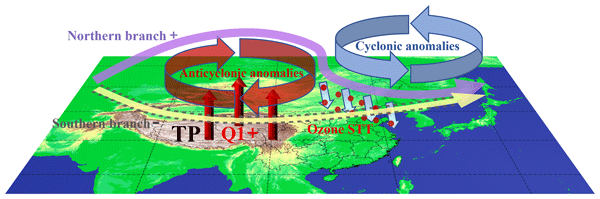
This study reveals a unique driver of the Tibetan Plateau (TP) thermal forcing of the interannual variations in stratosphere-to-troposphere transport (STT) of ozone with diverse structures. Anomalous strong TP thermal forcing induces anticyclonic anomalies in the upper troposphere over the TP, which strengthens and attenuates the northern and southern branches of the westerly jet, intensifying (weakening) the westerly trough for more (fewer) tropopause folds of ozone STT over the East Asian region.
Sihan Liu, Honglei Wang, Delong Zhao, Wei Zhou, Yuanmou Du, Zhengguo Zhang, Peng Cheng, Tianliang Zhao, Yue Ke, Zihao Wu, and Mengyu Huang
Atmos. Chem. Phys., 25, 4151–4165, https://doi.org/10.5194/acp-25-4151-2025, https://doi.org/10.5194/acp-25-4151-2025, 2025
Short summary
Short summary
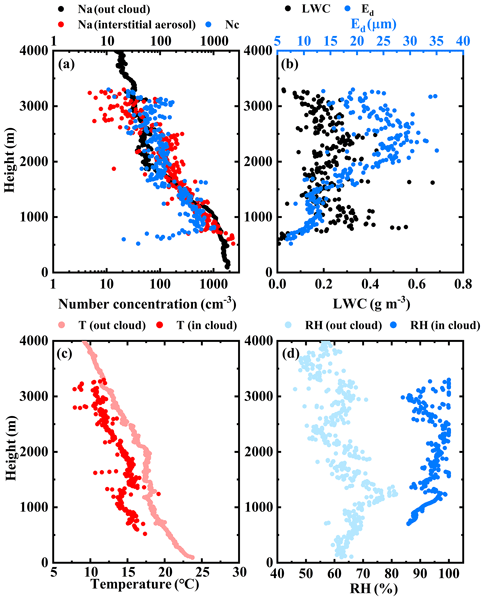
To understand the effect of aerosols on the vertical distribution of stratocumulus microphysical quantities in southwest China, the daily variation characteristics and formation mechanism of the vertical profiles of stratocumulus microphysical characteristics in this region were described using the data of nine cloud-crossing aircraft observations over Guangxi from 10 October to 3 November 2020.
Yongqing Bai, Tianliang Zhao, Kai Meng, Yue Zhou, Jie Xiong, Xiaoyun Sun, Lijuan Shen, Yanyu Yue, Yan Zhu, Weiyang Hu, and Jingyan Yao
Atmos. Chem. Phys., 25, 1273–1287, https://doi.org/10.5194/acp-25-1273-2025, https://doi.org/10.5194/acp-25-1273-2025, 2025
Short summary
Short summary
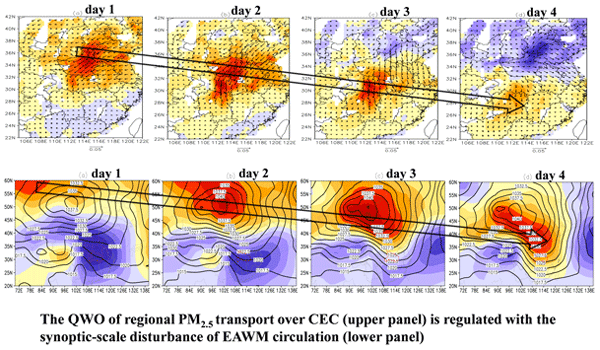
We proposed a composite statistical method to identify the quasi-weekly oscillation (QWO) of regional PM2.5 transport over China in winter from 2015 to 2019. The QWO of regional PM2.5 transport is constrained by synoptic-scale disturbances of the East Asian winter monsoon circulation with the periodic activities of the Siberian high, providing a new insight into the understanding of regional pollutant transport with meteorological drivers in atmospheric environment changes.
Xiaodan Ma, Jianping Huang, Michaela I. Hegglin, Patrick Jöckel, and Tianliang Zhao
Atmos. Chem. Phys., 25, 943–958, https://doi.org/10.5194/acp-25-943-2025, https://doi.org/10.5194/acp-25-943-2025, 2025
Short summary
Short summary
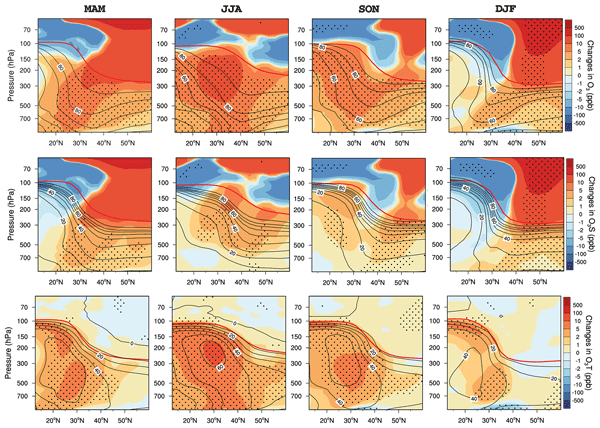
Our research explored changes in ozone levels in the northwest Pacific region over 30 years, revealing a significant increase in the middle-to-upper troposphere, especially during spring and summer. This rise is influenced by both stratospheric and tropospheric sources, which affect climate and air quality in East Asia. This work underscores the need for continued study to understand underlying mechanisms.
Kai Meng, Tianliang Zhao, Yongqing Bai, Ming Wu, Le Cao, Xuewei Hou, Yuehan Luo, and Yongcheng Jiang
Atmos. Chem. Phys., 24, 12623–12642, https://doi.org/10.5194/acp-24-12623-2024, https://doi.org/10.5194/acp-24-12623-2024, 2024
Short summary
Short summary
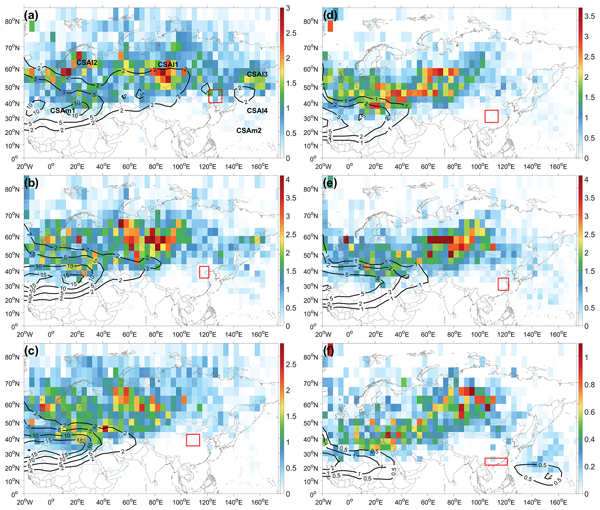
We studied the impact of stratospheric intrusions (SIs) on tropospheric and near-surface ozone in Central and Eastern China from a stratospheric source tracing perspective. SIs contribute the most in the eastern plains, with a contribution exceeding 15 %, and have a small contribution to the west and south. Western Siberia and Mongolia are the most critical source areas for indirect and direct SIs, with the Rossby wave and northeast cold vortex being important driving circulation systems.
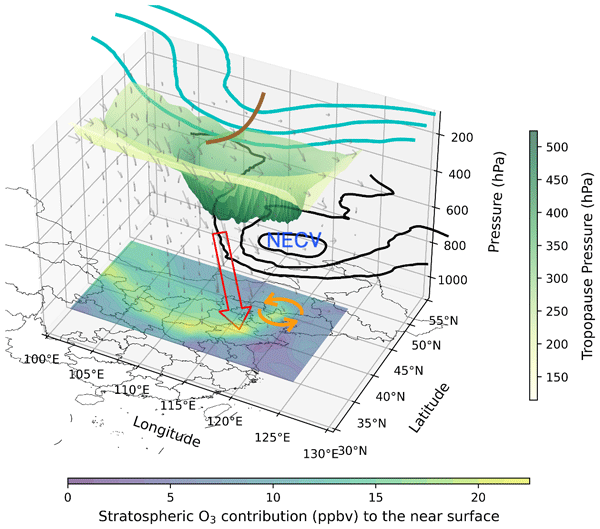
Yuehan Luo, Tianliang Zhao, Kai Meng, Jun Hu, Qingjian Yang, Yongqing Bai, Kai Yang, Weikang Fu, Chenghao Tan, Yifan Zhang, Yanzhe Zhang, and Zhikuan Li
Atmos. Chem. Phys., 24, 7013–7026, https://doi.org/10.5194/acp-24-7013-2024, https://doi.org/10.5194/acp-24-7013-2024, 2024
Short summary
Short summary
We reveal a significant mechanism of stratospheric O3 intrusion (SI) into the atmospheric environment induced by an extratropical cyclone system. This system facilitates the downward transport of stratospheric O3 to the near-surface layer by vertical coupling, involving the upper westerly trough, the middle northeast cold vortex, and the lower extratropical cyclone in the troposphere. On average, stratospheric O3 contributed 26.77 % to near-surface O3 levels over the North China Plain.
Naifu Shao, Chunsong Lu, Xingcan Jia, Yuan Wang, Yubin Li, Yan Yin, Bin Zhu, Tianliang Zhao, Duanyang Liu, Shengjie Niu, Shuxian Fan, Shuqi Yan, and Jingjing Lv
Atmos. Chem. Phys., 23, 9873–9890, https://doi.org/10.5194/acp-23-9873-2023, https://doi.org/10.5194/acp-23-9873-2023, 2023
Short summary
Short summary
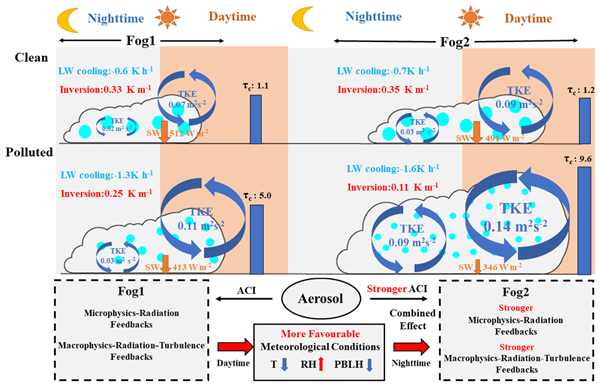
Fog is an important meteorological phenomenon that affects visibility. Aerosols and the planetary boundary layer (PBL) play critical roles in the fog life cycle. In this study, aerosol-induced changes in fog properties become more remarkable in the second fog (Fog2) than in the first fog (Fog1). The reason is that aerosol–cloud interaction (ACI) delays Fog1 dissipation, leading to the PBL meteorological conditions being more conducive to Fog2 formation and to stronger ACI in Fog2.
Le Cao, Simeng Li, Yicheng Gu, and Yuhan Luo
Atmos. Chem. Phys., 23, 3363–3382, https://doi.org/10.5194/acp-23-3363-2023, https://doi.org/10.5194/acp-23-3363-2023, 2023
Short summary
Short summary
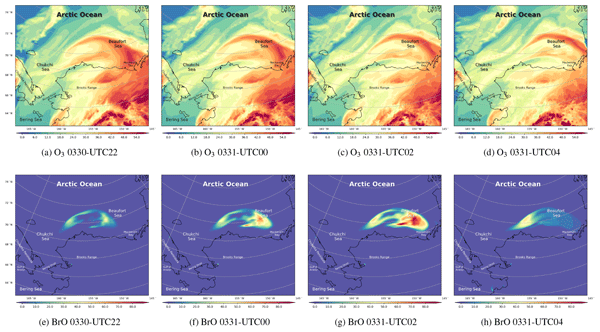
We performed a 3-D mesoscale model study on ozone depletion events (ODEs) occurring in the spring of 2019 at Barrow using an air quality model, CMAQ. Many ODEs observed at Barrow were captured by the model, and the contribution from each physical or chemical process to ozone and bromine species during ODEs was quantitatively evaluated. We found the ODEs at Barrow to be strongly influenced by horizontal transport. In contrast, over the sea, local chemistry significantly reduced the surface ozone.
Chenglong Zhou, Yuzhi Liu, Qingzhe Zhu, Qing He, Tianliang Zhao, Fan Yang, Wen Huo, Xinghua Yang, and Ali Mamtimin
Atmos. Chem. Phys., 22, 5195–5207, https://doi.org/10.5194/acp-22-5195-2022, https://doi.org/10.5194/acp-22-5195-2022, 2022
Short summary
Short summary
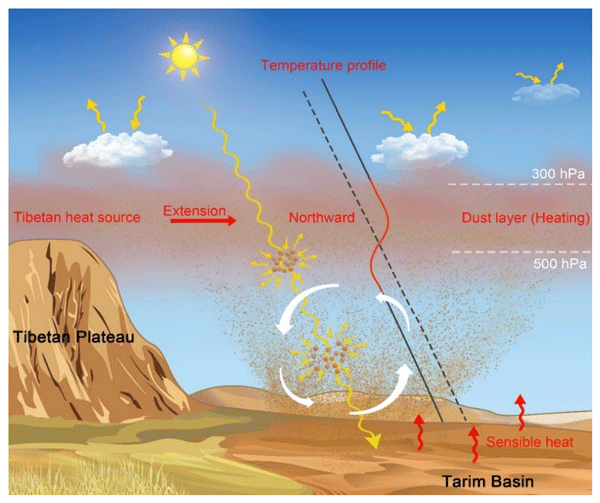
Based on the radiosonde observations, an anomalously warm layer is measured at altitudes between 500 and 300 hPa over the Tarim Basin (TB) with an average intensity of 2.53 and 1.39 K in the spring and summer, respectively. The heat contributions of dust to this anomalously warm atmospheric layer in spring and summer were 13.77 and 10.25 %, respectively. Topographically, the TB is adjacent to the Tibetan Plateau; we propose the concept of the Tibetan heat source’s northward extension.
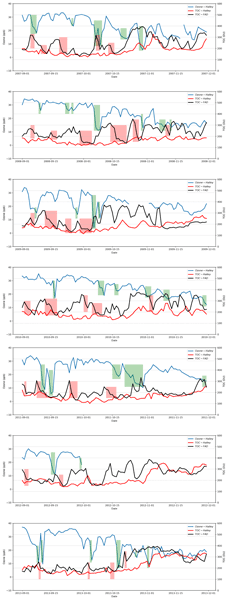
Le Cao, Linjie Fan, Simeng Li, and Shuangyan Yang
Atmos. Chem. Phys., 22, 3875–3890, https://doi.org/10.5194/acp-22-3875-2022, https://doi.org/10.5194/acp-22-3875-2022, 2022
Short summary
Short summary
We analyzed the observational data and used models to discover the impact of the total ozone column (TOC) on the occurrence of tropospheric ozone depletion events (ODE) in the Antarctic. The results suggest that the decrease of TOC favors the occurrence of ODE. When TOC varies the rates of major ODE accelerating reactions are substantially altered but the rates of major ODE decelerating reactions remain unchanged. As a result, the occurrence of ODE negatively depends on the TOC.
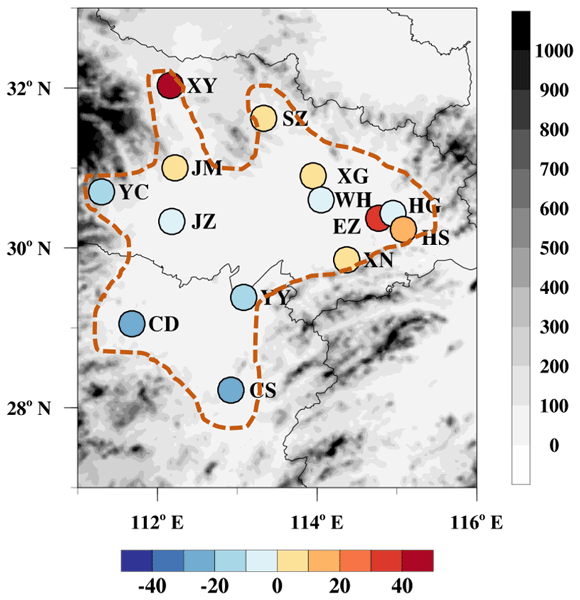
Xiaoyun Sun, Tianliang Zhao, Yongqing Bai, Shaofei Kong, Huang Zheng, Weiyang Hu, Xiaodan Ma, and Jie Xiong
Atmos. Chem. Phys., 22, 3579–3593, https://doi.org/10.5194/acp-22-3579-2022, https://doi.org/10.5194/acp-22-3579-2022, 2022
Short summary
Short summary
This study revealed the impact of anthropogenic emissions and meteorological conditions on PM2.5 decline in the regional transport of air pollutants over a receptor region in central China. The meteorological drivers led to upwind accelerating and downward offsetting of the effects of emission reductions over the receptor region in regional PM2.5 transport, and the contribution of gaseous precursor emissions to PM2.5 pollution was enhanced with reduced anthropogenic emissions in recent years.
Xiangde Xu, Chan Sun, Deliang Chen, Tianliang Zhao, Jianjun Xu, Shengjun Zhang, Juan Li, Bin Chen, Yang Zhao, Hongxiong Xu, Lili Dong, Xiaoyun Sun, and Yan Zhu
Atmos. Chem. Phys., 22, 1149–1157, https://doi.org/10.5194/acp-22-1149-2022, https://doi.org/10.5194/acp-22-1149-2022, 2022
Short summary
Short summary
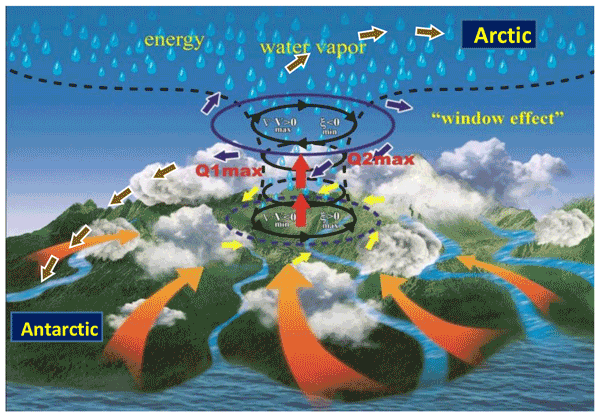
A vertical transport window of tropospheric vapor exists on the Tibetan Plateau (TP). The TP's thermal forcing drives the vertical transport
windowof vapor in the troposphere. The effects of the TP's vertical transport window of vapor are of importance in global climate change.
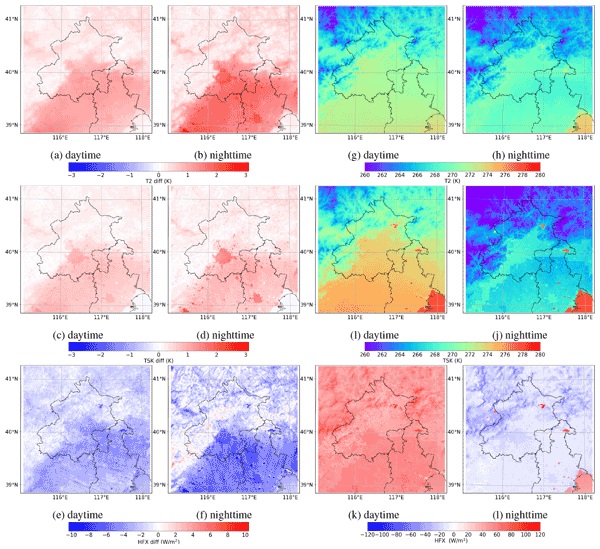
Hongyi Ding, Le Cao, Haimei Jiang, Wenxing Jia, Yong Chen, and Junling An
Geosci. Model Dev., 14, 6135–6153, https://doi.org/10.5194/gmd-14-6135-2021, https://doi.org/10.5194/gmd-14-6135-2021, 2021
Short summary
Short summary
We performed a WRF model study to figure out the mechanism of how the change in minimum eddy diffusivity (Kzmin) in the planetary boundary layer (PBL) closure scheme (ACM2) affects the simulated near-surface temperature in Beijing, China. Moreover, the influence of changing Kzmin on the temperature prediction in areas with different land-use categories was studied. The model performance using a functional-type Kzmin for capturing the temperature change in this area was also clarified.
Cited articles
Akritidis, D., Zanis, P., Pytharoulis, I., Mavrakis, A., and Karacostas, T.: A Deep Stratospheric Intrusion Event down to the Earth's Surface of the Megacity of Athens, Meteorol. Atmos. Phys., 109, 9–18, https://doi.org/10.1007/s00703-010-0096-6, 2010. a
Akritidis, D., Pozzer, A., Zanis, P., Tyrlis, E., Škerlak, B., Sprenger, M., and Lelieveld, J.: On the role of tropopause folds in summertime tropospheric ozone over the eastern Mediterranean and the Middle East, Atmos. Chem. Phys., 16, 14025–14039, https://doi.org/10.5194/acp-16-14025-2016, 2016. a, b
Antonescu, B., Vaughan, G., and Schultz, D. M.: A Five-Year Radar-Based Climatology of Tropopause Folds and Deep Convection over Wales, United Kingdom, Mon. Weather Rev., 141, 1693–1707, https://doi.org/10.1175/mwr-d-12-00246.1, 2013. a, b
Archer, C. L. and Caldeira, K.: Historical Trends in the Jet Streams, Geophys. Res. Lett., 35, 2008GL033614, https://doi.org/10.1029/2008GL033614, 2008. a, b
Bartusek, S., Wu, Y., Ting, M., Zheng, C., Fiore, A., Sprenger, M., and Flemming, J.: Higher-Resolution Tropopause Folding Accounts for More Stratospheric Ozone Intrusions, Geophys. Res. Lett., 50, e2022GL101690, https://doi.org/10.1029/2022GL101690, 2023. a
Borhani, R., Ahmadi-Givi, F., Ghader, S., and Mohebalhojeh, A. R.: A Climatological-Dynamical Analysis of Tropopause Folds over Southwest Asia in the Period of 1989–2018, Dynam. Atmos. Oceans, 98, 101300, https://doi.org/10.1016/j.dynatmoce.2022.101300, 2022. a, b, c
Browning, K. A. and Reynolds, R.: Diagnostic Study of a Narrow Cold-Frontal Rainband and Severe Winds Associated with a Stratospheric Intrusion, Q. J. Roy. Meteor. Soc., 120, 235–257, https://doi.org/10.1002/qj.49712051602, 1994. a
Cao, L., Yang, Y., Wang, M., Xu, L., Zhang, T., Lei, X., and Zhao, T.: A High-Resolution Tropopause Folding Dataset over China from 2014–2023, Zenodo [data set], https://doi.org/10.5281/zenodo.17446871, 2025. a, b
Chen, X. L., Ma, Y. M., Kelder, H., Su, Z., and Yang, K.: On the behaviour of the tropopause folding events over the Tibetan Plateau, Atmos. Chem. Phys., 11, 5113–5122, https://doi.org/10.5194/acp-11-5113-2011, 2011. a
Cooper, O., Forster, C., Parrish, D., Dunlea, E., Hübler, G., Fehsenfeld, F., Holloway, J., Oltmans, S., Johnson, B., Wimmers, A., and Horowitz, L.: On the Life Cycle of a Stratospheric Intrusion and Its Dispersion into Polluted Warm Conveyor Belts, J. Geophys. Res.-Atmos., 109, https://doi.org/10.1029/2003jd004006, 2004. a
Cooper, O. R., Stohl, A., Hübler, G., Hsie, E. Y., Parrish, D. D., Tuck, A. F., Kiladis, G. N., Oltmans, S. J., Johnson, B. J., Shapiro, M., Moody, J. L., and Lefohn, A. S.: Direct Transport of Midlatitude Stratospheric Ozone into the Lower Troposphere and Marine Boundary Layer of the Tropical Pacific Ocean, J. Geophys. Res.-Atmos., 110, 2005JD005783, https://doi.org/10.1029/2005JD005783, 2005. a
Danielsen, E. F. and Mohnen, V. A.: Project Dustorm Report: Ozone Transport, in Situ Measurements, and Meteorological Analyses of Tropopause Folding, J. Geophys. Res., 82, 5867–5877, https://doi.org/10.1029/jc082i037p05867, 1977. a
Hersbach, H., Bell, B., Berrisford, P., Hirahara, S., Horányi, A., Muñoz-Sabater, J., Nicolas, J., Peubey, C., Radu, R., Schepers, D., Simmons, A., Soci, C., Abdalla, S., Abellan, X., Balsamo, G., Bechtold, P., Biavati, G., Bidlot, J., Bonavita, M., De Chiara, G., Dahlgren, P., Dee, D., Diamantakis, M., Dragani, R., Flemming, J., Forbes, R., Fuentes, M., Geer, A., Haimberger, L., Healy, S., Hogan, R. J., Hólm, E., Janisková, M., Keeley, S., Laloyaux, P., Lopez, P., Lupu, C., Radnoti, G., de Rosnay, P., Rozum, I., Vamborg, F., Villaume, S., and Thépaut, J.-N.: The ERA5 Global Reanalysis, Q. J. Roy. Meteor. Soc., 146, 1999–2049, https://doi.org/10.1002/qj.3803, 2020. a
Holton, J. R., Haynes, P. H., McIntyre, M. E., Douglass, A. R., Rood, R. B., and Pfister, L.: Stratosphere-Troposphere Exchange, Rev. Geophys., 33, 403–439, https://doi.org/10.1029/95rg02097, 1995. a, b
Hong, J., Wang, H., Wang, W., Zhu, J., Deng, H., and Wang, H.: Impacts of Stratosphere-to-Troposphere Transport on Tropospheric Ozone in Southeastern China: Insights from Ozonesonde Observations, Environ. Res. Lett., 19, 064068, https://doi.org/10.1088/1748-9326/ad4ef9, 2024. a
Knowland, K. E., Ott, L. E., Duncan, B. N., and Wargan, K.: Stratospheric Intrusion-Influenced Ozone Air Quality Exceedances Investigated in the NASA MERRA-2 Reanalysis, Geophys. Res. Lett., 44, https://doi.org/10.1002/2017gl074532, 2017. a
Langford, A., Senff, C., Alvarez, R., Brioude, J., Cooper, O., Holloway, J., Lin, M., Marchbanks, R., Pierce, R., Sandberg, S., Weickmann, A., and Williams, E.: An Overview of the 2013 Las Vegas Ozone Study (LVOS): Impact of Stratospheric Intrusions and Long-Range Transport on Surface Air Quality, Atmos. Environ., 109, 305–322, https://doi.org/10.1016/j.atmosenv.2014.08.040, 2015. a, b
Langford, A. O.: Stratosphere-Troposphere Exchange at the Subtropical Jet: Contribution to the Tropospheric Ozone Budget at Midlatitudes, Geophys. Res. Lett., 26, 2449–2452, https://doi.org/10.1029/1999GL900556, 1999. a
Li, L., Tian, W., Zhang, J., Li, J., Luo, J., and Tian, H.: Characteristics of Summer Tropopause Folds over Southeastern Central Asia and Their Influences on Precipitation, Atmos. Res., 289, 106747, https://doi.org/10.1016/j.atmosres.2023.106747, 2023. a
Lian, Y., Shen, B., Li, S., Liu, G., and Yang, X.: Mechanisms for the Formation of Northeast China Cold Vortex and Its Activities and Impacts: An Overview, J. Meteorol. Res.-PRC, 30, 881–896, https://doi.org/10.1007/s13351-016-6003-4, 2016. a
Liang, T., Luo, J., Zhang, C., Tian, H., Bai, Z., Bian, J., Wang, Z., Luo, F., Zhu, F., Mao, L., He, X., Wang, S., Zhang, K., and Zhang, J.: The Impact of Tropopause Fold Event on Surface Ozone Concentration over Tibetan Plateau in July, Atmos. Res., 298, 107156, https://doi.org/10.1016/j.atmosres.2023.107156, 2024. a, b, c
Lin, M., Fiore, A. M., Horowitz, L. W., Langford, A. O., Oltmans, S. J., Tarasick, D., and Rieder, H. E.: Climate Variability Modulates Western US Ozone Air Quality in Spring via Deep Stratospheric Intrusions, Nat. Commun., 6, https://doi.org/10.1038/ncomms8105, 2015. a
Luo, J., Liang, W., Xu, P., Xue, H., Zhang, M., Shang, L., and Tian, H.: Seasonal Features and a Case Study of Tropopause Folds over the Tibetan Plateau, Adv. Meteorol., 2019, 4375123, https://doi.org/10.1155/2019/4375123, 2019. a, b, c
Luo, Y., Zhao, T., Meng, K., Hu, J., Yang, Q., Bai, Y., Yang, K., Fu, W., Tan, C., Zhang, Y., Zhang, Y., and Li, Z.: A mechanism of stratospheric O3 intrusion into the atmospheric environment: a case study of the North China Plain, Atmos. Chem. Phys., 24, 7013–7026, https://doi.org/10.5194/acp-24-7013-2024, 2024. a, b, c, d, e, f
Meul, S., Langematz, U., Kröger, P., Oberländer-Hayn, S., and Jöckel, P.: Future changes in the stratosphere-to-troposphere ozone mass flux and the contribution from climate change and ozone recovery, Atmos. Chem. Phys., 18, 7721–7738, https://doi.org/10.5194/acp-18-7721-2018, 2018. a
Neu, J. L., Flury, T., Manney, G. L., Santee, M. L., Livesey, N. J., and Worden, J.: Tropospheric Ozone Variations Governed by Changes in Stratospheric Circulation, Nat. Geosci., 7, 340–344, https://doi.org/10.1038/ngeo2138, 2014. a
Raveh-Rubin, S. and Wernli, H.: Large-Scale Wind and Precipitation Extremes in the Mediterranean: Dynamical Aspects of Five Selected Cyclone Events, Q. J. Roy. Meteor. Soc., 142, 3097–3114, https://doi.org/10.1002/qj.2891, 2016. a
Ren, Q., Jiang, X., Zhang, Y., Li, Z., and Yang, S.: Effects of Suppressed Transient Eddies by the Tibetan Plateau on the East Asian Summer Monsoon, J. Climate, 34, 8481–8501, https://doi.org/10.1175/JCLI-D-20-0646.1, 2021. a
Schill, G. P., Froyd, K. D., Murphy, D. M., Williamson, C. J., Brock, C. A., Sherwen, T., Evans, M. J., Ray, E. A., Apel, E. C., Hornbrook, R. S., Hills, A. J., Peischl, J., Ryerson, T. B., Thompson, C. R., Bourgeois, I., Blake, D. R., DiGangi, J. P., and Diskin, G. S.: Widespread trace bromine and iodine in remote tropospheric non-sea-salt aerosols, Atmos. Chem. Phys., 25, 45–71, https://doi.org/10.5194/acp-25-45-2025, 2025. a
Shapiro, M. A.: Turbulent Mixing within Tropopause Folds as a Mechanism for the Exchange of Chemical Constituents between the Stratosphere and Troposphere, J. Atmos. Sci., 37, 994–1004, https://doi.org/10.1175/1520-0469(1980)037<0994:TMWTFA>2.0.CO;2, 1980. a
Škerlak, B., Sprenger, M., and Wernli, H.: A global climatology of stratosphere–troposphere exchange using the ERA-Interim data set from 1979 to 2011, Atmos. Chem. Phys., 14, 913–937, https://doi.org/10.5194/acp-14-913-2014, 2014. a
Spreitzer, E., Attinger, R., Boettcher, M., Forbes, R., Wernli, H., and Joos, H.: Modification of Potential Vorticity near the Tropopause by Nonconservative Processes in the ECMWF Model, J. Atmos. Sci., 76, 1709–1726, https://doi.org/10.1175/jas-d-18-0295.1, 2019. a
Sprenger, M., Croci Maspoli, M., and Wernli, H.: Tropopause Folds and Cross-Tropopause Exchange: A Global Investigation Based upon ECMWF Analyses for the Time Period March 2000 to February 2001, J. Geophys. Res.-Atmos., 108, 2002JD002587, https://doi.org/10.1029/2002JD002587, 2003. a, b, c, d, e, f, g
Stohl, A., Bonasoni, P., Cristofanelli, P., Collins, W., Feichter, J., Frank, A., Forster, C., Gerasopoulos, E., Gäggeler, H., James, P., Kentarchos, T., Kromp-Kolb, H., Krüger, B., Land, C., Meloen, J., Papayannis, A., Priller, A., Seibert, P., Sprenger, M., Roelofs, G. J., Scheel, H. E., Schnabel, C., Siegmund, P., Tobler, L., Trickl, T., Wernli, H., Wirth, V., Zanis, P., and Zerefos, C.: Stratosphere-Troposphere Exchange: A Review, and What We Have Learned from STACCATO, J. Geophys. Res.-Atmos., 108, 2002JD002490, https://doi.org/10.1029/2002JD002490, 2003. a, b, c, d, e
Uccellini, L. W.: Processes Contributing to the Rapid Development of Extratropical Cyclones, in: Extratropical Cyclones, American Meteorological Society, Boston, MA, 81–105, ISBN 978-1-944970-33-8, https://doi.org/10.1007/978-1-944970-33-8_6, 1990. a
Wernli, H., Dirren, S., Liniger, M. A., and Zillig, M.: Dynamical Aspects of the Life Cycle of the Winter Storm “Lothar” (24–26 December 1999), Q. J. Roy. Meteor. Soc., 128, 405–429, https://doi.org/10.1256/003590002321042036, 2002. a
Williams, R. S., Hegglin, M. I., Kerridge, B. J., Jöckel, P., Latter, B. G., and Plummer, D. A.: Characterising the seasonal and geographical variability in tropospheric ozone, stratospheric influence and recent changes, Atmos. Chem. Phys., 19, 3589–3620, https://doi.org/10.5194/acp-19-3589-2019, 2019. a
Xue, D., Zhang, Y., Wang, P., Sun, F., and Yin, J.: Distinct Influences of Cold Vortex over Northeast China on Local Precipitation in Early Summer and Midsummer, Clim. Dynam., 59, 3701–3716, https://doi.org/10.1007/s00382-022-06291-4, 2022. a
Yang, M., Li, C., Luo, D., Yao, Y., Li, X., Chen, X., and Lu, Y.: Mechanical and Thermal Impacts of the Tibetan–Iranian Plateau on the North Pacific Storm Track: Numerical Experiments by FGOALS-f3-L, J. Geophys. Res.-Atmos., 127, e2021JD035659, https://doi.org/10.1029/2021JD035659, 2022. a
Yin, X., Rupakheti, D., Zhang, G., Luo, J., Kang, S., de Foy, B., Yang, J., Ji, Z., Cong, Z., Rupakheti, M., Li, P., Hu, Y., and Zhang, Q.: Surface ozone over the Tibetan Plateau controlled by stratospheric intrusion, Atmos. Chem. Phys., 23, 10137–10143, https://doi.org/10.5194/acp-23-10137-2023, 2023. a, b, c, d, e
Zhang, Y., Huang, Q., Guo, K., Wang, M., Liao, H., Chou, Y., and He, X.: Tropopause Folds over the Tibetan Plateau and Their Impact on Water Vapor in the Upper Troposphere-Lower Stratosphere, Clim. Dynam., 62, 1423–1437, https://doi.org/10.1007/s00382-023-06978-2, 2024. a
Zhang, Y., Zhao, T., Ning, G., Xu, X., Chen, Z., Jia, M., Sun, X., Shu, Z., Lu, Z., Liu, J., and Qie, X.: A Unique Mechanism of Ozone Surges Jointly Triggered by Deep Stratospheric Intrusions and the Tibetan Plateau Topographic Forcing, Geophys. Res. Lett., 52, e2024GL114207, https://doi.org/10.1029/2024GL114207, 2025. a, b, c, d, e, f
Zhao, K., Hu, C., Yuan, Z., Xu, D., Zhang, S., Luo, H., Wang, J., and Jiang, R.: A Modeling Study of the Impact of Stratospheric Intrusion on Ozone Enhancement in the Lower Troposphere over the Hong Kong Regions, China, Atmos. Res., 247, 105158, https://doi.org/10.1016/j.atmosres.2020.105158, 2021. a
Zhong, Y., Chen, Q., Zhou, X., Li, Y., Liao, Y., and Chen, Z.: Influence of Tropopause Folds on an Extreme Low Temperature Event in Eastern China in January 2021, Atmos. Res., 326, 108269, https://doi.org/10.1016/j.atmosres.2025.108269, 2025. a, b, c
Short summary
This study provides a high-resolution (0.25°, hourly) tropopause folding dataset for China (2014–2023) using ERA5 (ECMWF Reanalysis version 5) reanalysis data and a three-dimensional labeling method. It fills a critical data gap, enabling detailed spatiotemporal analysis of tropopause folding events. This validated resource provides a solid foundation for investigating stratosphere-troposphere transport and its impacts on near-surface air quality and extreme weather.
This study provides a high-resolution (0.25°, hourly) tropopause folding dataset for China...


Altmetrics
Final-revised paper
Preprint