Articles | Volume 18, issue 3
https://doi.org/10.5194/essd-18-2305-2026
© Author(s) 2026. This work is distributed under
the Creative Commons Attribution 4.0 License.
the Creative Commons Attribution 4.0 License.
https://doi.org/10.5194/essd-18-2305-2026
© Author(s) 2026. This work is distributed under
the Creative Commons Attribution 4.0 License.
the Creative Commons Attribution 4.0 License.
Data description article
| 
27 Mar 2026
Data description article |
| 27 Mar 2026
| 27 Mar 2026
Measurements of water droplet size distributions in a turbulent wind tunnel

Meteorology and Air Quality Group, Wageningen University, Wageningen, the Netherlands
Silvio Schmalfuß
Leibniz Institute for Tropospheric Research (TROPOS), Leipzig, Germany
Frank Stratmann
Leibniz Institute for Tropospheric Research (TROPOS), Leipzig, Germany
Dennis Niedermeier
Leibniz Institute for Tropospheric Research (TROPOS), Leipzig, Germany
Related authors
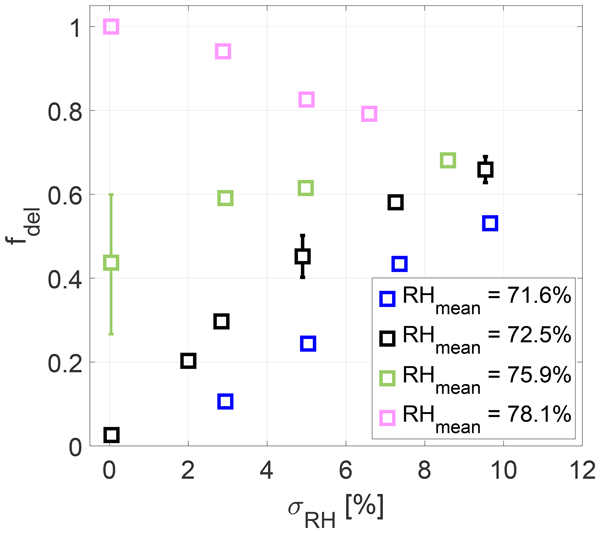
Dennis Niedermeier, Rasmus Hoffmann, Silvio Schmalfuss, Wiebke Frey, Fabian Senf, Olaf Hellmuth, Mira Pöhlker, and Frank Stratmann
Aerosol Research, 3, 219–230, https://doi.org/10.5194/ar-3-219-2025, https://doi.org/10.5194/ar-3-219-2025, 2025
Short summary
Short summary
This study examines the deliquescence behavior of NaCl particles in a turbulent humidity field using the wind tunnel LACIS-T (Turbulent Leipzig Aerosol Cloud Interaction Simulator). The results show that turbulent relative humidity (RH) fluctuations affect the number of deliquesced particles, depending on the mean RH, strength of humidity fluctuations, and particle residence time. It turns out that, in addition to the mean RH, it is essential to consider humidity fluctuations and particle history when determining the phase state of the deliquescent particles.
Sreehari Kizhuveettil, Jordi Vila-Guerau de Arellano, Martina Krämer, Armin Afchine, Luiz A. T. Machado, Martin Zöger, and Wiebke Frey
EGUsphere, https://doi.org/10.5194/egusphere-2025-1637, https://doi.org/10.5194/egusphere-2025-1637, 2025
Preprint archived
Short summary
Short summary
Aircraft measurements are used to investigate high-altitude downdrafts in tropical deep convective clouds. The cloud water present in the downdrafts and its intensity do not show any correlation. Surprisingly, downdrafts occurred in supersaturated regions, contradicting the classical view of subsaturated downdrafts. Up- and downdrafts of similar strength show similar particle size distributions. These findings shed new light on the interplay between deep convection dynamics and microphysics.

Jakub L. Nowak, Robert Grosz, Wiebke Frey, Dennis Niedermeier, Jędrzej Mijas, Szymon P. Malinowski, Linda Ort, Silvio Schmalfuß, Frank Stratmann, Jens Voigtländer, and Tadeusz Stacewicz
Atmos. Meas. Tech., 15, 4075–4089, https://doi.org/10.5194/amt-15-4075-2022, https://doi.org/10.5194/amt-15-4075-2022, 2022
Short summary
Short summary
A high-resolution infrared hygrometer (FIRH) was adapted to measure humidity and its rapid fluctuations in turbulence inside a moist-air wind tunnel LACIS-T where two air streams of different temperature and humidity are mixed. The measurement was achieved from outside the tunnel through its glass windows and provided an agreement with a reference dew-point hygrometer placed inside. The characterization of humidity complements previous investigations of velocity and temperature fields.
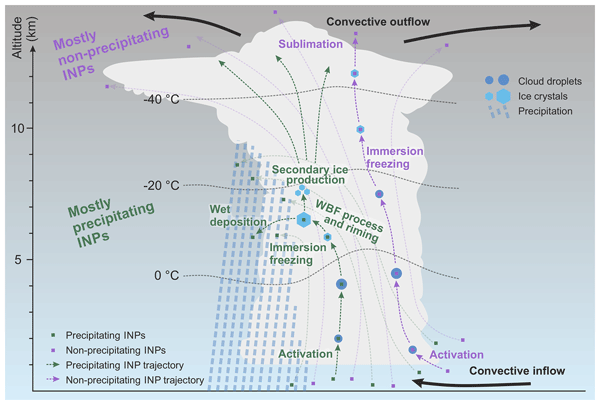
Jonas Schaefer, Sarah Grawe, Hans-Christian Clemen, Stephan Mertes, Johannes Schneider, Bruno Wetzel, Daniel Sauer, Jennifer Wolf, Laura Tomsche, Johanna Mayer, Roland Schrödner, Silvia Henning, Tina Jurkat-Witschas, Christiane Voigt, Helmut Ziereis, Theresa Harlaß, Mira Pöhlker, and Frank Stratmann
Atmos. Chem. Phys., 26, 12505–12520, https://doi.org/10.5194/acp-26-12505-2026, https://doi.org/10.5194/acp-26-12505-2026, 2026
Short summary
Short summary
Ice-nucleating particles (INP) are aerosol particles important for ice formation in clouds droplets and thereby influence climate. This study uses airborne measurements over Europe to show how INP are transported through thunderstorms. We show which particles are washed out and which are are transported into the higher troposphere, where they can again affect cloud ice formation. The findings improve understanding of atmospheric particle distribution and help refine climate models.
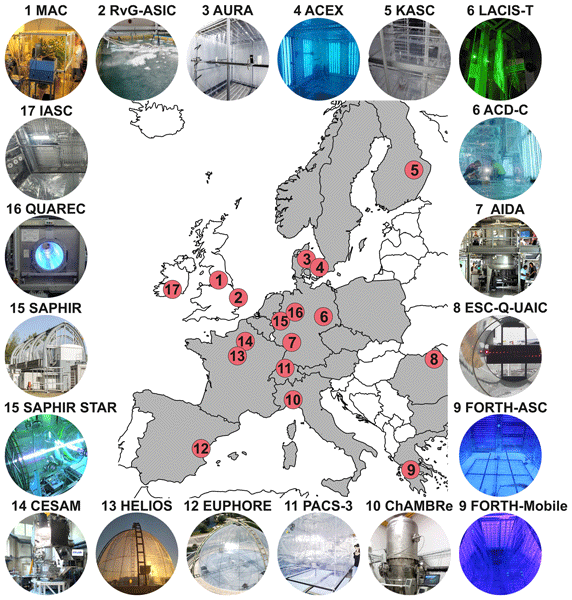
Hendrik Fuchs, Niklas Illmann, Amalia Muñoz, Mila Ródenas, Bénédicte Picquet-Varrault, M. Rami Alfarra, Cecilia Arsene, Iustinian G. Bejan, David M. Bell, Merete Bilde, Alexander Böhmländer, Mixtli Campos-Pineda, Mathieu Cazaunau, Patrice Coll, Véronique Daële, Claudia Di Biagio, Michael Flynn, Paola Formenti, Hartmut Herrmann, Kristina Höhler, Thorsten Hohaus, Matthew S. Johnson, Eija Juurola, Niku Kivekäs, Jan Kaiser, Christos Kaltsonoudis, Paolo Laj, Dario Massabò, Federico Mazzei, Gordon McFiggans, Max R. McGillen, Abdelwahid Mellouki, Peter Mettke, Ottmar Möhler, Falk Mothes, Dennis Niedermeier, Anna Novelli, Romeo I. Olariu, Spyros N. Pandis, Iulia Patroescu-Klotz, Rosa Maria Petracca Altieri, Paolo Prati, Claudiu Roman, Albert A. Ruth, Harald Saathoff, Silvio Schmalfuß, Frank Stratmann, Virginia Vernocchi, Aristeidis Voliotis, Jens Voigtländer, Annele Virtanen, Andreas Wahner, Robert Wagner, John Wenger, Sören Zorn, Peter Wiesen, and Jean-Francois Doussin
Atmos. Meas. Tech., 19, 4165–4199, https://doi.org/10.5194/amt-19-4165-2026, https://doi.org/10.5194/amt-19-4165-2026, 2026
Short summary
Short summary
Atmospheric simulation chambers enable experiments to be conducted under controlled conditions, improving our understanding of, and ability to predict, changes in the composition of the atmosphere. This is important for assessing air quality and its effects on human health, climate, the environment, and the economy. This paper describes the chambers of the European ACTRIS research infrastructure and discusses topics and directions that can be addressed in future chamber experiments.
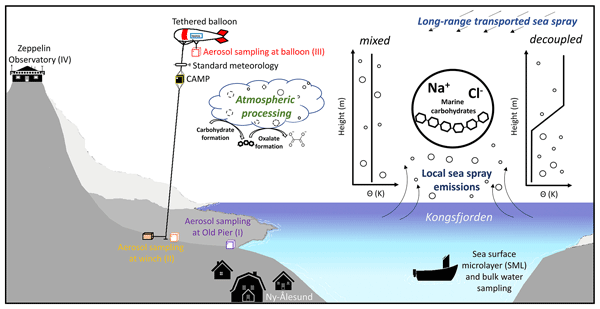
Sebastian Zeppenfeld, Jonas Schaefer, Christian Pilz, Kerstin Ebell, Moritz Zeising, Frank Stratmann, Holger Siebert, Birgit Wehner, Matthias Wietz, Astrid Bracher, and Manuela van Pinxteren
Atmos. Chem. Phys., 26, 7235–7260, https://doi.org/10.5194/acp-26-7235-2026, https://doi.org/10.5194/acp-26-7235-2026, 2026
Short summary
Short summary
Sea spray aerosol transports inorganic salts and carbohydrates from the ocean into the atmosphere. In this field study conducted in Svalbard, we found that carbohydrates reach elevated altitudes that are relevant for cloud formation and properties.
David J. Simon, Jonas Schaefer, Jörg Hartmann, Benjamin Kirbus, Joshua Müller, Markus Hartmann, Bruno Wetzel, Laura Köhler, Anna-Marie Jörss, Kay Weinhold, Andreas Herber, Zsófia Jurányi, Silvia Henning, Gregory C. Roberts, Manfred Wendisch, Mira L. Pöhlker, and Frank Stratmann
EGUsphere, https://doi.org/10.5194/egusphere-2026-2215, https://doi.org/10.5194/egusphere-2026-2215, 2026
Short summary
Short summary
We investigate the occurrence of newly formed aerosol particles in the Arctic atmosphere by analyzing aerosol particle measurements conducted aboard a research aircraft in April 2024. We frequently detected newly formed particles at altitudes of up to 4 km, while many previous studies had predominantly found such particles close to the surface. Newly formed particles were associated with air mass transport from lower latitudes, the occurrence of clouds, as well as the presence of sea ice.
Kaiqi Wang, Kai Bi, Shuling Chen, Markus Hartmann, Zhijun Wu, Jiyu Gao, Xiaoyu Xu, Yuhan Cheng, Mengyu Huang, Yunbo Chen, Huiwen Xue, Bingbing Wang, Yaqiong Hu, Xiongying Zhang, Xincheng Ma, Ruijie Li, Ping Tian, Ottmar Möhler, Heike Wex, Frank Stratmann, Jie Chen, and Xianda Gong
Atmos. Meas. Tech., 18, 5823–5840, https://doi.org/10.5194/amt-18-5823-2025, https://doi.org/10.5194/amt-18-5823-2025, 2025
Short summary
Short summary
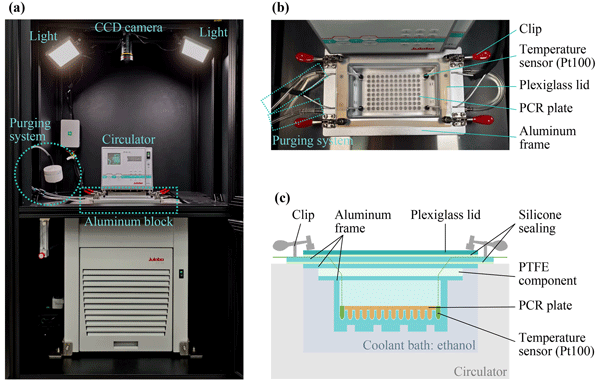
Understanding how ice forms in clouds is crucial for predicting weather and climate; however, accurately measuring the ice-nucleating particles that trigger ice formation remains challenging. We developed an advanced instrument called the Freezing Ice Nucleation Detection Analyzer. By refining temperature control, automating freezing detection, and rigorously testing, we demonstrated that this instrument can reliably measure immersion mode ice-nucleating particles across diverse conditions.
Zsófia Jurányi, Christof Lüpkes, Frank Stratmann, Jörg Hartmann, Jonas Schaefer, Anna-Marie Jörss, Alexander Schulz, Bruno Wetzel, David Simon, Eduard Gebhard, Maximilian Stöhr, Paula Hofmann, Dirk Kalmbach, Sarah Grawe, Manfred Wendisch, and Andreas Herber
Atmos. Meas. Tech., 18, 3477–3494, https://doi.org/10.5194/amt-18-3477-2025, https://doi.org/10.5194/amt-18-3477-2025, 2025
Short summary
Short summary
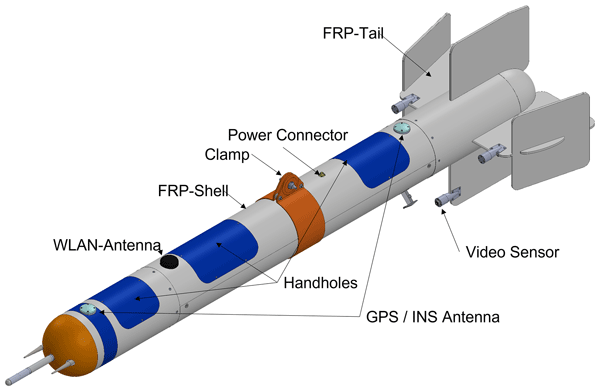
Understanding the lowest layers of the atmosphere is crucial for climate research, especially in the Arctic. Our study introduces the T-Bird, an aircraft-towed platform designed to measure turbulence and aerosol properties at extremely low altitudes. Traditional aircraft cannot access this region, making the T-Bird a breakthrough for capturing critical atmospheric data. Its first deployment over the Arctic demonstrated its potential to improve our understanding of polar processes.
Dennis Niedermeier, Rasmus Hoffmann, Silvio Schmalfuss, Wiebke Frey, Fabian Senf, Olaf Hellmuth, Mira Pöhlker, and Frank Stratmann
Aerosol Research, 3, 219–230, https://doi.org/10.5194/ar-3-219-2025, https://doi.org/10.5194/ar-3-219-2025, 2025
Short summary
Short summary
This study examines the deliquescence behavior of NaCl particles in a turbulent humidity field using the wind tunnel LACIS-T (Turbulent Leipzig Aerosol Cloud Interaction Simulator). The results show that turbulent relative humidity (RH) fluctuations affect the number of deliquesced particles, depending on the mean RH, strength of humidity fluctuations, and particle residence time. It turns out that, in addition to the mean RH, it is essential to consider humidity fluctuations and particle history when determining the phase state of the deliquescent particles.
Sreehari Kizhuveettil, Jordi Vila-Guerau de Arellano, Martina Krämer, Armin Afchine, Luiz A. T. Machado, Martin Zöger, and Wiebke Frey
EGUsphere, https://doi.org/10.5194/egusphere-2025-1637, https://doi.org/10.5194/egusphere-2025-1637, 2025
Preprint archived
Short summary
Short summary
Aircraft measurements are used to investigate high-altitude downdrafts in tropical deep convective clouds. The cloud water present in the downdrafts and its intensity do not show any correlation. Surprisingly, downdrafts occurred in supersaturated regions, contradicting the classical view of subsaturated downdrafts. Up- and downdrafts of similar strength show similar particle size distributions. These findings shed new light on the interplay between deep convection dynamics and microphysics.

André Ehrlich, Susanne Crewell, Andreas Herber, Marcus Klingebiel, Christof Lüpkes, Mario Mech, Sebastian Becker, Stephan Borrmann, Heiko Bozem, Matthias Buschmann, Hans-Christian Clemen, Elena De La Torre Castro, Henning Dorff, Regis Dupuy, Oliver Eppers, Florian Ewald, Geet George, Andreas Giez, Sarah Grawe, Christophe Gourbeyre, Jörg Hartmann, Evelyn Jäkel, Philipp Joppe, Olivier Jourdan, Zsófia Jurányi, Benjamin Kirbus, Johannes Lucke, Anna E. Luebke, Maximilian Maahn, Nina Maherndl, Christian Mallaun, Johanna Mayer, Stephan Mertes, Guillaume Mioche, Manuel Moser, Hanno Müller, Veronika Pörtge, Nils Risse, Greg Roberts, Sophie Rosenburg, Johannes Röttenbacher, Michael Schäfer, Jonas Schaefer, Andreas Schäfler, Imke Schirmacher, Johannes Schneider, Sabrina Schnitt, Frank Stratmann, Christian Tatzelt, Christiane Voigt, Andreas Walbröl, Anna Weber, Bruno Wetzel, Martin Wirth, and Manfred Wendisch
Earth Syst. Sci. Data, 17, 1295–1328, https://doi.org/10.5194/essd-17-1295-2025, https://doi.org/10.5194/essd-17-1295-2025, 2025
Short summary
Short summary
This paper provides an overview of the HALO–(AC)3 aircraft campaign data sets, the campaign-specific instrument operation, data processing, and data quality. The data set comprises in situ and remote sensing observations from three research aircraft: HALO, Polar 5, and Polar 6. All data are published in the PANGAEA database by instrument-separated data subsets. It is highlighted how the scientific analysis of the HALO–(AC)3 data benefits from the coordinated operation of three aircraft.
Manfred Wendisch, Susanne Crewell, André Ehrlich, Andreas Herber, Benjamin Kirbus, Christof Lüpkes, Mario Mech, Steven J. Abel, Elisa F. Akansu, Felix Ament, Clémantyne Aubry, Sebastian Becker, Stephan Borrmann, Heiko Bozem, Marlen Brückner, Hans-Christian Clemen, Sandro Dahlke, Georgios Dekoutsidis, Julien Delanoë, Elena De La Torre Castro, Henning Dorff, Regis Dupuy, Oliver Eppers, Florian Ewald, Geet George, Irina V. Gorodetskaya, Sarah Grawe, Silke Groß, Jörg Hartmann, Silvia Henning, Lutz Hirsch, Evelyn Jäkel, Philipp Joppe, Olivier Jourdan, Zsofia Jurányi, Michail Karalis, Mona Kellermann, Marcus Klingebiel, Michael Lonardi, Johannes Lucke, Anna E. Luebke, Maximilian Maahn, Nina Maherndl, Marion Maturilli, Bernhard Mayer, Johanna Mayer, Stephan Mertes, Janosch Michaelis, Michel Michalkov, Guillaume Mioche, Manuel Moser, Hanno Müller, Roel Neggers, Davide Ori, Daria Paul, Fiona M. Paulus, Christian Pilz, Felix Pithan, Mira Pöhlker, Veronika Pörtge, Maximilian Ringel, Nils Risse, Gregory C. Roberts, Sophie Rosenburg, Johannes Röttenbacher, Janna Rückert, Michael Schäfer, Jonas Schaefer, Vera Schemann, Imke Schirmacher, Jörg Schmidt, Sebastian Schmidt, Johannes Schneider, Sabrina Schnitt, Anja Schwarz, Holger Siebert, Harald Sodemann, Tim Sperzel, Gunnar Spreen, Bjorn Stevens, Frank Stratmann, Gunilla Svensson, Christian Tatzelt, Thomas Tuch, Timo Vihma, Christiane Voigt, Lea Volkmer, Andreas Walbröl, Anna Weber, Birgit Wehner, Bruno Wetzel, Martin Wirth, and Tobias Zinner
Atmos. Chem. Phys., 24, 8865–8892, https://doi.org/10.5194/acp-24-8865-2024, https://doi.org/10.5194/acp-24-8865-2024, 2024
Short summary
Short summary
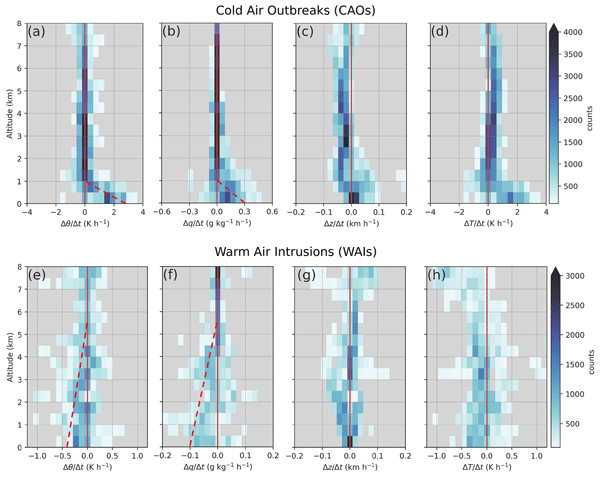
The Arctic is warming faster than the rest of the globe. Warm-air intrusions (WAIs) into the Arctic may play an important role in explaining this phenomenon. Cold-air outbreaks (CAOs) out of the Arctic may link the Arctic climate changes to mid-latitude weather. In our article, we describe how to observe air mass transformations during CAOs and WAIs using three research aircraft instrumented with state-of-the-art remote-sensing and in situ measurement devices.
Johanna S. Seidel, Alexei A. Kiselev, Alice Keinert, Frank Stratmann, Thomas Leisner, and Susan Hartmann
Atmos. Chem. Phys., 24, 5247–5263, https://doi.org/10.5194/acp-24-5247-2024, https://doi.org/10.5194/acp-24-5247-2024, 2024
Short summary
Short summary
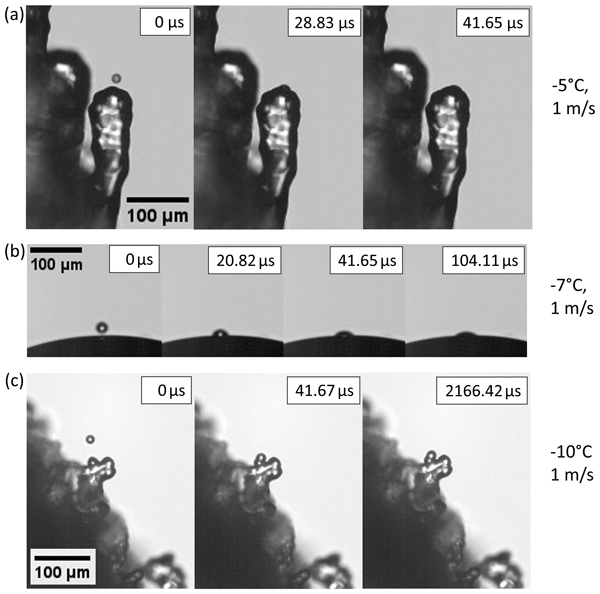
Clouds often contain several thousand times more ice crystals than aerosol particles catalyzing ice formation. This phenomenon, commonly known as ice multiplication, is often explained by secondary ice formation due to the collisions between falling ice particles and droplets. In this study, we mimic this riming process. Contrary to earlier experiments, we found no efficient ice multiplication, which fundamentally questions the importance of the rime-splintering mechanism.
Larissa Lacher, Michael P. Adams, Kevin Barry, Barbara Bertozzi, Heinz Bingemer, Cristian Boffo, Yannick Bras, Nicole Büttner, Dimitri Castarede, Daniel J. Cziczo, Paul J. DeMott, Romy Fösig, Megan Goodell, Kristina Höhler, Thomas C. J. Hill, Conrad Jentzsch, Luis A. Ladino, Ezra J. T. Levin, Stephan Mertes, Ottmar Möhler, Kathryn A. Moore, Benjamin J. Murray, Jens Nadolny, Tatjana Pfeuffer, David Picard, Carolina Ramírez-Romero, Mickael Ribeiro, Sarah Richter, Jann Schrod, Karine Sellegri, Frank Stratmann, Benjamin E. Swanson, Erik S. Thomson, Heike Wex, Martin J. Wolf, and Evelyn Freney
Atmos. Chem. Phys., 24, 2651–2678, https://doi.org/10.5194/acp-24-2651-2024, https://doi.org/10.5194/acp-24-2651-2024, 2024
Short summary
Short summary
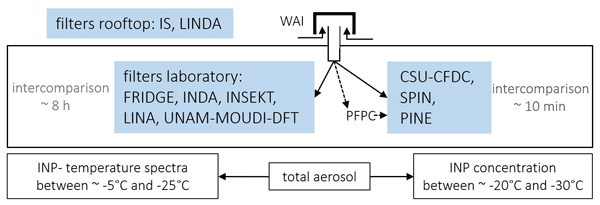
Aerosol particles that trigger ice formation in clouds are important for the climate system but are very rare in the atmosphere, challenging measurement techniques. Here we compare three cloud chambers and seven methods for collecting aerosol particles on filters for offline analysis at a mountaintop station. A general good agreement of the methods was found when sampling aerosol particles behind a whole air inlet, supporting their use for obtaining data that can be implemented in models.
Sarah Grawe, Conrad Jentzsch, Jonas Schaefer, Heike Wex, Stephan Mertes, and Frank Stratmann
Atmos. Meas. Tech., 16, 4551–4570, https://doi.org/10.5194/amt-16-4551-2023, https://doi.org/10.5194/amt-16-4551-2023, 2023
Short summary
Short summary
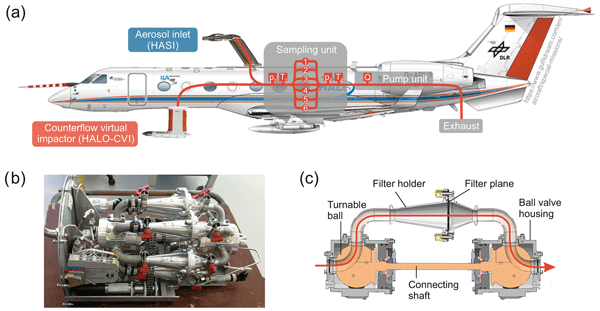
Measurements of ice-nucleating particle (INP) concentrations are valuable for the simulation of cloud properties. In recent years, filter sampling in combination with offline INP measurements has become increasingly popular. However, most sampling is ground-based, and the vertical transport of INPs is not well quantified. The High-volume flow aERosol particle filter sAmpler (HERA) for applications on board aircraft was developed to expand the sparse dataset of INP concentrations at cloud level.
Dimitri Castarède, Zoé Brasseur, Yusheng Wu, Zamin A. Kanji, Markus Hartmann, Lauri Ahonen, Merete Bilde, Markku Kulmala, Tuukka Petäjä, Jan B. C. Pettersson, Berko Sierau, Olaf Stetzer, Frank Stratmann, Birgitta Svenningsson, Erik Swietlicki, Quynh Thu Nguyen, Jonathan Duplissy, and Erik S. Thomson
Atmos. Meas. Tech., 16, 3881–3899, https://doi.org/10.5194/amt-16-3881-2023, https://doi.org/10.5194/amt-16-3881-2023, 2023
Short summary
Short summary
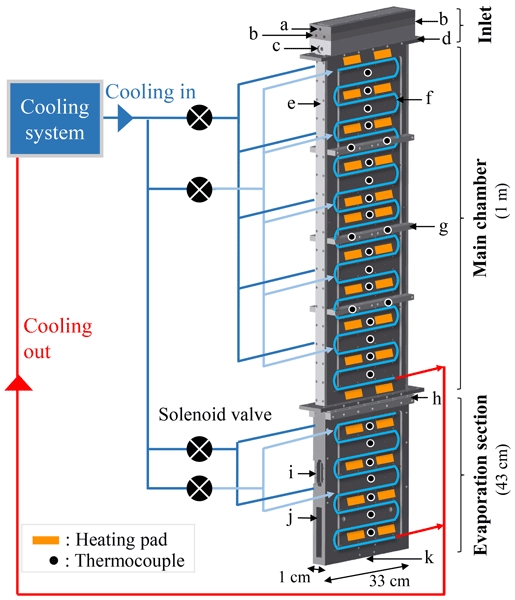
Clouds play a key role in Earth’s climate by influencing the surface energy budget. Certain types of atmospheric aerosols, called ice-nucleating particles (INPs), induce the formation of ice in clouds and, thus, often initiate precipitation formation. The Portable Ice Nucleation Chamber 2 (PINCii) is a new instrument developed to study ice formation and to conduct ambient measurements of INPs, allowing us to investigate the sources and properties of the atmospheric aerosols that can act as INPs.

Kevin C. H. Sze, Heike Wex, Markus Hartmann, Henrik Skov, Andreas Massling, Diego Villanueva, and Frank Stratmann
Atmos. Chem. Phys., 23, 4741–4761, https://doi.org/10.5194/acp-23-4741-2023, https://doi.org/10.5194/acp-23-4741-2023, 2023
Short summary
Short summary
Ice-nucleating particles (INPs) play an important role in cloud formation and thus in our climate. But little is known about the abundance and properties of INPs, especially in the Arctic, where the temperature increases almost 4 times as fast as that of the rest of the globe. We observe higher INP concentrations and more biological INPs in summer than in winter, likely from local sources. We also provide three equations for estimating INP concentrations in models at different times of the year.
Yuan Wang, Silvia Henning, Laurent Poulain, Chunsong Lu, Frank Stratmann, Yuying Wang, Shengjie Niu, Mira L. Pöhlker, Hartmut Herrmann, and Alfred Wiedensohler
Atmos. Chem. Phys., 22, 15943–15962, https://doi.org/10.5194/acp-22-15943-2022, https://doi.org/10.5194/acp-22-15943-2022, 2022
Short summary
Short summary
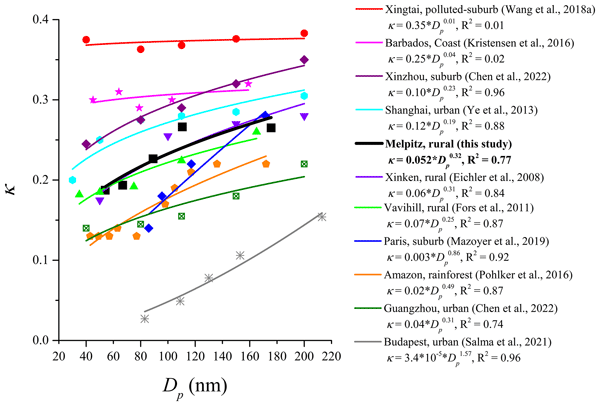
Aerosol particle activation affects cloud, precipitation, radiation, and thus the global climate. Its long-term measurements are important but still scarce. In this study, more than 4 years of measurements at a central European station were analyzed. The overall characteristics and seasonal changes of aerosol particle activation are summarized. The power-law fit between particle hygroscopicity factor and diameter was recommended for predicting cloud
condensation nuclei number concentration.
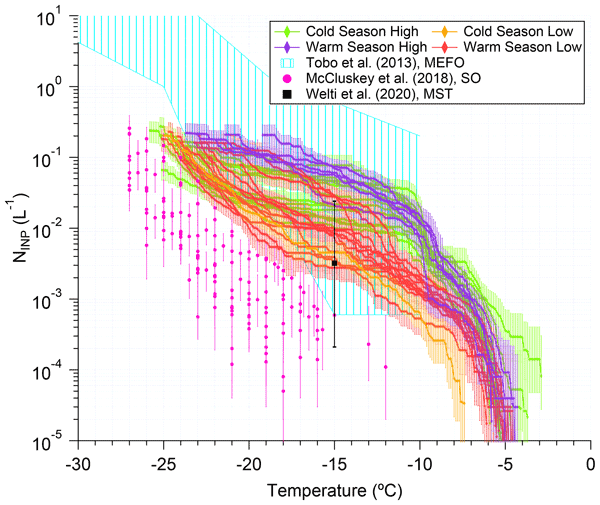
Xianda Gong, Martin Radenz, Heike Wex, Patric Seifert, Farnoush Ataei, Silvia Henning, Holger Baars, Boris Barja, Albert Ansmann, and Frank Stratmann
Atmos. Chem. Phys., 22, 10505–10525, https://doi.org/10.5194/acp-22-10505-2022, https://doi.org/10.5194/acp-22-10505-2022, 2022
Short summary
Short summary
The sources of ice-nucleating particles (INPs) are poorly understood in the Southern Hemisphere (SH). We studied INPs in the boundary layer in the southern Patagonia region. No seasonal cycle of INP concentrations was observed. The majority of INPs are biogenic particles, likely from local continental sources. The INP concentrations are higher when strong precipitation occurs. While previous studies focused on marine INP sources in SH, we point out the importance of continental sources of INPs.
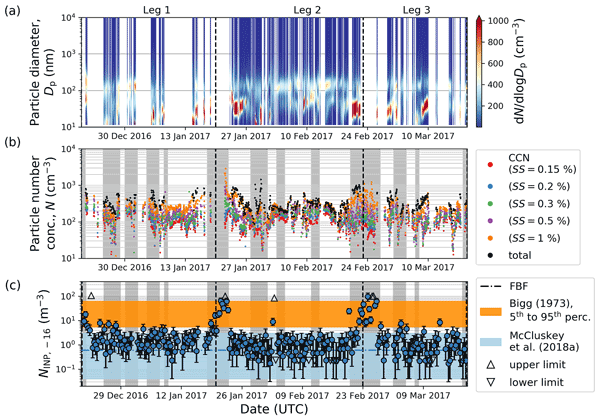
Christian Tatzelt, Silvia Henning, André Welti, Andrea Baccarini, Markus Hartmann, Martin Gysel-Beer, Manuela van Pinxteren, Robin L. Modini, Julia Schmale, and Frank Stratmann
Atmos. Chem. Phys., 22, 9721–9745, https://doi.org/10.5194/acp-22-9721-2022, https://doi.org/10.5194/acp-22-9721-2022, 2022
Short summary
Short summary
We present the abundance and origin of cloud-relevant aerosol particles in the preindustral-like conditions of the Southern Ocean (SO) during austral summer. Cloud condensation nuclei (CCN) and ice-nucleating particles (INP) were measured during a circum-Antarctic scientific cruise with in situ instrumentation and offline filter measurements, respectively. Transport processes were found to play an equally important role as local sources for both the CCN and INP population of the SO.
Jakub L. Nowak, Robert Grosz, Wiebke Frey, Dennis Niedermeier, Jędrzej Mijas, Szymon P. Malinowski, Linda Ort, Silvio Schmalfuß, Frank Stratmann, Jens Voigtländer, and Tadeusz Stacewicz
Atmos. Meas. Tech., 15, 4075–4089, https://doi.org/10.5194/amt-15-4075-2022, https://doi.org/10.5194/amt-15-4075-2022, 2022
Short summary
Short summary
A high-resolution infrared hygrometer (FIRH) was adapted to measure humidity and its rapid fluctuations in turbulence inside a moist-air wind tunnel LACIS-T where two air streams of different temperature and humidity are mixed. The measurement was achieved from outside the tunnel through its glass windows and provided an agreement with a reference dew-point hygrometer placed inside. The characterization of humidity complements previous investigations of velocity and temperature fields.
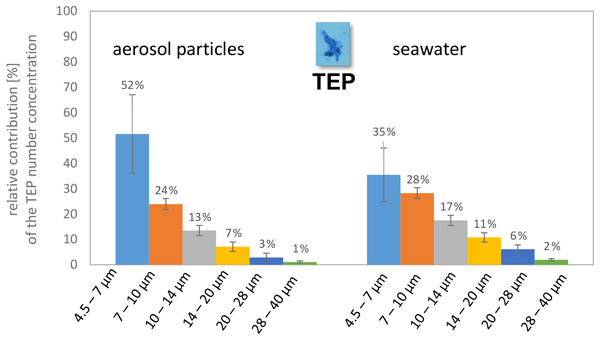
Manuela van Pinxteren, Tiera-Brandy Robinson, Sebastian Zeppenfeld, Xianda Gong, Enno Bahlmann, Khanneh Wadinga Fomba, Nadja Triesch, Frank Stratmann, Oliver Wurl, Anja Engel, Heike Wex, and Hartmut Herrmann
Atmos. Chem. Phys., 22, 5725–5742, https://doi.org/10.5194/acp-22-5725-2022, https://doi.org/10.5194/acp-22-5725-2022, 2022
Short summary
Short summary
A class of marine particles (transparent exopolymer particles, TEPs) that is ubiquitously found in the world oceans was measured for the first time in ambient marine aerosol particles and marine cloud waters in the tropical Atlantic Ocean. TEPs are likely to have good properties for influencing clouds. We show that TEPs are transferred from the ocean to the marine atmosphere via sea-spray formation and our results suggest that they can also form directly in aerosol particles and in cloud water.
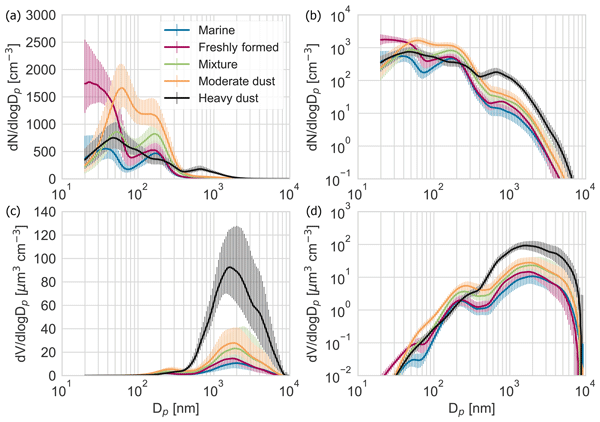
Xianda Gong, Heike Wex, Thomas Müller, Silvia Henning, Jens Voigtländer, Alfred Wiedensohler, and Frank Stratmann
Atmos. Chem. Phys., 22, 5175–5194, https://doi.org/10.5194/acp-22-5175-2022, https://doi.org/10.5194/acp-22-5175-2022, 2022
Short summary
Short summary
We conducted 10 yr measurements to characterize the atmospheric aerosol at Cabo Verde. An unsupervised machine learning algorithm, K-means, was implemented to study the aerosol types. Cloud condensation nuclei number concentrations during dust periods were 2.5 times higher than marine periods. The long-term data sets, together with the aerosol classification, can be used as a basis to improve understanding of annual cycles of aerosol, and aerosol-cloud interactions in the North Atlantic.
Rupert Holzinger, Oliver Eppers, Kouji Adachi, Heiko Bozem, Markus Hartmann, Andreas Herber, Makoto Koike, Dylan B. Millet, Nobuhiro Moteki, Sho Ohata, Frank Stratmann, and Atsushi Yoshida
Atmos. Chem. Phys. Discuss., https://doi.org/10.5194/acp-2022-95, https://doi.org/10.5194/acp-2022-95, 2022
Revised manuscript not accepted
Short summary
Short summary
In spring 2018 the research aircraft Polar 5 conducted flights in the Arctic atmosphere. The flight operation was from Station Nord in Greenland, 1700 km north of the Arctic Circle (81°43'N, 17°47'W). Using a mass spectrometer we measured more than 100 organic compounds in the air. We found a clear signature of natural organic compounds that are transported from forests to the high Arctic. These compounds have the potential to change the cloud cover and energy budget of the Arctic region.
Cited articles
Allwayin, N., Larsen, M. L., Glienke, S., and Shaw, R. A.: Locally narrow droplet size distributions are ubiquitous in stratocumulus clouds, Science, 384, 528–532, https://doi.org/10.1126/science.adi5550, 2024. a
Ayala, O., Rosa, B., Wang, L.-P., and Grabowski, W. W.: Effects of turbulence on the geometric collision rate of sedimenting droplets. Part 1. Results from direct numerical simulation, New J. Phys., 10, 075015, https://doi.org/10.1088/1367-2630/10/7/075015, 2008. a
Bera, S., Prabha, T. V., and Grabowski, W. W.: Observations of monsoon convective cloud microphysics over India and role of entrainment-mixing, J. Geophys. Res.-Atmos., 121, 9767–9788, https://doi.org/10.1002/2016JD025133,2016. a
Chandrakar, K. K., Cantrell, W., Chang, K., Ciochetto, D., Niedermeier, D., Ovchinnikov, M., Shaw, R. A., and Yang, F.: Aerosol indirect effect from turbulence-induced broadening of cloud-droplet size distributions, P. Natl. Acad. Sci. USA, 113, 14243–14248, https://doi.org/10.1073/pnas.1612686113, 2016. a
Chandrakar, K. K., Grabowski, W. W., Morrison, H., and Bryan, G. H.: Impact of Entrainment Mixing and Turbulent Fluctuations on Droplet Size Distributions in a Cumulus Cloud: An Investigation Using Lagrangian Microphysics with a Subgrid-Scale Model, J. Atmos. Sci., 78, 2983–3005, https://doi.org/10.1175/JAS-D-20-0281.1, 2021. a, b
Chang, K., Bench, J., Brege, M., Cantrell, W., Chandrakar, K., Ciochetto, D., Mazzoleni, C., Mazzoleni, L. R., Niedermeier, D., and Shaw, R. A.: A Laboratory Facility to Study Gas-Aerosol-Cloud Interactions in a Turbulent Environment: The Π Chamber, B. Am. Meteorol. Soc., 97, 2343–2358, https://doi.org/10.1175/BAMS-D-15-00203.1, 2016. a
Chen, S., Yau, M. K., and Bartello, P.: Turbulence Effects of Collision Efficiency and Broadening of Droplet Size Distribution in Cumulus Clouds, J. Atmos. Sci., 75, 203–217, https://doi.org/10.1175/JAS-D-17-0123.1, 2018. a
Desai, N., Liu, Y., Glienke, S., Shaw, R. A., Lu, C., Wang, J., and Gao, S.: Vertical Variation of Turbulent Entrainment Mixing Processes in Marine Stratocumulus Clouds Using High-Resolution Digital Holography, J. Geophys. Res.-Atmos., 126, e2020JD033527, https://doi.org/10.1029/2020JD033527, 2021. a
Devenish, B. J., Bartello, P., Brenguier, J.-L., Collins, L. R., Grabowski, W. W., IJzermans, R. H. A., Malinowski, S. P., Reeks, M. W., Vassilicos, J. C., Wang, L.-P., and Warhaft, Z.: Droplet growth in warm turbulent clouds, Q. J. Roy. Meteor. Soc., 138, 1401–1429, https://doi.org/10.1002/qj.1897, 2012. a, b
D’Alessandro, J. J. and McFarquhar, G. M.: Impacts of Drop Clustering and Entrainment-Mixing on Mixed Phase Shallow Cloud Properties Over the Southern Ocean: Results From SOCRATES, J. Geophys. Res.-Atmos., 128, e2023JD038622, https://doi.org/10.1029/2023JD038622, 2023. a
Frey, W.: Atmospheric simulation chamber study: water + None – Cloud study – 2022-02-16, ACTRIS [data set], https://doi.org/10.25326/3F1J-GQ35, 2025a. a
Frey, W.: Atmospheric simulation chamber study: water + None – Cloud study – 2022-02-21, ACTRIS [data set], https://doi.org/10.25326/6M2H-VC29, 2025b. a
Frey, W.: Atmospheric simulation chamber study: water + None – Cloud study – 2022-02-21, ACTRIS [data set], https://doi.org/10.25326/M1AE-G137, 2025c. a
Frey, W.: Atmospheric simulation chamber study: water + None – Cloud study – 2022-02-22, ACTRIS [data set], https://doi.org/10.25326/6WVK-9153, 2025d. a
Frey, W.: Atmospheric simulation chamber study: water + None – Cloud study – 2022-02-23, ACTRIS [data set], https://doi.org/10.25326/BT77-NA95, 2025e. a
Frey, W.: Atmospheric simulation chamber study: water + None – Cloud study – 2022-02-23, ACTRIS [data set], https://doi.org/10.25326/SV3H-CV11, 2025f. a
Frey, W.: Atmospheric simulation chamber study: water + None – Cloud study – 2022-02-23, ACTRIS [data set], https://doi.org/10.25326/CATS-D655, 2025g. a
Frey, W.: Atmospheric simulation chamber study: water + None – Cloud study – 2022-03-01, ACTRIS [data set], https://doi.org/10.25326/T0TG-VV79, 2025h. a
Frey, W.: Atmospheric simulation chamber study: water + None – Cloud study – 2022-03-02, ACTRIS [data set], https://doi.org/10.25326/1F17-VZ46, 2025i. a
Grabowski, W. W. and Wang, L.-P.: Growth of Cloud Droplets in a Turbulent Environment, Annu. Rev. Fluid Mech., 45, 293–324, https://doi.org/10.1146/annurev-fluid-011212-140750, 2013. a, b
Hoffmann, F. and Feingold, G.: Entrainment and Mixing in Stratocumulus: Effects of a New Explicit Subgrid-Scale Scheme for Large-Eddy Simulations with Particle-Based Microphysics, J. Atmos. Sci., 76, 1955–1973, https://doi.org/10.1175/JAS-D-18-0318.1, 2019. a
Karpińska, K., Bodenschatz, J. F. E., Malinowski, S. P., Nowak, J. L., Risius, S., Schmeissner, T., Shaw, R. A., Siebert, H., Xi, H., Xu, H., and Bodenschatz, E.: Turbulence-induced cloud voids: observation and interpretation, Atmos. Chem. Phys., 19, 4991–5003, https://doi.org/10.5194/acp-19-4991-2019, 2019. a
Khain, A., Pinsky, M., Elperin, T., Kleeorin, N., Rogachevskii, I., and Kostinski, A.: Critical comments to results of investigations of drop collisions in turbulent clouds, Atmos. Res., 86, 1–20, https://doi.org/10.1016/j.atmosres.2007.05.003, 2007. a
Klein, S. A. and Hall, A.: Emergent Constraints for Cloud Feedbacks, Current Climate Change Reports, 1, 276–287, https://doi.org/10.1007/s40641-015-0027-1, 2015. a
Klocke, D., Pincus, R., and Quaas, J.: On Constraining Estimates of Climate Sensitivity with Present-Day Observations through Model Weighting, J. Climate, 24, 6092–6099, https://doi.org/10.1175/2011JCLI4193.1, 2011. a
Kumar, B., Schumacher, J., and Shaw, R. A.: Cloud microphysical effects of turbulent mixing and entrainment, Theor. Comp. Fluid Dyn., 27, 361–376, https://doi.org/10.1007/s00162-012-0272-z, 2013. a
Lasher-Trapp, S. G., Cooper, W. A., and Blyth, A. M.: Broadening of droplet size distributions from entrainment and mixing in a cumulus cloud, Q. J. Roy. Meteor. Soc., 131, 195–220, https://doi.org/10.1256/qj.03.199, 2005. a
Lehmann, K., Siebert, H., and Shaw, R. A.: Homogeneous and Inhomogeneous Mixing in Cumulus Clouds: Dependence on Local Turbulence Structure, J. Atmos. Sci., 66, 3641–3659, https://doi.org/10.1175/2009JAS3012.1, 2009. a, b, c
Lim, J.-S. and Hoffmann, F.: Between Broadening and Narrowing: How Mixing Affects the Width of the Droplet Size Distribution, J. Geophys. Res.-Atmos., 128, e2022JD037900, https://doi.org/10.1029/2022JD037900, 2023. a, b, c
Lu, C., Sun, C., Liu, Y., Zhang, G. J., Lin, Y., Gao, W., Niu, S., Yin, Y., Qiu, Y., and Jin, L.: Observational Relationship Between Entrainment Rate and Environmental Relative Humidity and Implications for Convection Parameterization, Geophys. Res. Lett., 45, 13495–13504, https://doi.org/10.1029/2018GL080264, 2018. a
Morrison, H., van Lier-Walqui, M., Fridlind, A. M., Grabowski, W. W., Harrington, J. Y., Hoose, C., Korolev, A., Kumjian, M. R., Milbrandt, J. A., Pawlowska, H., Posselt, D. J., Prat, O. P., Reimel, K. J., Shima, S.-I., van Diedenhoven, B., and Xue, L.: Confronting the Challenge of Modeling Cloud and Precipitation Microphysics, J. Adv. Model. Earth Sy., 12, e2019MS001689, https://doi.org/10.1029/2019MS001689, 2020. a, b
Niedermeier, D., Voigtländer, J., Schmalfuß, S., Busch, D., Schumacher, J., Shaw, R. A., and Stratmann, F.: Characterization and first results from LACIS-T: a moist-air wind tunnel to study aerosol–cloud–turbulence interactions, Atmos. Meas. Tech., 13, 2015–2033, https://doi.org/10.5194/amt-13-2015-2020, 2020. a, b, c, d, e, f, g
Niedermeier, D., Hoffmann, R., Schmalfuss, S., Frey, W., Senf, F., Hellmuth, O., Pöhlker, M., and Stratmann, F.: Particle deliquescence in a turbulent humidity field, Aerosol Res., 3, 219–230, https://doi.org/10.5194/ar-3-219-2025, 2025. a
Onishi, R. and Seifert, A.: Reynolds-number dependence of turbulence enhancement on collision growth, Atmos. Chem. Phys., 16, 12441–12455, https://doi.org/10.5194/acp-16-12441-2016, 2016. a
Sardina, G., Picano, F., Brandt, L., and Caballero, R.: Continuous Growth of Droplet Size Variance due to Condensation in Turbulent Clouds, Phys. Rev. Lett., 115, 184501, https://doi.org/10.1103/PhysRevLett.115.184501, 2015. a
Saw, E.-W. and Meng, X.: Intricate relations among particle collision, relative motion and clustering in turbulent clouds: computational observation and theory, Atmos. Chem. Phys., 22, 3779–3788, https://doi.org/10.5194/acp-22-3779-2022, 2022. a
Schlenczek, O., Nordsiek, F., Brunner, C. E., Chávez-Medina, V., Thiede, B., Bodenschatz, E., and Bagheri, G.: Airborne measurements of turbulence and cloud microphysics during PaCE 2022 using the Advanced Max Planck CloudKite Instrument (MPCK+), Earth Syst. Sci. Data Discuss. [preprint], https://doi.org/10.5194/essd-2025-112, in review, 2025. a
Shaw, R. A.: Particle-turbulence interactions in atmospheric clouds, Annu. Rev. Fluid Mech., 35, 183–227, https://doi.org/10.1146/annurev.fluid.35.101101.161125, 2003. a
Sherwood, S. C., Bony, S., and Dufresne, J.-L.: Spread in model climate sensitivity traced to atmospheric convective mixing, Nature, 505, 37–42, https://doi.org/10.1038/nature12829, 2014. a
Siebert, H., Lehmann, K., Wendisch, M., Franke, H., Maser, R., Schell, D., Saw, E. W., and Shaw, R. A.: Probing Finescale Dynamics and Microphysics of Clouds with Helicopter-Borne Measurements, B. Am. Meteorol. Soc., 87, 1727–1738, https://doi.org/10.1175/BAMS-87-12-1727, 2006. a
Siebert, H., Shaw, R. A., and Warhaft, Z.: Statistics of Small-Scale Velocity Fluctuations and Internal Intermittency in Marine Stratocumulus Clouds, J. Atmos. Sci., 67, 262–273, https://doi.org/10.1175/2009JAS3200.1, 2010. a
Stevens, B., Bony, S., Farrell, D., Ament, F., Blyth, A., Fairall, C., Karstensen, J., Quinn, P. K., Speich, S., Acquistapace, C., Aemisegger, F., Albright, A. L., Bellenger, H., Bodenschatz, E., Caesar, K.-A., Chewitt-Lucas, R., de Boer, G., Delanoë, J., Denby, L., Ewald, F., Fildier, B., Forde, M., George, G., Gross, S., Hagen, M., Hausold, A., Heywood, K. J., Hirsch, L., Jacob, M., Jansen, F., Kinne, S., Klocke, D., Kölling, T., Konow, H., Lothon, M., Mohr, W., Naumann, A. K., Nuijens, L., Olivier, L., Pincus, R., Pöhlker, M., Reverdin, G., Roberts, G., Schnitt, S., Schulz, H., Siebesma, A. P., Stephan, C. C., Sullivan, P., Touzé-Peiffer, L., Vial, J., Vogel, R., Zuidema, P., Alexander, N., Alves, L., Arixi, S., Asmath, H., Bagheri, G., Baier, K., Bailey, A., Baranowski, D., Baron, A., Barrau, S., Barrett, P. A., Batier, F., Behrendt, A., Bendinger, A., Beucher, F., Bigorre, S., Blades, E., Blossey, P., Bock, O., Böing, S., Bosser, P., Bourras, D., Bouruet-Aubertot, P., Bower, K., Branellec, P., Branger, H., Brennek, M., Brewer, A., Brilouet , P.-E., Brügmann, B., Buehler, S. A., Burke, E., Burton, R., Calmer, R., Canonici, J.-C., Carton, X., Cato Jr., G., Charles, J. A., Chazette, P., Chen, Y., Chilinski, M. T., Choularton, T., Chuang, P., Clarke, S., Coe, H., Cornet, C., Coutris, P., Couvreux, F., Crewell, S., Cronin, T., Cui, Z., Cuypers, Y., Daley, A., Damerell, G. M., Dauhut, T., Deneke, H., Desbios, J.-P., Dörner, S., Donner, S., Douet, V., Drushka, K., Dütsch, M., Ehrlich, A., Emanuel, K., Emmanouilidis, A., Etienne, J.-C., Etienne-Leblanc, S., Faure, G., Feingold, G., Ferrero, L., Fix, A., Flamant, C., Flatau, P. J., Foltz, G. R., Forster, L., Furtuna, I., Gadian, A., Galewsky, J., Gallagher, M., Gallimore, P., Gaston, C., Gentemann, C., Geyskens, N., Giez, A., Gollop, J., Gouirand, I., Gourbeyre, C., de Graaf, D., de Groot, G. E., Grosz, R., Güttler, J., Gutleben, M., Hall, K., Harris, G., Helfer, K. C., Henze, D., Herbert, C., Holanda, B., Ibanez-Landeta, A., Intrieri, J., Iyer, S., Julien, F., Kalesse, H., Kazil, J., Kellman, A., Kidane, A. T., Kirchner, U., Klingebiel, M., Körner, M., Kremper, L. A., Kretzschmar, J., Krüger, O., Kumala, W., Kurz, A., L'Hégaret, P., Labaste, M., Lachlan-Cope, T., Laing, A., Landschützer, P., Lang, T., Lange, D., Lange, I., Laplace, C., Lavik, G., Laxenaire, R., Le Bihan, C., Leandro, M., Lefevre, N., Lena, M., Lenschow, D., Li, Q., Lloyd, G., Los, S., Losi, N., Lovell, O., Luneau, C., Makuch, P., Malinowski, S., Manta, G., Marinou, E., Marsden, N., Masson, S., Maury, N., Mayer, B., Mayers-Als, M., Mazel, C., McGeary, W., McWilliams, J. C., Mech, M., Mehlmann, M., Meroni, A. N., Mieslinger, T., Minikin, A., Minnett, P., Möller, G., Morfa Avalos, Y., Muller, C., Musat, I., Napoli, A., Neuberger, A., Noisel, C., Noone, D., Nordsiek, F., Nowak, J. L., Oswald, L., Parker, D. J., Peck, C., Person, R., Philippi, M., Plueddemann, A., Pöhlker, C., Pörtge, V., Pöschl, U., Pologne, L., Posyniak, M., Prange, M., Quiñones Meléndez, E., Radtke, J., Ramage, K., Reimann, J., Renault, L., Reus, K., Reyes, A., Ribbe, J., Ringel, M., Ritschel, M., Rocha, C. B., Rochetin, N., Röttenbacher, J., Rollo, C., Royer, H., Sadoulet, P., Saffin, L., Sandiford, S., Sandu, I., Schäfer, M., Schemann, V., Schirmacher, I., Schlenczek, O., Schmidt, J., Schröder, M., Schwarzenboeck, A., Sealy, A., Senff, C. J., Serikov, I., Shohan, S., Siddle, E., Smirnov, A., Späth, F., Spooner, B., Stolla, M. K., Szkółka, W., de Szoeke, S. P., Tarot, S., Tetoni, E., Thompson, E., Thomson, J., Tomassini, L., Totems, J., Ubele, A. A., Villiger, L., von Arx, J., Wagner, T., Walther, A., Webber, B., Wendisch, M., Whitehall, S., Wiltshire, A., Wing, A. A., Wirth, M., Wiskandt, J., Wolf, K., Worbes, L., Wright, E., Wulfmeyer, V., Young, S., Zhang, C., Zhang, D., Ziemen, F., Zinner, T., and Zöger, M.: EUREC4A, Earth Syst. Sci. Data, 13, 4067–4119, https://doi.org/10.5194/essd-13-4067-2021, 2021. a
Tölle, M. H. and Krueger, S. K.: Effects of entrainment and mixing on droplet size distributions in warm cumulus clouds, J. Adv. Model. Earth Sy., 6, 281–299, https://doi.org/10.1002/2012MS000209, 2014. a
Vaillancourt, P. A., Yau, M. K., Bartello, P., and Grabowski, W. W.: Microscopic Approach to Cloud Droplet Growth by Condensation. Part II: Turbulence, Clustering, and Condensational Growth, J. Atmos. Sci., 59, 3421–3435, https://doi.org/10.1175/1520-0469(2002)059<3421:MATCDG>2.0.CO;2, 2002. a
Wang, A., Ovchinnikov, M., Yang, F., Cantrell, W., Yeom, J., and Shaw, R. A.: The Dual Nature of Entrainment-Mixing Signatures Revealed through Large-Eddy Simulations of a Convection-Cloud Chamber, J. Atmos. Sci., 81, 2017–2039, https://doi.org/10.1175/JAS-D-24-0043.1, 2024. a
Yeom, J. M., Helman, I., Prabhakaran, P., Anderson, J. C., Yang, F., Shaw, R. A., and Cantrell, W.: Cloud microphysical response to entrainment and mixing is locally inhomogeneous and globally homogeneous: Evidence from the lab, P. Natl. Acad. Sci. USA, 120, e2307354120, https://doi.org/10.1073/pnas.2307354120, 2023. a
Short summary
In order to gain a better understanding on the impact of entrainment on cloud droplet size distributions, water droplets were sprayed into the mixing plane of a turbulent wind tunnel, where two separately conditioned air streams are combined. One air stream resembling 'in cloud' conditions (with relative humidity close to saturation) and one air stream resembling 'out of cloud' conditions, which are dryer and warmer. The paper describes the data set and outlines future use examples.
In order to gain a better understanding on the impact of entrainment on cloud droplet size...


Altmetrics
Final-revised paper
Preprint