Articles | Volume 18, issue 3
https://doi.org/10.5194/essd-18-1995-2026
© Author(s) 2026. This work is distributed under
the Creative Commons Attribution 4.0 License.
the Creative Commons Attribution 4.0 License.
https://doi.org/10.5194/essd-18-1995-2026
© Author(s) 2026. This work is distributed under
the Creative Commons Attribution 4.0 License.
the Creative Commons Attribution 4.0 License.
Data description article
| 
17 Mar 2026
Data description article |
| 17 Mar 2026
| 17 Mar 2026
ChinaAI-FSC: a comprehensive AI-ready MODIS fractional snow cover dataset for China (2000–2022)
Jinliang Hou
Heihe Remote Sensing Experimental Research Station, State Key Laboratory of Cryospheric Science and Frozen Soil Engineering, Northwest Institute of Eco-Environment and Resources, Chinese Academy of Sciences, Lanzhou 730000, China
Mingkai Zhang
Heihe Remote Sensing Experimental Research Station, State Key Laboratory of Cryospheric Science and Frozen Soil Engineering, Northwest Institute of Eco-Environment and Resources, Chinese Academy of Sciences, Lanzhou 730000, China
University of Chinese Academy of Sciences, Beijing 100094, China
Xiaohua Hao
Heihe Remote Sensing Experimental Research Station, State Key Laboratory of Cryospheric Science and Frozen Soil Engineering, Northwest Institute of Eco-Environment and Resources, Chinese Academy of Sciences, Lanzhou 730000, China
Jifu Guo
College of Information Science and Technology, Gansu Agricultural University, Lanzhou 730070, China
Peng Dou
Heihe Remote Sensing Experimental Research Station, State Key Laboratory of Cryospheric Science and Frozen Soil Engineering, Northwest Institute of Eco-Environment and Resources, Chinese Academy of Sciences, Lanzhou 730000, China
Ying Zhang
CORRESPONDING AUTHOR

National Cryosphere Desert Data Center, Northwest Institute of Eco-Environment and Resources, Chinese Academy of Sciences, Lanzhou 730000, China
Heihe Remote Sensing Experimental Research Station, State Key Laboratory of Cryospheric Science and Frozen Soil Engineering, Northwest Institute of Eco-Environment and Resources, Chinese Academy of Sciences, Lanzhou 730000, China
Faculty of Geomatics, Lanzhou Jiaotong University, Lanzhou 730070, China
Related authors
Yajie Zhu, Jinliang Hou, Chunlin Huang, Weizhen Wang, Ying Zhang, and Yuanhong You
EGUsphere, https://doi.org/10.5194/egusphere-2026-3207, https://doi.org/10.5194/egusphere-2026-3207, 2026
This preprint is open for discussion and under review for Hydrology and Earth System Sciences (HESS).
Short summary
Short summary
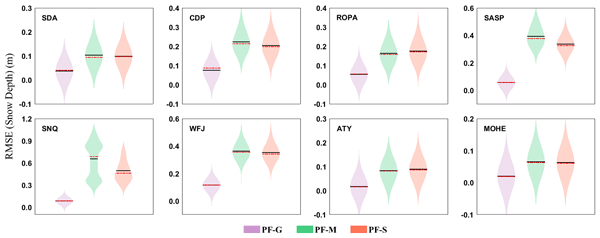
Soil moisture data assimilation is limited by sparse irregular observations and high cost of ensemble Kalman filter methods. We develop a deep learning–augmented framework that learns the ensemble update and handles temporal gaps. Tests at eight Tibetan Plateau sites show improved accuracy and lower cost, demonstrating the potential of deep learning for efficient soil moisture estimation in data-limited environments.
Yuanhong You, Chunlin Huang, Zuo Wang, Jinliang Hou, Ying Zhang, and Peipei Xu
Hydrol. Earth Syst. Sci., 27, 2919–2933, https://doi.org/10.5194/hess-27-2919-2023, https://doi.org/10.5194/hess-27-2919-2023, 2023
Short summary
Short summary
This study aims to investigate the performance of a genetic particle filter which was used as a snow data assimilation scheme across different snow climates. The results demonstrated that the genetic algorithm can effectively solve the problem of particle degeneration and impoverishment in a particle filter algorithm. The system has revealed a low sensitivity to the particle number in point-scale application of the ground snow depth measurement.
Yajie Zhu, Jinliang Hou, Chunlin Huang, Weizhen Wang, Ying Zhang, and Yuanhong You
EGUsphere, https://doi.org/10.5194/egusphere-2026-3207, https://doi.org/10.5194/egusphere-2026-3207, 2026
This preprint is open for discussion and under review for Hydrology and Earth System Sciences (HESS).
Short summary
Short summary
Soil moisture data assimilation is limited by sparse irregular observations and high cost of ensemble Kalman filter methods. We develop a deep learning–augmented framework that learns the ensemble update and handles temporal gaps. Tests at eight Tibetan Plateau sites show improved accuracy and lower cost, demonstrating the potential of deep learning for efficient soil moisture estimation in data-limited environments.
Lue Li, Qian Yang, Meng Cui, Huanjun Liu, Xiaohua Hao, Yiyang Peng, and Junyi Chang
The Cryosphere, 20, 29–46, https://doi.org/10.5194/tc-20-29-2026, https://doi.org/10.5194/tc-20-29-2026, 2026
Short summary
Short summary
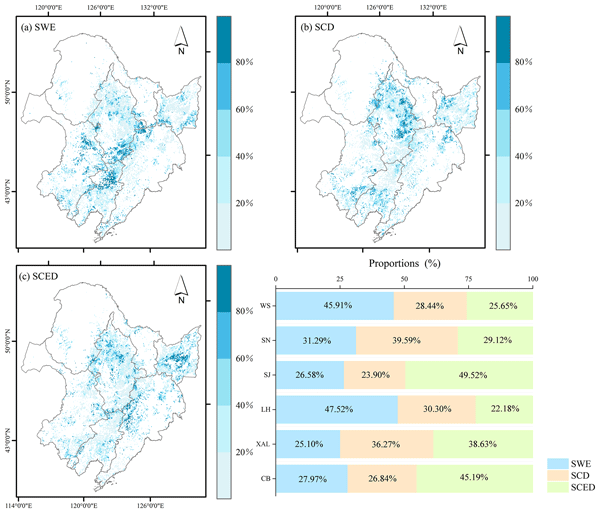
This study demonstrates that snow cover generally suppresses crop growth (GPP) in Northeast China's croplands through thermal effects. Snow cover generally exerts a negative effect on GPP through the thermal influence. Regionally, snow indirectly inhibits GPP via water-mediated effects in the Liaohe and Songnen Plains, but promotes it in the Sanjiang Plain, Xing'an and Changbai Mountains, and Western Sandy Area.
Yuanhong You, Chunlin Huang, Zuo Wang, Jinliang Hou, Ying Zhang, and Peipei Xu
Hydrol. Earth Syst. Sci., 27, 2919–2933, https://doi.org/10.5194/hess-27-2919-2023, https://doi.org/10.5194/hess-27-2919-2023, 2023
Short summary
Short summary
This study aims to investigate the performance of a genetic particle filter which was used as a snow data assimilation scheme across different snow climates. The results demonstrated that the genetic algorithm can effectively solve the problem of particle degeneration and impoverishment in a particle filter algorithm. The system has revealed a low sensitivity to the particle number in point-scale application of the ground snow depth measurement.

Qian Yang, Xiaoguang Shi, Weibang Li, Kaishan Song, Zhijun Li, Xiaohua Hao, Fei Xie, Nan Lin, Zhidan Wen, Chong Fang, and Ge Liu
The Cryosphere, 17, 959–975, https://doi.org/10.5194/tc-17-959-2023, https://doi.org/10.5194/tc-17-959-2023, 2023
Short summary
Short summary
A large-scale linear structure has repeatedly appeared on satellite images of Chagan Lake in winter, which was further verified as being ice ridges in the field investigation. We extracted the length and the angle of the ice ridges from multi-source remote sensing images. The average length was 21 141.57 ± 68.36 m. The average azimuth angle was 335.48° 141.57 ± 0.23°. The evolution of surface morphology is closely associated with air temperature, wind, and shoreline geometry.
Xiaohua Hao, Guanghui Huang, Zhaojun Zheng, Xingliang Sun, Wenzheng Ji, Hongyu Zhao, Jian Wang, Hongyi Li, and Xiaoyan Wang
Hydrol. Earth Syst. Sci., 26, 1937–1952, https://doi.org/10.5194/hess-26-1937-2022, https://doi.org/10.5194/hess-26-1937-2022, 2022
Short summary
Short summary
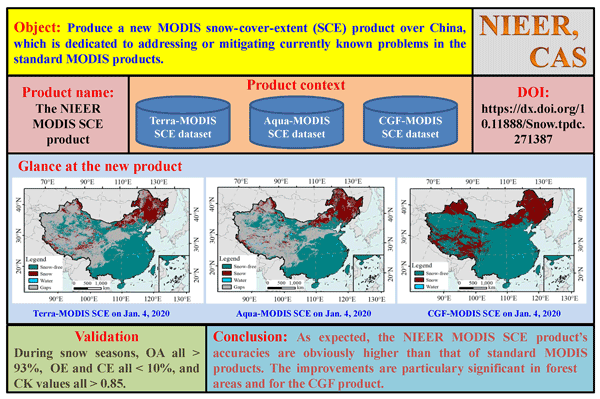
We develop and validate a new 20-year MODIS snow-cover-extent product over China, which is dedicated to addressing known problems of the standard snow products. As expected, the new product significantly outperforms the state-of-the-art MODIS C6.1 products; improvements are particularly clear in forests and for the daily cloud-free product. Our product has provided more reliable snow knowledge over China and can be accessible freely https://dx.doi.org/10.11888/Snow.tpdc.271387.

Donghang Shao, Hongyi Li, Jian Wang, Xiaohua Hao, Tao Che, and Wenzheng Ji
Earth Syst. Sci. Data, 14, 795–809, https://doi.org/10.5194/essd-14-795-2022, https://doi.org/10.5194/essd-14-795-2022, 2022
Short summary
Short summary
The temporal series and spatial distribution discontinuity of the existing snow water equivalent (SWE) products in the pan-Arctic region severely restricts the use of SWE data in cryosphere change and climate change studies. Using a ridge regression machine learning algorithm, this study developed a set of spatiotemporally seamless and high-precision SWE products. This product could contribute to the study of cryosphere change and climate change at large spatial scales.
Xiaohua Hao, Guanghui Huang, Tao Che, Wenzheng Ji, Xingliang Sun, Qin Zhao, Hongyu Zhao, Jian Wang, Hongyi Li, and Qian Yang
Earth Syst. Sci. Data, 13, 4711–4726, https://doi.org/10.5194/essd-13-4711-2021, https://doi.org/10.5194/essd-13-4711-2021, 2021
Short summary
Short summary
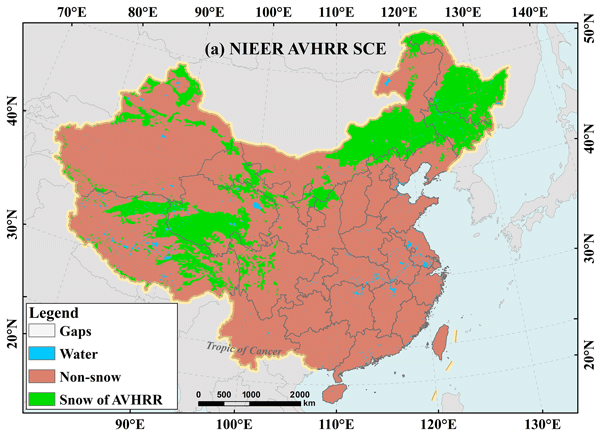
Long-term snow cover data are not only of importance for climate research. Currently China still lacks a high-quality snow cover extent (SCE) product for climate research. This study develops a multi-level decision tree algorithm for cloud and snow discrimination and gap-filled technique based on AVHRR surface reflectance data. We generate a daily 5 km SCE product across China from 1981 to 2019. It has high accuracy and will serve as baseline data for climate and other applications.
Cited articles
Azizi, A. H., Akhtar, F., Kusche, J., Tischbein, B., Borgemeister, C., and Oluoch, W. A.: Machine learning-based estimation of fractional snow cover in the Hindukush Mountains using MODIS and Landsat data, J. Hydrol., 638, 131579, https://doi.org/10.1016/j.jhydrol.2024.131579, 2024.
Barnett, T. P., Adam, J. C., and Lettenmaier, D. P.: Potential impacts of a warming climate on water availability in snow-dominated regions, Nature, 438, 303–309, https://doi.org/10.1038/nature04141, 2005.
Chander, G., Hewison, T. J., Fox, N., Wu, X., Xiong, X., and Blackwell, W. J.: Overview of intercalibration of satellite instruments, IEEE T. Geosci. Remote, 51, 1056–1080, https://doi.org/10.1109/TGRS.2012.2228654, 2013.
Chen, J., Zhu, X., Vogelmann, J. E., Gao, F., and Jin, S.: A simple and effective method for filling gaps in Landsat ETM+ SLC-off images, Remote Sens. Environ., 115, 1053–1064, https://doi.org/10.1016/j.rse.2010.12.010, 2011.
Christensen, T.: What is AI-Ready Open Data?, presented 22 October 2020, NOAA NESDIS/STAR, U. S. Department of Commerce, National Oceanic and Atmospheric Administration, https://www.star.nesdis.noaa.gov/star/documents/meetings/2020AI/presentations/202010/20201022_Christensen.pdf (last access: 25 October 2025), 2020.
Claverie, M., Ju, J., Masek, J. G., Dungan, J. L., Vermote, E. F., Roger, J. C., Skakun, S. V., and Justice, C.: The Harmonized Landsat and Sentinel-2 surface reflectance data set, Remote Sens. Environ., 219, 145–161, https://doi.org/10.1016/j.rse.2018.09.002, 2018.
Crawford, C. J., Roy, D. P., Arab, S., Barnes, C., Vermote, E., Hulley, G., Gerace, A., Choate, M., Engebretson, C., Micijevic, E., and Schmidt, G.: The 50-year Landsat Collection 2 archive, Sci. Remote Sens., 8, 100103, https://doi.org/10.1016/j.srs.2023.100103, 2023.
Czyzowska-Wisniewski, E. H., van Leeuwen, W. J., Hirschboeck, K. K., Marsh, S. E., and Wisniewski, W. T.: Fractional snow cover estimation in complex alpine-forested environments using an artificial neural network, Remote Sens. Environ., 156, 403–417, https://doi.org/10.1016/j.rse.2014.09.026, 2015.
Dietz, A. J., Kuenzer, C., Gessner, U., and Dech, S.: Remote sensing of snow – a review of available methods, Int. J. Remote Sens., 33, 4094–4134, https://doi.org/10.1080/01431161.2011.640964, 2012.
Dobreva, I. D. and Klein, A. G.: Fractional snow cover mapping through artificial neural network analysis of MODIS surface reflectance, Remote Sens. Environ., 115, 3355–3366, https://doi.org/10.1016/j.rse.2011.07.018, 2011.
Dozier, J.: Spectral signature of alpine snow cover from the Landsat Thematic Mapper, Remote Sens. Environ., 28, 9–22, https://doi.org/10.1016/0034-4257(89)90101-6, 1989.
Dozier, J., Painter, T. H., Rittger, K., and Frew, J. E.: Time-space continuity of daily maps of fractional snow cover and albedo from MODIS, Adv. Water Resour., 31, 1515–1526, https://doi.org/10.1016/j.advwatres.2008.08.011, 2008.
Drusch, M., Del Bello, U., Carlier, S., Colin, O., Fernandez, V., Gascon, F., Hoersch, B., Isola, C., Laberinti, P., Martimort, P., Meygret, A., Spoto, F., Sy, O., Marchese, F., and Bargellini, P.: Sentinel-2: ESA's optical high-resolution mission for GMES operational services, Remote Sens. Environ., 120, 25–36, https://doi.org/10.1016/j.rse.2011.11.026, 2012.
Essery, R. and Pomeroy, J. W.: Vegetation and topographic control of wind-blown snow distributions in distributed and aggregated simulations for an Arctic tundra basin, J. Hydrometeorol., 5, 735–744, 2004.
Frei, A., Tedesco, M., Lee, S., Foster, J., Hall, D. K., Kelly, R., and Robinson, D. A.: A review of global satellite-derived snow products, Adv. Space Res., 50, 1007–1029, https://doi.org/10.1016/j.asr.2011.12.021, 2012.
Grünewald, T., Stötter, J., Pomeroy, J. W., Dadic, R., Moreno Baños, I., Marturià, J., and Lehning, M.: Statistical modelling of the snow depth distribution in open alpine terrain, Hydrol. Earth Syst. Sci., 17, 3005–3021, https://doi.org/10.5194/hess-17-3005-2013, 2013.
Hall, D. K. and Riggs, G. A.: Accuracy assessment of the MODIS snow products, Hydrol. Process., 21, 1534–1547, https://doi.org/10.1002/hyp.6715, 2007.
Hall, D. K., Riggs, G. A., and Salomonson, V. V.: Development of methods for mapping global snow cover using Moderate Resolution Imaging Spectroradiometer data, Remote Sens. Environ., 54, 127–140, https://doi.org/10.1016/0034-4257(95)00137-P, 1995.
Hall, D. K., Riggs, G. A., Salomonson, V. V., DiGirolamo, N. E., and Bayr, K. J.: MODIS snow-cover products, Remote Sens. Environ., 83, 181–194, https://doi.org/10.1016/S0034-4257(02)00095-0, 2002.
Hao, S., Jiang, L., Shi, J., Wang, G., and Liu, X.: Assessment of MODIS-Based Fractional Snow Cover Products Over the Tibetan Plateau, IEEE J. Sel. Top. Appl., 12, 533–548, https://doi.org/10.1109/JSTARS.2018.2879666, 2019.
Hou, J.: AI-Ready-China-FSC, GitHub [code], https://github.com/houjin0503/AI-Ready-China-FSC (last access: 13 March 2026), 2026.
Hou, J. and Huang, C.: Improving mountainous snow cover fraction mapping via artificial neural networks combined with MODIS and ancillary topographic data, IEEE T. Geosci. Remote, 52, 5601–5611, https://doi.org/10.1109/TGRS.2013.2290996, 2014.
Hou, J., Huang, C., and Zhang, Y.: ChinaAI-FSC: A comprehensive AI-ready MODIS fractional snow cover dataset for China (2000–2022), National Tibetan Plateau/Third Pole Environment Data Center [data set], https://doi.org/10.11888/Cryos.tpdc.303034, 2025a.
Hou, J., Huang, C., and Zhang, Y.: ChinaAI-FSC: A Comprehensive AI-Ready MODIS Fractional Snow Cover Dataset for China (2000–2022), Zenodo [data set], https://doi.org/10.5281/zenodo.17707386, 2025b.
Jarvis, A., Reuter, H. I., Nelson, A., and Guevara, E.: Hole-filled seamless SRTM data V4, Int. Cent. Trop. Agric. (CIAT), https://srtm.csi.cgiar.org (last access: 20 October 2025), 2008.
Kidwai-Khan, F., Wang, R., Skanderson, M., Brandt, C. A., Fodeh, S., and Womack, J. A.: A roadmap to artificial intelligence (AI): Methods for designing and building AI-ready data to promote fairness, J. Biomed. Inform., 154, 104654, https://doi.org/10.1016/j.jbi.2024.104654, 2024.
Klein, A. G. and Barnett, A. C.: Validation of daily MODIS snow cover maps of the Upper Rio Grande River Basin, Remote Sens. Environ., 86, 162–176, https://doi.org/10.1016/S0034-4257(03)00097-X, 2003.
Klein, A. G., Hall, D. K., and Riggs, G. A.: Improving snow cover mapping in forests through the use of a canopy reflectance model, Hydrol. Process., 12, 1723–1744, https://doi.org/10.1002/(SICI)1099-1085(199808/09)12:10/11<1723::AID-HYP691>3.0.CO;2-2, 1998.
Kuter, S.: Completing the machine learning saga in fractional snow cover estimation from MODIS Terra reflectance data: Random forests versus support vector regression, Remote Sens. Environ., 255, 112294, https://doi.org/10.1016/j.rse.2021.112294, 2021.
Kuter, S., Akyurek, Z., and Weber, G. W.: Retrieval of fractional snow covered area from MODIS data by multivariate adaptive regression splines, Remote Sens. Environ., 205, 236–252, https://doi.org/10.1016/j.rse.2017.11.021, 2018.
Kuter, S., Bolat, K., and Akyurek, Z.: A machine learning-based accuracy enhancement on EUMETSAT H-SAF H35 effective snow-covered area product, Remote Sens. Environ., 272, 112947, https://doi.org/10.1016/j.rse.2022.112947, 2022.
Liang, X., Liu, Q., Wang, J., Chen, S., and Gong, P.: Global 500 m seamless dataset (2000–2022) of land surface reflectance generated from MODIS products, Earth Syst. Sci. Data, 16, 177–200, https://doi.org/10.5194/essd-16-177-2024, 2024.
Liu, X., Kan, X., Zhang, Y., Zhu, L., Liu, Q., Zhou, Z., and Ma, G.: FSC-USNet: Fractional snow cover retrieval on the Tibetan Plateau by integrating improved attention mechanisms, IEEE J. Sel. Top. Appl., 17, 10083–10096, https://doi.org/10.1109/JSTARS.2024.3360087, 2024a.
Liu, Y., Liu, R., Chen, J., Wei, X., Qi, L., and Zhao, L.: A global annual fractional tree cover dataset during 2000–2021 generated from realigned MODIS seasonal data, Sci. Data, 11, 832, https://doi.org/10.1038/s41597-024-03671-9, 2024b.
Markham, B. L., Storey, J. C., Williams, D. L., and Irons, J. R.: Landsat sensor performance: history and current status, IEEE T. Geosci. Remote, 42, 2691–2694, https://doi.org/10.1109/TGRS.2004.840720, 2004.
Metsämäki, S., Mattila, O. P., Pulliainen, J., Niemi, K., Luojus, K., and Böttcher, K.: An optical reflectance model-based method for fractional snow cover mapping applicable to continental scale, Remote Sens. Environ., 123, 508–521, https://doi.org/10.1016/j.rse.2012.04.010, 2012.
Mudryk, L., Santolaria-Otín, M., Krinner, G., Ménégoz, M., Derksen, C., Brutel-Vuilmet, C., Brady, M., and Essery, R.: Historical Northern Hemisphere snow cover trends and projected changes in the CMIP6 multi-model ensemble, The Cryosphere, 14, 2495–2514, https://doi.org/10.5194/tc-14-2495-2020, 2020.
Painter, T. H., Dozier, J., Roberts, D. A., Davis, R. E., and Green, R. O.: Retrieval of subpixel snow-covered area and grain size from imaging spectrometer data, Remote Sens. Environ., 85, 64–77, https://doi.org/10.1016/S0034-4257(02)00187-6, 2003.
Painter, T. H., Rittger, K., McKenzie, C., Slaughter, P., Davis, R. E., and Dozier, J.: Retrieval of subpixel snow covered area, grain size, and albedo from MODIS, Remote Sens. Environ., 113, 868–879, https://doi.org/10.1016/j.rse.2009.01.001, 2009.
Pan, F., Jiang, L., Wang, G., Pan, J., Huang, J., Zhang, C., Cui, H., Yang, J., Zheng, Z., Wu, S., and Shi, J.: MODIS daily cloud-gap-filled fractional snow cover dataset of the Asian Water Tower region (2000–2022), Earth Syst. Sci. Data, 16, 2501–2523, https://doi.org/10.5194/essd-16-2501-2024, 2024.
Poduval, B., McPherron, R. L., Walker, R., Himes, M. D., Pitman, K. M., Azari, A. R., Shneider, C., Tiwari, A. K., Kapali, S., Bruno, G., and Georgoulis, M. K.: AI-ready data in space science and solar physics: problems, mitigation and action plan, Front. Astron. Space Sci., 10, 1203598, https://doi.org/10.3389/fspas.2023.1203598, 2023.
Qiu, S., Zhu, Z., Shang, R., and Crawford, C. J.: Can Landsat 7 preserve its science capability with a drifting orbit?, Sci. Remote Sens., 4, 100026, https://doi.org/10.1016/j.srs.2021.100026, 2021.
Raleigh, M. S., Rittger, K., Moore, C. E., Henn, B., Lutz, J. A., and Lundquist, J. D.: Ground-based testing of MODIS fractional snow cover in subalpine meadows and forests of the Sierra Nevada, Remote Sens. Environ., 128, 44–57, https://doi.org/10.1016/j.rse.2012.09.016, 2013.
Rittger, K., Painter, T. H., and Dozier, J.: Assessment of methods for mapping snow cover from MODIS, Adv. Water Resour., 51, 367–380, https://doi.org/10.1016/j.advwatres.2012.03.002, 2013.
Salomonson, V. V. and Appel, I.: Estimating fractional snow cover from MODIS using the normalized difference snow index, Remote Sens. Environ., 89, 351–360, https://doi.org/10.1016/j.rse.2003.10.016, 2004.
Salomonson, V. V. and Appel, I.: Development of the Aqua MODIS NDSI fractional snow cover algorithm and validation results, IEEE T. Geosci. Remote, 44, 1747–1756, https://doi.org/10.1109/TGRS.2006.876029, 2006.
Stillinger, T., Rittger, K., Raleigh, M. S., Michell, A., Davis, R. E., and Bair, E. H.: Landsat, MODIS, and VIIRS snow cover mapping algorithm performance as validated by airborne lidar datasets, The Cryosphere, 17, 567–590, https://doi.org/10.5194/tc-17-567-2023, 2023.
Tan, X., Wu, Z., Mu, X., Gao, P., Zhao, G., Sun, W., and Gu, C.: Spatiotemporal changes in snow cover over China during 1960–2013, Atmos. Res., 218, 183–194, https://doi.org/10.1016/j.atmosres.2018.11.018, 2019.
Tang, W., Zhou, J., Ma, J., Wang, Z., Ding, L., Zhang, X., and Zhang, X.: TRIMS LST: a daily 1 km all-weather land surface temperature dataset for China's landmass and surrounding areas (2000–2022), Earth Syst. Sci. Data, 16, 387–419, https://doi.org/10.5194/essd-16-387-2024, 2024.
Thackeray, C. W. and Fletcher, C. G.: Snow albedo feedback: Current knowledge, importance, outstanding issues and future directions, Prog. Phys. Geogr., 40, 392–408, https://doi.org/10.1177/0309133315620999, 2016.
US National Science Foundation: Dear Colleague Letter: National Artificial Intelligence Research Resource (NAIRR) Pilot seeks datasets to facilitate AI education and researcher skill development (DCL NSF 24-093), National Science Foundation, https://new.nsf.gov/funding/information/dcl-national-ai-research-resource-nairr-pilot-seeks-datasets (last access: 20 October 2025), 2024.
Xiao, X., He, T., Liang, S., Liu, X., Ma, Y., Liang, S., and Chen, X.: Estimating fractional snow cover in vegetated environments using MODIS surface reflectance data, Int. J. Appl. Earth Obs., 114, 103030, https://doi.org/10.1016/j.jag.2022.103030, 2022.
Xin, Q., Woodcock, C. E., Liu, J., Tan, B., Melloh, R. A., and Davis, R. E.: View angle effects on MODIS snow mapping in forests, Remote Sens. Environ., 118, 50–59, https://doi.org/10.1016/j.rse.2011.10.029, 2012.
Zhao, Q., Hao, X., Che, T., Shao, D., Ji, W., Luo, S., Huang, G., Feng, T., Dong, L., Sun, X., and Li, H.: Estimating AVHRR snow cover fraction by coupling physical constraints into a deep learning framework, ISPRS J. Photogramm. Remote Sens., 218, 120–135, https://doi.org/10.1016/j.isprsjprs.2024.08.015, 2024.
Zhu, Z., Wang, S., and Woodcock, C. E.: Improvement and expansion of the Fmask algorithm: Cloud, cloud shadow, and snow detection for Landsats 4–7, 8, and Sentinel-2 images, Remote Sens. Environ., 159, 269–277, https://doi.org/10.1016/j.rse.2017.03.026, 2015.
Short summary
ChinaAI-FSC provides the first large-scale, artificial intelligence (AI)-ready fractional snow cover dataset for China, covering 2000–2022. It integrates observations from the Moderate Resolution Imaging Spectroradiometer, Landsat, and Sentinel-2 satellites and is carefully processed to enable training and evaluation of AI models and large-scale snow mapping. This dataset improves snow monitoring accuracy and supports reproducible research on climate and hydrological processes.
ChinaAI-FSC provides the first large-scale, artificial intelligence (AI)-ready fractional snow...


Altmetrics
Final-revised paper
Preprint