Articles | Volume 18, issue 3
https://doi.org/10.5194/essd-18-1855-2026
© Author(s) 2026. This work is distributed under
the Creative Commons Attribution 4.0 License.
the Creative Commons Attribution 4.0 License.
https://doi.org/10.5194/essd-18-1855-2026
© Author(s) 2026. This work is distributed under
the Creative Commons Attribution 4.0 License.
the Creative Commons Attribution 4.0 License.
Data description article
| 
11 Mar 2026
Data description article |
| 11 Mar 2026
| 11 Mar 2026
GRAIN – a Global Registry of Agricultural Irrigation Networks
Sarath Suresh
CORRESPONDING AUTHOR
Department of Civil and Environmental Engineering, University of Washington, Seattle, WA 98195, USA
Faisal Hossain
Department of Civil and Environmental Engineering, University of Washington, Seattle, WA 98195, USA
Vimal Mishra
Civil Engineering, Indian Institute of Technology (IIT), Gandhinagar, India
Nehan Hossain
Bothell High School, Bothell, WA, USA
Related authors
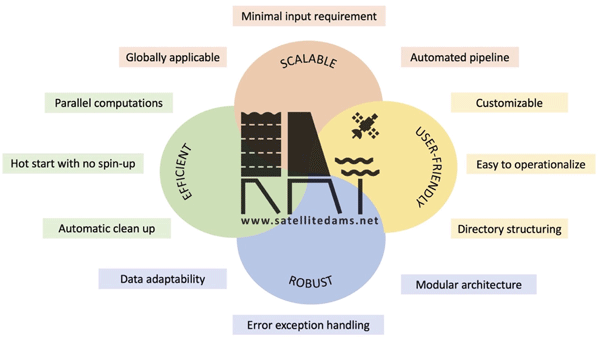
Sanchit Minocha, Faisal Hossain, Pritam Das, Sarath Suresh, Shahzaib Khan, George Darkwah, Hyongki Lee, Stefano Galelli, Konstantinos Andreadis, and Perry Oddo
Geosci. Model Dev., 17, 3137–3156, https://doi.org/10.5194/gmd-17-3137-2024, https://doi.org/10.5194/gmd-17-3137-2024, 2024
Short summary
Short summary
The Reservoir Assessment Tool (RAT) merges satellite data with hydrological models, enabling robust estimation of reservoir parameters like inflow, outflow, surface area, and storage changes around the world. Version 3.0 of RAT lowers the barrier of entry for new users and achieves scalability and computational efficiency. RAT 3.0 also facilitates open-source development of functions for continuous improvement to mobilize and empower the global water management community.
Sarath Suresh, Faisal Hossain, Sanchit Minocha, Pritam Das, Shahzaib Khan, Hyongki Lee, Konstantinos Andreadis, and Perry Oddo
Hydrol. Earth Syst. Sci. Discuss., https://doi.org/10.5194/hess-2023-193, https://doi.org/10.5194/hess-2023-193, 2023
Manuscript not accepted for further review
Short summary
Short summary
Using entirely space-based data we explored how well can we predict the fast evolving dynamics of a flooding event in the mountainous region of Kerala during the 2018 disastrous floods. The tool, Reservoir Assessment Tool (RAT) was applied and found to have actionable accuracy in predicting the state of the Kerala reservoirs entirely from space to foster better coordinated management in future for reservoir operations.
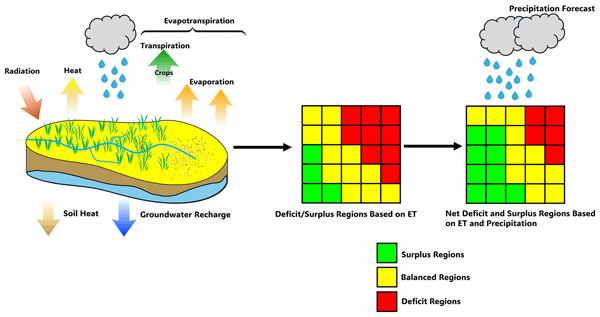
Shahzaib Khan, Faisal Hossain, Khairul Islam, and Mahfuz Ahamed
Hydrol. Earth Syst. Sci., 30, 3675–3695, https://doi.org/10.5194/hess-30-3675-2026, https://doi.org/10.5194/hess-30-3675-2026, 2026
Short summary
Short summary
We developed a satellite-based irrigation advisory system that operates weekly, helping water providers make informed, science-based decisions. It estimates crop water needs using satellite data combined with rainfall and past irrigation and can also be used to simulate future cropping patterns under policy changes or reduced water supply. Co-developed with stakeholders, it is scalable to other regions with similar water management challenges.
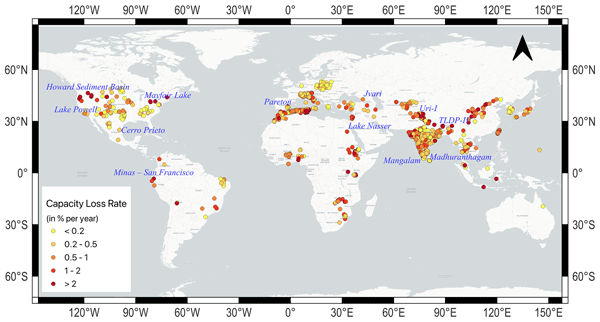
Sanchit Minocha and Faisal Hossain
Earth Syst. Sci. Data, 17, 1743–1759, https://doi.org/10.5194/essd-17-1743-2025, https://doi.org/10.5194/essd-17-1743-2025, 2025
Short summary
Short summary
Trustworthy and independently verifiable information on declining storage capacity or sedimentation rates worldwide is sparse and suffers from inconsistent metadata and curation to allow global-scale archiving and analyses. The Global Reservoir Inventory of Lost Storage by Sedimentation (GRILSS) dataset addresses this challenge by providing organized, well-curated, and open-source data on sedimentation rates and capacity loss for 1013 reservoirs in 75 major river basins across 54 countries.
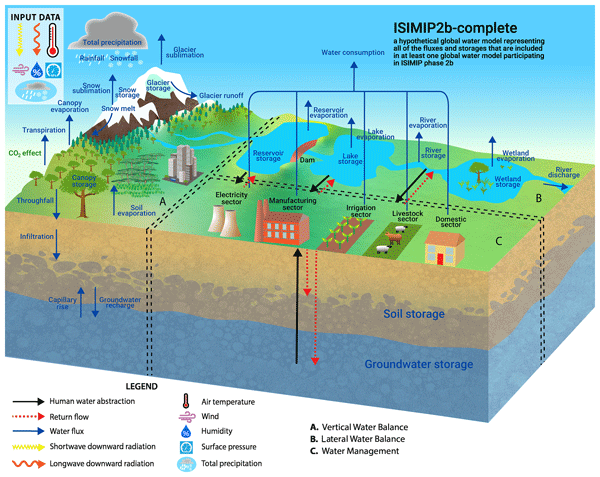
Hannes Müller Schmied, Simon Newland Gosling, Marlo Garnsworthy, Laura Müller, Camelia-Eliza Telteu, Atiq Kainan Ahmed, Lauren Seaby Andersen, Julien Boulange, Peter Burek, Jinfeng Chang, He Chen, Lukas Gudmundsson, Manolis Grillakis, Luca Guillaumot, Naota Hanasaki, Aristeidis Koutroulis, Rohini Kumar, Guoyong Leng, Junguo Liu, Xingcai Liu, Inga Menke, Vimal Mishra, Yadu Pokhrel, Oldrich Rakovec, Luis Samaniego, Yusuke Satoh, Harsh Lovekumar Shah, Mikhail Smilovic, Tobias Stacke, Edwin Sutanudjaja, Wim Thiery, Athanasios Tsilimigkras, Yoshihide Wada, Niko Wanders, and Tokuta Yokohata
Geosci. Model Dev., 18, 2409–2425, https://doi.org/10.5194/gmd-18-2409-2025, https://doi.org/10.5194/gmd-18-2409-2025, 2025
Short summary
Short summary
Global water models contribute to the evaluation of important natural and societal issues but are – as all models – simplified representation of reality. So, there are many ways to calculate the water fluxes and storages. This paper presents a visualization of 16 global water models using a standardized visualization and the pathway towards this common understanding. Next to academic education purposes, we envisage that these diagrams will help researchers, model developers, and data users.
Sanchit Minocha, Faisal Hossain, Pritam Das, Sarath Suresh, Shahzaib Khan, George Darkwah, Hyongki Lee, Stefano Galelli, Konstantinos Andreadis, and Perry Oddo
Geosci. Model Dev., 17, 3137–3156, https://doi.org/10.5194/gmd-17-3137-2024, https://doi.org/10.5194/gmd-17-3137-2024, 2024
Short summary
Short summary
The Reservoir Assessment Tool (RAT) merges satellite data with hydrological models, enabling robust estimation of reservoir parameters like inflow, outflow, surface area, and storage changes around the world. Version 3.0 of RAT lowers the barrier of entry for new users and achieves scalability and computational efficiency. RAT 3.0 also facilitates open-source development of functions for continuous improvement to mobilize and empower the global water management community.
Urmin Vegad, Yadu Pokhrel, and Vimal Mishra
Hydrol. Earth Syst. Sci., 28, 1107–1126, https://doi.org/10.5194/hess-28-1107-2024, https://doi.org/10.5194/hess-28-1107-2024, 2024
Short summary
Short summary
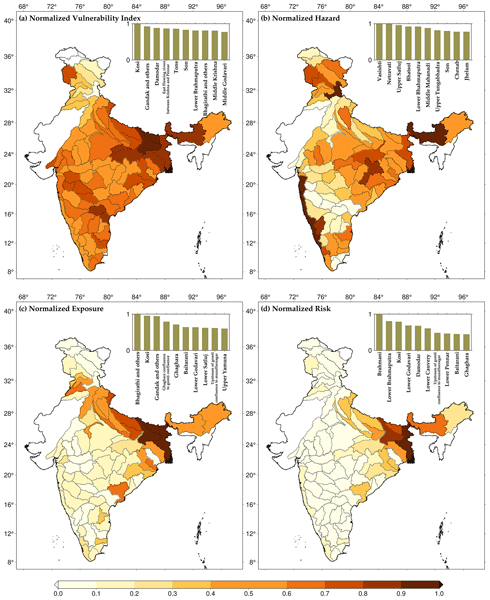
A large population is affected by floods, which leave their footprints through human mortality, migration, and damage to agriculture and infrastructure, during almost every summer monsoon season in India. Despite the massive damage of floods, sub-basin level flood risk assessment is still in its infancy and needs to be improved. Using hydrological and hydrodynamic models, we reconstructed sub-basin level observed floods for the 1901–2020 period.
Sarath Suresh, Faisal Hossain, Sanchit Minocha, Pritam Das, Shahzaib Khan, Hyongki Lee, Konstantinos Andreadis, and Perry Oddo
Hydrol. Earth Syst. Sci. Discuss., https://doi.org/10.5194/hess-2023-193, https://doi.org/10.5194/hess-2023-193, 2023
Manuscript not accepted for further review
Short summary
Short summary
Using entirely space-based data we explored how well can we predict the fast evolving dynamics of a flooding event in the mountainous region of Kerala during the 2018 disastrous floods. The tool, Reservoir Assessment Tool (RAT) was applied and found to have actionable accuracy in predicting the state of the Kerala reservoirs entirely from space to foster better coordinated management in future for reservoir operations.
Urmin Vegad and Vimal Mishra
Hydrol. Earth Syst. Sci., 26, 6361–6378, https://doi.org/10.5194/hess-26-6361-2022, https://doi.org/10.5194/hess-26-6361-2022, 2022
Short summary
Short summary
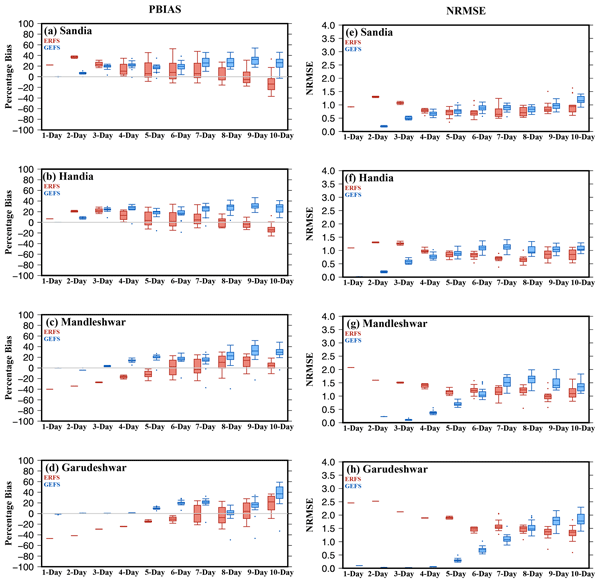
Floods cause enormous damage to infrastructure and agriculture in India. However, the utility of ensemble meteorological forecast for hydrologic prediction has not been examined. Moreover, Indian river basins have a considerable influence of reservoirs that alter the natural flow variability. We developed a hydrologic modelling-based streamflow prediction considering the influence of reservoirs in India.
Anukesh Ambika and Vimal Mishra
Earth Syst. Sci. Data Discuss., https://doi.org/10.5194/essd-2022-81, https://doi.org/10.5194/essd-2022-81, 2022
Preprint withdrawn
Short summary
Short summary
Understanding the impacts of drought on agriculture is hampered due to the lack of high-resolution data in India. Moreover, most of the existing drought monitoring system do not account for the influence of irrigation on drought mitigation. To fill these crucial gaps in drought assessment capability, we develop a high-resolution (250 m) dataset of land surface temperature (LST) and enhanced vegetation index (EVI) for India for 2000–2017 period.
Dung Trung Vu, Thanh Duc Dang, Stefano Galelli, and Faisal Hossain
Hydrol. Earth Syst. Sci., 26, 2345–2364, https://doi.org/10.5194/hess-26-2345-2022, https://doi.org/10.5194/hess-26-2345-2022, 2022
Short summary
Short summary
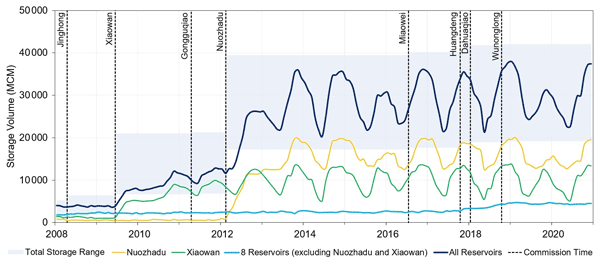
The lack of data on how big dams are operated in the Upper Mekong, or Lancang, largely contributes to the ongoing controversy between China and the other Mekong countries. Here, we rely on satellite observations to reconstruct monthly storage time series for the 10 largest reservoirs in the Lancang. Our analysis shows how quickly reservoirs were filled in, what decisions were made during recent droughts, and how these decisions impacted downstream discharge.
Camelia-Eliza Telteu, Hannes Müller Schmied, Wim Thiery, Guoyong Leng, Peter Burek, Xingcai Liu, Julien Eric Stanislas Boulange, Lauren Seaby Andersen, Manolis Grillakis, Simon Newland Gosling, Yusuke Satoh, Oldrich Rakovec, Tobias Stacke, Jinfeng Chang, Niko Wanders, Harsh Lovekumar Shah, Tim Trautmann, Ganquan Mao, Naota Hanasaki, Aristeidis Koutroulis, Yadu Pokhrel, Luis Samaniego, Yoshihide Wada, Vimal Mishra, Junguo Liu, Petra Döll, Fang Zhao, Anne Gädeke, Sam S. Rabin, and Florian Herz
Geosci. Model Dev., 14, 3843–3878, https://doi.org/10.5194/gmd-14-3843-2021, https://doi.org/10.5194/gmd-14-3843-2021, 2021
Short summary
Short summary
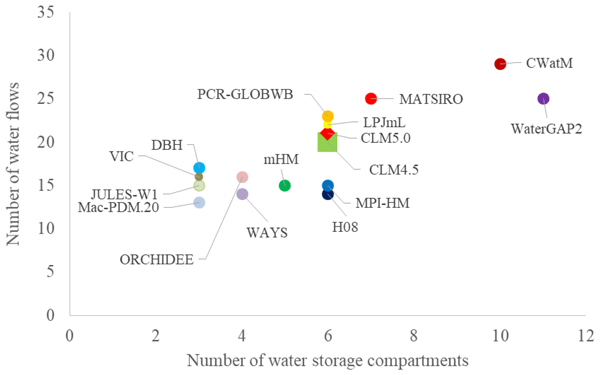
We analyse water storage compartments, water flows, and human water use sectors included in 16 global water models that provide simulations for the Inter-Sectoral Impact Model Intercomparison Project phase 2b. We develop a standard writing style for the model equations. We conclude that even though hydrologic processes are often based on similar equations, in the end these equations have been adjusted, or the models have used different values for specific parameters or specific variables.
Cited articles
Al Zayed, I. S. and Elagib, N. A.: Implications of non-sustainable agricultural water policies for the water–food nexus in large-scale irrigation systems: A remote sensing approach, Adv. Water Resour., 110, 408–422, https://doi.org/10.1016/j.advwatres.2017.07.010, 2017.
Altenau, E. H., Pavelsky, T. M., Durand, M. T., Yang, X., de Moraes Frasson, R. P., and Bendezu, L.: The Surface Water and Ocean Topography (SWOT) Mission River Database (SWORD): A global river network for satellite data products, Water Resour. Res., 57, e2021WR030054, https://doi.org/10.1029/2021WR030054, 2021.
Angelakis, A. N., Zaccaria, D., Krasilnikoff, J., Salgot, M., Bazza, M., Roccaro, P., Jimenez, B., Kumar, A., Yinghua, W., Baba, A., and Harrison, J. A.: Irrigation of world agricultural lands: Evolution through the millennia, Water, 12, 1285, https://doi.org/10.3390/w12051285, 2020.
Beck, H. E., McVicar, T. R., Vergopolan, N., Berg, A., Lutsko, N. J., Dufour, A., Zeng, Z., Jiang, X., van Dijk, A. I. J. M., and Miralles, D. G.: High-resolution (1 km) Köppen–Geiger maps for 1901–2099 based on constrained CMIP6 projections, Scientific Data, 10, 724, https://doi.org/10.1038/s41597-023-02549-6, 2023.
Belgiu, M. and Drăguţ, L.: Random forest in remote sensing: A review of applications and future directions, ISPRS J. Photogramm., 114, 24–31, https://doi.org/10.1016/j.isprsjprs.2016.01.011, 2016.
Biancamaria, S., Lettenmaier, D. P., and Pavelsky, T. M.: The SWOT Mission and Its Capabilities for Land Hydrology, in: Remote Sensing and Water Resources, Space Sciences Series of ISSI, vol. 55, Springer, Cham, https://doi.org/10.1007/978-3-319-32449-4_6, 2016.
Boon, M., Motta, D., Massa, M., Wainwright, J., Lawrence, D., and Ayala, G.: Understanding the long-term development of an irrigation network using a sinuosity-based automatic classification of waterways, The Holocene, 35, 29–43, https://doi.org/10.1177/09596836241285795, 2025.
Breiman, L.: Random forests, Mach. Learn., 45, 5–32, https://doi.org/10.1023/A:1010933404324, 2001.
Cookson-Hills, C.: Irrigation in Egypt, in: Encyclopaedia of the History of Science, Technology, and Medicine in Non-Western Cultures, 2358–2361, Springer, Dordrecht, https://doi.org/10.1007/978-94-007-7747-7_10130, 2016.
ESA: Land Cover CCI Product User Guide Version 2, Tech. Rep., https://maps.elie.ucl.ac.be/CCI/viewer/download/ESACCI-LC-Ph2-PUGv2_2.0.pdf (last access: 22 July 2025), 2017.
Farr, T. G., Rosen, P. A., Caro, E., Crippen, R., Duren, R., Hensley, S., Kobrick, M., Paller, M., Rodriguez, E., Roth, L., and Seal, D.: The Shuttle Radar Topography Mission, Rev. Geophys., 45, RG2004, https://doi.org/10.1029/2005RG000183, 2007.
FAO AQUASTAT: AQUASTAT Dissemination System, https://data.apps.fao.org/aquastat/?lang=en, last access: 23 July 2025.
Geofabrik GmbH: Download server for OpenStreetMap data, https://download.geofabrik.de (last access: 25 July 2025), 2025.
Gupta, R. K., Naresh, R. K., Hobbs, P. R., Jiaguo, Z., and Ladha, J. K.: Sustainability of post-Green Revolution agriculture: The rice–wheat cropping systems of the Indo-Gangetic Plains and China, in: Improving the Productivity and Sustainability of Rice-Wheat Systems: Issues and Impacts, Special Publication 65, 25 pp., https://doi.org/10.2134/asaspecpub65.c1, 2003.
Hussain, A. and Mohammad, T. A.: Indira Gandhi canal project environment and changing scenario of western Rajasthan: a case study, International Journal of Academic Research and Development, 3, 15–19, https://allstudiesjournal.com/assets/archives/2018/vol3issue4/3-3-223-695.pdf (last access: 23 July 2025), 2018.
Johnson, R. and Cody, B. A.: California Agricultural Production and Irrigated Water Use, Library of Congress, https://www.congress.gov/crs-product/R44093 (last access: 5 March 2026), 2015.
Khan, S., Hossain, F., Islam, K., and Ahamed, M.: Satellite Data Rendered Irrigation using Penman-Monteith and SEBAL – sDRIPS for Surface Water Irrigation Optimization, EGUsphere [preprint], https://doi.org/10.5194/egusphere-2025-4574, 2025.
Lehner, B. and Grill, G.: Global river hydrography and network routing: baseline data and new approaches to study the world's large river systems, Hydrol. Process., 27, 2171–2186, https://doi.org/10.1002/hyp.9740, 2013.
Liimatainen, K., Heikkilä, R., Yli-Harja, O., Huttunen, H., and Ruusuvuori, P.: Sparse logistic regression and polynomial modelling for detection of artificial drainage networks, Remote Sens. Lett., 6, 311–320, https://doi.org/10.1080/2150704X.2015.1031919, 2015.
McGee, P. and Stubbs, M.: Irrigation in US agriculture: On-farm technologies and best management practices, UNT Digital Library, 65, https://digital.library.unt.edu/ark:/67531/metadc812784/2016 (last access: 5 March 2026), 2026.
Ministry of Jal Shakti – Department of Water Resources, River Development & Ganga Rejuvenation: Boundaries of Canal, National Water Informatics Centre, Open Government Data (OGD) Platform India [data set], https://www.data.gov.in/resource/boundaries-canal (last access: 5 March 2026), 2022.
Monteiro, E. S. V. and Patrício, G. R.: Analysing temporal evolution of OpenStreetMap waterways completeness in a mountain region of Portugal, Remote Sensing, 16, 3159, https://doi.org/10.3390/rs16173159, 2024.
Nash, L. L.: Transforming the Central Valley: Body, identity, and environment in California, 1850–1970, PhD thesis, University of Washington, https://www.usbr.gov/history/ProjectHistories/Central%20Valley%20Project-Auburn%20Dam%20D2.pdf (last access: 5 March 2026), 2000.
Peña-Arancibia, J. L., Ahmad, M. U. D., and Yu, Y.: Remote sensing characterisation of cropping systems and their water use to assess irrigation management from field to canal command scale, Agr. Water Manage., 311, 109374, https://doi.org/10.1016/j.agwat.2025.109374, 2025.
Prasad, R. and Shivay, Y. S.: Agricultural changes in north-western India as influenced by green revolution and irrigation water availability, International Journal of Bio-Resource and Stress Management, 13, 1355–1359, https://doi.org/10.23910/1.2022.3244a, 2022.
Ritchie, H., Rosado, P., and Roser, M.: Agricultural Production, Data adapted from Food and Agriculture Organization of the United Nations, https://archive.ourworldindata.org/20250731-180103/grapher/cereal-yield.html (last access: 5 March 2026), 2023.
Rodriguez-Galiano, V. F., Ghimire, B., Rogan, J., Chica-Olmo, M., and Rigol-Sanchez, J. P.: An assessment of the effectiveness of a random forest classifier for land-cover classification, ISPRS J. Photogramm., 67, 93–104, https://doi.org/10.1016/j.isprsjprs.2011.11.002, 2012.
Sarfaraz, M. U., Hall, D. M., and Rotman, R. M.: Data sharing in transboundary water management, Frontiers in Water, 4, 982605, https://doi.org/10.3389/frwa.2022.982605, 2022.
Siebert, S., Henrich, V., Frenken, K., and Burke, J.: Update of the digital global map of irrigation areas to version 5, Rheinische Friedrich-Wilhelms-Universität, Bonn, Germany, and Food and Agriculture Organization of the United Nations [data set], https://www.fao.org/aquastat/en/geospatial-information/global-maps-irrigated-areas/latest-version/ (last access: 23 July 2025), 2013.
Spielman, D. J. and Pandya-Lorch, R.: Proven Successes in Agricultural Development: A Technical Compendium to Millions Fed, International Food Policy Research Institute, https://books.google.com/books?id=zBTqydfKOeoC (last access: 5 March 2026), 2010.
McGee, P. and Stubbs, M.: Irrigation in US agriculture: On-farm technologies and best management practices, UNT Digital Library, https://digital.library.unt.edu/ark:/67531/metadc812784/ (last access: 5 March 2026), 2016.
Suresh, S.: UW-SASWE/GRAIN: GRAIN v.1.0.0, Zenodo [code], https://doi.org/10.5281/zenodo.18751935, 2026.
Suresh, S. and Hossain, F.: GRAIN v.1.0, Zenodo [data set], https://doi.org/10.5281/zenodo.16786488, 2025.
Teluguntla, P., Thenkabail, P., Xiong, J., Gumma, M., Giri, C., Milesi, C., Ozdogan, M., Congalton, R., Tilton, J., Sankey, T., Massey, R., Phalke, A., and Yadav, K.: NASA Making Earth System Data Records for Use in Research Environments (MEaSUREs) Global Food Security Support Analysis Data (GFSAD) Crop Mask 2010 Global 1 km V001, NASA Land Processes Distributed Active Archive Center [data set], https://doi.org./10.5067/MEASURES/GFSAD/GFSAD1KCM. 001, 2016.
UN: The United Nations World Water Development Report 2024: Water for Prosperity and Peace, UNESCO, Paris, p. 1, https://unesdoc.unesco.org/ark:/48223/pf0000388948 (last access: 5 March 2026), 2024.
U.S. Geological Survey: National Hydrography Dataset (ver. USGS National Hydrography Dataset Best Resolution (NHD) for Hydrologic Unit (HU) 4 – 2001 (published 20191002)), USGS [data set], https://www.usgs.gov/national-hydrography/access-national-hydrography-products (last access: 23 July 2025), 2022.
Westermann, W. L.: The development of the irrigation system of Egypt, Classical Philol., 14, 158–164, http://www.jstor.org/stable/263080 (last access: 22 July 2025), 1919.
World Food Programme: World Administrative Boundaries – Countries and Territories, OpenDataSoft [data set], https://public.opendatasoft.com/explore/assets/world-administrative-boundaries/ (last access: 24 July 2025), 2022.
Yan, H., Hui, X., Li, M., and Xu, Y.: Development in sprinkler irrigation technology in China, Irrig. Drain., 69, 75–87, https://doi.org/10.1002/ird.2435, 2020.
Zhao, H., Tian, F., Zhang, K., Morovati, K., and Sun, J.: Intelligent remote sensing canal system detection and irrigation water use estimation: A case study in the transboundary Mekong River Basin, J. Hydrol., 657, 133110, https://doi.org/10.1016/j.jhydrol.2025.133110, 2025.
Short summary
Irrigation canals deliver water to farms and sustain much of the world’s food supply, yet no global dataset previously existed. GRAIN (Global Registry of Agricultural Irrigation Networks) is the first openly accessible, worldwide map of irrigation canals, and was built using community driven mapping efforts and machine learning. GRAIN contains data on nearly 4 million kilometers of canals, and this resource can support better water planning and agricultural management efforts by governments, researchers, and communities worldwide.
Irrigation canals deliver water to farms and sustain much of the world’s food supply, yet no...


Altmetrics
Final-revised paper
Preprint