Articles | Volume 18, issue 2
https://doi.org/10.5194/essd-18-1619-2026
© Author(s) 2026. This work is distributed under
the Creative Commons Attribution 4.0 License.
the Creative Commons Attribution 4.0 License.
https://doi.org/10.5194/essd-18-1619-2026
© Author(s) 2026. This work is distributed under
the Creative Commons Attribution 4.0 License.
the Creative Commons Attribution 4.0 License.
Data description article
| 
02 Mar 2026
Data description article |
| 02 Mar 2026
| 02 Mar 2026
The ELK global emission inventory for the transport sectors

Deutsches Zentrum für Luft- und Raumfahrt (DLR), Institut für Physik der Atmosphäre, Oberpfaffenhofen, Germany
Simone Ehrenberger
Deutsches Zentrum für Luft- und Raumfahrt (DLR), Institut für Fahrzeugkonzepte, Stuttgart, Germany
Sabine Brinkop
Deutsches Zentrum für Luft- und Raumfahrt (DLR), Institut für Physik der Atmosphäre, Oberpfaffenhofen, Germany
Johannes Hendricks
Deutsches Zentrum für Luft- und Raumfahrt (DLR), Institut für Physik der Atmosphäre, Oberpfaffenhofen, Germany
Jens Hellekes
Deutsches Zentrum für Luft- und Raumfahrt (DLR), Institut für Methodik der Fernerkundung, Oberpfaffenhofen, Germany
Paweł Banyś
Deutsches Zentrum für Luft- und Raumfahrt (DLR), Institut für Kommunikation und Navigation, Neustrelitz, Germany
Isheeka Dasgupta
Deutsches Zentrum für Luft- und Raumfahrt (DLR), Institut für Fahrzeugkonzepte, Stuttgart, Germany
Patrick Draheim
Deutsches Zentrum für Luft- und Raumfahrt (DLR), Institut für Vernetzte Energiesysteme, Stuttgart, Germany
Annika Fitz
Deutsches Zentrum für Luft- und Raumfahrt (DLR), Institut für Maritime Energiesysteme, Geesthacht, Germany
Manuel Löber
Deutsches Zentrum für Luft- und Raumfahrt (DLR), Institut für Verbrennungstechnik, Stuttgart, Germany
Thomas Pregger
Deutsches Zentrum für Luft- und Raumfahrt (DLR), Institut für Vernetzte Energiesysteme, Stuttgart, Germany
Yvonne Scholz
Deutsches Zentrum für Luft- und Raumfahrt (DLR), Institut für Vernetzte Energiesysteme, Stuttgart, Germany
Angelika Schulz
Deutsches Zentrum für Luft- und Raumfahrt (DLR), Institut für Verkehrsforschung, Berlin, Germany
Birgit Suhr
Deutsches Zentrum für Luft- und Raumfahrt (DLR), Institut für Raumfahrtsysteme, Bremen, Germany
Nina Thomsen
Deutsches Zentrum für Luft- und Raumfahrt (DLR), Institut für Verkehrsforschung, Berlin, Germany
Christian Martin Weder
Deutsches Zentrum für Luft- und Raumfahrt (DLR), Institut für Luftverkehr, Hamburg, Germany
Deutsches Zentrum für Luft- und Raumfahrt (DLR), Institut für Luftverkehr, Cologne, Germany
Peter Berster
Deutsches Zentrum für Luft- und Raumfahrt (DLR), Institut für Luftverkehr, Hamburg, Germany
Deutsches Zentrum für Luft- und Raumfahrt (DLR), Institut für Luftverkehr, Cologne, Germany
Maximilian Clococeanu
Deutsches Zentrum für Luft- und Raumfahrt (DLR), Institut für Luftverkehr, Hamburg, Germany
Deutsches Zentrum für Luft- und Raumfahrt (DLR), Institut für Luftverkehr, Cologne, Germany
Marc Gelhausen
Deutsches Zentrum für Luft- und Raumfahrt (DLR), Institut für Luftverkehr, Hamburg, Germany
Deutsches Zentrum für Luft- und Raumfahrt (DLR), Institut für Luftverkehr, Cologne, Germany
Alexander Lau
Deutsches Zentrum für Luft- und Raumfahrt (DLR), Institut für Luftverkehr, Hamburg, Germany
Deutsches Zentrum für Luft- und Raumfahrt (DLR), Institut für Luftverkehr, Cologne, Germany
Florian Linke
Deutsches Zentrum für Luft- und Raumfahrt (DLR), Institut für Luftverkehr, Hamburg, Germany
Deutsches Zentrum für Luft- und Raumfahrt (DLR), Institut für Luftverkehr, Cologne, Germany
Sigrun Matthes
Deutsches Zentrum für Luft- und Raumfahrt (DLR), Institut für Physik der Atmosphäre, Oberpfaffenhofen, Germany
Zarah Lea Zengerling
Deutsches Zentrum für Luft- und Raumfahrt (DLR), Institut für Luftverkehr, Hamburg, Germany
Deutsches Zentrum für Luft- und Raumfahrt (DLR), Institut für Luftverkehr, Cologne, Germany
Related authors
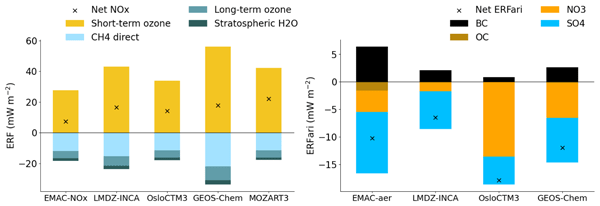
Yann Cohen, Didier Hauglustaine, Zosia Staniaszek, Marianne Tronstad Lund, Irene Dedoussi, Sigrun Matthes, Flávio Quadros, Mattia Righi, Agnieszka Skowron, and Robin Thor
Atmos. Chem. Phys., 26, 5983–6013, https://doi.org/10.5194/acp-26-5983-2026, https://doi.org/10.5194/acp-26-5983-2026, 2026
Short summary
Short summary
Non-CO2 effects from aviation on climate show large uncertainties. Among them, this study investigates the present-day impact of nitrogen oxides (through ozone and methane) and aerosols produced by aviation on atmospheric composition and therefore on climate, using a global-model intercomparison. Our results show a good consistency between the models for gaseous chemistry, but they also highlight the need for more accurate comparisons and further model development for aerosol parameterization.
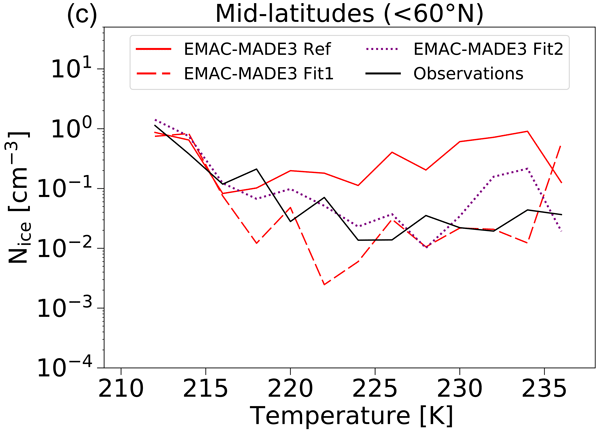
Elena De La Torre Castro, Christof G. Beer, Tina Jurkat-Witschas, Daniel Sauer, Mattia Righi, Johannes Hendricks, and Christiane Voigt
Atmos. Chem. Phys., 26, 5879–5899, https://doi.org/10.5194/acp-26-5879-2026, https://doi.org/10.5194/acp-26-5879-2026, 2026
Short summary
Short summary
Ice nucleating particles strongly influence cirrus cloud properties but remain difficult to measure at cirrus temperatures. By combining EMAC (ECHAM/MESSy Atmospheric Chemistry) model simulations with in situ observations from the CIRRUS-HL (Cirrus in High-Latitudes) campaign, we investigate aerosol-cirrus interactions across latitudes. While the model generally agrees with observations, it overestimates ice crystal number concentrations detrained from convection, which we correct applying a new radius-temperature parametrization from the observations.
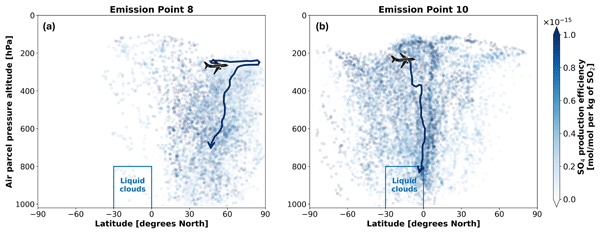
Jin Maruhashi, Mattia Righi, Monica Sharma, Johannes Hendricks, Patrick Jöckel, Volker Grewe, and Irene C. Dedoussi
Geosci. Model Dev., 19, 2747–2784, https://doi.org/10.5194/gmd-19-2747-2026, https://doi.org/10.5194/gmd-19-2747-2026, 2026
Short summary
Short summary
Aerosol-cloud interactions remain a major source of uncertainty in assessing aviation's net climate impact. We develop and evaluate a new Lagrangian tagging model that tracks aviation-emitted SO2 and H2SO4 as they are chemically transformed into SO4 aerosols and transported throughout the atmosphere. This development allows the identification of atmospheric regions with elevated potential for aerosol–cloud interactions driven by SO4 from aircraft.
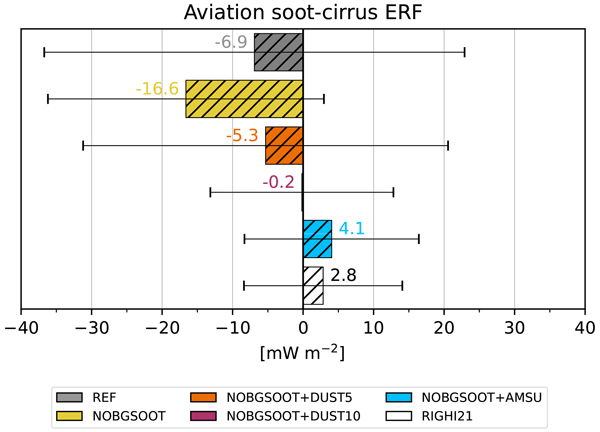
Mattia Righi, Baptiste Testa, Christof G. Beer, Johannes Hendricks, and Zamin A. Kanji
Atmos. Chem. Phys., 25, 18341–18353, https://doi.org/10.5194/acp-25-18341-2025, https://doi.org/10.5194/acp-25-18341-2025, 2025
Short summary
Short summary
The effective radiative forcing due to the effect of aviation soot on natural cirrus clouds is likely very small, thus confirming most previous studies, but for the first time with the support of laboratory measurements specifically targeting aviation soot and its ice nucleation ability.
Monica Sharma, Mattia Righi, Johannes Hendricks, Anja Schmidt, Daniel Sauer, and Volker Grewe
Geosci. Model Dev., 18, 8485–8510, https://doi.org/10.5194/gmd-18-8485-2025, https://doi.org/10.5194/gmd-18-8485-2025, 2025
Short summary
Short summary
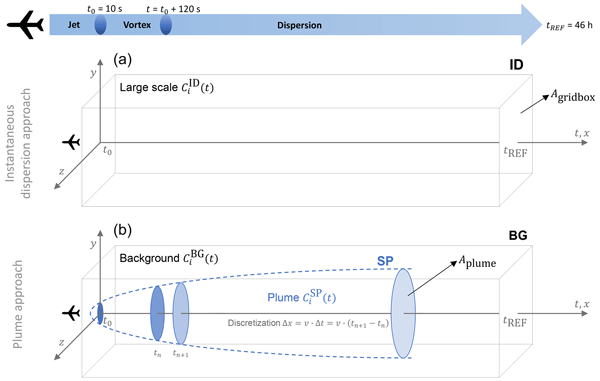
A plume model is developed to simulate aerosol microphysics in a dispersing aircraft plume, including interactions between ice crystals and aerosols in vortex regime. Compared to an instantaneous dispersion approach, the plume approach estimates 15 % lower aviation aerosol number concentrations, due to more efficient coagulation at plume scale. The model is sensitive to background conditions and initialization parameters, such as ice crystal number concentration and fuel sulfur content.
Jingmin Li, Mattia Righi, Johannes Hendricks, Christof G. Beer, Ulrike Burkhardt, and Anja Schmidt
Atmos. Chem. Phys., 24, 12727–12747, https://doi.org/10.5194/acp-24-12727-2024, https://doi.org/10.5194/acp-24-12727-2024, 2024
Short summary
Short summary
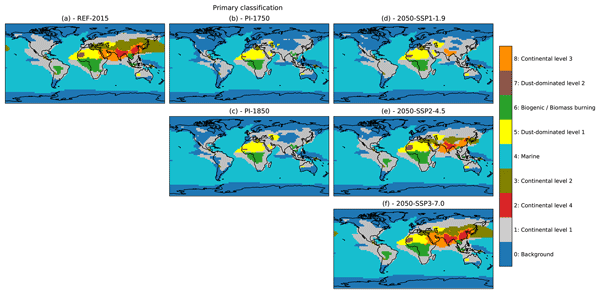
Aiming to understand underlying patterns and trends in aerosols, we characterize the spatial patterns and long-term evolution of lower tropospheric aerosols by clustering multiple aerosol properties from preindustrial times to the year 2050 under three Shared
Socioeconomic Pathway scenarios. The results provide a clear and condensed picture of the spatial extent and distribution of aerosols for different time periods and emission scenarios.
Socioeconomic Pathway scenarios. The results provide a clear and condensed picture of the spatial extent and distribution of aerosols for different time periods and emission scenarios.
Mariano Mertens, Sabine Brinkop, Phoebe Graf, Volker Grewe, Johannes Hendricks, Patrick Jöckel, Anna Lanteri, Sigrun Matthes, Vanessa S. Rieger, Mattia Righi, and Robin N. Thor
Atmos. Chem. Phys., 24, 12079–12106, https://doi.org/10.5194/acp-24-12079-2024, https://doi.org/10.5194/acp-24-12079-2024, 2024
Short summary
Short summary
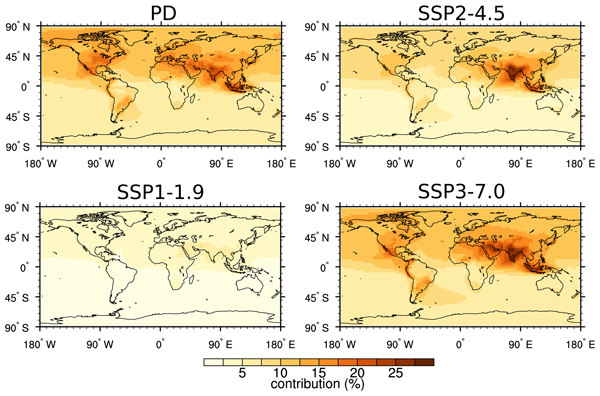
We quantified the contributions of land transport, shipping, and aviation emissions to tropospheric ozone; its radiative forcing; and the reductions of the methane lifetime using chemistry-climate model simulations. The contributions were analysed for the conditions of 2015 and for three projections for the year 2050. The results highlight the challenges of mitigating ozone formed by emissions of the transport sector, caused by the non-linearitiy of the ozone chemistry and the long lifetime.
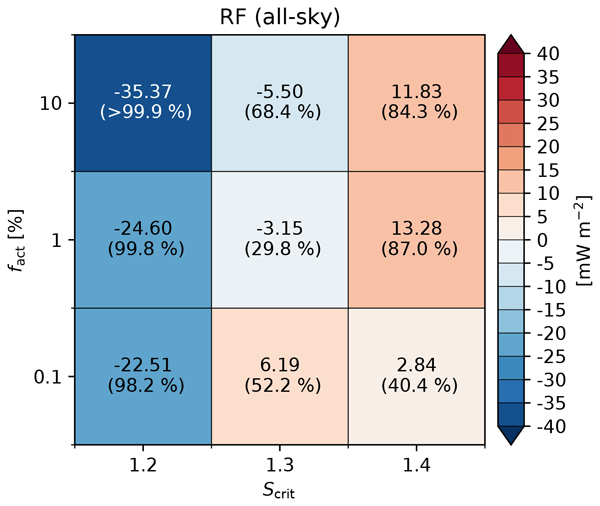
Christof G. Beer, Johannes Hendricks, and Mattia Righi
Atmos. Chem. Phys., 24, 3217–3240, https://doi.org/10.5194/acp-24-3217-2024, https://doi.org/10.5194/acp-24-3217-2024, 2024
Short summary
Short summary
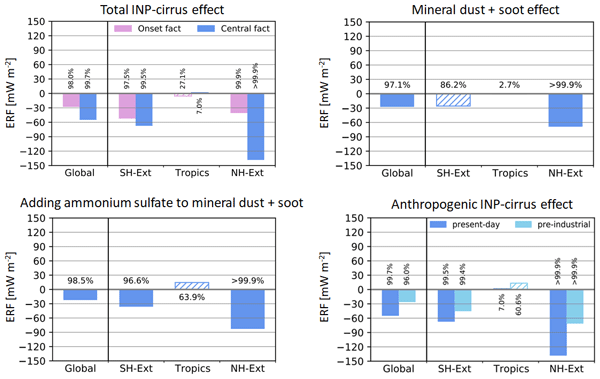
Ice-nucleating particles (INPs) have important influences on cirrus clouds and the climate system; however, the understanding of their global impacts is still uncertain. We perform numerical simulations with a global aerosol–climate model to analyse INP-induced cirrus changes and the resulting climate impacts. We evaluate various sources of uncertainties, e.g. the ice-nucleating ability of INPs and the role of model dynamics, and provide a new estimate for the global INP–cirrus effect.
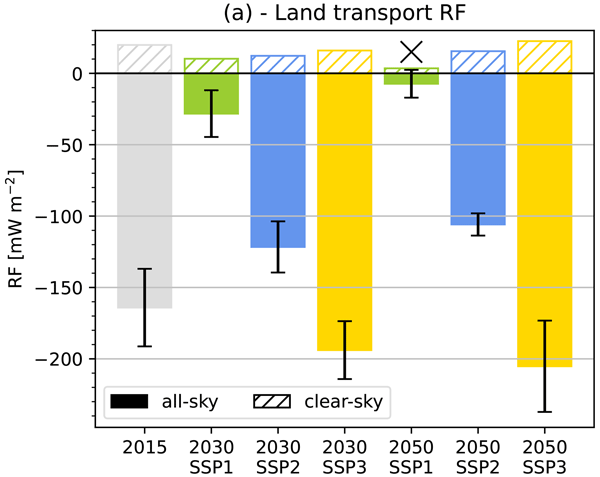
Mattia Righi, Johannes Hendricks, and Sabine Brinkop
Earth Syst. Dynam., 14, 835–859, https://doi.org/10.5194/esd-14-835-2023, https://doi.org/10.5194/esd-14-835-2023, 2023
Short summary
Short summary
A global climate model is applied to quantify the impact of land transport, shipping, and aviation on aerosol and climate. The simulations show that these sectors provide relevant contributions to aerosol concentrations on the global scale and have a significant cooling effect on climate, which partly offsets their CO2 warming. Future projections under different scenarios show how the transport impacts can be related to the underlying storylines, with relevant consequences for policy-making.
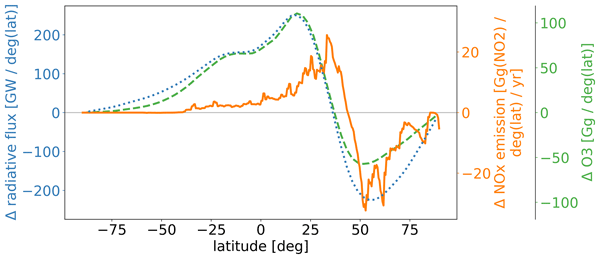
Robin N. Thor, Mariano Mertens, Sigrun Matthes, Mattia Righi, Johannes Hendricks, Sabine Brinkop, Phoebe Graf, Volker Grewe, Patrick Jöckel, and Steven Smith
Geosci. Model Dev., 16, 1459–1466, https://doi.org/10.5194/gmd-16-1459-2023, https://doi.org/10.5194/gmd-16-1459-2023, 2023
Short summary
Short summary
We report on an inconsistency in the latitudinal distribution of aviation emissions between two versions of a data product which is widely used by researchers. From the available documentation, we do not expect such an inconsistency. We run a chemistry–climate model to compute the effect of the inconsistency in emissions on atmospheric chemistry and radiation and find that the radiative forcing associated with aviation ozone is 7.6 % higher when using the less recent version of the data.
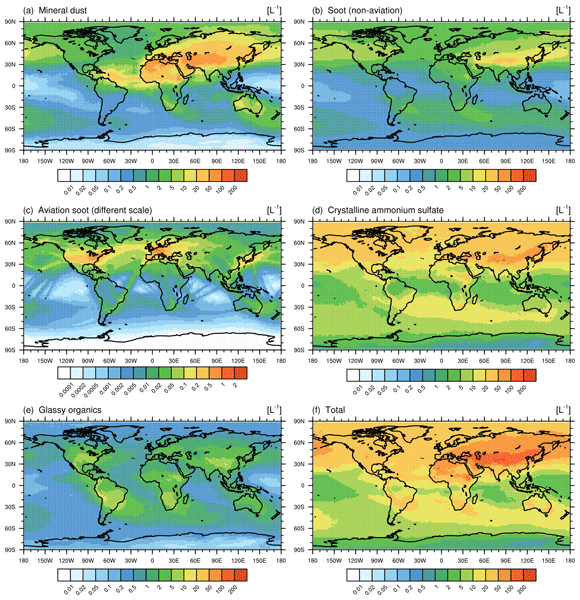
Christof G. Beer, Johannes Hendricks, and Mattia Righi
Atmos. Chem. Phys., 22, 15887–15907, https://doi.org/10.5194/acp-22-15887-2022, https://doi.org/10.5194/acp-22-15887-2022, 2022
Short summary
Short summary
Ice-nucleating particles (INPs) have important influences on cirrus clouds and the climate system; however, their global atmospheric distribution in the cirrus regime is still very uncertain. We present a global climatology of INPs under cirrus conditions derived from model simulations, considering the mineral dust, soot, crystalline ammonium sulfate, and glassy organics INP types. The comparison of respective INP concentrations indicates the large importance of ammonium sulfate particles.

Jingmin Li, Johannes Hendricks, Mattia Righi, and Christof G. Beer
Geosci. Model Dev., 15, 509–533, https://doi.org/10.5194/gmd-15-509-2022, https://doi.org/10.5194/gmd-15-509-2022, 2022
Short summary
Short summary
The growing complexity of global aerosol models results in a large number of parameters that describe the aerosol number, size, and composition. This makes the analysis, evaluation, and interpretation of the model results a challenge. To overcome this difficulty, we apply a machine learning classification method to identify clusters of specific aerosol types in global aerosol simulations. Our results demonstrate the spatial distributions and characteristics of these identified aerosol clusters.
Mattia Righi, Johannes Hendricks, and Christof Gerhard Beer
Atmos. Chem. Phys., 21, 17267–17289, https://doi.org/10.5194/acp-21-17267-2021, https://doi.org/10.5194/acp-21-17267-2021, 2021
Short summary
Short summary
A global climate model is applied to simulate the impact of aviation soot on natural cirrus clouds. A large number of numerical experiments are performed to analyse how the quantification of the resulting climate impact is affected by known uncertainties. These concern the ability of aviation soot to nucleate ice and the role of model dynamics. Our results show that both aspects are important for the quantification of this effect and that discrepancies among different model studies still exist.
Roland Eichinger, Katrin Dahlmann, Volker Grewe, Benedict Enderle, Sven Maertens, Shravana Kumar, Christian Weder, Wolfgang Grimme, Leon Müller, Malte Niklaß, and Hannes Bruder
J. Env. Com. Air Transp. Sys. Discuss., https://doi.org/10.5194/jecats-2026-15, https://doi.org/10.5194/jecats-2026-15, 2026
Preprint under review for JECATS
Short summary
Short summary
Sustainable aviation fuels (SAFs) reduce the climate effect of contrail-induced cirrus cloudiness (CiC). We assess the climate-optimal SAF distribution for flights departing from Copenhagen Airport in 2030. We determine the potential climate benefit of 6 % available SAF by allocating it to flights with climatologically largest CiC climate effect to fuel use ratio. Targeted SAF use can here increase the CO2e benefit by 60 kt and enhance the CiC share in climate benefit from 20 % to almost 50 %.
Dennis Piontek, Kai Widmaier, Simon Kirschler, Joël Clément, Jacques Edeline, Jakob Smretschnig, David Antonello, Tarmo Pihlak, Simone Dietmüller, Sigrun Matthes, Katrin Dahlmann, Feijia Yin, and Christiane Voigt
J. Env. Com. Air Transp. Sys. Discuss., https://doi.org/10.5194/jecats-2026-14, https://doi.org/10.5194/jecats-2026-14, 2026
Preprint under review for JECATS
Short summary
Short summary
Model simulations were used to study all air traffic over Northern Europe during 16 days in 2023, following the European Union's planned framework (using CoCiP and aCCFs) for monitoring aviation’s non-CO2 climate effects. Small changes in flight altitude reduced the climate impact of contrails by 48 % while increasing the fleet-wide fuel use by only 0.4 %. The changes had only limited effects on air traffic density and aircraft spacing, showing that climate-optimized flight planning is feasible.
Nina Merkle, Corentin Henry, Sandeep Kumar Jangir, Jens Hellekes, Felix Rauch, Pablo d'Angelo, and Franz Kurz
ISPRS Ann. Photogramm. Remote Sens. Spatial Inf. Sci., XI-2-2026, 493–501, https://doi.org/10.5194/isprs-annals-XI-2-2026-493-2026, https://doi.org/10.5194/isprs-annals-XI-2-2026-493-2026, 2026
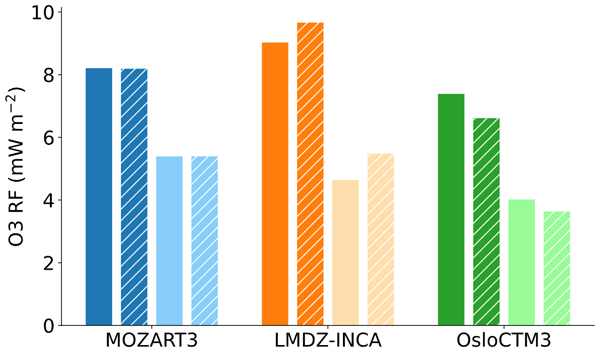
Zosia Staniaszek, Didier A. Hauglustaine, Yann Cohen, Agnieszka Skowron, Sigrun Matthes, Robin Thor, and Marianne T. Lund
Atmos. Chem. Phys., 26, 7985–7999, https://doi.org/10.5194/acp-26-7985-2026, https://doi.org/10.5194/acp-26-7985-2026, 2026
Short summary
Short summary
NOx emissions from aircraft affect the climate indirectly, by changing greenhouse gas concentrations. We explore whether the NOx emissions from aviation would have a different effect in different potential future climate states, i.e. a high pollution and low pollution case. The three models we use show varied responses for how this background state alters the climate effects of the NOx emissions. This shows the continuing need to improve our understanding of non-CO2 aviation impacts.
Christine Frömming, Volker Grewe, Sigrun Matthes, Simone Dietmüller, Patrick Peter, Katrin Dahlmann, and Patrick Jöckel
J. Env. Com. Air Transp. Sys. Discuss., https://doi.org/10.5194/jecats-2026-7, https://doi.org/10.5194/jecats-2026-7, 2026
Revised manuscript under review for JECATS
Short summary
Short summary
Aviation non-CO2 climate effects could be reduced through rerouting using Climate Change Functions (CCFs) and its surrogate aCCFs. This study expands CCFs regionally and seasonally and enables a comparison with aCCFs. ACCFs simplify complex processes but reproduce magnitudes and most gradients, though they underestimate variability compared to detailed CCF simulations and limitations to certain altitudes were revealed. The present study promotes future development of refined and extended aCCFs.
Yann Cohen, Didier Hauglustaine, Zosia Staniaszek, Marianne Tronstad Lund, Irene Dedoussi, Sigrun Matthes, Flávio Quadros, Mattia Righi, Agnieszka Skowron, and Robin Thor
Atmos. Chem. Phys., 26, 5983–6013, https://doi.org/10.5194/acp-26-5983-2026, https://doi.org/10.5194/acp-26-5983-2026, 2026
Short summary
Short summary
Non-CO2 effects from aviation on climate show large uncertainties. Among them, this study investigates the present-day impact of nitrogen oxides (through ozone and methane) and aerosols produced by aviation on atmospheric composition and therefore on climate, using a global-model intercomparison. Our results show a good consistency between the models for gaseous chemistry, but they also highlight the need for more accurate comparisons and further model development for aerosol parameterization.
Elena De La Torre Castro, Christof G. Beer, Tina Jurkat-Witschas, Daniel Sauer, Mattia Righi, Johannes Hendricks, and Christiane Voigt
Atmos. Chem. Phys., 26, 5879–5899, https://doi.org/10.5194/acp-26-5879-2026, https://doi.org/10.5194/acp-26-5879-2026, 2026
Short summary
Short summary
Ice nucleating particles strongly influence cirrus cloud properties but remain difficult to measure at cirrus temperatures. By combining EMAC (ECHAM/MESSy Atmospheric Chemistry) model simulations with in situ observations from the CIRRUS-HL (Cirrus in High-Latitudes) campaign, we investigate aerosol-cirrus interactions across latitudes. While the model generally agrees with observations, it overestimates ice crystal number concentrations detrained from convection, which we correct applying a new radius-temperature parametrization from the observations.
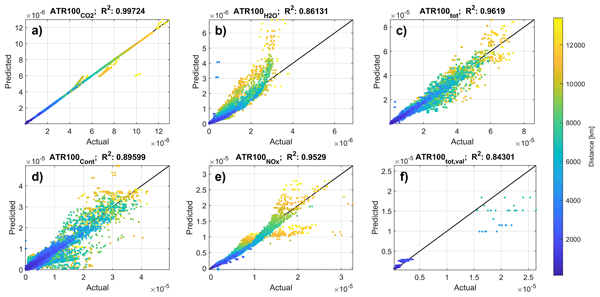
Hannes Bruder, Robin N. Thor, Malte Niklaß, Katrin Dahlmann, Roland Eichinger, Florian Linke, Volker Grewe, Sigrun Matthes, and Simon Unterstrasser
Geosci. Model Dev., 19, 3551–3567, https://doi.org/10.5194/gmd-19-3551-2026, https://doi.org/10.5194/gmd-19-3551-2026, 2026
Short summary
Short summary
We develop an easy-to-use tool to estimate the per-flight climate effect of CO2 and non-CO2 emissions, based only on aircraft size as well as origin and destination airports. The implemented model results from a comparison of Multiple and Symbolic Regression approaches and exhibits a mean relative error of 21 % with respect to climate response model results. The simplified method is designed for climate footprint assessment and covers jet-powered passenger aircraft with over 20 seats.
Jin Maruhashi, Mattia Righi, Monica Sharma, Johannes Hendricks, Patrick Jöckel, Volker Grewe, and Irene C. Dedoussi
Geosci. Model Dev., 19, 2747–2784, https://doi.org/10.5194/gmd-19-2747-2026, https://doi.org/10.5194/gmd-19-2747-2026, 2026
Short summary
Short summary
Aerosol-cloud interactions remain a major source of uncertainty in assessing aviation's net climate impact. We develop and evaluate a new Lagrangian tagging model that tracks aviation-emitted SO2 and H2SO4 as they are chemically transformed into SO4 aerosols and transported throughout the atmosphere. This development allows the identification of atmospheric regions with elevated potential for aerosol–cloud interactions driven by SO4 from aircraft.
Sigrun Matthes, Klaus Gierens, Björn Beckmann, Luca Bugliaro, Simone Dietmüller, Christine Frömming, Maleen Hanst, Sina Hofer, Julian Jene, Simon Kirschler, Carmen G. Köhler, Alexander Lau, Ralph Leemüller, Aline Liedtke, Max Mendiguchia Meuser, Patrick Peter, Vanessa Santos Gabriel, Ines Köhler, Gerd Saueressig, Linda Schlemmer, Jonas Sperling, Swen Schlobach, Ralph Schultz, Kristina von Sack, and Nathalie Waltenberg
J. Env. Com. Air Transp. Sys. Discuss., https://doi.org/10.5194/jecats-2026-3, https://doi.org/10.5194/jecats-2026-3, 2026
Revised manuscript accepted for JECATS
Short summary
Short summary
Operational strategies such as eco-efficient flight routing have potential to reduce aviation’s climate effect. A collaborative workflow integrating aviation weather forecasting, flight planning, air traffic control, and climate benefit assessment was developed and tested in D-KULT. Innovative developments demonstrate substantial progress on how to identify alternative trajectories but also highlight remaining challenges, including uncertainties in weather forecast and non-CO2 climate effects.
Volker Grewe, Simon Blakey, Florian Linke, Sigrun Matthes, Jan Middel, Radu Mirea, Ayce Celikel, David Raper, Feijia Yin, and Xin Zhao
J. Env. Com. Air Transp. Sys., 1, 1, https://doi.org/10.5194/jecats-1-1-2026, https://doi.org/10.5194/jecats-1-1-2026, 2026
Short summary
Short summary
The Journal of Environmentally Compatible Air Transport System (JECATS) is a not-for-profit international scientific journal dedicated to aspects of the air transport system with a focus on the environmental implications. JECATS combines areas of aerospace engineering, fuels, environmental analysis, climate change, economics, aviation climate mitigation, circularity and policy analysis. It includes aviation transport-related aspects and environmental effects from local to global scales.
Mattia Righi, Baptiste Testa, Christof G. Beer, Johannes Hendricks, and Zamin A. Kanji
Atmos. Chem. Phys., 25, 18341–18353, https://doi.org/10.5194/acp-25-18341-2025, https://doi.org/10.5194/acp-25-18341-2025, 2025
Short summary
Short summary
The effective radiative forcing due to the effect of aviation soot on natural cirrus clouds is likely very small, thus confirming most previous studies, but for the first time with the support of laboratory measurements specifically targeting aviation soot and its ice nucleation ability.
Monica Sharma, Mattia Righi, Johannes Hendricks, Anja Schmidt, Daniel Sauer, and Volker Grewe
Geosci. Model Dev., 18, 8485–8510, https://doi.org/10.5194/gmd-18-8485-2025, https://doi.org/10.5194/gmd-18-8485-2025, 2025
Short summary
Short summary
A plume model is developed to simulate aerosol microphysics in a dispersing aircraft plume, including interactions between ice crystals and aerosols in vortex regime. Compared to an instantaneous dispersion approach, the plume approach estimates 15 % lower aviation aerosol number concentrations, due to more efficient coagulation at plume scale. The model is sensitive to background conditions and initialization parameters, such as ice crystal number concentration and fuel sulfur content.
Felix Rauch, Corentin Henry, Manuel Mühlhaus, Franz Kurz, Jens Hellekes, and Nina Merkle
Int. Arch. Photogramm. Remote Sens. Spatial Inf. Sci., XLVIII-4-W16-2025, 83–89, https://doi.org/10.5194/isprs-archives-XLVIII-4-W16-2025-83-2025, https://doi.org/10.5194/isprs-archives-XLVIII-4-W16-2025-83-2025, 2025
Reza Bahmanyar, Jens Hellekes, Manuel Mühlhaus, Veronika Gstaiger, and Franz Kurz
ISPRS Ann. Photogramm. Remote Sens. Spatial Inf. Sci., X-G-2025, 151–158, https://doi.org/10.5194/isprs-annals-X-G-2025-151-2025, https://doi.org/10.5194/isprs-annals-X-G-2025-151-2025, 2025
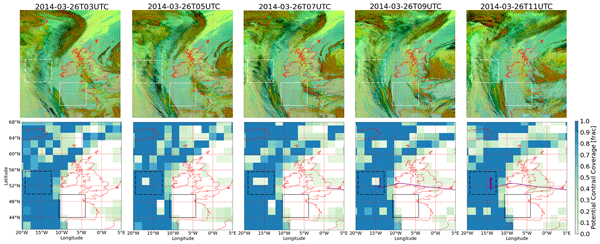
Patrick Peter, Sigrun Matthes, Christine Frömming, Patrick Jöckel, Luca Bugliaro, Andreas Giez, Martina Krämer, and Volker Grewe
Atmos. Chem. Phys., 25, 5911–5934, https://doi.org/10.5194/acp-25-5911-2025, https://doi.org/10.5194/acp-25-5911-2025, 2025
Short summary
Short summary
Our study examines how well the global climate model EMAC (ECHAM/MESSy Atmospheric Chemistry) predicts contrail formation by analysing temperature and humidity – two key factors for contrail development and persistence. The model underestimates temperature, leading to an overprediction of contrail formation and larger ice-supersaturated regions. Adjusting the model improves temperature accuracy but adds uncertainties. Better predictions of contrail formation areas can help optimise flight tracks to reduce aviation's climate effect.
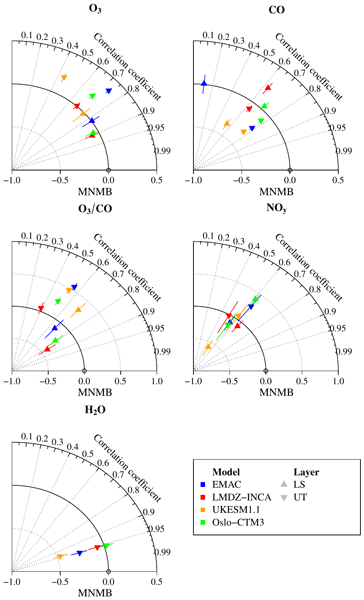
Yann Cohen, Didier Hauglustaine, Nicolas Bellouin, Marianne Tronstad Lund, Sigrun Matthes, Agnieszka Skowron, Robin Thor, Ulrich Bundke, Andreas Petzold, Susanne Rohs, Valérie Thouret, Andreas Zahn, and Helmut Ziereis
Atmos. Chem. Phys., 25, 5793–5836, https://doi.org/10.5194/acp-25-5793-2025, https://doi.org/10.5194/acp-25-5793-2025, 2025
Short summary
Short summary
The chemical composition of the atmosphere near the tropopause is a key parameter for evaluating the climate impact of subsonic aviation pollutants. This study uses in situ data collected aboard passenger aircraft to assess the ability of four chemistry–climate models to reproduce (bi-)decadal climatologies of ozone, carbon monoxide, water vapour, and reactive nitrogen in this region. The models reproduce the very distinct ozone seasonality in the upper troposphere and in the lower stratosphere well.
Franz Kurz, Nina Merkle, Corentin Henry, Reza Bahmanyar, Felix Rauch, Jens Hellekes, Veronika Gstaiger, Dominik Rosenbaum, and Peter Reinartz
Int. Arch. Photogramm. Remote Sens. Spatial Inf. Sci., XLVIII-M-6-2025, 189–195, https://doi.org/10.5194/isprs-archives-XLVIII-M-6-2025-189-2025, https://doi.org/10.5194/isprs-archives-XLVIII-M-6-2025-189-2025, 2025
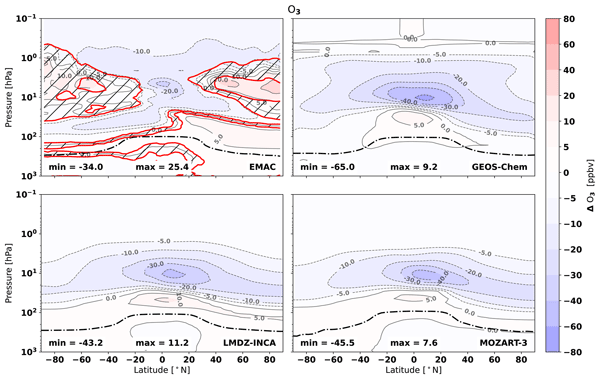
Jurriaan A. van 't Hoff, Didier Hauglustaine, Johannes Pletzer, Agnieszka Skowron, Volker Grewe, Sigrun Matthes, Maximilian M. Meuser, Robin N. Thor, and Irene C. Dedoussi
Atmos. Chem. Phys., 25, 2515–2550, https://doi.org/10.5194/acp-25-2515-2025, https://doi.org/10.5194/acp-25-2515-2025, 2025
Short summary
Short summary
Civil supersonic aircraft may return in the near future, and their emissions could lead to atmospheric changes which are detrimental to public health and the climate. We use four atmospheric chemistry models and show that emissions from a future supersonic aircraft fleet increase stratospheric nitrogen and water vapor levels, while depleting the global ozone column and leading to increases in radiative forcing. Their impacts can be reduced by reducing NOx emissions or the cruise altitude.
Jingmin Li, Mattia Righi, Johannes Hendricks, Christof G. Beer, Ulrike Burkhardt, and Anja Schmidt
Atmos. Chem. Phys., 24, 12727–12747, https://doi.org/10.5194/acp-24-12727-2024, https://doi.org/10.5194/acp-24-12727-2024, 2024
Short summary
Short summary
Aiming to understand underlying patterns and trends in aerosols, we characterize the spatial patterns and long-term evolution of lower tropospheric aerosols by clustering multiple aerosol properties from preindustrial times to the year 2050 under three Shared
Socioeconomic Pathway scenarios. The results provide a clear and condensed picture of the spatial extent and distribution of aerosols for different time periods and emission scenarios.
Socioeconomic Pathway scenarios. The results provide a clear and condensed picture of the spatial extent and distribution of aerosols for different time periods and emission scenarios.
Mariano Mertens, Sabine Brinkop, Phoebe Graf, Volker Grewe, Johannes Hendricks, Patrick Jöckel, Anna Lanteri, Sigrun Matthes, Vanessa S. Rieger, Mattia Righi, and Robin N. Thor
Atmos. Chem. Phys., 24, 12079–12106, https://doi.org/10.5194/acp-24-12079-2024, https://doi.org/10.5194/acp-24-12079-2024, 2024
Short summary
Short summary
We quantified the contributions of land transport, shipping, and aviation emissions to tropospheric ozone; its radiative forcing; and the reductions of the methane lifetime using chemistry-climate model simulations. The contributions were analysed for the conditions of 2015 and for three projections for the year 2050. The results highlight the challenges of mitigating ozone formed by emissions of the transport sector, caused by the non-linearitiy of the ozone chemistry and the long lifetime.
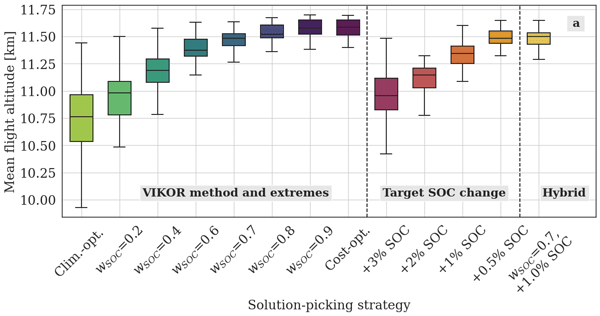
Federica Castino, Feijia Yin, Volker Grewe, Hiroshi Yamashita, Sigrun Matthes, Simone Dietmüller, Sabine Baumann, Manuel Soler, Abolfazl Simorgh, Maximilian Mendiguchia Meuser, Florian Linke, and Benjamin Lührs
Geosci. Model Dev., 17, 4031–4052, https://doi.org/10.5194/gmd-17-4031-2024, https://doi.org/10.5194/gmd-17-4031-2024, 2024
Short summary
Short summary
We introduce SolFinder 1.0, a decision-making tool to select trade-offs between different objective functions for optimal aircraft trajectories, including fuel use, flight time, NOx emissions, contrail distance, and climate impact. The module is included in the AirTraf 3.0 submodel and uses weather conditions simulated by the EMAC atmospheric model. This paper focuses on the ability of SolFinder to identify eco-efficient trajectories, reducing a flight's climate impact at limited cost penalties.
Christof G. Beer, Johannes Hendricks, and Mattia Righi
Atmos. Chem. Phys., 24, 3217–3240, https://doi.org/10.5194/acp-24-3217-2024, https://doi.org/10.5194/acp-24-3217-2024, 2024
Short summary
Short summary
Ice-nucleating particles (INPs) have important influences on cirrus clouds and the climate system; however, the understanding of their global impacts is still uncertain. We perform numerical simulations with a global aerosol–climate model to analyse INP-induced cirrus changes and the resulting climate impacts. We evaluate various sources of uncertainties, e.g. the ice-nucleating ability of INPs and the role of model dynamics, and provide a new estimate for the global INP–cirrus effect.
M. Mühlhaus, F. Kurz, A. R. Guridi Tartas, R. Bahmanyar, S. M. Azimi, and J. Hellekes
ISPRS Ann. Photogramm. Remote Sens. Spatial Inf. Sci., X-1-W1-2023, 371–378, https://doi.org/10.5194/isprs-annals-X-1-W1-2023-371-2023, https://doi.org/10.5194/isprs-annals-X-1-W1-2023-371-2023, 2023
Sigrun Matthes, Simone Dietmüller, Katrin Dahlmann, Christine Frömming, Patrick Peter, Hiroshi Yamashita, Volker Grewe, Feijia Yin, and Federica Castino
Geosci. Model Dev. Discuss., https://doi.org/10.5194/gmd-2023-92, https://doi.org/10.5194/gmd-2023-92, 2023
Revised manuscript not accepted
Short summary
Short summary
Aviation aims to reduce its climate effect by identifying alternative climate-optimized aircraft trajectories. Such routing strategies requires a dedicated meteorological service in order to inform on regions of the atmosphere where aviation non-CO2 emissions have a large climate effect, e.g. by contrail formation or nitrogen-oxide (NOx)-induced ozone formation. This study presents calibration factors for individual non-CO2 effects by comparing with the climate response model AirClim.
Mattia Righi, Johannes Hendricks, and Sabine Brinkop
Earth Syst. Dynam., 14, 835–859, https://doi.org/10.5194/esd-14-835-2023, https://doi.org/10.5194/esd-14-835-2023, 2023
Short summary
Short summary
A global climate model is applied to quantify the impact of land transport, shipping, and aviation on aerosol and climate. The simulations show that these sectors provide relevant contributions to aerosol concentrations on the global scale and have a significant cooling effect on climate, which partly offsets their CO2 warming. Future projections under different scenarios show how the transport impacts can be related to the underlying storylines, with relevant consequences for policy-making.
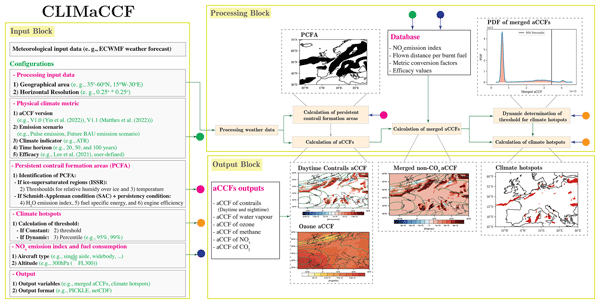
Simone Dietmüller, Sigrun Matthes, Katrin Dahlmann, Hiroshi Yamashita, Abolfazl Simorgh, Manuel Soler, Florian Linke, Benjamin Lührs, Maximilian M. Meuser, Christian Weder, Volker Grewe, Feijia Yin, and Federica Castino
Geosci. Model Dev., 16, 4405–4425, https://doi.org/10.5194/gmd-16-4405-2023, https://doi.org/10.5194/gmd-16-4405-2023, 2023
Short summary
Short summary
Climate-optimized aircraft trajectories avoid atmospheric regions with a large climate impact due to aviation emissions. This requires spatially and temporally resolved information on aviation's climate impact. We propose using algorithmic climate change functions (aCCFs) for CO2 and non-CO2 effects (ozone, methane, water vapor, contrail cirrus). Merged aCCFs combine individual aCCFs by assuming aircraft-specific parameters and climate metrics. Technically this is done with a Python library.
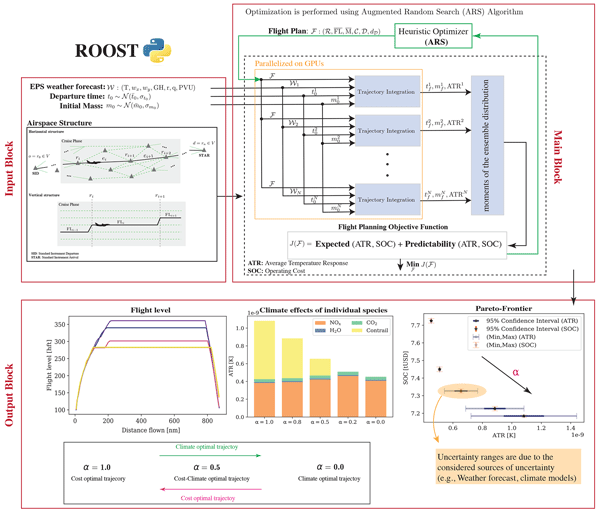
Abolfazl Simorgh, Manuel Soler, Daniel González-Arribas, Florian Linke, Benjamin Lührs, Maximilian M. Meuser, Simone Dietmüller, Sigrun Matthes, Hiroshi Yamashita, Feijia Yin, Federica Castino, Volker Grewe, and Sabine Baumann
Geosci. Model Dev., 16, 3723–3748, https://doi.org/10.5194/gmd-16-3723-2023, https://doi.org/10.5194/gmd-16-3723-2023, 2023
Short summary
Short summary
This paper addresses the robust climate optimal trajectory planning problem under uncertain meteorological conditions within the structured airspace. Based on the optimization methodology, a Python library has been developed, which can be accessed using the following DOI: https://doi.org/10.5281/zenodo.7121862. The developed tool is capable of providing robust trajectories taking into account all probable realizations of meteorological conditions provided by an EPS computationally very fast.
Robin N. Thor, Malte Niklaß, Katrin Dahlmann, Florian Linke, Volker Grewe, and Sigrun Matthes
Geosci. Model Dev. Discuss., https://doi.org/10.5194/gmd-2023-126, https://doi.org/10.5194/gmd-2023-126, 2023
Preprint withdrawn
Short summary
Short summary
We develop a simplied method to estimate the climate effects of single flights through CO2 and non-CO2 effects, exclusively based on the aircraft seat category as well as the origin and destination airports. The derived climate effect functions exhibit a mean relative error of only 15 % with respect to results from a climate response model. The method is designed for climate footprint assessments and covers most commerical airlines with seat capacities starting from 101 passengers.
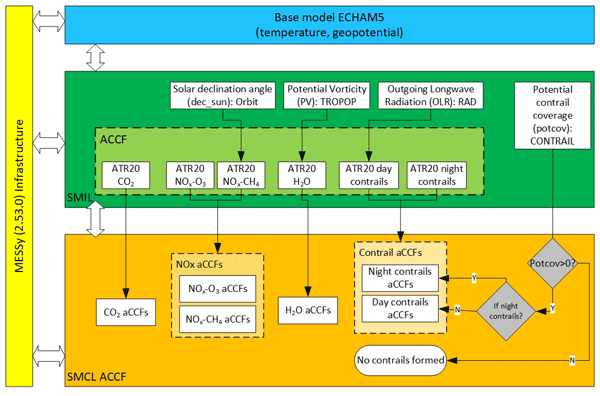
Feijia Yin, Volker Grewe, Federica Castino, Pratik Rao, Sigrun Matthes, Katrin Dahlmann, Simone Dietmüller, Christine Frömming, Hiroshi Yamashita, Patrick Peter, Emma Klingaman, Keith P. Shine, Benjamin Lührs, and Florian Linke
Geosci. Model Dev., 16, 3313–3334, https://doi.org/10.5194/gmd-16-3313-2023, https://doi.org/10.5194/gmd-16-3313-2023, 2023
Short summary
Short summary
This paper describes a newly developed submodel ACCF V1.0 based on the MESSy 2.53.0 infrastructure. The ACCF V1.0 is based on the prototype algorithmic climate change functions (aCCFs) v1.0 to enable climate-optimized flight trajectories. One highlight of this paper is that we describe a consistent full set of aCCFs formulas with respect to fuel scenario and metrics. We demonstrate the usage of the ACCF submodel using AirTraf V2.0 to optimize trajectories for cost and climate impact.
Robin N. Thor, Mariano Mertens, Sigrun Matthes, Mattia Righi, Johannes Hendricks, Sabine Brinkop, Phoebe Graf, Volker Grewe, Patrick Jöckel, and Steven Smith
Geosci. Model Dev., 16, 1459–1466, https://doi.org/10.5194/gmd-16-1459-2023, https://doi.org/10.5194/gmd-16-1459-2023, 2023
Short summary
Short summary
We report on an inconsistency in the latitudinal distribution of aviation emissions between two versions of a data product which is widely used by researchers. From the available documentation, we do not expect such an inconsistency. We run a chemistry–climate model to compute the effect of the inconsistency in emissions on atmospheric chemistry and radiation and find that the radiative forcing associated with aviation ozone is 7.6 % higher when using the less recent version of the data.
Christof G. Beer, Johannes Hendricks, and Mattia Righi
Atmos. Chem. Phys., 22, 15887–15907, https://doi.org/10.5194/acp-22-15887-2022, https://doi.org/10.5194/acp-22-15887-2022, 2022
Short summary
Short summary
Ice-nucleating particles (INPs) have important influences on cirrus clouds and the climate system; however, their global atmospheric distribution in the cirrus regime is still very uncertain. We present a global climatology of INPs under cirrus conditions derived from model simulations, considering the mineral dust, soot, crystalline ammonium sulfate, and glassy organics INP types. The comparison of respective INP concentrations indicates the large importance of ammonium sulfate particles.
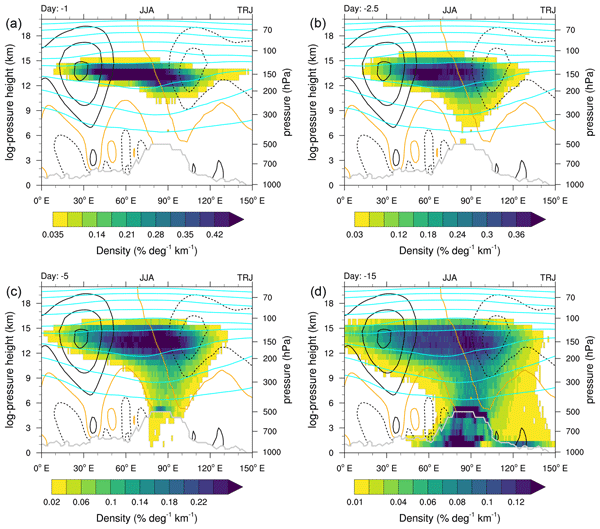
Matthias Nützel, Sabine Brinkop, Martin Dameris, Hella Garny, Patrick Jöckel, Laura L. Pan, and Mijeong Park
Atmos. Chem. Phys., 22, 15659–15683, https://doi.org/10.5194/acp-22-15659-2022, https://doi.org/10.5194/acp-22-15659-2022, 2022
Short summary
Short summary
During the Asian summer monsoon season, a large high-pressure system is present at levels close to the tropopause above Asia. We analyse how air masses are transported from surface levels to this high-pressure system, which shows distinct features from the surrounding air masses. To this end, we employ multiannual data from two complementary models that allow us to analyse the climatology as well as the interannual and intraseasonal variability of these transport pathways.
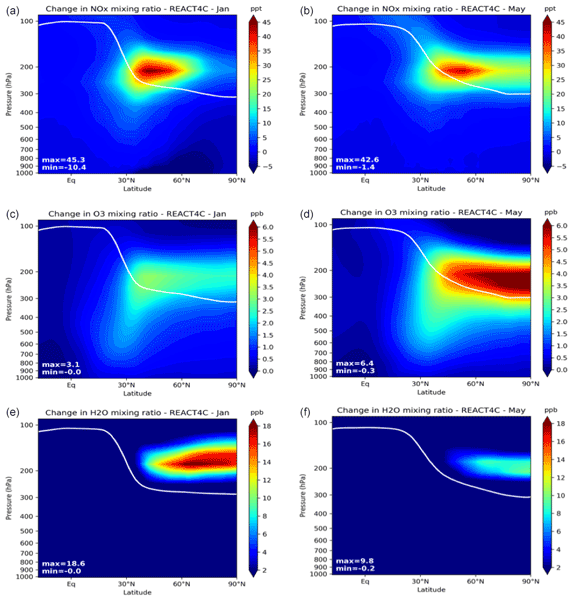
Etienne Terrenoire, Didier A. Hauglustaine, Yann Cohen, Anne Cozic, Richard Valorso, Franck Lefèvre, and Sigrun Matthes
Atmos. Chem. Phys., 22, 11987–12023, https://doi.org/10.5194/acp-22-11987-2022, https://doi.org/10.5194/acp-22-11987-2022, 2022
Short summary
Short summary
Aviation NOx emissions not only have an impact on global climate by changing ozone and methane levels in the atmosphere, but also contribute to the deterioration of local air quality. The LMDZ-INCA global model is applied to re-evaluate the impact of aircraft NOx and aerosol emissions on climate. We investigate the impact of present-day and future (2050) aircraft emissions on atmospheric composition and the associated radiative forcings of climate for ozone, methane and aerosol direct forcings.

Simon Kirschler, Christiane Voigt, Bruce Anderson, Ramon Campos Braga, Gao Chen, Andrea F. Corral, Ewan Crosbie, Hossein Dadashazar, Richard A. Ferrare, Valerian Hahn, Johannes Hendricks, Stefan Kaufmann, Richard Moore, Mira L. Pöhlker, Claire Robinson, Amy J. Scarino, Dominik Schollmayer, Michael A. Shook, K. Lee Thornhill, Edward Winstead, Luke D. Ziemba, and Armin Sorooshian
Atmos. Chem. Phys., 22, 8299–8319, https://doi.org/10.5194/acp-22-8299-2022, https://doi.org/10.5194/acp-22-8299-2022, 2022
Short summary
Short summary
In this study we show that the vertical velocity dominantly impacts the cloud droplet number concentration (NC) of low-level clouds over the western North Atlantic in the winter and summer season, while the cloud condensation nuclei concentration, aerosol size distribution and chemical composition impact NC within a season. The observational data presented in this study can evaluate and improve the representation of aerosol–cloud interactions for a wide range of conditions.
F. Kurz, P. Mendes, V. Gstaiger, R. Bahmanyar, P. d’Angelo, S. M. Azimi, S. Auer, N. Merkle, C. Henry, D. Rosenbaum, J. Hellekes, H. Runge, F. Toran, and P. Reinartz
ISPRS Ann. Photogramm. Remote Sens. Spatial Inf. Sci., V-1-2022, 221–226, https://doi.org/10.5194/isprs-annals-V-1-2022-221-2022, https://doi.org/10.5194/isprs-annals-V-1-2022-221-2022, 2022
Jingmin Li, Johannes Hendricks, Mattia Righi, and Christof G. Beer
Geosci. Model Dev., 15, 509–533, https://doi.org/10.5194/gmd-15-509-2022, https://doi.org/10.5194/gmd-15-509-2022, 2022
Short summary
Short summary
The growing complexity of global aerosol models results in a large number of parameters that describe the aerosol number, size, and composition. This makes the analysis, evaluation, and interpretation of the model results a challenge. To overcome this difficulty, we apply a machine learning classification method to identify clusters of specific aerosol types in global aerosol simulations. Our results demonstrate the spatial distributions and characteristics of these identified aerosol clusters.
Mattia Righi, Johannes Hendricks, and Christof Gerhard Beer
Atmos. Chem. Phys., 21, 17267–17289, https://doi.org/10.5194/acp-21-17267-2021, https://doi.org/10.5194/acp-21-17267-2021, 2021
Short summary
Short summary
A global climate model is applied to simulate the impact of aviation soot on natural cirrus clouds. A large number of numerical experiments are performed to analyse how the quantification of the resulting climate impact is affected by known uncertainties. These concern the ability of aviation soot to nucleate ice and the role of model dynamics. Our results show that both aspects are important for the quantification of this effect and that discrepancies among different model studies still exist.
Cited articles
ACI: Traffic statistics, Tech. rep., Airport Council International, https://aci.aero/resources/data-center/ (last access: 6 Febraury 2026), 2019. a
Al-Falahi, M., Tarasiuk, T., Jayasinghe, S., Jin, Z., Enshaei, H., and Guerrero, J.: AC ship microgrids: control and power management optimization, Energies, 11, 1458, https://doi.org/10.3390/en11061458, 2018. a
Allekotte, M., Biemann, K., C., H., Colson, M., and Knörr, W.: Aktualisierung der Modelle TREMOD/TREMOD-MM für die Emissionsberichterstattung 2020 (Berichtsperiode 1990–2018): Berichtsteil TREMOD, Tech. rep., ifeu – Institut für Energie- und Umweltforschung, Heidelberg, Germany, https://www.umweltbundesamt.de/publikationen/aktualisierung-tremod-2019 (last access: 27 February 2026), 2020. a
Aritua, B., Cheng, L., van Liere, R., and de Leijer, H.: Blue Routes for a New Era: Developing Inland Waterways Transportation in China, Tech. rep., World Bank, Washington, DC, USA, https://doi.org/10.1596/978-1-4648-1584-3, 2020. a, b
Banyś, P., Heymann, F., and Gucma, M.: Occurrence of unknown sensor data within AIS dynamic messages, Naše More, 67, 126–137, https://doi.org/10.17818/NM/2020/2.5, 2020. a, b, c
Banyś, P., Gucma, M., and Shradha Fowdur, J.: Assessment of possible misidentification of AIS transponders within AIS data due to bit inversions of MMSI, Naše More, 71, 30–37, https://doi.org/10.17818/nm/2024/1.5, 2024. a
Banyś, P., Fitz, A., Suhr, B., Hellekes, J., Brinkop, S., Hendricks, J., Schulz, A., and Righi, M.: ELK – Global Emission Inventory – Shipping Sector, 2019, DLR [data set], https://doi.org/10.15489/lhqawfes5755, 2025. a
BASt: Automatic counting stations 2019, https://www.bast.de/DE/Themen/Digitales/HF_1/Massnahmen/verkehrszaehlung/Daten/2019_1/Jawe2019.html?nn=414410 (last access: 6 February 2026), 2019. a
Belzer, D. B.: A Comprehensive System of Energy Intensity Indicators for the U.S. Methods, Data and Key Trends, Tech. Rep. PNNL-22267, Pacific Northwest National Laboratory, Richland, WA, USA, https://www.pnnl.gov/main/publications/external/technical_reports/pnnl-22267.pdf (last access: 27 February 2026), 2014. a
Bickel, M., Ponater, M., Burkhardt, U., Righi, M., Hendricks, J., and Jöckel, P.: Contrail cirrus climate impact: from radiative forcing to surface temperature change, J. Climate, 38, 1895–1912, https://doi.org/10.1175/JCLI-D-24-0245.1, 2025. a, b
BMV: Verkehr in Zahlen 2025/2026, https://www.bmv.de/SharedDocs/DE/Anlage/G/verkehr-in-zahlen25-26-pdf.pdf?__blob=publicationFile (last access: 6 February 2026), 2025. a
Bray, L. G., Dager, C. A., Henry, R. L., and Koroa, M. C.: River efficiency, fuel taxes, and modal shifts: Tennessee Valley Authority model assists policy makers, TR News, 18–22, https://onlinepubs.trb.org/onlinepubs/mb/TRNews221Features.pdf (last access: 27 February 2026), 2002. a
Burkhardt, U. and Kärcher, B.: Global radiative forcing from contrail cirrus, Nat. Clim. Change, 1, 54–58, https://doi.org/10.1038/nclimate1068, 2011. a, b
CARB: EMFAC 2021, Tech. rep., California Air Resources Board, https://ww2.arb.ca.gov/our-work/programs/msei/emfac2021-model-and-documentation (last access: 6 February 2026), 2021. a
CCNR: Annual Report 2023: Inland Navigation in Europe Market Observation, Tech. rep., Central Commission for the Navigation of the Rhine, https://inland-navigation-market.org/wp-content/uploads/2023/10/CCNR_annual_report_EN_2023_WEB-1.pdf (last access: 6 February 2026), 2023. a
Corbett, J. J. and Fischbeck, P.: Emissions from ships, Science, 278, https://doi.org/10.1126/science.278.5339.823, 1997. a
Crippa, M., Solazzo, E., Huang, G., Guizzardi, D., Koffi, E., Muntean, M., Schieberle, C., Friedrich, R., and Janssens-Maenhout, G.: High resolution temporal profiles in the emissions database for global atmospheric research, Sci. Data, 7, https://doi.org/10.1038/s41597-020-0462-2, 2020. a
Crippa, M., Guizzardi, D., Schaaf, E., Monforti-Ferrario, F., Quadrelli, R., Risquez Martin, A., Rossi, S., Vignati, E., Muntean, M., Brandao De Melo, J., Oom, D., Pagani, F., Banja, M., Taghavi-Moharamli, P., Köykkä, J., Grassi, G., Branco, A., and San-Miguel, J.: GHG emissions of all world countries – 2023, Tech. rep., European Commission, Luxembourg, https://doi.org/10.2760/953322, 2023. a
Crippa, M., Guizzardi, D., Pagani, F., Schiavina, M., Melchiorri, M., Pisoni, E., Graziosi, F., Muntean, M., Maes, J., Dijkstra, L., Van Damme, M., Clarisse, L., and Coheur, P.: Insights into the spatial distribution of global, national, and subnational greenhouse gas emissions in the Emissions Database for Global Atmospheric Research (EDGAR v8.0), Earth Syst. Sci. Data, 16, 2811–2830, https://doi.org/10.5194/essd-16-2811-2024, 2024. a, b
Crisp, D.: The State-of-the-Art in Ship Detection in Synthetic Aperture Radar Imagery, AD-a426 096, Australian Government – Department of Defence, https://apps.dtic.mil/sti/tr/pdf/ADA426096.pdf (last access: 6 February 2026), 2004. a
Dahl, A., Gharibi, A., Swietlicki, E., Gudmundsson, A., Bohgard, M., Ljungman, A., Blomqvist, G., and Gustafsson, M.: Traffic-generated emissions of ultrafine particles from pavement–tire interface, Atmos. Environ., 40, 1314–1323, https://doi.org/10.1016/j.atmosenv.2005.10.029, 2006. a
Deidewig, F., Doepelheuer, A., and Lecht, M.: Methods to assess aircraft engine emissions in flight, in: 20th Congress of the Int. Council of the Aeronautical Sciences 1996 (ICAS), Sorrento, Italy, https://elib.dlr.de/38317/ (last access: 26 February 2026), 1996. a
DfT: Road Traffic Statistics, Tech. rep., UK Department for Transport, https://storage.googleapis.com/dft-statistics/road-traffic/all-traffic-data-metadata.pdf (last access: 6 February 2026), 2014. a
DfT: Average annual daily flow (AADF) – major and minor roads, Tech. rep., UK Department for Transport, https://storage.googleapis.com/dft-statistics/road-traffic/downloads/data-gov-uk/dft_traffic_counts_aadf.zip (last access: 6 February 2026), 2019. a
Döpelheuer, A.: Anwendungsorientierte Verfahren zur Bestimmung von CO, HC und Ruß aus Luftfahrttriebwerten, Tech. Rep. DLR Forschungsbericht 2002–10, DLR Institut für Antriebstechnik, https://elib.dlr.de/49148/ (last access: 27 February 2026), 2002. a
Draheim, P., Pregger, T., Scholz, Y., Hellekes, J., Brinkop, S., Hendricks, J., Schulz, A., and Righi, M.: ELK – Global Emission Inventory – Energy-for-Transport Sector, 2019, DLR [data set], https://doi.org/10.15489/gixadaq6ds98, 2025. a
DuBois, D. and Paynter, G.: Fuel Flow Method2 for estimating aircraft emissions, J. Aerosp., 115, 1–14, https://doi.org/10.4271/2006-01-1987, 2006. a, b
EASA: Introduction to the ICAO Engine Emissions Databank, Tech. Rep. TE.GEN.00301-006, European Union Aviation Safety Agency (EASA), Cologne, Germany, https://www.easa.europa.eu/en/downloads/45576/en (last access: 6 February 2026), 2023. a
Ehrenberger, S., Dasgupta, I., Thomsen, N., Hellekes, J., Löber, M., Brinkop, S., Hendricks, J., Schulz, A., and Righi, M.: ELK – Global Emission Inventory – Land Transport Sector, 2019, DLR [data set], https://doi.org/10.15489/d9dswthdix21, 2025. a
Eurostat: Statistical regions in the European Union and partner countries – NUTS and statistical regions 2021–2022 edition, Publications Office of the European Union, https://doi.org/10.2785/321792, 2022. a, b, c
Eyers, C., Addleton, D., Atkinson, K., Broomhead, M., Christou, R., Elliff, T., Falk, R., Gee, I., Lee, D., Marizy, C., Michot, S., Middel, J., Newton, P., Norman, P., Plohr, M., Raper, D., and Stanciou, N.: AERO2k Global Aviation Emissions Inventories for 2002 and 2025, Tech. rep., QinetiQ LtD, Farnborough, Hants, UK, https://www.yumpu.com/en/document/read/7313363/aero2k- global-aviation-emissions-inventories-for-2002-and-2025 (last access: 27 February 2026), 2005. a
Eyring, V., Köhler, H. W., van Aardenne, J., and Lauer, A.: Emissions from international shipping: 1. The last 50 years, J. Geophys. Res.-Atmos., 110, https://doi.org/10.1029/2004JD005619, 2005. a
Faber, J., Hanayama, S., Zhang, S., Pereda, P., Comer, B., Hauerhof, E., van der Loeff, W. S., Smith, T., Zhang, Y., Kosaka, H., Adachi, M., Bonello, J.-M., Galbraith, C., Gong, Z., Hirata, K., Hummels, D., Kleijn, A., Lee, D. S., Liu, Y., Lucchesi, A., Mao, X., Muraoka, E., Osipova, L., Qian, H., Rutherford, D., de la Fuente, S. S., Yuan, H., Perico, C. V., Wu, L., Sun, D., Yoo, D.-H., and Xing, H.: Fourth IMO Greenhouse Gas Study 2020, Tech. rep., International Maritime Organization, London, UK, https://www.imo.org/en/ourwork/environment/pages/fourth-imo-greenhouse-gas-study-2020.aspx (last access: 26 February 2026), 2020. a, b, c, d, e, f, g, h, i, j, k, l, m
Feng, L., Smith, S. J., Braun, C., Crippa, M., Gidden, M. J., Hoesly, R., Klimont, Z., van Marle, M., van den Berg, M., and van der Werf, G. R.: The generation of gridded emissions data for CMIP6, Geosci. Model Dev., 13, 461–482, https://doi.org/10.5194/gmd-13-461-2020, 2020. a
FHWA: Traffic Monitoring Guide, Tech. rep., Federal Highway Administration, https://rosap.ntl.bts.gov/view/dot/74643 (last access: 6 February 2026), 2022a. a
FHWA: U.S Traffic Volume Data : Special Tabulations, Tech. rep., Federal Highway Administration, https://www.fhwa.dot.gov/policyinformation/tables/tmasdata/#y22 (last access: 6 February 2026), 2022b. a
Fiore, A. M., Naik, V., Spracklen, D. V., Steiner, A., Unger, N., Prather, M., Bergmann, D., Cameron-Smith, P. J., Cionni, I., Collins, W. J., DalsØren, S., Eyring, V., Folberth, G. A., Ginoux, P., Horowitz, L. W., Josse, B., Lamarque, J.-F., MacKenzie, I. A., Nagashima, T., O'Connor, F. M., Righi, M., Rumbold, S. T., Shindell, D. T., Skeie, R. B., Sudo, K., Szopa, S., Takemura, T., and Zeng, G.: Global air quality and climate, Chem. Soc. Rev., 41, 6663, https://doi.org/10.1039/c2cs35095e, 2012. a
FOCA: Aviation Policy and Strategy, Environmental Affairs; Aircraft Piston Engine Emissions, Tech. rep., Federal Department of the Environment, Transport, Energy and Communications DETEC; Federal Office of Civil Aviation, Bern, Switzerland, https://downloads.regulations.gov/EPA-HQ-OAR-2007-0294-0103/content.pdf (last access: 27 February 2026), 2007. a, b
Fruhwirt, D., Sturm, P., Nöst, T., Leonhardt, P., Bode, G., Michael, S., and Rodler, J.: PM emissions from railways – results of tests on a wheel-rail test bench, Transport. Res. D-Tr. E., 122, 103858, https://doi.org/10.1016/j.trd.2023.103858, 2023. a
Gately, C. K. and Hutyra, L. R.: Large uncertainties in urban-scale carbon emissions, J. Geophys. Res.-Atmos., 122, 11242–11260, https://doi.org/10.1002/2017JD027359, 2017. a
Gelhausen, M. C., Berster, P., and Wilken, D.: Airport Capacity Constraints And Strategies For Mitigation – A global Perspective, Academic Press, https://doi.org/10.1016/C2016-0-01894-6, 2019. a
Gettelman, A., Christensen, M. W., Diamond, M. S., Gryspeerdt, E., Manshausen, P., Stier, P., Watson Parris, D., Yang, M., Yoshioka, M., and Yuan, T.: Has reducing ship emissions brought forward global warming?, Geophys. Res. Lett., 51, https://doi.org/10.1029/2024gl109077, 2024. a
Ghosh, A.: Possibilities and challenges for the inclusion of the electric vehicle (EV) to reduce the carbon footprint in the transport sector: a review, Energies, 13, 2602, https://doi.org/10.3390/en13102602, 2020. a
Graver, B., Rutherford, D., and Zheng, S.: CO2 emissions from commercial aviation: 2013, 2018, and 2019, Tech. rep., The International Council on Clean Transportation (ICCT), https://theicct.org/wp-content/uploads/2021/06/CO2-commercial-aviation-oct2020.pdf (last access: 27 February 2026), 2020. a, b
Hagberg, A. A., Schult, D. A., and Swart, P. J.: Exploring network structure, dynamics, and function using NetworkX, in: Proceedings of the 7th Python in Science Conference, edited by: Varoquaux, G., Vaught, T., and Millman, J., Pasadena, CA, USA, 11–15, https://doi.org/10.25080/TCWV9851, 2008. a
Hersbach, H., Bell, B., Berrisford, P., Biavati, G., Horányi, A., Muñoz Sabater, J., Nicolas, J., Peubey, C., Radu, R., Rozum, I., Schepers, D., Simmons, A., Soci, C., Dee, D., and Thépaut, J.-N.: ERA5 hourly data on pressure levels from 1940 to present Copernicus Climate Change Service (C3S) Climate Data Store (CDS) [data set], https://doi.org/10.24381/cds.bd0915c6, 2023. a, b
Hiraishi, T., Nyenzi, B., Odingo, R., Galbally, I., Paciornik, N., and Tichy, M.: Annex 1: Conceptual Basis for Uncertainty Analysis: IPCC Good Practice Guidance and Uncertainty Management in National Greenhouse Gas Inventories, https://www.ipcc.ch/site/assets/uploads/2018/03/A1_Conceptual-1.pdf (last access: 27 February 2026), 2000a. a
Hiraishi, T., Nyenzi, B., Odingo, R., Penman, J., Habetsion, S., Abel, K., Eggleston, S., and Pullus, T.: Chapter 6: Quantifying Uncertainties in Practice: IPCC Good Practice Guidance and Uncertainty Management in National Greenhouse Gas Inventories, https://www.ipcc.ch/site/assets/uploads/2018/03/6_Uncertainty-1.pdf (last access: 27 February 2026), 2000b. a
Hoesly, R. M., Smith, S. J., Feng, L., Klimont, Z., Janssens-Maenhout, G., Pitkanen, T., Seibert, J. J., Vu, L., Andres, R. J., Bolt, R. M., Bond, T. C., Dawidowski, L., Kholod, N., Kurokawa, J.-I., Li, M., Liu, L., Lu, Z., Moura, M. C. P., O'Rourke, P. R., and Zhang, Q.: Historical (1750–2014) anthropogenic emissions of reactive gases and aerosols from the Community Emissions Data System (CEDS), Geosci. Model Dev., 11, 369–408, https://doi.org/10.5194/gmd-11-369-2018, 2018. a, b
Huang, H., Zhou, C., Huang, L., Xiao, C., Wen, Y., Li, J., and Lu, Z.: Inland ship emission inventory and its impact on air quality over the middle Yangtze River, China, Sci. Total Environ., 843, 156770, https://doi.org/10.1016/j.scitotenv.2022.156770, 2022. a
IATA: Air Freight Bills (CASS), Tech. rep., International Air Transport Association, Montreal, Canada, https://www.iata.org/en/services/finance/cass/ (last access: 6 February 2026), 2019. a
ICAO: Annex 16 to the Convention on International Civil Aviation – Environmental Protection – Volume II: Aircraft Engine Emissions, 3rd edn., Tech. rep., International Civil Aviation Organization, https://www.bazl.admin.ch/dam/de/sd-web/2zooNDDnJSFa/icao_annex_16_environmentalprotectionvolumeii-aircraftengineemis.pdf (last access: 27 February 2026), 2008. a, b, c, d
IEA: The Future of Trucks: Implications for energy and the environment, Tech. rep., IEA, Paris, https://www.iea.org/reports/the-future-of-trucks (last access: 6 February 2026), 2017. a
IPCC: Reporting Tables, in: 2006 IPCC Guidelines for National Greenhouse Gas Inventories, Prepared by the National Greenhouse Gas Inventories Programme, edited by: Eggleston, H., Buendia, L., Miwa, K., Ngara, T., and Tanabe, K., book section 8A.2, IGES, Japan, https://www.ipcc-nggip.iges.or.jp/public/2006gl/pdf/1_Volume1/V1_8x_Ch8_An2_ReportingTables.pdf (last access: 27 February 2026), 2006. a
ITU: Recommendation ITU-R M.1371-5 Technical characteristics for an automatic identification system using time division multiple access in the VHF maritime mobile frequency band, Tech. rep., International Telecommunication Union, https://www.itu.int/dms_pubrec/itu-r/rec/m/R-REC-M.1371-5-201402-I!!PDF-E.pdf (last access: 6 February 2026), 2014. a, b, c
Iturbide, M., Gutiérrez, J. M., Alves, L. M., Bedia, J., Cerezo-Mota, R., Cimadevilla, E., Cofiño, A. S., Di Luca, A., Faria, S. H., Gorodetskaya, I. V., Hauser, M., Herrera, S., Hennessy, K., Hewitt, H. T., Jones, R. G., Krakovska, S., Manzanas, R., Martínez-Castro, D., Narisma, G. T., Nurhati, I. S., Pinto, I., Seneviratne, S. I., van den Hurk, B., and Vera, C. S.: An update of IPCC climate reference regions for subcontinental analysis of climate model data: definition and aggregated datasets, Earth Syst. Sci. Data, 12, 2959–2970, https://doi.org/10.5194/essd-12-2959-2020, 2020. a
Jaghdani, T. J. and Ketabchy, M.: The Strategic significance of the Russian Volga River System, Russian Analytical Digest, 304, 22–27, https://doi.org/10.3929/ethz-b-000643679, 2023. a, b
Jalkanen, J.-P., Brink, A., Kalli, J., Pettersson, H., Kukkonen, J., and Stipa, T.: A modelling system for the exhaust emissions of marine traffic and its application in the Baltic Sea area, Atmos. Chem. Phys., 9, 9209–9223, https://doi.org/10.5194/acp-9-9209-2009, 2009. a
Janssens-Maenhout, G., Crippa, M., Guizzardi, D., Muntean, M., Schaaf, E., Dentener, F., Bergamaschi, P., Pagliari, V., Olivier, J. G. J., Peters, J. A. H. W., van Aardenne, J. A., Monni, S., Doering, U., Petrescu, A. M. R., Solazzo, E., and Oreggioni, G. D.: EDGAR v4.3.2 Global Atlas of the three major greenhouse gas emissions for the period 1970–2012, Earth Syst. Sci. Data, 11, 959–1002, https://doi.org/10.5194/essd-11-959-2019, 2019. a
Jaramillo, P., Kahn Ribeiro, S., Newman, P., Dhar, S., Diemuodeke, O., Kajino, T., Lee, D., Nugroho, S., Ou, X., Hammer Strømman, A., and Whitehead, J.: Transport, in: Climate Change 2022: Mitigation of Climate Change. Contribution of Working Group III to the Sixth Assessment Report of the Intergovernmental Panel on Climate Change, edited by: Shukla, P., Skea, J., Slade, R., Khourdajie, A. A., van Diemen, R., McCollum, D., Pathak, M., Some, S., Vyas, P., Fradera, R., Belkacemi, M., Hasija, A., Lisboa, G., Luz, S., and Malley, J., Cambridge University Press, Cambridge, UK and New York, NY, USA, https://doi.org/10.1017/9781009157926.012, 2022. a
Jelinek, F., Carlier, S., and Smith, J.: Advanced Emission Model (AEM3) v1.5 Validation Report, Tech. rep., EUROCONTROL Experimental Centre, Breitgny sur Orge, France, https://www.eurocontrol.int/sites/default/files/library/016a_AEM_Validation.pdf (last access: 27 February 2026), 2004. a
Johansson, L., Jalkanen, J.-P., and Kukkonen, J.: Global assessment of shipping emissions in 2015 on a high spatial and temporal resolution, Atmos. Environ., 167, 403–415, https://doi.org/10.1016/j.atmosenv.2017.08.042, 2017. a, b
Jordan, G. and Henry, M.: IMO2020 regulations accelerate global warming by up to 3 years in UKESM1, Earths Future, 12, e2024EF005011, https://doi.org/10.1029/2024EF005011, 2024. a
Knörr, W., Heidt, C., Schmied, M., and Notte, B.: Aktualisierung der Emissionsberechnung für die Binnenschifffahrt und Übertragung der Daten in TREMOD, https://www.ifeu.de/fileadmin/uploads/IFEU-INFRAS-2013-Aktualisierung-der-Emissionsberechnung-für-die-Binnenschifffahrt-und-Übertragung-der-Daten-in-TREMOD3.pdf (last access: 26 February 2026), 2013. a, b, c
Lamb, W. F., Wiedmann, T., Pongratz, J., Andrew, R., Crippa, M., Olivier, J. G. J., Wiedenhofer, D., Mattioli, G., Khourdajie, A. A., House, J., Pachauri, S., Figueroa, M., Saheb, Y., Slade, R., Hubacek, K., Sun, L., Ribeiro, S. K., Khennas, S., de la Rue du Can, S., Chapungu, L., Davis, S. J., Bashmakov, I., Dai, H., Dhakal, S., Tan, X., Geng, Y., Gu, B., and Minx, J.: A review of trends and drivers of greenhouse gas emissions by sector from 1990 to 2018, Environ. Res. Lett., 16, 073005, https://doi.org/10.1088/1748-9326/abee4e, 2021. a
Lee, D., Fahey, D., Skowron, A., Allen, M., Burkhardt, U., Chen, Q., Doherty, S., Freeman, S., Forster, P., Fuglestvedt, J., Gettelman, A., De León, R., Lim, L., Lund, M., Millar, R., Owen, B., Penner, J., Pitari, G., Prather, M., Sausen, R., and Wilcox, L.: The contribution of global aviation to anthropogenic climate forcing for 2000 to 2018, Atmos. Environ., 244, 117834, https://doi.org/10.1016/j.atmosenv.2020.117834, 2021. a
Lekaki, D., Kastori, M., Papadimitriou, G., Mellios, G., Guizzardi, D., Muntean, M., Crippa, M., Oreggioni, G., and Ntziachristos, L.: Road transport emissions in EDGAR (Emissions Database for Global Atmospheric Research), Atmos. Environ., 324, 120422, https://doi.org/10.1016/j.atmosenv.2024.120422, 2024. a
Lewis, P., Donahue, K., Benitez, J., Doyle, A., Gomez, R., Narukullapati, S. S., O'Brien, T., Olson, B., Reuter, J., Schildt, S., Suico, G., Vij, A., and Vu, K.: Waterborne Competitiveness: U.S. and Foreign Investments in Inland Waterways, Tech. rep., Eno Center for Transportation, https://enotrans.org/wp-content/uploads/2023/02/Waterborne-Competitiveness-Eno-Center-for-Transportation.pdf (last access: 6 February 2026), 2022. a, b
Löber, M., Bondorf, L., Grein, T., Reiland, S., Wieser, S., Epple, F., Philipps, F., and Schripp, T.: Investigations of airborne tire and brake wear particles using a novel vehicle design, Environ. Sci. Pollut. Res., 31, 53521–53531, https://doi.org/10.1007/s11356-024-34543-9, 2024. a
Lund, M. T., Aamaas, B., Stjern, C. W., Klimont, Z., Berntsen, T. K., and Samset, B. H.: A continued role of short-lived climate forcers under the Shared Socioeconomic Pathways, Earth Syst. Dynam., 11, 977–993, https://doi.org/10.5194/esd-11-977-2020, 2020. a
Mastrandrea, M. D., Field, C. B., Stocker, T. F., Edenhofer, O., Ebi, K. L., Frame, D. J., Held, H., Kriegler, E., Mach, K. J., Matschoss, P. R., Plattner, G.-K., Yohe, G. W., and Zwiers, F. W.: Guidance Note for Lead Authors of the IPCC Fifth Assessment Report on Consistent Treatment of Uncertainties, https://pure.mpg.de/rest/items/item_2147184/component/file_2147185/content (last access: 27 February 2026), 2010. a
Mathissen, M., Grigoratos, T., Gramstat, S., Mamakos, A., Vedula, R., Agudelo, C., Grochowicz, J., and Giechaskiel, B.: Interlaboratory study on brake particle emissions part II: particle number emissions, Atmosphere-Basel, 14, 424, https://doi.org/10.3390/atmos14030424, 2023. a
Matthias, V., Bieser, J., Mocanu, T., Pregger, T., Quante, M., Ramacher, M. O., Seum, S., and Winkler, C.: Modelling road transport emissions in Germany – current day situation and scenarios for 2040, Transport. Res. D-Tr. E., 87, 102536, https://doi.org/10.1016/j.trd.2020.102536, 2020. a
McDonald, B. C., McBride, Z. C., Martin, E. W., and Harley, R. A.: High-resolution mapping of motor vehicle carbon dioxide emissions, J. Geophys. Res.-Atmos., 119, 5283–5298, https://doi.org/10.1002/2013JD021219, 2014. a
Meijer, J., Huijbregts, M., and Schotten, C.: Global patterns of current and future road infrastructure, Environ. Res. Lett., 13, 064006, https://doi.org/10.1088/1748-9326/aabd42, 2018. a
Mertens, M., Brinkop, S., Graf, P., Grewe, V., Hendricks, J., Jöckel, P., Lanteri, A., Matthes, S., Rieger, V. S., Righi, M., and Thor, R. N.: The contribution of transport emissions to ozone mixing ratios and methane lifetime in 2015 and 2050 in the Shared Socioeconomic Pathways (SSPs), Atmos. Chem. Phys., 24, 12079–12106, https://doi.org/10.5194/acp-24-12079-2024, 2024. a, b
Milios, A., Bereta, K., Chatzikokolakis, K., Zissis, D., and Matwin, S.: Automatic fusion of satellite imagery and AIS data for vessel detection, in: 2019 22th International Conference on Information Fusion (FUSION), https://doi.org/10.23919/FUSION43075.2019.9011339, 1–5, 2019. a
Monks, P., Allan, J., Reeves, C., Williams, M., and Carruthers, D.: Non-Exhaust Emissions from Road Traffic, Tech. rep., Department for Environment, Food and Rural Affairs; Scottish Government; Welsh Government; and Department of the Environment in Northern Ireland, https://uk-air.defra.gov.uk/assets/documents/reports/cat09/1907101151_20190709_Non_Exhaust_Emissions_typeset_Final.pdf (last access: 6 Febrary 2026), 2019. a
Morales, M., Gonzalez-García, S., Aroca, G., and Moreira, M. T.: Life cycle assessment of gasoline production and use in Chile, Sci. Total Environ., 505, 833–843, https://doi.org/10.1016/j.scitotenv.2014.10.067, 2015. a
Nuic, A., Poles, D., and Mouillet, V.: BADA: an advanced aircraft performance model for present and future ATM systems, Int. J. Adapt. Control Signal Process, 24, 850–866, https://doi.org/10.1002/acs.1176, 2010. a, b
OECD: Passenger Transport by Mode (Rail, Road, Cars, Buses), https://data-viewer.oecd.org/?chartId=68958164-16bd-4f7a-9e70-3f39bb05cbb0 (last access: 6 February 2026), 2025. a
O'Rourke, P., Smith, S., Mott, A., Ahsan, H., Mcduffie, E., Crippa, M., Klimont, Z., Mcdonald, B., Wang, S., Nicholson, M., Hoesly, R., and Feng, L.: CEDS v_2021_04_21 Gridded emissions data, PNNL [data set], https://doi.org/10.25584/PNNLDataHub/1779095, 2021. a
Paolo, F. S., Kroodsma, D., Raynor, J., Hochberg, T., Davis, P., Cleary, J., Marsaglia, L., Orofino, S., Thomas, C., and Halpin, P.: Satellite mapping reveals extensive industrial activity at sea, Nature, 625, 85–91, https://doi.org/10.1038/s41586-023-06825-8, 2024. a, b
Paxian, A., Eyring, V., Beer, W., Sausen, R., and Wright, C.: Present-day and future global bottom-up ship emission inventories including polar routes, Environ. Sci. Technol., 44, 1333–1339, https://doi.org/10.1021/es9022859, 2010. a
Peng, X., Ding, Y., Yi, W., Laroussi, I., He, T., He, K., and Liu, H.: The inland waterway ship emission inventory modeling: the Yangtze River case, Transport. Res. D-Tr. E., 129, 104138, https://doi.org/10.1016/j.trd.2024.104138, 2024. a, b
Perricone, G., Alemani, M., Wahlström, J., and Olofsson, U.: A proposed driving cycle for brake emissions investigation for test stand, P. I. Mech. Eng. D-J. Aut., 234, 122–135, https://doi.org/10.1177/0954407019841222, 2020. a
Poles, D., Nuic, A., and Mouillet, V.: Advanced aircraft performance modeling for ATM: analysis of BADA model capabilities, in: 29th Digital Avionics Systems Conference, https://doi.org/10.1109/DASC.2010.5655518, 1.D.1–1–1.D.1–14, 2010. a
Prime, N., Smith, S. J., Ahsan, H., Hoesly, R. M., Mott, A., O'Rourke, P. R., McDuffie, E. E., Crippa, M., Klimont, Z., McDonald, B., Wang, S., Nicholson, M. B., and Feng, L.: CEDS Version 2021-04-21 Aircraft Emissions Fix, Zenodo [code], https://doi.org/10.5281/zenodo.7846185, 2023. a
Quadros, F. D. A., Snellen, M., Sun, J., and Dedoussi, I. C.: Global civil aviation emissions estimates for 2017–2020 using ADS-B data, J. Aircraft, 59, 1394–1405, https://doi.org/10.2514/1.C036763, 2022. a, b, c
Quaglia, I. and Visioni, D.: Modeling 2020 regulatory changes in international shipping emissions helps explain anomalous 2023 warming, Earth Syst. Dynam., 15, 1527–1541, https://doi.org/10.5194/esd-15-1527-2024, 2024. a
Radmilovic, Z. and Dragovic, B.: The inland navigation in Europe: basic facts, advantages and disadvantages, J. Marit. Res., 4, 31–46, 2007. a
Rahman, M. M., Canter, C., and Kumar, A.: Well-to-wheel life cycle assessment of transportation fuels derived from different North American conventional crudes, Appl. Energ., 156, 159–173, https://doi.org/10.1016/j.apenergy.2015.07.004, 2015. a
Rayner, N. A., Parker, D. E., Horton, E. B., Folland, C. K., Alexander, L. V., Rowell, D. P., Kent, E. C., and Kaplan, A.: Global analyses of sea surface temperature, sea ice, and night marine air temperature since the late nineteenth century, J. Geophys. Res.-Atmos., 108, https://doi.org/10.1029/2002JD002670, 2003. a
Reed Travel Group: Official Airline Guide (OAG), Tech. rep., Reed Travel Group, Dunstable, UK, https://www.oag.com (last access: 6 February 2026), 2019. a
Righi, M., Hendricks, J., and Brinkop, S.: The global impact of the transport sectors on the atmospheric aerosol and the resulting climate effects under the Shared Socioeconomic Pathways (SSPs), Earth Syst. Dynam., 14, 835–859, https://doi.org/10.5194/esd-14-835-2023, 2023. a, b
Sabre: Data Based on Market Information Data Tapes (MIDT), Tech. rep., Sabre AirVision Market Intelligence (MI), Southlake, UK, https://www.sabre.com/products/suites/pricing-and-revenue-optimization/market-intelligence/ (last access: 6 February 2026), 2019. a
Schaefer, M. and Bartosch, S.: Overview on fuel flow correlation methods for the calculation of NOx, CO and HC emissions and their implementation into aircraft performance software, Tech. Rep. IB-325-11-13, German Aerospace Center (DLR), Cologne, Germany, 2013. a
Schäfer, M., Strohmeier, M., Lenders, V., Martinovic, I., and Wilhelm, M.: Bringing up OpenSky: a large-scale ADS-B sensor network for research, in: Proceedings of the 13th International Symposium on Information Processing in Sensor Networks, IPSN '14, IEEE Press, 83–94, https://doi.org/10.1109/IPSN.2014.6846743, 2014. a
Schulte, P., Schlager, H., Ziereis, H., Schumann, U., Baughcum, S. L., and Deidewig, F.: NO emission indices of subsonic long-range jet aircraft at cruise altitude: in situ measurements and predictions, J. Geophys. Res.-Atmos., 102, 21431–21442, https://doi.org/10.1029/97JD01526, 1997. a
Schumann, U.: On conditions for contrail formation from aircraft exhausts, Meteorol. Z., 5, 4–23, https://doi.org/10.1127/metz/5/1996/4, 1996. a
Schumann, U., Penner, J. E., Chen, Y., Zhou, C., and Graf, K.: Dehydration effects from contrails in a coupled contrail–climate model, Atmos. Chem. Phys., 15, 11179–11199, https://doi.org/10.5194/acp-15-11179-2015, 2015. a
Segers, L.: Mapping inland shipping emissions in time and space for the benefit of emission policy development: a case study on the Rotterdam-Antwerp corridor, https://resolver.tudelft.nl/uuid:a260bc48-c6ce-4f7c-b14a-e681d2e528e3 (last access: 6 February 2026), 2021. a
Simone, N. W., Stettler, M. E., and Barrett, S. R.: Rapid estimation of global civil aviation emissions with uncertainty quantification, Transport. Res. D-Tr. E., 25, 33–41, https://doi.org/10.1016/j.trd.2013.07.001, 2013. a, b
Smith, S. J., McDuffie, E. E., and Charles, M.: Opinion: Coordinated development of emission inventories for climate forcers and air pollutants, Atmos. Chem. Phys., 22, 13201–13218, https://doi.org/10.5194/acp-22-13201-2022, 2022. a
Smith, T. W. P., Jalkanen, J. P., Anderson, B. A., Corbett, J. J., Faber, J., Hanayama, S., O'Keeffe, E., Parker, S., Johansson, L., Aldous, L., Raucci, C., Traut, M., Ettinger, S., Nelissen, D., Lee, D. S., Ng, S., Agrawal, A., Winebrake, J. J., Hoen, M., Chesworth, S., and Pandey, A.: Third IMO Greenhouse Gas Study 2014, Tech. rep., International Maritime Organization, London, UK, https://www.imo.org/en/ourwork/environment/pages/greenhouse-gas-studies-2014.aspx (last access: 27 February 2026), 2014. a
Solazzo, E., Crippa, M., Guizzardi, D., Muntean, M., Choulga, M., and Janssens-Maenhout, G.: Uncertainties in the Emissions Database for Global Atmospheric Research (EDGAR) emission inventory of greenhouse gases, Atmos. Chem. Phys., 21, 5655–5683, https://doi.org/10.5194/acp-21-5655-2021, 2021. a
Soulie, A., Granier, C., Darras, S., Zilbermann, N., Doumbia, T., Guevara, M., Jalkanen, J.-P., Keita, S., Liousse, C., Crippa, M., Guizzardi, D., Hoesly, R., and Smith, S. J.: Global anthropogenic emissions (CAMS-GLOB-ANT) for the Copernicus Atmosphere Monitoring Service simulations of air quality forecasts and reanalyses, Earth Syst. Sci. Data, 16, 2261–2279, https://doi.org/10.5194/essd-16-2261-2024, 2024. a, b, c
Stettler, M., Eastham, S., and Barrett, S.: Air quality and public health impacts of UK airports. Part I: Emissions, Atmos. Environ., 45, 5415–5424, https://doi.org/10.1016/j.atmosenv.2011.07.012, 2011. a
Stettler, M. E. J., Boies, A. M., Petzold, A., and Barrett, S. R. H.: Global civil aviation black carbon emissions, Environ. Sci. Technol., 47, 10397–10404, https://doi.org/10.1021/es401356v, 2013. a
Strohmeier, M., Olive, X., Lübbe, J., Schäfer, M., and Lenders, V.: Crowdsourced air traffic data from the OpenSky Network 2019–2020, Earth Syst. Sci. Data, 13, 357–366, https://doi.org/10.5194/essd-13-357-2021, 2021. a
Sun, P., Young, B., Elgowainy, A., Lu, Z., Wang, M., Morelli, B., and Hawkins, T.: Criteria air pollutant and greenhouse gases emissions from U.S. refineries allocated to refinery products, Environ. Sci. Technol., 53, 6556–6569, https://doi.org/10.1021/acs.est.8b05870, 2019. a, b, c
Swaid, M., Linke, F., and Gollnick, V.: A methodology for efficient statistical analysis of air distance in aviation, in: AIAA Aviation Forum and ASCEND, https://doi.org/10.2514/6.2024-3850, 2024. a, b
Szopa, S., Naik, V., Adhikary, B., Artaxo, P., Berntsen, T., Collins, W., Fuzzi, S., Gallardo, L., Kiendler-Scharr, A., Klimont, Z., Liao, H., Unger, N., and Zanis, P.: Short-lived climate forcers, in: Climate Change 2021: The Physical Science Basis. Contribution of Working Group I to the Sixth Assessment Report of the Intergovernmental Panel on Climate Change, edited by: Masson-Delmotte, V., Zhai, P., Pirani, A., Connors, S. L., Péan, C., Berger, S., Caud, N., Chen, Y., Goldfarb, L., Gomis, M. I., Huang, M., Leitzell, K., Lonnoy, E., Matthews, J. B. R., Maycock, T. K., Waterfield, T., Yelekçi, O., Yu, R., and Zhou, B., Cambridge University Press, Cambridge, UK and New York, NY, USA, https://doi.org/10.1017/9781009157896.008, 2021. a
Teoh, R., Schumann, U., Majumdar, A., and Stettler, M. E. J.: Mitigating the climate forcing of aircraft contrails by small-scale diversions and technology adoption, Environ. Sci. Technol., 54, 2941–2950, https://doi.org/10.1021/acs.est.9b05608, 2020. a
Teoh, R., Engberg, Z., Shapiro, M., Dray, L., and Stettler, M. E. J.: The high-resolution Global Aviation emissions Inventory based on ADS-B (GAIA) for 2019–2021, Atmos. Chem. Phys., 24, 725–744, https://doi.org/10.5194/acp-24-725-2024, 2024. a, b, c
Teske, S., Giurco, D., Morris, T., Nagrath, K., Mey, F., Briggs, C., Dominish, E., and Florin, N.: Achieving the Paris Climate Agreement goals: Global and regional 100% renewable energy scenarios with non-energy GHG pathways for +1.5°C and +2°C, Springer eBook Collection, Springer International Publishing, https://doi.org/10.1007/978-3-030-05843-2, 2019. a
Thomsen, N.: ULTImodel, Zenodo [code], https://doi.org/10.5281/zenodo.7826486, 2023. a
Thomsen, N. and Schulz, A.: Projecting traffic flows for road-based passenger transport in Europe for the analysis of climate impact, Eur. Transp. Res. Rev., 16, 33, https://doi.org/10.1186/s12544-024-00652-2, 2024. a, b
Thomsen, N. and Seum, S.: Using open data for spatial transport emission modelling, in: European Transport Conference ETC 2021, https://elib.dlr.de/144436/ (last access: 27 February 2026), 2021. a
Thor, R. N., Mertens, M., Matthes, S., Righi, M., Hendricks, J., Brinkop, S., Graf, P., Grewe, V., Jöckel, P., and Smith, S.: An inconsistency in aviation emissions between CMIP5 and CMIP6 and the implications for short-lived species and their radiative forcing, Geosci. Model Dev., 16, 1459–1466, https://doi.org/10.5194/gmd-16-1459-2023, 2023. a
Timmermans, B. W., Gommenginger, C. P., Dodet, G., and Bidlot, J.-R.: Global wave height trends and variability from new multimission satellite altimeter products, reanalyses, and wave buoys, Geophys. Res. Lett., 47, e2019GL086880, https://doi.org/10.1029/2019GL086880, 2020. a, b
Tings, B., da Silva, C. A. B., and Lehner, S.: Dynamically adapted ship parameter estimation using TerraSAR-X images, Int. J. Remote Sens., 37, 1990–2015, https://doi.org/10.1080/01431161.2015.1071898, 2016. a, b, c, d
Townsin, R. L.: The ship hull fouling penalty, Biofouling, 19, 9–15, https://doi.org/10.1080/0892701031000088535, 2003. a
Urjais, D.: DDR2 Reference Manual for Airline Users (ed. 2.9.11), Tech. rep., EUROCONTROL, Brussels, Belgium, https://www.eurocontrol.int/ddr (last access: 6 February 2026), 2022. a
Vachon, P., Campbell, J., Bjerkelund, C., Dobson, F., and Rey, M.: Ship detection by the RADARSAT SAR: validation of detection model predictions, Can. J. Remote Sens., 23, 48–59, https://doi.org/10.1080/07038992.1997.10874677, 1997. a
Waterborne Commerce Statistics Center: 2019 – State to State Commodity Tonnages Public Domain Database, https://ndclibrary.sec.usace.army.mil/resource?title=2019- State to State Commodity Tonnages Public Domain Database in EXCEL format& documentId=d1eafdfc-426d-4e47-bbf5-a638d4d8825e (last access: 27 February 2026), 2021. a
Weder, C. M., Berster, P., Clococeanu, M., Gelhausen, M., Lau, A., Linke, F., Matthes, S., Zengerling, Z. L., Brinkop, S., Hendricks, J., Schulz, A., and Righi, M.: ELK – Global Emission Inventory – Aviation Sector, 2019, DLR [data set], https://doi.org/10.15489/86s8uwpxik95, 2025. a
Wilkerson, J. T., Jacobson, M. Z., Malwitz, A., Balasubramanian, S., Wayson, R., Fleming, G., Naiman, A. D., and Lele, S. K.: Analysis of emission data from global commercial aviation: 2004 and 2006, Atmos. Chem. Phys., 10, 6391–6408, https://doi.org/10.5194/acp-10-6391-2010, 2010. a, b, c, d
Woehler, S., Atanasov, G., Silberhorn, D., Fröhler, B., and Zill, T.: Preliminary Aircraft Design within a Multidisciplinary and Multifidelity Design Environment, in: Aerospace Europe Conference 2020, https://elib.dlr.de/185515/ (last access: 27 February 2026), 2020. a
Yeh, S., Mishra, G. S., Fulton, L., Kyle, P., McCollum, D. L., Miller, J., Cazzola, P., and Teter, J.: Detailed assessment of global transport-energy models' structures and projections, Transport. Res. D-Tr. E., 55, 294–309, https://doi.org/10.1016/j.trd.2016.11.001, 2017. a
Yi, W., Wang, X., He, T., Liu, H., Luo, Z., Lv, Z., and He, K.: The high-resolution global shipping emission inventory by the Shipping Emission Inventory Model (SEIM), Earth Syst. Sci. Data, 17, 277–292, https://doi.org/10.5194/essd-17-277-2025, 2025. a
Zengerling, Z. L., Linke, F., Weder, C. M., and Dahlmann, K.: Climate-Optimised Intermediate Stop Operations: Mitigation Potential and Differences from Fuel-Optimised Configuration, Appl. Sci., 12, https://doi.org/10.3390/app122312499, 2022. a
Short summary
The ELK (EmissionsLandKarte) emission inventory provides global emissions for the three transport sectors (land transport, shipping and aviation) and transport-related emissions for the energy sector (oil refineries). It features a detailed resolution of the emissions in different subsectors, transport-specific quantities like non-exhaust emissions, and aviation-specific parameters. The inventory is complemented with uncertainty scores and validated against well-established global inventories.
The ELK (EmissionsLandKarte) emission inventory provides global emissions for the three...


Altmetrics
Final-revised paper
Preprint