Articles | Volume 18, issue 2
https://doi.org/10.5194/essd-18-1225-2026
© Author(s) 2026. This work is distributed under
the Creative Commons Attribution 4.0 License.
the Creative Commons Attribution 4.0 License.
https://doi.org/10.5194/essd-18-1225-2026
© Author(s) 2026. This work is distributed under
the Creative Commons Attribution 4.0 License.
the Creative Commons Attribution 4.0 License.
Data description article
| 
16 Feb 2026
Data description article |
| 16 Feb 2026
| 16 Feb 2026
A complete database of AMS radiocarbon estimates from Lake Baikal sediment cores with a lake-wide assessment of TOC age offsets
Samuel R. S. Newall
CORRESPONDING AUTHOR

Department of Earth Science, University of California, Santa Barbara, CA 93106, USA
Anson W. Mackay
Department of Geography, Environmental Change Research Centre, UCL, London, WC1E 6BT, UK
Natalia Piotrowska
Division of Geochronology and Environmental Isotopes, Institute of Physics – CSE, Silesian University of Technology, Konarskiego 22B, 44-100 Gliwice, Poland
Maarten Blaauw
School of Natural and Built Environment, Queen's University Belfast, Belfast, BT7 1NN, UK
Related authors
Taehee Lee, Lorraine E. Lisiecki, Samuel R. Newall, Yuxin Zhou, and Charles E. Lawrence
EGUsphere, https://doi.org/10.5194/egusphere-2026-2299, https://doi.org/10.5194/egusphere-2026-2299, 2026
Short summary
Short summary
We propose a new method, the CIR Process Age Inference Algorithm, to improve age estimates from deep-sea sediment cores. It uses a Cox-Ingersoll-Ross process as a prior on inverse sedimentation rates, ensuring smooth, realistic changes with depth. The model parameters are learned from 79 sediment records. Tested on real sediment core data, our method produces more consistent, robust age estimates than the software BIGMACS, avoids alignment errors, and maintains smooth sedimentation patterns.
Taehee Lee, Lorraine E. Lisiecki, Samuel R. Newall, Yuxin Zhou, and Charles E. Lawrence
EGUsphere, https://doi.org/10.5194/egusphere-2026-2299, https://doi.org/10.5194/egusphere-2026-2299, 2026
Short summary
Short summary
We propose a new method, the CIR Process Age Inference Algorithm, to improve age estimates from deep-sea sediment cores. It uses a Cox-Ingersoll-Ross process as a prior on inverse sedimentation rates, ensuring smooth, realistic changes with depth. The model parameters are learned from 79 sediment records. Tested on real sediment core data, our method produces more consistent, robust age estimates than the software BIGMACS, avoids alignment errors, and maintains smooth sedimentation patterns.
Philip Meister, Anne Alexandre, Hannah Bailey, Philip Barker, Boris K. Biskaborn, Ellie Broadman, Rosine Cartier, Bernhard Chapligin, Martine Couapel, Jonathan R. Dean, Bernhard Diekmann, Poppy Harding, Andrew C. G. Henderson, Armand Hernandez, Ulrike Herzschuh, Svetlana S. Kostrova, Jack Lacey, Melanie J. Leng, Andreas Lücke, Anson W. Mackay, Eniko Katalin Magyari, Biljana Narancic, Cécile Porchier, Gunhild Rosqvist, Aldo Shemesh, Corinne Sonzogni, George E. A. Swann, Florence Sylvestre, and Hanno Meyer
Clim. Past, 20, 363–392, https://doi.org/10.5194/cp-20-363-2024, https://doi.org/10.5194/cp-20-363-2024, 2024
Short summary
Short summary
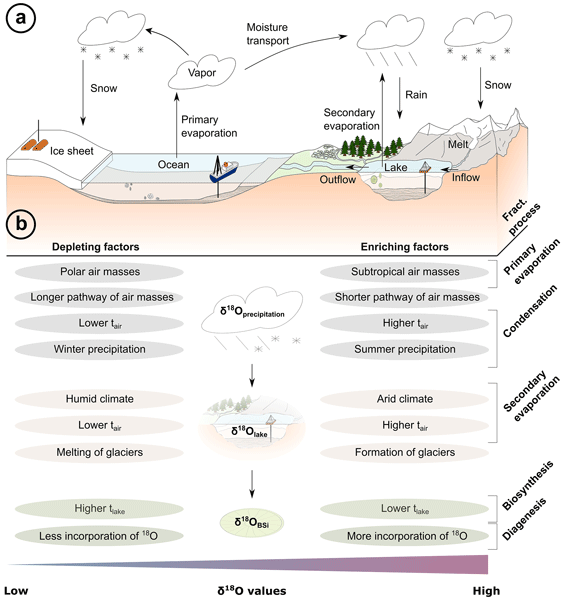
This paper presents the first comprehensive compilation of diatom oxygen isotope records in lake sediments (δ18OBSi), supported by lake basin parameters. We infer the spatial and temporal coverage of δ18OBSi records and discuss common hemispheric trends on centennial and millennial timescales. Key results are common patterns for hydrologically open lakes in Northern Hemisphere extratropical regions during the Holocene corresponding to known climatic epochs, i.e. the Holocene Thermal Maximum.
Anson W. Mackay, Vivian A. Felde, David W. Morley, Natalia Piotrowska, Patrick Rioual, Alistair W. R. Seddon, and George E. A. Swann
Clim. Past, 18, 363–380, https://doi.org/10.5194/cp-18-363-2022, https://doi.org/10.5194/cp-18-363-2022, 2022
Short summary
Short summary
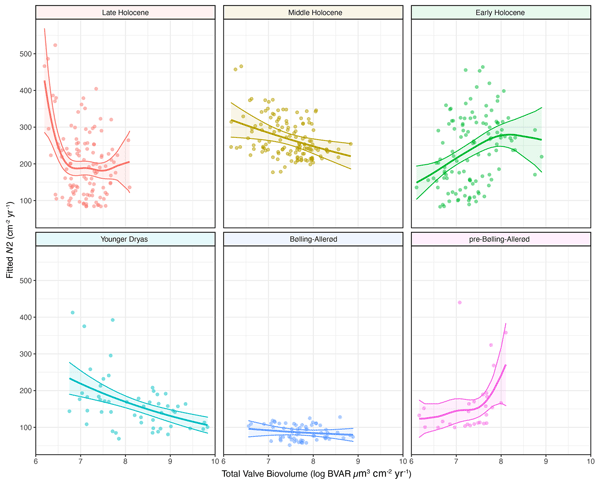
We investigated the diversity of algae called diatoms in Lake Baikal, the oldest and deepest lake in the world, because algae sit at the base of aquatic foodwebs and provide energy (in the form of primary production) for other organisms to use. Diatom diversity and primary production have been influenced by both long-term and abrupt climate change over the past 16 000 years. The shape of these responses appears to be time-period specific.
Cited articles
Anchukaitis, K. J. and Tierney, J. E.: Identifying coherent spatiotemporal modes in time-uncertain proxy paleoclimate records, Clim. Dynam., 41, 1291–1306, https://doi.org/10.1007/s00382-012-1483-0, 2013.
Björck, S. and Wohlfarth, B.: 14C Chronostratigraphic Techniques in Paleolimnology, in: Tracking Environmental Change Using Lake Sediments, vol. 1, edited by: Last, W. M. and Smol, J. P., Kluwer Academic Publishers, Dordrecht, 205–245, https://doi.org/10.1007/0-306-47669-X_10, 2002.
Blaauw, M. and Christen, J. A.: Flexible paleoclimate age-depth models using an autoregressive gamma process, Bayesian Anal., 6, 457–474, https://doi.org/10.1214/11-BA618, 2011.
Boës, X., Piotrowska, N., and Fagel, N.: High-resolution diatom/clay record in Lake Baikal from grey scale, and magnetic susceptibility over Holocene and Termination I, Global and Planetary Change, 46, 299–313, https://doi.org/10.1016/j.gloplacha.2004.09.025, 2005.
Bronk Ramsey, C.: Deposition models for chronological records, Quaternary Science Reviews, 27, 42–60, https://doi.org/10.1016/j.quascirev.2007.01.019, 2008.
Carter, S. J. and Colman, S. M.: Biogenic Silica in Lake Baikal Sediments: Results From 1990–1992 American Cores, Journal of Great Lakes Research, 20, 751–760, https://doi.org/10.1016/S0380-1330(94)71192-8, 1994.
Colman, S. M., Jones, G. A., Rubin, M., King, J. W., Peck, J. A., and Orem, W. H.: AMS radiocarbon analyses from Lake Baikal, Siberia: Challanges of dating sediments from a large, oligotrophic lake, Quaternary Science Reviews, 15, 669–684, https://doi.org/10.1016/0277-3791(96)00027-3, 1996.
Colman, S. M., Karabanov, E. B., and Nelson, C. H.: Quaternary Sedimentation and Subsidence History of Lake Baikal, Siberia, Based on Seismic Stratigraphy and Coring, Journal of Sedimentary Research, 73, 941–956, https://doi.org/10.1306/041703730941, 2003.
Demske, D., Heumann, G., Granoszewski, W., Nita, M., Mamakowa, K., Tarasov, P. E., and Oberhänsli, H.: Late glacial and Holocene vegetation and regional climate variability evidenced in high-resolution pollen records from Lake Baikal, Global and Planetary Change, 46, 255–279, https://doi.org/10.1016/j.gloplacha.2004.09.020, 2005.
Dubois, N., Saulnier-Talbot, É., Mills, K., Gell, P., Battarbee, R., Bennion, H., Chawchai, S., Dong, X., Francus, P., Flower, R., Gomes, D. F., Gregory-Eaves, I., Humane, S., Kattel, G., Jenny, J., Langdon, P., Massaferro, J., McGowan, S., Mikomägi, A., Ngoc, N. T. M., Ratnayake, A. S., Reid, M., Rose, N., Saros, J., Schillereff, D., Tolotti, M., and Valero-Garcés, B.: First human impacts and responses of aquatic systems: A review of palaeolimnological records from around the world, The Anthropocene Review, 5, 28–68, https://doi.org/10.1177/2053019617740365, 2018.
Erb, M. P., McKay, N. P., Steiger, N., Dee, S., Hancock, C., Ivanovic, R. F., Gregoire, L. J., and Valdes, P.: Reconstructing Holocene temperatures in time and space using paleoclimate data assimilation, Clim. Past, 18, 2599–2629, https://doi.org/10.5194/cp-18-2599-2022, 2022.
Fedotov, A. P., Trunova, V. A., Stepanova, O. G., Vorobyeva, S. S., Parkhomchuk, E. V., Krapivina, S. M., Zheleznyakova, T. O., and Legkodymov, A. A.: Changes in patterns of mineral and chemical elements in bottom sediments of Lake Baikal (Russia) as high-resolution records of moisture for the past 31–16 ka BP, Quaternary International, 644–645, 51–60, https://doi.org/10.1016/j.quaint.2021.05.026, 2023.
Franke, J. G. and Donner, R. V.: Correlating paleoclimate time series: Sources of uncertainty and potential pitfalls, Quaternary Science Reviews, 212, 69–79, https://doi.org/10.1016/j.quascirev.2019.03.017, 2019.
Fritz, S. C.: Deciphering climatic history from lake sediments, J. Paleolimnol., 39, 5–16, https://doi.org/10.1007/s10933-007-9134-x, 2008.
Gaglioti, B. V., Mann, D. H., Jones, B. M., Pohlman, J. W., Kunz, M. L., and Wooller, M. J.: Radiocarbon age-offsets in an arctic lake reveal the long-term response of permafrost carbon to climate change: Radiocarbon age-offsets, J. Geophys. Res. Biogeosci., 119, 1630–1651, https://doi.org/10.1002/2014JG002688, 2014.
Giesecke, T., Davis, B., Brewer, S., Finsinger, W., Wolters, S., Blaauw, M., De Beaulieu, J.-L., Binney, H., Fyfe, R. M., Gaillard, M.-J., Gil-Romera, G., Van Der Knaap, W. O., Kuneš, P., Kühl, N., Van Leeuwen, J. F. N., Leydet, M., Lotter, A. F., Ortu, E., Semmler, M., and Bradshaw, R. H. W.: Towards mapping the late Quaternary vegetation change of Europe, Veget. Hist. Archaeobot., 23, 75–86, https://doi.org/10.1007/s00334-012-0390-y, 2014.
Goring, S., Williams, J. W., Blois, J. L., Jackson, S. T., Paciorek, C. J., Booth, R. K., Marlon, J. R., Blaauw, M., and Christen, J. A.: Deposition times in the northeastern United States during the Holocene: establishing valid priors for Bayesian age models, Quaternary Science Reviews, 48, 54–60, https://doi.org/10.1016/j.quascirev.2012.05.019, 2012.
Goslar, T., Czernik, J., and Goslar, E.: Low-energy 14C AMS in Poznań Radiocarbon Laboratory, Poland, Nuclear Instruments and Methods in Physics Research Section B: Beam Interactions with Materials and Atoms, 223–224, 5–11, https://doi.org/10.1016/j.nimb.2004.04.005, 2004.
Haslett, J. and Parnell, A.: A Simple Monotone Process with Application to Radiocarbon-Dated Depth Chronologies, Journal of the Royal Statistical Society Series C: Applied Statistics, 57, 399–418, https://doi.org/10.1111/j.1467-9876.2008.00623.x, 2008.
Hatté, C. and Jull, A. J. T.: Radiocarbon dating | 14C of Plant Macrofossils, in: Encyclopedia of Quaternary Science, Elsevier, 361–367, https://doi.org/10.1016/B978-0-444-53643-3.00049-2, 2013.
Hohmann, R., Hofer, M., Kipfer, R., Peeters, F., Imboden, D. M., Baur, H., and Shimaraev, M. N.: Distribution of helium and tritium in Lake Baikal, J. Geophys. Res., 103, 12823–12838, https://doi.org/10.1029/97JC02218, 1998.
Horiuchi, K., Minoura, K., Hoshino, K., Oda, T., Nakamura, T., and Kawai, T.: Palaeoenvironmental history of Lake Baikal during the last 23000 years, Palaeogeography, Palaeoclimatology, Palaeoecology, 157, 95–108, https://doi.org/10.1016/S0031-0182(99)00156-X, 2000.
Hou, J., D'Andrea, W. J., and Liu, Z.: The influence of 14C reservoir age on interpretation of paleolimnological records from the Tibetan Plateau, Quaternary Science Reviews, 48, 67–79, https://doi.org/10.1016/j.quascirev.2012.06.008, 2012.
Hu, J., Emile-Geay, J., and Partin, J.: Correlation-based interpretations of paleoclimate data – where statistics meet past climates, Earth and Planetary Science Letters, 459, 362–371, https://doi.org/10.1016/j.epsl.2016.11.048, 2017.
Karabanov, E., Williams, D., Kuzmin, M., Sideleva, V., Khursevich, G., Prokopenko, A., Solotchina, E., Tkachenko, L., Fedenya, S., Kerber, E., Gvozdkov, A., Khlustov, O., Bezrukova, E., Letunova, P., and Krapivina, S.: Ecological collapse of Lake Baikal and Lake Hovsgol ecosystems during the Last Glacial and consequences for aquatic species diversity, Palaeogeography, Palaeoclimatology, Palaeoecology, 209, 227–243, https://doi.org/10.1016/j.palaeo.2004.02.017, 2004.
Kashiwaya, K., Sakai, H., Ryugo, M., Horii, M., and Kawai, T.: Long-term climato-limnological cycles found in a 3.5-million-year continental record, Journal of Paleolimnology, 25, 271–278, 2001.
Kaufman, D., McKay, N., Routson, C., Erb, M., Dätwyler, C., Sommer, P. S., Heiri, O., and Davis, B.: Holocene global mean surface temperature, a multi-method reconstruction approach, Sci. Data, 7, 201, https://doi.org/10.1038/s41597-020-0530-7, 2020.
Khan, K. S., Kunz, R., Kleijnen, J., and Antes, G.: Five Steps to Conducting a Systematic Review, J. R. Soc. Med., 96, 118–121, https://doi.org/10.1177/014107680309600304, 2003.
Khider, D., Emile‐Geay, J., McKay, N. P., Gil, Y., Garijo, D., Ratnakar, V., Alonso‐Garcia, M., Bertrand, S., Bothe, O., Brewer, P., Bunn, A., Chevalier, M., Comas‐Bru, L., Csank, A., Dassié, E., DeLong, K., Felis, T., Francus, P., Frappier, A., Gray, W., Goring, S., Jonkers, L., Kahle, M., Kaufman, D., Kehrwald, N. M., Martrat, B., McGregor, H., Richey, J., Schmittner, A., Scroxton, N., Sutherland, E., Thirumalai, K., Allen, K., Arnaud, F., Axford, Y., Barrows, T., Bazin, L., Pilaar Birch, S. E., Bradley, E., Bregy, J., Capron, E., Cartapanis, O., Chiang, H. ‐, Cobb, K. M., Debret, M., Dommain, R., Du, J., Dyez, K., Emerick, S., Erb, M. P., Falster, G., Finsinger, W., Fortier, D., Gauthier, N., George, S., Grimm, E., Hertzberg, J., Hibbert, F., Hillman, A., Hobbs, W., Huber, M., Hughes, A. L. C., Jaccard, S., Ruan, J., Kienast, M., Konecky, B., Le Roux, G., Lyubchich, V., Novello, V. F., Olaka, L., Partin, J. W., Pearce, C., Phipps, S. J., Pignol, C., Piotrowska, N., Poli, M. ‐S., Prokopenko, A., Schwanck, F., Stepanek, C., Swann, G. E. A., Telford, R., Thomas, E., Thomas, Z., Truebe, S., Von Gunten, L., Waite, A., Weitzel, N., Wilhelm, B., Williams, J., Williams, J. J., Winstrup, M., Zhao, N., and Zhou, Y.: PaCTS 1.0: A Crowdsourced Reporting Standard for Paleoclimate Data, Paleoceanog. Paleoclimatol., 34, 1570–1596, https://doi.org/10.1029/2019PA003632, 2019.
Kilian, M. R., Van Der Plicht, J., Van Geel, B., and Goslar, T.: Problematic 14C-AMS dates of pollen concentrates from Lake Gosciaz (Poland), Quaternary International, 88, 21–26, https://doi.org/10.1016/S1040-6182(01)00070-2, 2002.
Lacourse, T. and Gajewski, K.: Current practices in building and reporting age-depth models, Quat. Res., 96, 28–38, https://doi.org/10.1017/qua.2020.47, 2020.
Lindberg, K. R., Thomas, E. K., Rosenheim, B. E., Miller, G. H., Sepúlveda, J., Firesinger, D. R., De Wet, G. A., and Gaglioti, B. V.: Postglacial Carbon Cycling History of a Northeastern Baffin Island Lake Catchment Inferred From Ramped Pyrolysis Oxidation and Radiocarbon Dating, J. Geophys. Res.-Biogeo., 130, e2024JG008515, https://doi.org/10.1029/2024JG008515, 2025.
Mackay, A. W., Seddon, A. W. R., Leng, M. J., Heumann, G., Morley, D. W., Piotrowska, N., Rioual, P., Roberts, S., and Swann, G. E. A.: Holocene carbon dynamics at the forest–steppe ecotone of southern Siberia, Global Change Biology, 23, 1942–1960, https://doi.org/10.1111/gcb.13583, 2017.
McClelland, H. L. O., Halevy, I., Wolf-Gladrow, D. A., Evans, D., and Bradley, A. S.: Statistical Uncertainty in Paleoclimate Proxy Reconstructions, Geophysical Research Letters, 48, e2021GL092773, https://doi.org/10.1029/2021GL092773, 2021.
McKay, N. P., Emile-Geay, J., and Khider, D.: geoChronR – an R package to model, analyze, and visualize age-uncertain data, Geochronology, 3, 149–169, https://doi.org/10.5194/gchron-3-149-2021, 2021.
Michczyński, A.: Is it Possible to Find a Good Point Estimate of a Calibrated Radiocarbon Date?, Radiocarbon, 49, 393–401, https://doi.org/10.1017/S0033822200042326, 2007.
Millard, A. R.: Conventions for reporting radiocarbon determinations, Radiocarbon, 56, 555–559, https://doi.org/10.2458/56.17455, 2014.
Mischke, S., Weynell, M., Zhang, C., and Wiechert, U.: Spatial variability of 14C reservoir effects in Tibetan Plateau lakes, Quaternary International, 313–314, 147–155, https://doi.org/10.1016/j.quaint.2013.01.030, 2013.
Morley, D. W., Leng, M. J., Mackay, A. W., and Sloane, H. J.: Late glacial and Holocene environmental change in the Lake Baikal region documented by oxygen isotopes from diatom silica, Global and Planetary Change, 46, 221–233, https://doi.org/10.1016/j.gloplacha.2004.09.018, 2005.
Murakami, T., Takamatsu, T., Katsuta, N., Takano, M., Yamamoto, K., Takahashi, Y., Nakamura, T., and Kawai, T.: Centennial- to millennial-scale climate shifts in continental interior Asia repeated between warm–dry and cool–wet conditions during the last three interglacial states: evidence from uranium and biogenic silica in the sediment of Lake Baikal, southeast Siberia, Quaternary Science Reviews, 52, 49–59, https://doi.org/10.1016/j.quascirev.2012.08.001, 2012.
Nagata, T., Takai, K., Kawanobe, K., Kim, D.-S., Nakazato, R., Guselnikova, N., Bondarenko, N., Mologawaya, O., Kostrnova, T., Drucker, V., Satoh, Y., and Watanabe, Y.: Autotrophic picoplankton in southern Lake Baikal: abundance, growth and grazing mortality during summer, J. Plankton Res., 16, 945–959, https://doi.org/10.1093/plankt/16.8.945, 1994.
Nakamura, T., Oda, T., Tanaka, A., and Horiuchi, K.: High precision 14C age estimation of bottom sediments of Lake Baikal and Lake Hovsgol by AMS, Gekkan Chikyu, Special No. 42, Kaiyoshuppasha, Tokyo, 20–31, 2003.
Nara, F. W., Watanabe, T., Nakamura, T., Kakegawa, T., Katamura, F., Shichi, K., Takahara, H., Imai, A., and Kawai, T.: Radiocarbon and Stable Carbon Isotope Ratio Data from a 4.7-Mlong Sediment Core of Lake Baikal (Southern Siberia, Russia), Radiocarbon, 52, 1449–1457, https://doi.org/10.1017/S0033822200046531, 2010.
Nara, F. W., Watanabe, T., Lougheed, B. C., and Obrochta, S.: Alternative radiocarbon age-depth model from Lake Baikal sediment: implication for past hydrological changes for last glacial to the Holocene, Radiocarbon, 1–18, https://doi.org/10.1017/RDC.2023.63, 2023.
Neulieb, T., Levac, E., Southon, J., Lewis, M., Pendea, I. F., and Chmura, G. L.: Potential Pitfalls of Pollen Dating, Radiocarbon, 55, 1142–1155, https://doi.org/10.1017/S0033822200048050, 2013.
Newall, S. R.: samrsnewall/baikal_essd_ice: Baikal14C_ESSD, Zenodo [code], https://doi.org/10.5281/ZENODO.18344188, 2026.
Newall, S. R. S., Mackay, A. W., Blaauw, M., and Piotrowska, N.: Lake Baikal sediment core AMS radiocarbon data, PANGAEA [data set], https://doi.org/10.1594/PANGAEA.973799, 2025.
Ogura, K.: A preliminary report on 14C ages of a 4.6 m long core sample of Lake Baikal, International Project on Paleolimnology and Late Cenozoic Climate, 6, 123–124, 1992.
Omori, T., Yamada, K., Kitaba, I., Hori, T., and Nakagawa, T.: Reliable radiocarbon dating of fossil pollen grains: It is truly possible, Quaternary Geochronology, 77, 101456, https://doi.org/10.1016/j.quageo.2023.101456, 2023.
Oswald, W. W., Anderson, P. M., Brown, T. A., Brubaker, L. B., Hu, F. S., Lozhkin, A. V., Tinner, W., and Kaltenrieder, P.: Effects of sample mass and macrofossil type on radiocarbon dating of arctic and boreal lake sediments, The Holocene, 15, 758–767, https://doi.org/10.1191/0959683605hl849rr, 2005.
Philippsen, B.: The freshwater reservoir effect in radiocarbon dating, Herit. Sci., 1, 24, https://doi.org/10.1186/2050-7445-1-24, 2013.
Piotrowska, N.: Status report of AMS sample preparation laboratory at GADAM Centre, Gliwice, Poland, Nuclear Instruments and Methods in Physics Research Section B: Beam Interactions with Materials and Atoms, 294, 176–181, https://doi.org/10.1016/j.nimb.2012.05.017, 2013.
Piotrowska, N., Bluszcz, A., Demske, D., Granoszewski, W., and Heumann, G.: Extraction and AMS Radiocarbon Dating of Pollen from Lake Baikal Sediments, Radiocarbon, 46, 181–187, https://doi.org/10.1017/S0033822200039503, 2004.
Prokopenko, A. A., Khursevich, G. K., Bezrukova, E. V., Kuzmin, M. I., Boes, X., Williams, D. F., Fedenya, S. A., Kulagina, N. V., Letunova, P. P., and Abzaeva, A. A.: Paleoenvironmental proxy records from Lake Hovsgol, Mongolia, and a synthesis of Holocene climate change in the Lake Baikal watershed, Quat. Res., 68, 2–17, https://doi.org/10.1016/j.yqres.2007.03.008, 2007.
Reimer, P. J.: Evolution of radiocarbon calibration, Radiocarbon, 64, 523–539, https://doi.org/10.1017/RDC.2021.62, 2022.
Rehfeld, K. and Kurths, J.: Similarity estimators for irregular and age-uncertain time series, Clim. Past, 10, 107–122, https://doi.org/10.5194/cp-10-107-2014, 2014.
Sakai, H.: Paleoenvironment deduced from magnetic susceptibility studies on surface sediments of Lake Baikal and Lake Biwa, Kanazawa University 21st Century COE Program: Environmental monitoring of the Circum-Japan Sea region and prediction of long- and short-term variability, 78–82, https://kanazawa-u.repo.nii.ac.jp/records/35021 (last access: 3 February 2026), 2006.
Sakai, H., Nomura, S., Horii, M., Kashiwaya, K., Tanaka, A., Kawai, T., Kravchinsky, V., and Peck, J.: Paleomagnetic and rock-magnetic studies on lake baikal sediments – BDP96 borehole at academician ridge, in: Lake Baikal, Elsevier, 35–52, https://doi.org/10.1016/B978-044450434-0/50004-4, 2000.
Schiller, C. M., Whitlock, C., Elder, K. L., Iverson, N. A., and Abbott, M. B.: Erroneously old Radiocarbon Ages from terrestrial pollen concentrates in Yellowstone Lake, Wyoming, Usa, Radiocarbon, 63, 321–342, https://doi.org/10.1017/RDC.2020.118, 2021.
Shimaraev, M. N., Granin, N. G., and Zhdanov, A. A.: Deep ventilation of Lake Baikal waters due to spring thermal bars, Limnology & Oceanography, 38, 1068–1072, https://doi.org/10.4319/lo.1993.38.5.1068, 1993.
Snyder, C. W.: The value of paleoclimate research in our changing climate: An editorial comment, Climatic Change, 100, 407–418, https://doi.org/10.1007/s10584-010-9842-5, 2010.
Strunk, A., Olsen, J., Sanei, H., Rudra, A., and Larsen, N. K.: Improving the reliability of bulk sediment radiocarbon dating, Quaternary Science Reviews, 242, 106442, https://doi.org/10.1016/j.quascirev.2020.106442, 2020.
Stuiver, M. and Polach, H. A.: Discussion Reporting of 14C Data, Radiocarbon, 19, 355–363, https://doi.org/10.1017/S0033822200003672, 1977.
Swann, G. E. A., Panizzo, V. N., Piccolroaz, S., Pashley, V., Horstwood, M. S. A., Roberts, S., Vologina, E., Piotrowska, N., Sturm, M., Zhdanov, A., Granin, N., Norman, C., McGowan, S., and Mackay, A. W.: Changing nutrient cycling in Lake Baikal, the world's oldest lake, P. Natl. Acad. Sci. USA, 117, 27211–27217, https://doi.org/10.1073/pnas.2013181117, 2020.
Sweeney, J., Salter-Townshend, M., Edwards, T., Buck, C. E., and Parnell, A. C.: Statistical challenges in estimating past climate changes, WIREs Computational Stats, 10, e1437, https://doi.org/10.1002/wics.1437, 2018.
Tani, Y., Kurihara, K., Nara, F., Itoh, N., Soma, M., Soma, Y., Tanaka, A., Yoneda, M., Hirota, M., and Shibata, Y.: Temporal changes in the phytoplankton community of the southern basin of Lake Baikal over the last 24,000 years recorded by photosynthetic pigments in a sediment core, Organic Geochemistry, 33, 1621–1634, https://doi.org/10.1016/S0146-6380(02)00107-9, 2002.
Tarasov, P., Bezrukova, E., Karabanov, E., Nakagawa, T., Wagner, M., Kulagina, N., Letunova, P., Abzaeva, A., Granoszewski, W., and Riedel, F.: Vegetation and climate dynamics during the Holocene and Eemian interglacials derived from Lake Baikal pollen records, Palaeogeography, Palaeoclimatology, Palaeoecology, 252, 440–457, https://doi.org/10.1016/j.palaeo.2007.05.002, 2007.
Vologina, E. G. and Sturm, M.: Types of Holocene deposits and regional pattern of sedimentation in Lake Baikal, Russian Geology and Geophysics, 50, 722–727, https://doi.org/10.1016/j.rgg.2008.12.012, 2009.
Wang, Y., Goring, S. J., and McGuire, J. L.: Bayesian ages for pollen records since the last glaciation in North America, Sci. Data, 6, 176, https://doi.org/10.1038/s41597-019-0182-7, 2019.
Watanabe, T., Nakamura, T., and Kawai, T.: Radiocarbon dating of sediments from large continental lakes (Lakes Baikal, Hovsgol and Erhel), Nuclear Instruments and Methods in Physics Research Section B: Beam Interactions with Materials and Atoms, 259, 565–570, https://doi.org/10.1016/j.nimb.2007.01.200, 2007.
Watanabe, T., Nakamura, T., Nara, F. W., Kakegawa, T., Nishimura, M., Shimokawara, M., Matsunaka, T., Senda, R., and Kawai, T.: A new age model for the sediment cores from Academician ridge (Lake Baikal) based on high-time-resolution AMS 14C data sets over the last 30 kyr: Paleoclimatic and environmental implications, Earth and Planetary Science Letters, 286, 347–354, https://doi.org/10.1016/j.epsl.2009.06.046, 2009a.
Watanabe, T., Nakamura, T., Nara, F. W., Kakegawa, T., Horiuchi, K., Senda, R., Oda, T., Nishimura, M., Matsumoto, G. I., and Kawai, T.: High-time resolution AMS 14C data sets for Lake Baikal and Lake Hovsgol sediment cores: Changes in radiocarbon age and sedimentation rates during the transition from the last glacial to the Holocene, Quaternary International, 205, 12–20, https://doi.org/10.1016/j.quaint.2009.02.002, 2009b.
Weiss, R. F., Carmack, E. C., and Koropalov, V. M.: Deep-water renewal and biological production in Lake Baikal, Nature, 349, 665–669, https://doi.org/10.1038/349665a0, 1991.
Wilkinson, M. D., Dumontier, M., Aalbersberg, Ij. J., Appleton, G., Axton, M., Baak, A., Blomberg, N., Boiten, J.-W., Da Silva Santos, L. B., Bourne, P. E., Bouwman, J., Brookes, A. J., Clark, T., Crosas, M., Dillo, I., Dumon, O., Edmunds, S., Evelo, C. T., Finkers, R., Gonzalez-Beltran, A., Gray, A. J. G., Groth, P., Goble, C., Grethe, J. S., Heringa, J., 'T Hoen, P. A. C., Hooft, R., Kuhn, T., Kok, R., Kok, J., Lusher, S. J., Martone, M. E., Mons, A., Packer, A. L., Persson, B., Rocca-Serra, P., Roos, M., Van Schaik, R., Sansone, S.-A., Schultes, E., Sengstag, T., Slater, T., Strawn, G., Swertz, M. A., Thompson, M., Van Der Lei, J., Van Mulligen, E., Velterop, J., Waagmeester, A., Wittenburg, P., Wolstencroft, K., Zhao, J., and Mons, B.: The FAIR Guiding Principles for scientific data management and stewardship, Sci. Data, 3, 160018, https://doi.org/10.1038/sdata.2016.18, 2016.
Zimmerman, S. R. H. and Wahl, D. B.: Holocene paleoclimate change in the western US: The importance of chronology in discerning patterns and drivers, Quaternary Science Reviews, 246, 106487, https://doi.org/10.1016/j.quascirev.2020.106487, 2020.
Short summary
Lake sediment cores are records of ancient climate change. Radiocarbon dates provide the records a timeframe. We present a database of radiocarbon data from Lake Baikal sediment cores to aid re-use of this data, and evaluate a key correction required to use radiocarbon data. Previous studies used corrections of 380–2100 years with an uncertainty of 90 years at most. Our results (1610 ± 760 years) highlight that age offset uncertainty has been underestimated and better estimators are needed.
Lake sediment cores are records of ancient climate change. Radiocarbon dates provide the records...


Altmetrics
Final-revised paper
Preprint